

Spouted baby food pouches more like sugary drinks/smoothies than nutritious food
Published: 25 August 2026
Commercial baby foods in spouted pouches – intended to boost nutritional intake from the age of 6 months onwards – are often more like sugary drinks and smoothies than nutritious food, an analysis of UK products finds
Commercial baby foods in spouted pouches – intended to boost nutritional intake from the age of 6 months onwards – are often more like sugary drinks and smoothies than nutritious food, an analysis of UK products finds.
Results from a new study, led by the University of Glasgow and published in Archives of Disease in Childhood, found these products are often higher in sugar and lower in nutrient density than breast milk or formula. Researchers found they were also frequently lacking the texture needed to help babies learn to eat solid foods.
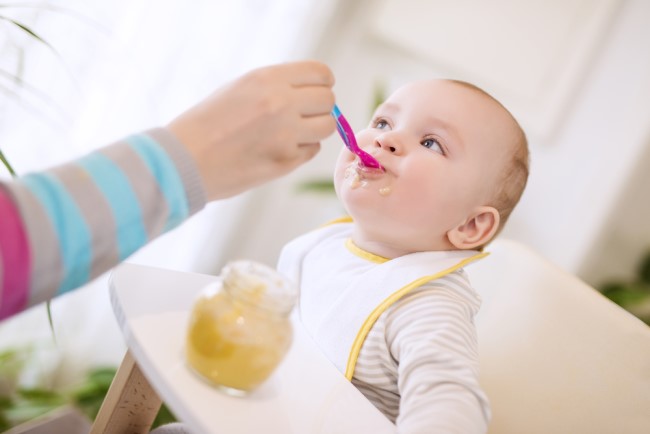
Spouted pouches are currently labelled as a complementary food to breast milk or formula, but the new findings have prompted researchers to question whether this labelling is appropriate, and to call for a regulatory review of these products.
Breast milk alone can’t supply all the key nutrients needed once a child reaches the age of around 6 months. Complementary foods are therefore essential for establishing healthy food preferences, optimal growth, and long-term health and for helping babies learn how to eat solid foods.
Complementary foods should have an increasingly solid texture and be more energy and nutrient dense than breast milk, but while spouted pouches have become the dominant packaging for commercially made baby foods, it has not been known if their content fulfils these criteria.
To find out, the researchers reviewed the commercial baby foods available in 6 large hypermarkets, serving families in Glasgow, Scotland in October and November 2024.
In all, they found 298 products from 16 manufacturers, of which 178 (60%) were spouted pouches. All these pouches were labelled as suitable for children under 12 months; two-thirds were aimed at babies aged 6 months or younger. Of the other products, 46 (38%) were aimed at infants aged 12 months or more.
Foods were categorised relative to breast milk for energy, protein and sugar content, and defined as minimally suitable for complementary feeding if they were: a purée or solid food which would enable weaning; more energy and protein dense than breast milk; had a sugar content no higher than breast milk.
Food texture was rated by two assessors for 284 (95%) of all the products. Half of the spout pouches (49%) were liquids (score 1–3, where 0 is thin, and 4 is very thick) compared with 7% of the other products. Only 10% of the spout pouches were soft foods, compared with more than three-quarters (77%) of the other products.
Dr Ada Garcia, lead author of the study from the University of Glasgow, said: “The texture and manner of complementary feeding is important. While suckling is an innate characteristic, the oromotor skills required for the manipulation of solid food in the mouth must be learnt experientially.
“For that reason, recommendations suggest that first foods offered should progress from purées to lumpy, mashed, and finger foods. For pouches specifically, not only do they deliver a thin food that can be swallowed with little oromotor manipulation, but they are also often consumed by sucking from the spout, rather than from a spoon.”
Overall, the available baby foods had an average energy content of 66.5 kcal/100 g, with only 35% above that for breast milk (65–70 kcal/100 g). The average protein content was 2.3 g/100 g and sugar content 3.7 g/100g. Around half (52%) of spout pouches had a protein content higher than the range for breast milk, but 29% fell below this.
In common with most of the other baby foods, only around a third of the spout pouches had an energy density greater than breast milk, but 61% had higher sugar content than breast milk, compared with only 8% of the other baby foods.
In all, only 14 (8.5%) of the spout pouches were defined as being completely suitable for complementary feeding in that they met all the desired criteria; 48 (29%) met none. By contrast, 37 (32%) of the other wet baby foods met all the desired criteria; only 2 (2%) met none.
The researchers acknowledge various limitations to their findings. For example, they had no data on actual consumption, and the assessment of nutrient content was limited to the information provided by the manufacturers, with iron content, which is a key nutrient, rarely stated.
Dr Garcia added: “High sugar intakes in early childhood have long-term health implications, both in terms of dental health and overweight. Products delivered in pouches generally do not meet the desired characteristics of complementary foods. Many are more similar to sweet fruit smoothies, which are not recommended at all for babies or preschool children.
“Our findings suggest that regulators should consider whether a change in product categorisation and labelling is needed to make clear which products are foods and which are drinks, to discourage the use of [these pouches] and to enable parents to make informed choices in line with public health recommendations for feeding infants and young children.”
Enquiries: ali.howard@glasgow.ac.uk or elizabeth.mcmeekin@glasgow.ac.uk
First published: 25 August 2026
Related Links
School of Medicine, Dentistry & Nursing
College of Medical, Veterinary & Life Sciences
Link to the study