

UofG’s CVR contributes to Ebola health emergency
Published: 20 August 2026
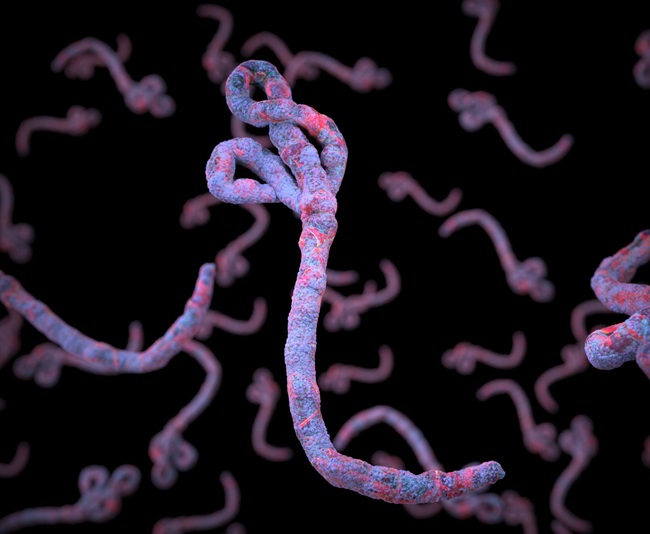
The MRC-University of Glasgow Centre for Virus Research (CVR) will play a key role in new studies to assess whether vaccines already or previously licensed against Zaire ebolavirus—including Ervebo—could offer protection against Bundibugyo ebolavirus, the virus behind the rapidly escalating outbreak in the Democratic Republic of the Congo, which was declared a Public Health Emergency of International Concern by the World Health Organization (WHO) in May 2026.
The MRC-University of Glasgow Centre for Virus Research (CVR) will play a key role in new studies to assess whether vaccines already or previously licensed against Zaire ebolavirus—including Ervebo—could offer protection against Bundibugyo ebolavirus, the virus behind the rapidly escalating outbreak in the Democratic Republic of the Congo, which was declared a Public Health Emergency of International Concern by the World Health Organization (WHO) in May 2026.
The studies will analyse blood samples from thousands of people who have already been vaccinated against Zaire ebolavirus, with first results expected within months."
CEPI (Coalition for Epidemic Preparedness Innovations; www.cepti.net) is investing $4.17 million funding for four research projects, including one led by the CVR.
The CVR team will draw on two existing cohorts: the Glasgow Ebola Vaccine (GEV) study of close contacts vaccinated against Zaire ebolavirus, and the Arboviral Infection study of Ugandan healthcare workers vaccinated during the 2019 outbreak response.
The study will be done in collaboration with the Uganda Virus Research Institute and will help establish whether antibodies generated in response to Ervebo vaccination also recognise Bundibugyo virus.
Prof Brian Willett, Professor of Viral Immunology at CVR, said: "Studies that measure virus-specific antibodies provide a critical tool for identifying evidence of virus exposure, revealing patterns of virus circulation, identifying high-risk groups and geographic hotspots, and improving understanding of transmission dynamics.
“The Centre for Virus Research Preparedness team is developing diagnostic tests for high-priority pathogens such as Bundibugyo virus, thereby supporting more effective surveillance, outbreak preparedness, and public health interventions in regions at risk of viral emergence.
“Funding from CEPI will enable the team to investigate the level of cross[1]protection afforded by existing Ebola vaccines, and their likely effectiveness against emerging filoviruses.”
Other awardees from CEPI include research groups led by UCLA (USA); the Institute of Tropical Medicine (Antwerp); and the University of Oxford (UK).
Dr Richard Hatchett, CEO of CEPI, said: “There is no licensed vaccine against Bundibugyo virus. CEPI is funding multiple Bundibugyo vaccine candidates to address this gap, but even on the most compressed timelines those vaccines will not be available for the earliest phase of this outbreak.”
“However, vaccines do exist for the related Zaire ebolavirus, including Ervebo. Given the recent announcement that Ervebo will be deployed for emergency use against Bundibugyo virus, these CEPI-backed studies will be all the more important to inform on how we can make the best use of the existing vaccine.”
The research teams will analyse stored blood samples from individuals vaccinated with licensed/previously licensed vaccines against Zaire ebolavirus either in previous vaccination campaigns and/or clinical trials. They aim to characterise vaccine-induced immune responses and assess cross-reactivity of antibody responses against Bundibugyo ebolavirus.
The critical data that these serology studies will provide will help establish and standardise tests for antibodies against Bundibugyo virus and use longitudinal samples to define the dynamics and durability of these responses. Data from these studies will also aid interpretation of immune responses in clinical trials, help assess whether Bundibugyo-specific antibodies are associated with protection, and inform future vaccination strategies and evaluation of Bundibugyo-specific and broadly protective filovirus vaccines.
In recent weeks, new data have emerged indicating that further prospective evaluation of Ervebo is warranted. Consequently, the WHO Technical Advisory Group on Candidate Vaccine Prioritization (TAG-CVP) has recommended that Ervebo be evaluated in a Phase 3 clinical trial, in addition to Bundibugyo-specific vaccine candidates when they are ready. The DRC authorities and Africa CDC have announced plans to deploy Ervebo to priority groups under protocol-governed expanded use. The CEPI-backed studies will rapidly generate additional evidence to help fill outstanding gaps in knowledge and contribute to decision making about how Ervebo can be used in this and future responses.
The CVR is the UK’s national centre of excellence for human virology research. Established in 2010 as a partnership between the University and the Medical Research Council (MRC), its mission is to improve global health and preparedness for viral threats by carrying out fundamental research on viruses and viral diseases, and translating this knowledge into advances for global health and societal benefit.
The CVR also contributes to sovereign capabilities in epidemic preparedness, bio-surveillance, and biosecurity. Researchers at the CVR have made significant contributions to the study of multiple important viruses including influenza, AAV2-linked paediatric hepatitis, mpox, rabies, dengue fever, Ebola, Zika, hepatitis C and SARS-CoV-2. In addition, the CVR houses world-class facilities including comprehensive containment level 3 (CL3) laboratories, state-of-the-art cryo-EM microscopes and a drug-resistance screening hub.
The University of Glasgow is committed to CEPI’s Equitable Access Policy and will support publication of the project-related results in open access journals for the benefit of the global scientific community.
Enquiries: ali.howard@glasgow.ac.uk or elizabeth.mcmeekin@glasgow.ac.uk
First published: 20 August 2026