

Scientists uncover the evolutionary process behind live birth in lizards
Published: 19 August 2026
Scientists studying one of nature’s greatest reproductive innovations have discovered how some lizards evolved from laying eggs to giving birth to live young
Scientists studying one of nature’s greatest reproductive innovations have discovered how some lizards evolved from laying eggs to giving birth to live young.
The new research is the first to reveal the evolutionary process behind this important biological change and offers a unique insight into how other species – including mammals – may have evolved to give birth to live young millions of years ago.
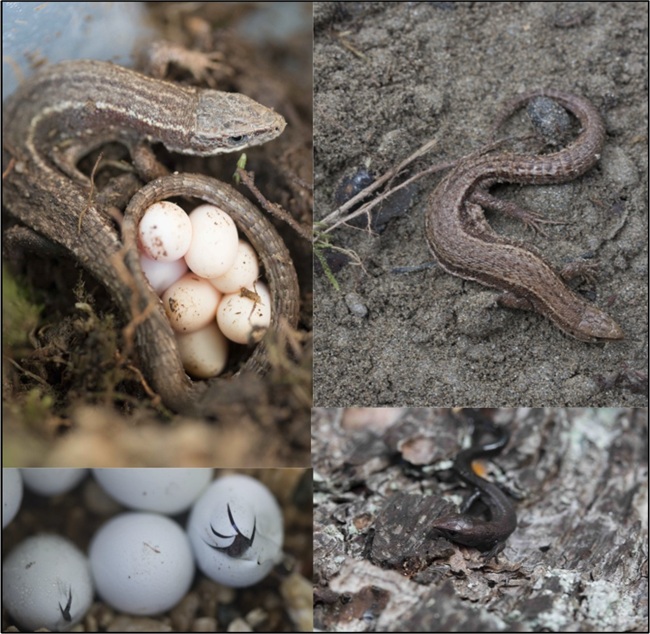
The study, led by researchers at the University of Glasgow and published in Current Biology, reconstructs how live birth evolved in the Eurasian common lizard. Researchers found that the reproductive change occurred, not through one large evolutionary leap as some scientists have previously assumed, but through the gradual accumulation of many small genetic changes over time.
The findings have implications for our wider understanding of reproductive evolution, and reveal never before seen information on how small, incremental changes at a genetic level can lead to big biological transformations.
The transition from laying eggs to giving birth to live young is one of the most significant innovations in animal evolution, and has happened multiple times in most vertebrate lineages, including in fish, amphibians, reptiles and mammals. However, because most transitions to live birth occurred tens or even hundreds of millions of years ago (as in mammals), until now scientists have struggled to understand the evolutionary process that first gave rise to this complex reproductive strategy.
Although lizards and humans reproduce in different ways, the structures involved in carrying and nourishing developing young have shared evolutionary origins. The egg sac around a baby in a live-bearing lizard is evolutionarily comparable to the membranes and placenta that surround and support a developing human baby during pregnancy.
The common lizard provides a rare opportunity to study this process because it contains both egg-laying and live-bearing lineages that diverged relatively recently in evolutionary time.
In the new study, the researchers analysed whole genome sequences from lizards sampled from across the species' range. They then used these data to reconstruct how those genetic differences accumulated during evolution and gave rise to live birth.
The analyses showed that rather than arising through one or two major genetic changes, the transition resulted from natural selection acting on many regions across the genome over a long evolutionary timescale. The changes occurred primarily in regulatory DNA that controls when and where genes are switched on during pregnancy. Consistent with this regulatory mechanism, genes in these regions were more highly expressed in the uterus of pregnant live-bearing lizards, suggesting that changes in gene regulation played a central role in the evolution of live birth.
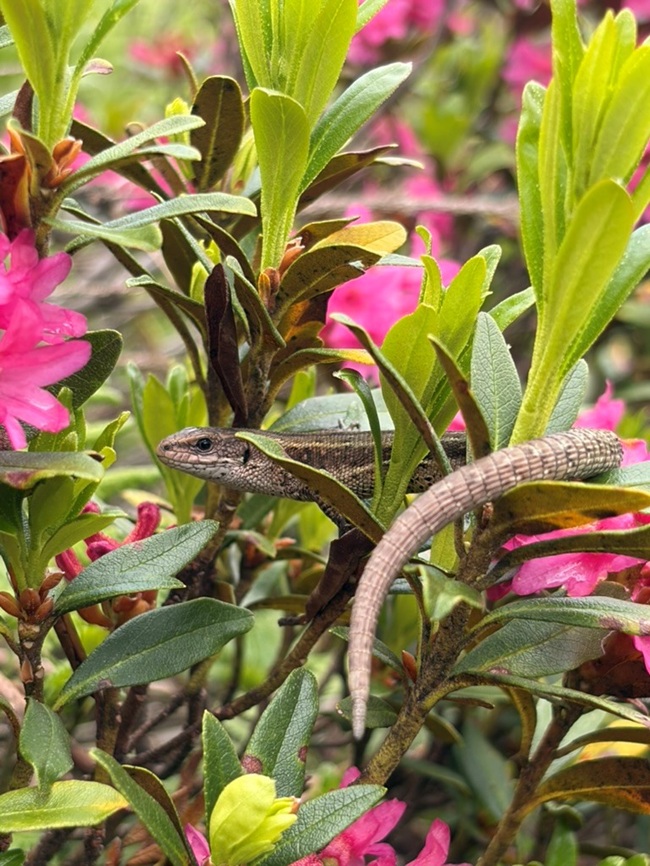
The findings provide one of the clearest reconstructions yet of how a complex evolutionary innovation emerges.
Lead author Dr Hongxin Xie from the University of Glasgow's School of Biodiversity, One Health and Veterinary Medicine, said: "Live birth is one of the most remarkable evolutionary innovations among vertebrates, but because it evolved so long ago in most animals, we've had very little opportunity to understand how it actually arose.
"The common lizard provides a unique window into this transition. By reconstructing its evolutionary history using whole genomes, we were able to show how a complex trait can emerge through many small genetic changes that accumulated over time.
"Perhaps most excitingly, we found that much of this evolution involved changes in gene regulation rather than changes to the genes themselves. Regulatory DNA acts like an instruction manual, determining when and where genes are switched on during pregnancy, providing a flexible way for evolution to build an entirely new reproductive system."
Despite continued gene flow between egg-laying and live-bearing lizard lineages during the mating process, the research team also found that any reproductive adaptations were maintained in the lizards who had them, helping to maintain the reproductive change became established in some species.
Dr Hans Recknagel, co-author of the study, now based at the University of Trier, said: "This is one of the few systems in the world where we can still observe both the ancestral egg-laying form and the derived live-bearing form within the same species. That makes it possible to reconstruct an evolutionary transition that is usually hidden deep in the past."
Professor Kathryn Elmer, senior author of the study, said: "One of the longstanding questions in evolutionary biology is how complex adaptations arise. Do they evolve through a few major genetic changes, or through the accumulation of many small ones? Our study provides a remarkable example of the latter.
“We show that one of the most complex reproductive innovations in vertebrates evolved through many small regulatory changes distributed across the genome, gradually assembling a completely new reproductive strategy. These findings not only explain how live birth evolved in lizards, but also provide a broader framework for understanding how complex evolutionary innovations arise across the tree of life."
The study, "Genome-wide barriers to gene flow reveal the genetic basis of viviparity evolution in a lizard," is published in Current Biology. The research was carried out by scientists from the University of Glasgow and international collaborators from China and France. UK’s Natural Environment Research Council funded the research.
Enquiries: ali.howard@glasgow.ac.uk or elizabeth.mcmeekin@glasgow.ac.uk
First published: 19 August 2026