

Imaging offers clearer insights to cancer
Published: 17 July 2026
New imaging technology in Scotland is allowing scientists, for the first time, to track cancer from the whole-body level down to the individual cells, offering new insights into the disease.
New imaging technology in Scotland is allowing scientists, for the first time, to track cancer from the whole-body level down to the individual cells, offering new insights into the disease.
One of the biggest challenges in cancer research has been linking the “big picture” seen in medical scans, with the microscopic biology that drives tumour growth and dictates how patients respond to treatment.
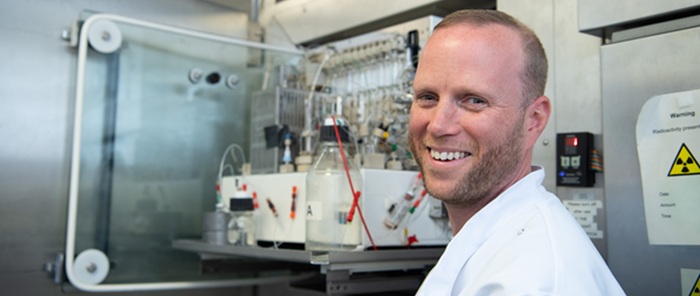
Now by combining multiple imaging techniques (PET scans, bioluminescence and fluorescence) scientists can detect tumours across the whole body at the same time, pinpoint key targets, and then examine those tumours in high detail, including the surrounding cells and tissue.
Study lead, Professor David Lewis of the Cancer Research UK Scotland Institute and University of Glasgow, said: “This exciting technology allows us to build a clearer map of how cancer behaves at both a holistic and microscopic level.
“It allows researchers to follow tumours in the body, identify the lesions that matter, and then zoom in to study those cancer cells and their environment giving us new information about cancer which we can take forward into better and more precise treatments.”
In the UK, more than 403,000* people are diagnosed with cancer each year (34,800 in Scotland***) with around 170,000** people (16,400 in Scotland****) dying from the disease annually, so finding new ways to tackle the disease is vital.
Cancer is not a static disease. Tumours grow, spread, interact with immune cells and blood vessels, and respond differently to treatments even within the same patient.
Until now, scientists have had to study these processes in separate ways. Whole-body imaging techniques such as PET scans can show where tumours are and how they grow but lack the detail to reveal what individual cells are doing. In contrast, microscopy can capture cellular behaviour but cannot show how cancer develops across the entire body.
This new approach connects those two worlds by linking large-scale imaging with cellular-level analysis allowing researchers to better understand why tumours behave differently and why some respond to therapy while others do not.
Using this new approach, funded by Cancer Research UK, researchers can tag cancer cells allowing them to be identified and tracked across different imaging techniques to observe how they grow and respond.
Importantly, it also makes it possible to investigate how tumour cells interact with their surroundings, including nearby immune cells and blood vessels - factors known to influence how cancer progresses and responds to treatment.
While the technology is currently only available for research use in mice and not in human patients it is helping scientists understand why treatments work for some tumours but not others, test new therapies more precisely, focus on individual lesions and develop imaging approaches that better reflect the underlying biology of cancer.
A Cancer Research UK spokesperson said: “This technology represents a new and powerful tool in our aim to understand cancer biology. Cancer behaves differently from person to person and even tumour to tumour so having the knowledge that allows us to target each with the most effective treatment could be a game changer.
“Being able to see how cancer grows and develops at both a macro and micro level offers us new ways to find more precise ways to tackle and prevent cancer.”
The new approach also opens the door to more detailed preclinical testing, where tumours are no longer treated as biologically identical, but studied individually.
Although demonstrated in liver and lung cancer models, the researchers say the approach could be widely applied across multiple fields, including oncology, immunology, neuroscience and regenerative medicine.
The work, published in Nature Biotechnology, represents a significant contribution from Scotland’s cancer research and imaging community, led by Cancer Research UK-supported teams and supported by infrastructure including the West of Scotland PET Centre and advanced imaging and radiochemistry facilities in Glasgow.
Enquiries: ali.howard@glasgow.ac.uk or elizabeth.mcmeekin@glasgow.ac.uk
First published: 17 July 2026