

225 years on, Burns Suppers continue to be reinvented around the world
Published: 16 July 2026
Research maps more than 1000 Burns Suppers held across 75 countries during the tradition’s 225th anniversary year.
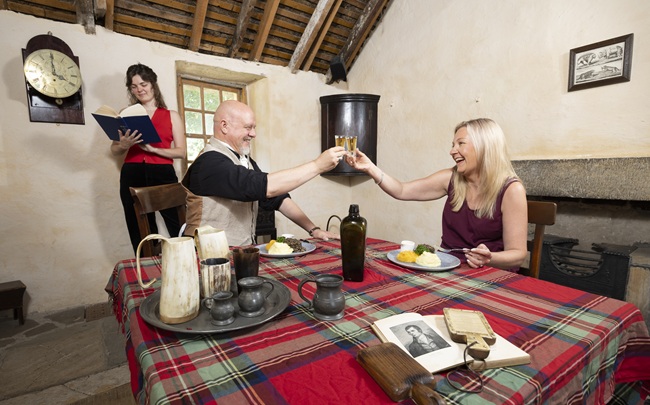
What does a Burns Supper held in Ireland, Greece, Hong Kong and New York have in common with one held in Antarctica?
According to new research from the University of Glasgow, quite a lot.
Two hundred and twenty-five years after the first Burns Supper was held at Burns Cottage in Alloway, Scotland, a new study of celebrations held during the anniversary year shows that the tradition, now marked around the world, retains many of the customs established at the original supper.
The research - The Burns Supper at 225 Years: Scottish Tradition, Global Reinvention - draws on more than 1000 Burns Suppers held across 75 countries and all seven continents during this anniversary year.
The crowdsourced archive of Burns Suppers 2026 events, viewable through an interactive global map is being launched by the University’s Centre for Robert Burns Studies (CRBS) this weekend and builds on six years of research by Glasgow scholars.
Like the first Burns Supper, held on 21 July 1801 by nine admirers and friends of Robert Burns to mark the 5th anniversary of his death aged just 37, the traditions established more than 225 years ago continue to unite the poet’s enthusiasts.
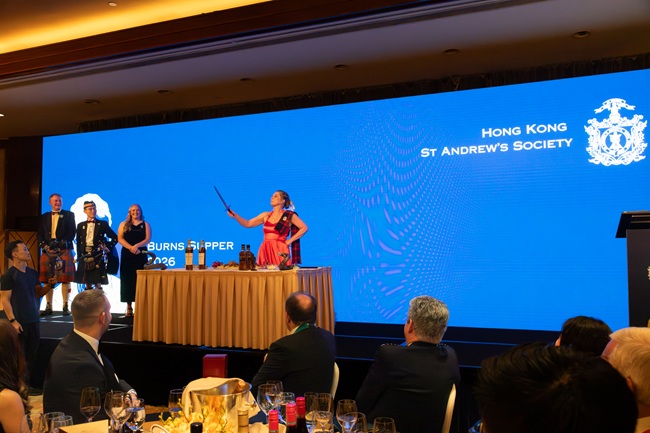
The research found that, despite their global spread, most of the 1059 Burns Suppers recorded in 2026 remain faithful to the traditions established by Burns's earliest admirers:
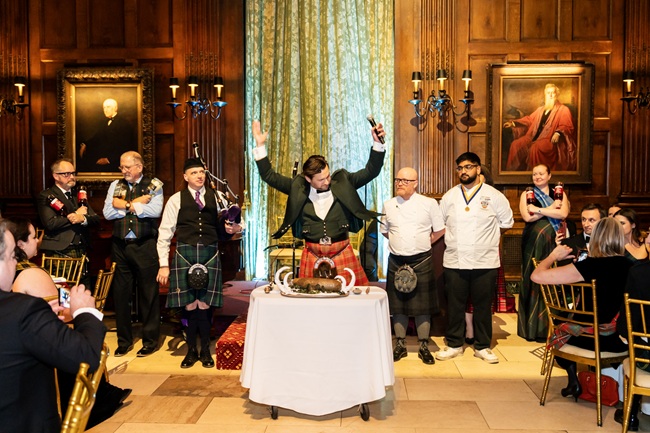
- Burns’s poem Address to a Haggis featured at 93% of celebrations.
- Scotch whisky was served at 89%.
- Haggis, neeps and tatties appeared on 82% of menus.
The findings are being officially unveiled on Saturday 18 July 2026 at The National Trust for Scotland's Robert Burns Birthplace Museum in Alloway, where the first Burns Supper took place on 21 July 1801. For the day, the museums will be free to visitors wanting to visit the site of the 1801 Burns Supper. The following year in 1802, Burns Night switched to January and today the 25th January – Burns’s birthday – is the date used to celebrate Scotland’s national poet. The map will also be launched to a global online audience on the anniversary itself on Tuesday next week.
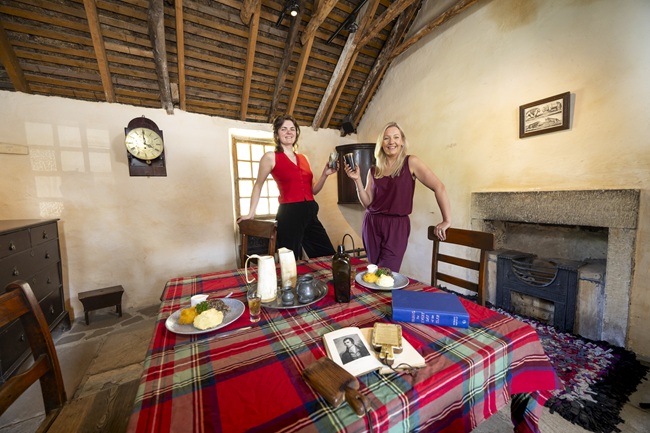
Professor Pauline Mackay, Director of the Centre for Robert Burns Studies (CRBS), University of Glasgow, who led the research project, said: “Those that took part in the first Burns Suppers 225 years ago would recognise many of the elements of today’s worldwide celebrations. Our research shows that from Ayrshire to Antarctica, those taking part value many of the key elements of the tradition but have also adapted it to reflect local customs and communities.
“The Burns Supper is one of Scotland’s greatest cultural exports and one of the most successful examples of living heritage anywhere in the world. These findings provide strong evidence that the tradition is actively practised, adapted and passed between generations worldwide. That is exactly what living heritage is, and why we believe the Burns Supper deserves to be included in the UK's Inventory of Living Heritage.”
Chris Waddell, the National Trust for Scotland’s Learning Manager at Robert Burns Birthplace Museum, said: “It feels very fitting to celebrate the 225th anniversary of the first Burns Supper in the place where it all began. Burns Cottage is where Robert Burns was born in 1759 and where, in July 1801, his friends and admirers gathered to honour his memory without knowing they were creating a tradition that would endure for centuries.
“As custodians of Burns Cottage and the wider Robert Burns Birthplace Museum, we are privileged to care for the place at the heart of this story. Seeing celebrations mapped from every continent reminds us that what began in Alloway has grown into a worldwide tradition that continues to bring people together through poetry, music, food and friendship.”
Dr Cleo O’Callaghan Yeoman, Research Associate on the project, said: “The Burns Supper has never stood still. Our research and new interactive map shows, that 26 years into the 21st century, it continues to be adapted by communities across the globe in ways that celebrate both the local and the international impact of Scottish literary culture.”
It is hoped that the crowdsourced interactive map of Burns Suppers will provide evidence that the tradition should be recognised on the UK’s Inventory of Living Heritage.
Jacob O'Sullivan of Intangible Cultural Heritage Scotland, which helps to promote and safeguard Scotland’s traditional arts and Intangible Cultural Heritage (ICH), often described as our “Living Heritage”, said: “The Burns Supper is a unique expression of intangible cultural heritage in Scotland, which is celebrated worldwide. This practice brings people together, encouraging inter-cultural and inter-generational dialogue. This new landmark interactive map allows us to explore our commonalities and is an important example of how living heritage can be safeguarding and promoted through international collaboration.”
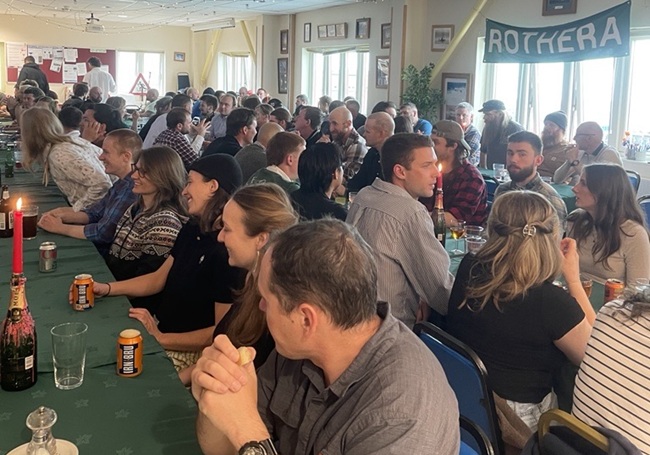
The map currently features 1059 Burns Suppers. Of these, 450 were submitted as survey responses and 609 were gathered from public sources. The countries outside of the UK that hosted the most suppers were the United States of America, Canada and Australia linked to many of Scotland’s diaspora around the world.
Of the 484 suppers that supplied a frequency, 400 (83%) were annual events and the most popular types of host were hotel, bar, or restaurant (280), Scottish or Celtic society (141) and Community association or social club (98).
Information about drinks was provided for 695 suppers and Scottish Whisky (also known as Scotch) was the drink most served, being offered at 616 (89%) Burns Suppers. Wine was the next most popular drink, being offered at 380 (55%) suppers.
A total of 792 suppers feature information about food choices, and haggis, neeps, and tatties appeared on the menus of 648 (82%) suppers, with the next most popular dish being Scottish soups (including Cock-a-Leekie, Scotch Broth, and Cullen Skink) (299 (38%)). Responses to the global survey also revealed innovative culinary fusions that play on tradition, with haggis wonton and haggis poutine featuring, for example, on several menus in Canada.
The most popular oral element was Address to a Haggis, which was performed at 683 (93%) of suppers, with the next most popular being Selkirk Grace (352 (48%)), based on 734 suppers that supplied information about toasts.
Information about songs and poems was supplied for 522 suppers, and the most popular song was Auld Lang Syne, performed at 344 (66%) of suppers. 653 suppers included information about entertainment and Reading of Burns' poetry was the type of entertainment enjoyed at the most suppers (485 (74%)). Of the 678 suppers that featured information about music performed, the most popular type was bagpipes, performed at 528 (78%) suppers. 570 suppers featured information about dance, and 215 (38%) of these featured a ceilidh. In total, 155 (15%) suppers raised funds for charities.
The latest phase of the project is made possible by the Shaw Bequest, a significant philanthropic gift from American benefactors Susan Shaw and her late husband Frank of Atlanta, Georgia.
CRBS are encouraging submissions to the map on an ongoing basis, as a means of recording, promoting and safeguarding this living heritage. The global survey remains open and the map will be updated biannually in March and August each year to record new Burns Suppers.
The Centre for Robert Burns Studies (CRBS)
The Centre for Robert Burns Studies (CRBS) is the world’s leading centre for the study of Scotland’s national poet Robert Burns (1759-96), his contexts and associated literatures. Establishing itself as a cross-disciplinary area of research excellence which has attracted major financial and intellectual investment, CRBS has brought together the largest concentration of Burns experts in the world and their work has impact on a global scale. In February 2024, CRBS was awarded the Queen’s Anniversary Prize for Higher Education for the centre’s world leading research and scholarship on Scotland’s national poet.
Inventory of Living Heritage
The ‘Inventory of Living Heritage’ was launched in December 2025 by the Department for Culture, Media and Sport. Communities were invited to submit beloved traditions for recognition as UK living heritage. It is hoped that the crowdsourced interactive map of Burns Suppers will provide crucial evidence towards the tradition being listed on this new inventory.
First published: 16 July 2026