

Evidence from five decades of graduates confirms Humanities skills power careers and lifelong impact
Published: 16 March 2026
New research has been released demonstrating the long‑term value of Humanities degrees.
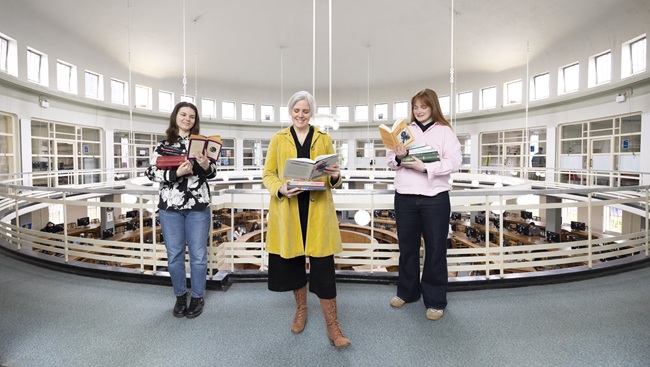
The University of Glasgow has released new research demonstrating the long‑term value of Humanities degrees at a time when these subjects face increasing scrutiny in political and media debate.
The Humanities World-Changers Report, drawing on alumni insights spanning more than 50 years, shows that University of Glasgow graduates of Humanities subjects enjoy sustained career progression, high levels of personal fulfilment and have a significant impact on society.
Yet, the assumption persists that there is a disconnect between skills and knowledge learned in Humanities programmes not being transferrable to the jobs markets. The report says this is in part due to existing metrics for analysing the value of degrees – relied on by the government, media and Higher Education – such as the Graduate Outcomes Survey which has a very narrow focus of measuring employment just 15 months after graduation and often fails to capture the longer term nature of Humanities career paths or the contribution its graduates make to society more broadly.
According to the Glasgow report, 90% of Humanities alumni now hold mid‑level, senior or executive roles and 88.1% report an upward career trajectory. Graduates have gone on to careers across 24 distinct sectors, including public service, Higher Education, the creative industries, technology, finance, heritage and the third sector, demonstrating the versatility and adaptability of Humanities skills in an evolving job market shaped by AI and social change.
Jodie Pike, a 4th year student in History & Ancient History and author of the Humanities World-Changers Report, said: “As a student, this report has been incredibly powerful and illuminating for me. It has allowed me to see the true value of my degree and the skills it has taught me. It has also reassured me as I prepare to enter the job market that the versatile human-centred skills that the Humanities have instilled in me will continue to be valuable throughout the AI era. Being able to reflect on the longer-term impact of my degree has shown me the enduring importance and benefits of my studies.”
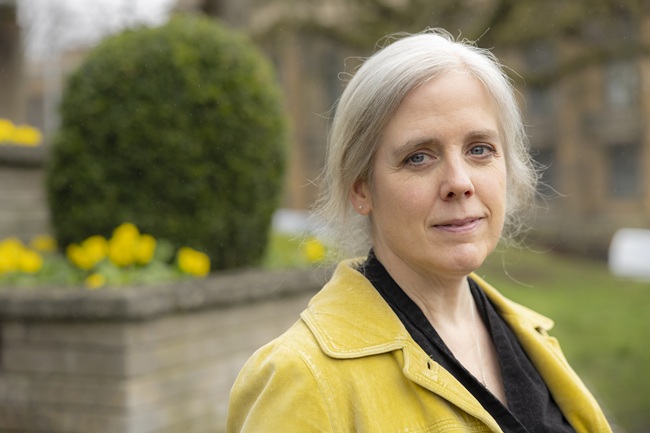
Dr Tanya Cheadle, Lecturer in Gender History and Director of Learning, Teaching and Student Experience at the School of Humanities | Sgoil nan Daonnachdan, as well as, Project Lead for the Humanities World Changers Report said: “Our report adds to a growing body of research which makes clear that Humanities degrees produce graduates ready for the realities of a rapidly changing global economy. In a world that demands flexibility, cross‑sector adaptability and sharp analytical thinking, the critical, research and communication skills taught in Humanities programmes stand out as some of the most sought‑after by employers.”
Professor Ian Forrest, Head of the School of Humanities | Sgoil nan Daonnachdan, said: “A Humanities degree is for life (in every sense!) and we wanted to know more about how our students had fared across the years and decades. The Humanities World Changers Report, written by current student Jodie Pike, tells that rich and fascinating story. Subjects taught in the School of Humanities – Archaeology, Celtic and Gaelic, Classics, History, Information Studies and Philosophy – have roots in the curriculum of 1451 and today help students find their place in a changing world and prepare them to lead society’s responses to global challenges.”
While national data may understate early career outcomes for Humanities graduates, Glasgow’s alumni evidence shows that the critical thinking, analytical abilities and ethical awareness developed through Humanities study become increasingly valuable as graduates progress through their careers.
The findings in the Glasgow report are also reflected globally with Humanities graduates taking on prominent roles in various high-profile fields. For example, since the 18th century, at least 27 UK Prime Ministers have held Humanities degrees, as have two of Scotland’s seven First Ministers, including the late Donald Dewar, a University of Glasgow History alumnus who first held the post of Scottish first minister and is widely regarded as the “Father of the Nation”.
This is also true beyond Scotland and the UK – French President Emmanuel Macron studied Philosophy; Mark Rutte, NATO’s current Secretary General, is a History graduate and acclaimed actor Tom Hiddleston holds a Classics degree.
The Glasgow report further shows that 91.7% of Glasgow alumni report high levels of personal fulfilment in their careers and 86.9% feel their degree has helped them make a full contribution to society, enabling them to understand diverse perspectives empowering them to be active and thoughtful global citizens.
“My degree has never been questioned or made to feel of less value by an employer. Early in my career when I was just trying to get a foot in the door and jump from fixed-term contract to fixed-term contract, I might’ve questioned the relevance of my degree to my work. However, now that I’m in my permanent “career” position, I am genuinely thankful every week that I did a Humanities degree due to the research, analysis and information presentation skills that it has given me.” - Anonymous
While 77.4% of respondents report that skills developed by studying Humanities subjects including written and verbal communication skills, critical thinking and problem-solving skills, analytical skills, independent thinking, curiosity, open-mindedness and self-reflection are not only transferrable to their working lives but highly prized by employers in many diverse sectors.
The Humanities World-Changers Report will be formally launched today (Monday 16 March 2026) at the School of Humanities | Sgoil nan Daonnachdan ‘Humanities World-Changers’ event.
The event will showcase the valuable findings of the report through student exhibitions, career focussed panels, a networking lunch and speeches by the head of the School of Humanities Professor Ian Forrest, Professor Andy Schofield, Principal and Vice-Chancellor, University of Glasgow and Humanities alumni Ewen MacAskill.
Graduating with a MA in History and Politics from Glasgow in 1973, renowned political journalist Ewen MacAskill has worked for The Guardian as one of the paper’s top political journalists from 1996-2018. Collecting a Pulitzer Prize and an Emmy for his work, MacAskill demonstrates the value of a Humanities degree not only through his impressive career progression but also through the incremental impact his work has had on global society.
Humanities World-Changers Report
The full report, can be found here: Humanities World-Changers Report Final
School of Humanities | Sgoil nan Daonnachdan
The School of Humanities | Sgoil nan Daonnachdan, which sits within the College of Arts & Humanities at the University of Glasgow, has around 140 academic and professional staff with 1500 undergraduate students, 250 taught postgraduates, over 100 postgraduate researchers in addition is also home to a number of postdoctoral researchers, visiting staff and students from all over the world.
There are six subject areas in the School of Humanities | Sgoil nan Daonnachdan:
- Archaeology
- Ceiltis is Gàidhlig/Celtic & Gaelic
- Classics
- History
- Information Studies
- Philosophy
Learn more here:
First published: 16 March 2026