

UofG engineers and ESA demonstrate remote medicine breakthrough
Published: 22 January 2026
A new collaboration between University of Glasgow engineers and the European Space Agency (ESA) has showcased the potential of nomadic mobile communications networks to enable remote healthcare.
A new collaboration between University of Glasgow engineers and the European Space Agency (ESA) has showcased the potential of nomadic mobile communications networks to enable remote healthcare.
The team used a pop-up 5G network developed by ESA’s 5G REMOTE project in a demonstration which linked healthcare professionals to simulated patients hundreds of miles away.
This experiment showcased the benefits of satellite communications to support remote 5G deployments for telemedicine, enabling healthcare professionals to engage and even physically interact with patients using robot arms.
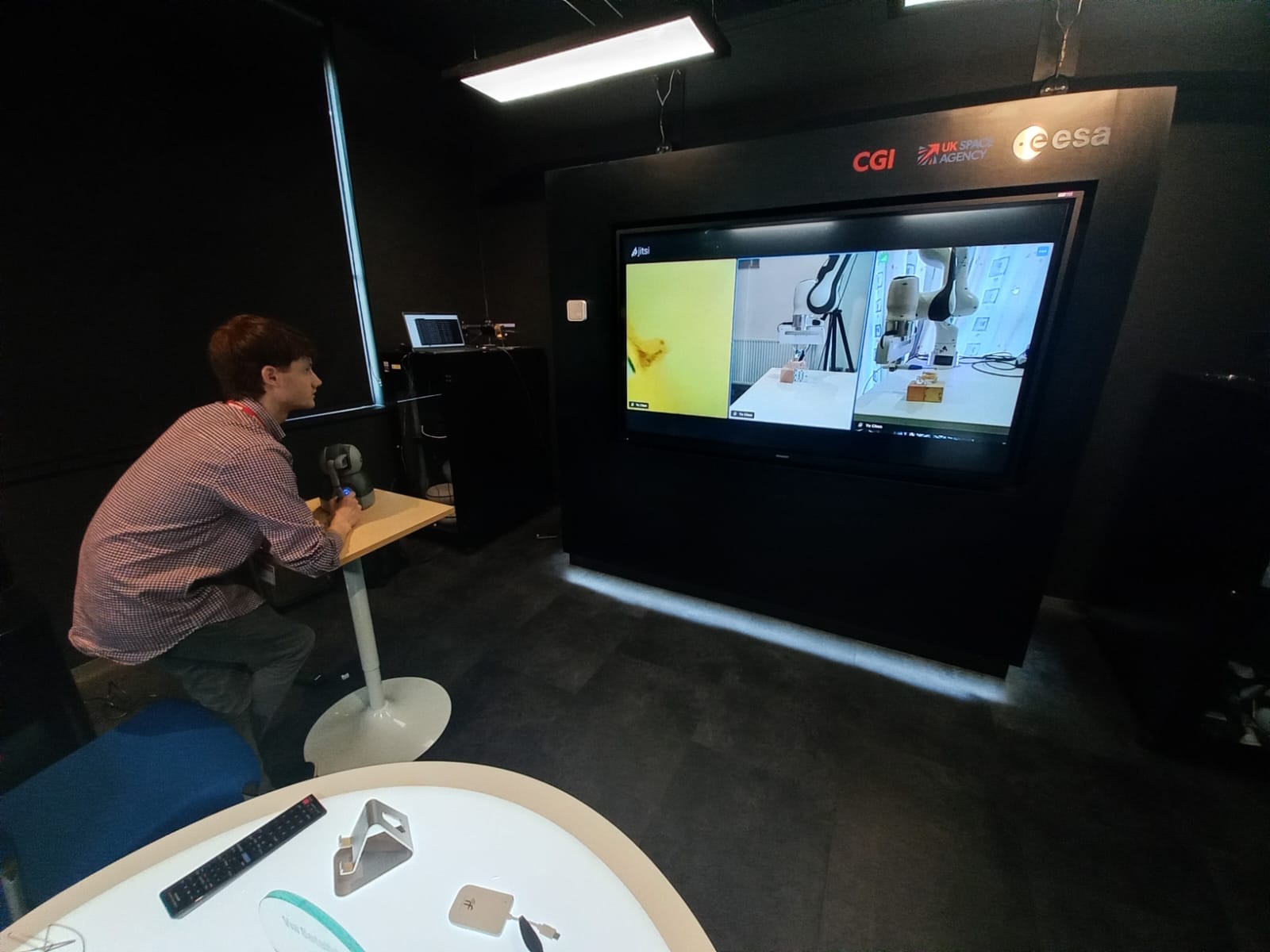
Consulting dentist performing the remote dental inspection from the 5G/6G Hub in ESA’s ECSAT. Image credit: European Space Agency
The test demonstrated a complete, end-to-end remote patient experience. The haptic controller located in the 5G/6G Hub at ESA’s European Centre for Space Applications and Telecommunications (ECSAT) site at the Harwell Science and Innovation Campus connected through a OneWeb satellite link to the University of Glasgow’s 5G pop-up network.
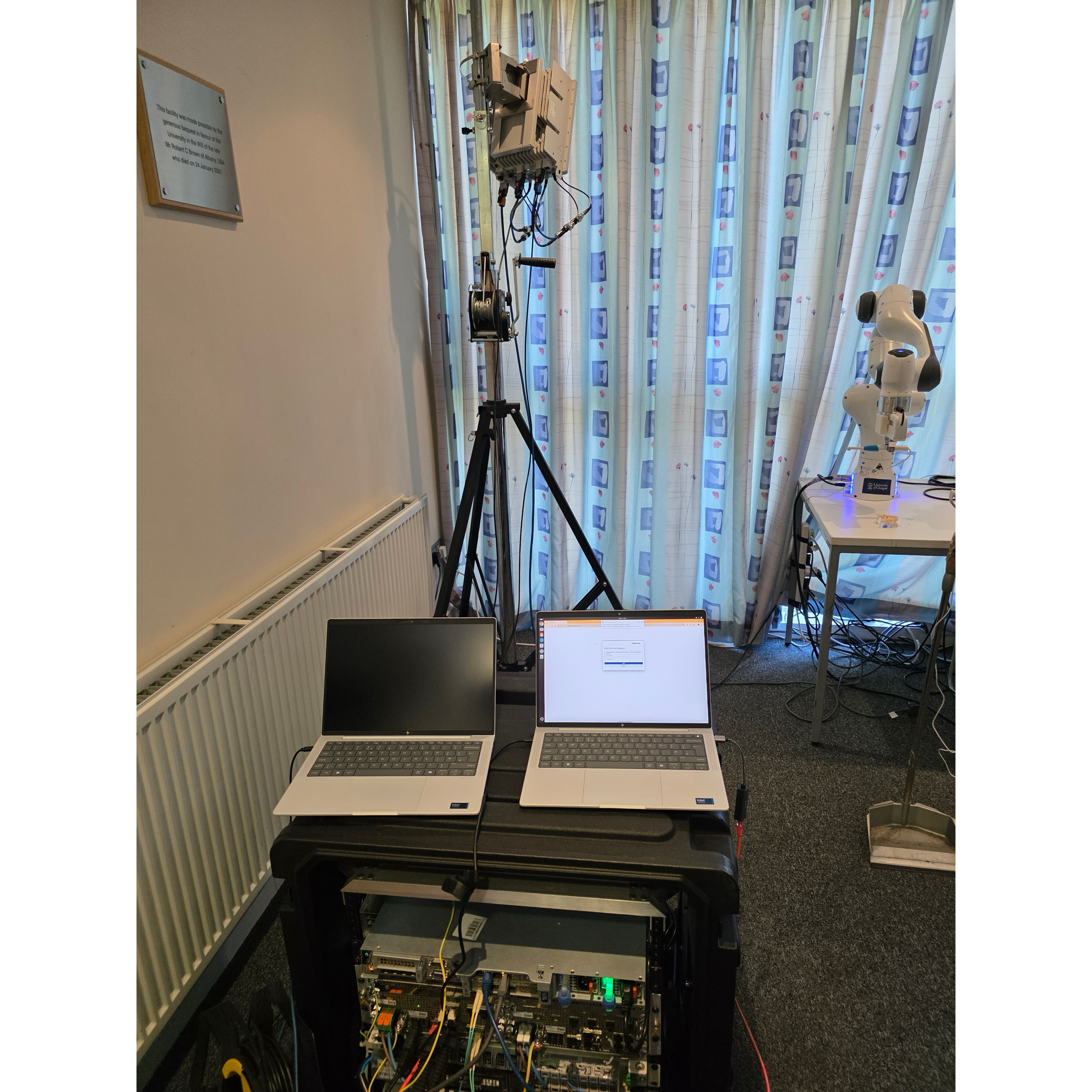
This pop-up network enabled the team to connect to and manipulate a robotic arm located at the University of Glasgow’s SCENE facility at Loch Lomond, using a 5G edge breakout to optimise user plane traffic.
Through this remotely controlled robotic arm, the doctor at ESA ECSAT was able to perform a dental examination of the simulated patient at Loch Lomond. The Space for 5G/6G team then dispatched a drone to deliver medication to the patient, all the while monitoring and tracking its payload over a 5G-enabled Long-Range Wide Area Network (LoRaWAN).
This seamless experience, which blends terrestrial and non-terrestrial networks with robotic systems and drones while leveraging edge computing capabilities, highlights the transformative potential of integrated terrestrial and non-terrestrial connectivity for secluded areas.
Where terrestrial networks are not economically viable or practical due to geographical or demographic constraints, hybrid 5G and satellite-enabled connectivity can bridge the gap and enable advanced telemedicine services. By integrating terrestrial and non-terrestrial networks, new and faster communications standards being developed by industry will help to enable stable and continuous connections worldwide.
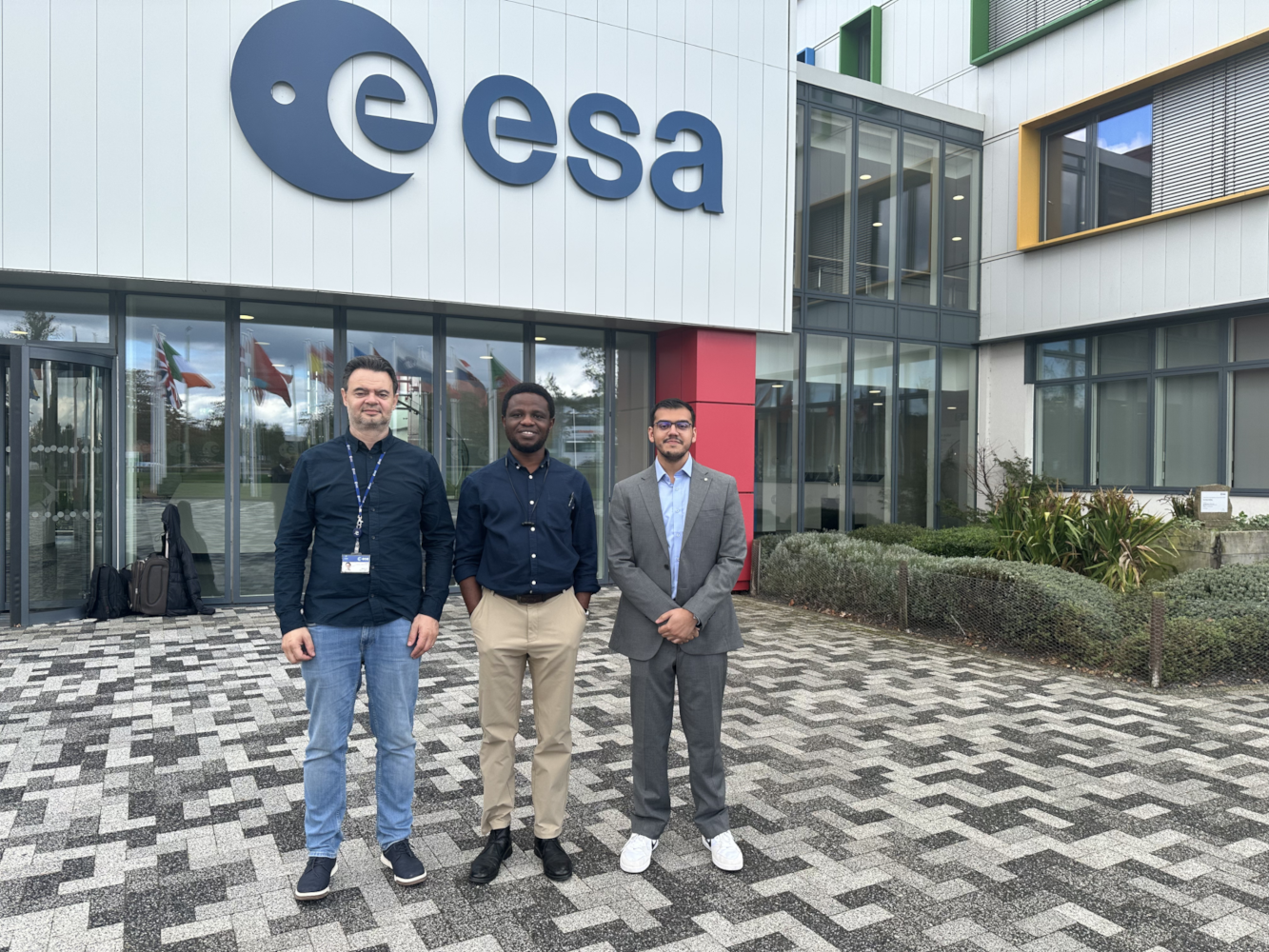
The test team at ESA’s ECSAT in Harwell. Image credit: European Space Agency
The University of Glasgow’s Dr Yusuf Sambo was the project’s principal investigator, alongside Dr Olaoluwa Popoola, Dr Shuja Ansari and Professor Muhammad Imran.
The project builds on technology developed by the team during the first wave of projects developed by the Scotland 5G Centre, the Scottish Government-funded the national centre for accelerating the deployment and adoption of 5G connectivity in Scotland’s Industry and Public Sectors.
Professor Muhammad Imran, head of the University of Glasgow’s James Watt School of Engineering, said: “Access to healthcare should not depend on postcode or proximity to a major hospital. Our team’s work with ESA demonstrates a practical pathway to bring specialist assessment and timely intervention closer to remote and rural communities.
“This was enabled by using integrated 5G and satellite connectivity (terrestrial and non—terrestrial networks) to support real—time interaction, remote examination and delivery of essentials when every minute matters.”
Leveraging the potential of ubiquitous signal coverage afforded by integrated terrestrial and non-terrestrial networks, the 5G REMOTE project combines satellite connectivity with a portable 5G pop-up network that can be rapidly deployed in remote locations where only satellite coverage can reach.
This hybrid solution supports critical services, such as telemedicine, by enabling new robotic and unmanned solutions that extend the reach and effectiveness of healthcare providers. For emergency situations, this technology can help provide critical care, even in geographically isolated and otherwise hard-to-reach locations. The technology can also reduce cost by removing transportation from the equation.
“This kind of reliable and flexible connectivity has potentially transformative applications for improving the wellbeing of millions of people,” said Antonio Franchi, Head of ESA’s Space for 5G/6G & Sustainable Connectivity programme. “We are combining satellite communications technology with new advances in mobile signals and robotics to unlock the full power of telemedicine and help to overcome the digital divide.”
This simulation was conducted in a partnership between ESA Connectivity and Secure Communications, and the Glasgow Next—Generation (GXG) testbed at the University of Glasgow.
The experiment was funded under ESA’s Space for 5G/6G & Sustainable Connectivity programme within the Advanced Research in Telecommunications Systems (ARTES) programme, with support from the UK Space Agency.
First published: 22 January 2026