

How Scotland’s bard influenced a nation across the ocean
Published: 16 January 2026
Exploring how Robert Burns’s transatlantic influence helped shape American ideals of equality and democracy.
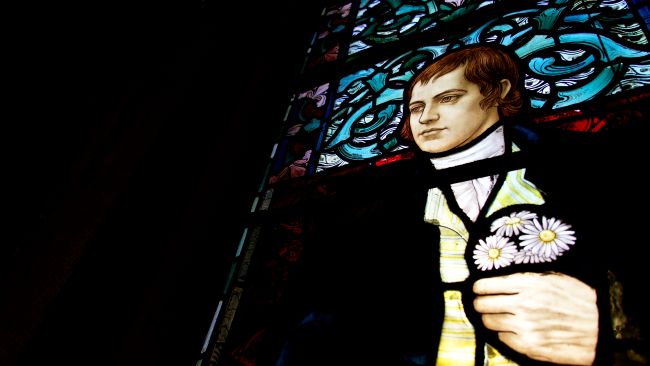
Scotland’s national bard Robert Burns never crossed the Atlantic but his words did.
They crossed the ocean in the hands of immigrants and reformers and arrived on the shores of America. Then they found their way into the speeches of leading Americans inspired by Burns’s writing.
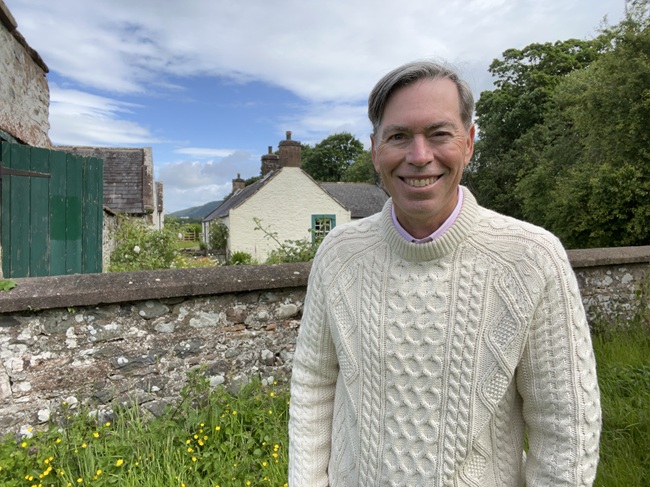
That journey and its resonance will be explored by leading Scots American Ian Houston at the Craig Sharp Memorial Lecture at the University of Glasgow’s Centre for Robert Burns Studies conference on Saturday 17 January.
It comes as July 2026 marks the 250th anniversary of the founding of the United States of America and the 230th anniversary of the death of Robert Burns.
In his lecture, “Burns Across the Atlantic: A Living Bridge”, Mr Houston argues that the most consequential crossings are not measured in miles but in courage and conscience and that Burns made precisely that crossing for America.
Speaking ahead of his talk, Mr Houston said: “Burns crossed no ocean in life. But his words did, his spirit did and they still do. They open doors and invite dialogue, reminding us that the most important crossings bring us closer to one another.”
In 1759, American founding father Benjamin Franklin visited Scotland and engaged with the great minds of the Scottish Enlightenment including the University of Glasgow’s Adam Smith, who he met on several occasions on visits to Britain. In that same year Robert Burns was born in Alloway.
Mr Houston said while Franklin and Burns never meet, they “both gave voice - each in his own register - to a moral vision grounded in liberty, dignity and the worth of the common person. They were shaped by the same Scottish Enlightenment air, breathing parallel truths on opposite sides of the Atlantic.
“Burns, in particular, did not need to be explained to America. He was already intelligible there. Burns honoured ordinary labour, moral equality, self-education and human dignity without rank.”
The first American editions of Burns's Poems, Chiefly in the Scottish Dialect appeared in 1788 printed in Philadelphia and soon after in New York. Burns was being read, quoted, shared and discussed with remarkable speed.
That recognition extended beyond words. By the mid-19th century, Burns Suppers were being held in cities such as Boston, New York and Philadelphia. Statues and memorials to Burns stand in American cities as public declarations of shared values. You will find Burns in New York City’s Central Park; in Albany, New York; in Boston along The Fens; Chicago, Illinois; Milwaukee, Wisconsin; Denver, Colorado; St. Louis, Missouri; Pittsburgh, Pennsylvania and Cheyenne, Wyoming. While in Atlanta, Georgia there is a replica of Burns’s Cottage.
But Burns words and ideals was also in the speeches and writings of some of the most influential Americans including anti-slavery campaigner Frederick Douglass and the 16th US president Abraham Lincoln.
Mr Houston said: “The first Black American to gain a medical degree in the world, James McCune Smith who first came to this University (of Glasgow) in 1832, found in Burns a model of intellectual independence and self-education. America’s most famous abolitionist, former slave Frederick Douglass so admired Burns’s insistence on human dignity and moral equality that the first book he ever bought was of Burns poetry. US President Abraham Lincoln carried Burns’s words with him, returning to poems that affirmed humility, empathy and the worth of ordinary lives. And Frances Wright, reformer, enlightened social leader and transatlantic thinker drew from Burns a vision of social equality that challenged inherited power and imagined a more just republic when she came to America.
“Burns did not belong to one class, one movement, or one nation. He belonged to those willing to take seriously the idea that all human beings matter.”
Mr Houston will also argue that Burns is not a relic of the past but an opening door to modern Scotland’s creativity, research and values of fairness and shared humanity.
He added: “Burns was modern, provocative and unafraid. He wrote with boldness. He challenged power. He refused to accept that worth could be measured by title, land, or privilege. And that is precisely why Burns matters for contemporary Scotland.
“Through Burns, people around the world first encounter Scotland, not as stereotype, but as a place of intellect, empathy, humour and moral seriousness. Through Burns, Scotland speaks in a human voice, one that invites conversation rather than demands reverence.”
The first Burns Supper was held on 21 July 1801 – 225 years ago this year – to mark the 5th anniversary of the death of Robert Burns.
Today more than 9.5 million people around the world now celebrate Burns Night each year on 25 January, the poet’s birthday. While Burns’s Auld Lang Syne, traditionally sung to bid farewell to the old year at New Year's Eve celebrations, is today recognised as the second most sung song in the world, after “Happy Birthday to You” according to the Guinness World Records.
The Centre for Robert Burns Studies at the University of Glasgow hosts the largest group of Burns experts in the world who have helped to rewrite our understanding of the works and life of Scotland’s national bard. This work was recognised with the award of a Queen’s Anniversary Prize for Higher Education, now known as the Queen Elizabeth Prizes for Higher and Further Education. The Prize is the highest national Honour awarded in UK further and higher education and was presented to the University by Her Majesty The Queen at Buckingham Palace in February 2024.
About Ian Houston
Ian Houston has spent his career in Washington DC as an international non-profit leader and policy advocate focused on diplomatic engagement, global poverty alleviation, trade and intercultural dialogue. A former US Congressional staffer, he promotes business, university, charitable and cultural links between Scotland and the US. He serves as Honorary Professor and Lecturer at the University of the West of Scotland and the University of Aberdeen, advises Black Professionals Scotland and the Edinburgh Fringe Society and is a trustee of Robert Burns Ellisland Farm & Museum. He is a GlobalScot. The GlobalScot network offers a place for Scottish businesses, entrepreneurs and professionals to connect with some of the highly valuable connections and friends Scotland has around the world.
The Burns Supper at 225 Years: Scottish Tradition, Global Reinvention project
If you want to be part of history and are organising a Burns Supper or attending one, then we want to hear from you. The Centre for Robert Burns Studies at the University of Glasgow has launched a global campaign to create a new archive and map of Burns Suppers around the world. The new interactive map will be launched in July 2025 – to mark the 225th anniversary of the first Burns Supper held in Burns Cottage, Alloway.
It is hoped the new archive will feature poems and songs performed at Burns Suppers around the world as well as videos, photographs, recipes and clothing worn. To participate in our short survey follow this link: Burns Supper at 225 Survey.
Centre for Robert Burns Studies Conference
Date: Saturday 17 January 2026
Time: 09:30 - 16:00
Venue: University of Glasgow, Advanced Research Centre, 11 Chapel Lane
Ian Houston will give the Craig Sharp Memorial Lecture at the University of Glasgow's Centre for Robert Burns Studies Conference, hosted in collaboration with the National Trust for Scotland Robert Burns Birthplace Museum. This year, the conference theme is the Burns Supper: a global phenomenon that celebrates its 225th anniversary in 2026. Tickets available here - Centre for Robert Burns Studies Conference
First published: 16 January 2026