

Supercharging our immune cells could tackle cancer
Published: 12 January 2026
Supercharging immune cells could provide an effective way to tackle cancer, according to new research by scientists in Scotland
Supercharging immune cells could provide an effective way to tackle cancer, according to new research by scientists in Scotland.
The team at the Cancer Research UK Scotland Institute, at the University of Glasgow, studied how the immune system works and why it becomes “exhausted” by cancer. T cells, which are the immune system’s front line against disease, eventually become overcome by cancer allowing it to grow.
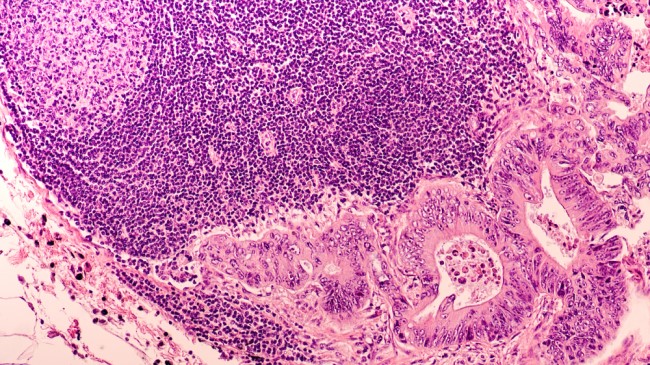
Their research, published in Cell Reports, has identified a potential way to “boost” T cells, a key defence against cancer.
Lead researcher Professor Victoria Cowling, of the Cancer Research UK Scotland Institute and the University of Glasgow, said: “T cells need to rapidly multiply and produce proteins to fight off infections. That requires a huge amount of energy.
“We’ve discovered that a little-known enzyme, called CMTR1, helps switch on the energy supply by changing how certain genes work.
“If we can find ways to boost this process, we could improve how the immune system responds to cancer which could be a game-changer in how we treat the disease.”
CMTR1 plays a vital role in energising T cells, acting as a switch to help the immune cells ramp up their energy production.
The team found that CMTR1 tweaks the instructions inside cells – known as RNA – so that the right versions of energy-related proteins are made.
These proteins help shape the mitochondria, which are like tiny batteries inside cells. With the right shape, mitochondria can produce more energy, helping T cells stay strong and active.
Without CMTR1, the mitochondria break apart and don’t work properly, leaving T cells weak and unable to fight off infections effectively. With CMTR1 present, T cells have more energy allowing them to proliferate and fight infection.
Next steps would be to identify new or existing treatments which increase CMTR1 to give exhausted T cells the power to tackle cancer cells.
Cancer Research UK Director of Research, Dr Catherine Elliott, said: “Scientific breakthroughs like this have the potential to transform how we see and, crucially, how we treat cancer.
“Our immune system is a key area of cancer research and scrutinising how it works can help create real-world impact for those affected by cancer.”
In Scotland, around 34,800 people are diagnosed with cancer each year, with around 16,400 people dying from the disease annually, so finding new ways to tackle the disease is vital.
The paper, ‘CMTR1 directs mitochondrial dynamics during T cell activation through epitranscriptomic regulation of splice isoforms’ is published in Cell Reports. The study was funded by Cancer Research UK, the European Research Council, the Medical Research Council, and the Wellcome Trust.
nquiries: ali.howard@glasgow.ac.uk or elizabeth.mcmeekin@glasgow.ac.uk
First published: 12 January 2026