

Pakistan Academy of Sciences fellowship for UofG engineer
Published: 5 January 2026
A researcher from the University of Glasgow’s James Watt School of Engineering has been elected to a prestigious fellowship by the Pakistan Academy of Sciences (PAS).
A researcher from the University of Glasgow’s James Watt School of Engineering has been elected to a prestigious fellowship by the Pakistan Academy of Sciences (PAS).
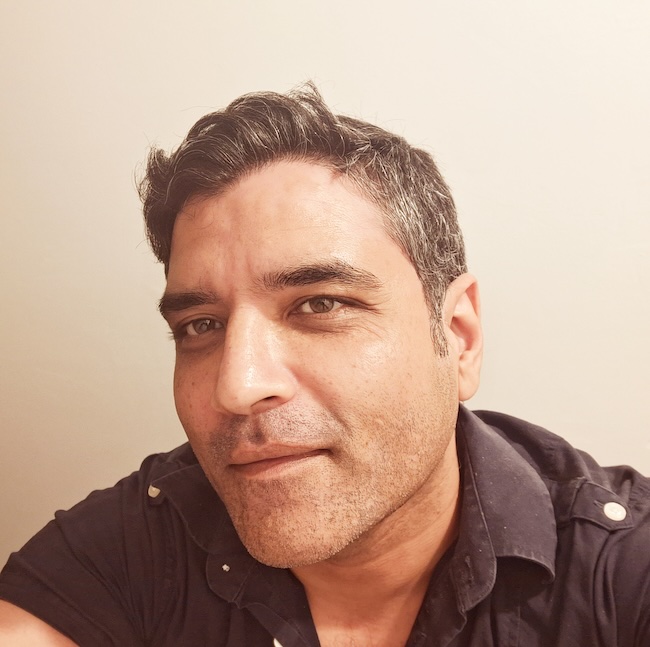
Dr Umer Zeeshan Ijaz, a Reader in Information Engineering at the School, was honoured by the PAS with a Foreign Fellowship last month. The PAS, established in 1953, is the supreme scientific authority in Pakistan.
The Fellowship is a prestigious lifelong honour bestowed upon eminent international scholars who have significantly contributed to scientific development in Pakistan or advanced global scientific knowledge. No more than three Foreign Fellows can be elected in a single year, and the total number is capped at 30 at any given time.
As a Foreign Fellow, Dr Ijaz will serve as a high-level scientific ambassador and a permanent consultative bridge for the Government of Pakistan. In this capacity, he will provide expert guidance on national policy, review scientific curricula, and facilitate strategic institutional linkages.
The Fellowship reflects Dr Ijaz’s achievements in developing analytical strategies to process, integrate, and visualise different sources of 'omics’ data (metagenomics, metatranscriptomics, metabolomics, and metaproteomics) in environmental and medical science to explore and harness the power of microbiome.
In partnership with colleagues at the Kauser Abdulla Malik (KAM) School of Life Sciences at Forman Christian College, Pakistan, he has codirected several studies that have driven economic impact by pioneering microbiota transplantation to combat Cotton Leaf Curl Disease, which could help save Pakistan’s cotton industry billions. The sustainable plant protection strategies, which are currently being field-tested, align with two UN Sustainable Development Goals: Zero Hunger and Life on Land.
With COMSATS University, Islamabad, Pakistan, he has directed several studies under Pakistan Microbiome Initiative to characterise the previously-understudied gut and oral microbiota of the Pakistani population, focusing on dietary, sociodemographic and lifestyle factors. Similarly, with the Poultry Research Institute, Government of Pakistan, and National Veterinary Laboratory (NVL), Pakistan Agricultural Research Council, Dr Ijaz took a leading role in understanding the microbial ecology of local and indigenous poultry breeds, improving commercial and backyard farming setups in Pakistan, and reducing antimicrobial resistance. By decoding poultry microbiota across contexts, he is enabling more resilient, efficient, and antibiotic-free production systems. This work supports both high-intensity global agriculture and vulnerable Low and Middle Income (LMIC) markets.
Dr Ijaz bridges East and West through leadership roles, notably as Chairperson of the Scottish Pakistani Association. His commitment began during his studies in South Korea, where he led the Foreign Students Association and organised earthquake relief efforts. Earlier, he served as Graduate Students Association President in Pakistan.
Dr Ijaz has supervised 235+ students and staff, including 49 completed PhDs, and serves on advisory committees for major Pakistani institutions. He actively supports research capacity-building through collaborations and mentorship. He is already a Fellow of the British Computing Society, the Royal Society of Biology, the Royal Society for Public Health, the Royal Statistical Society, the Royal Society of Arts, the Institute of Leadership, the Institute of Mathematics and its Applications, the British Ecological Society, and the Institute of Biomedical Science.
Dr Ijaz said: “I’m very grateful to the PAS for electing me to this prestigious Foreign Fellowship. It’s a great honour and an opportunity to return to my roots with a renewed sense of service.
“The Fellowship will help develop my research partnerships in Pakistan and around the world and enable further work to ensure that the 'invisible' intelligence of the microbial world becomes a tangible catalyst for the nation's economic and health sovereignty.”
First published: 5 January 2026