


Library Arts Associates Programme
The Arts & Humanities Library Associates programme is an innovative collaboration between the Library and the College of Arts & Humanities that has been running since 2024. The scheme offers an informal way for students in the College to learn about the inside work of the Library and also to provide invaluable feedback about how they use the Library's services and resources. Associates take part in interactive meetings with a range of Library staff as well as getting involved in other activities such as user testing.
As well as this, Associates have the opportunity to work on a mini project investigating any aspect of Library services, resources or collections that interests them. The outputs over the past couple of years have covered a wide range of formats including videos, posters, presentations and blog posts demonstrating a huge amount of creativity. Explore what the Associates came up with below!
The most recent group of the Associates had the opportunity to showcase their projects at an end of programme event attended by College and Library staff where prizes were also awarded for the best mini projects.
Applications to become an Associate open at the beginning of semester 1 each year and are sent to all UG and PGT students in the College of Arts & Humanities.
To find out more about the Associates programme get in touch with Morag Greig (morag.greig@glasgow.ac.uk).
Arts Associates Projects 2025/26

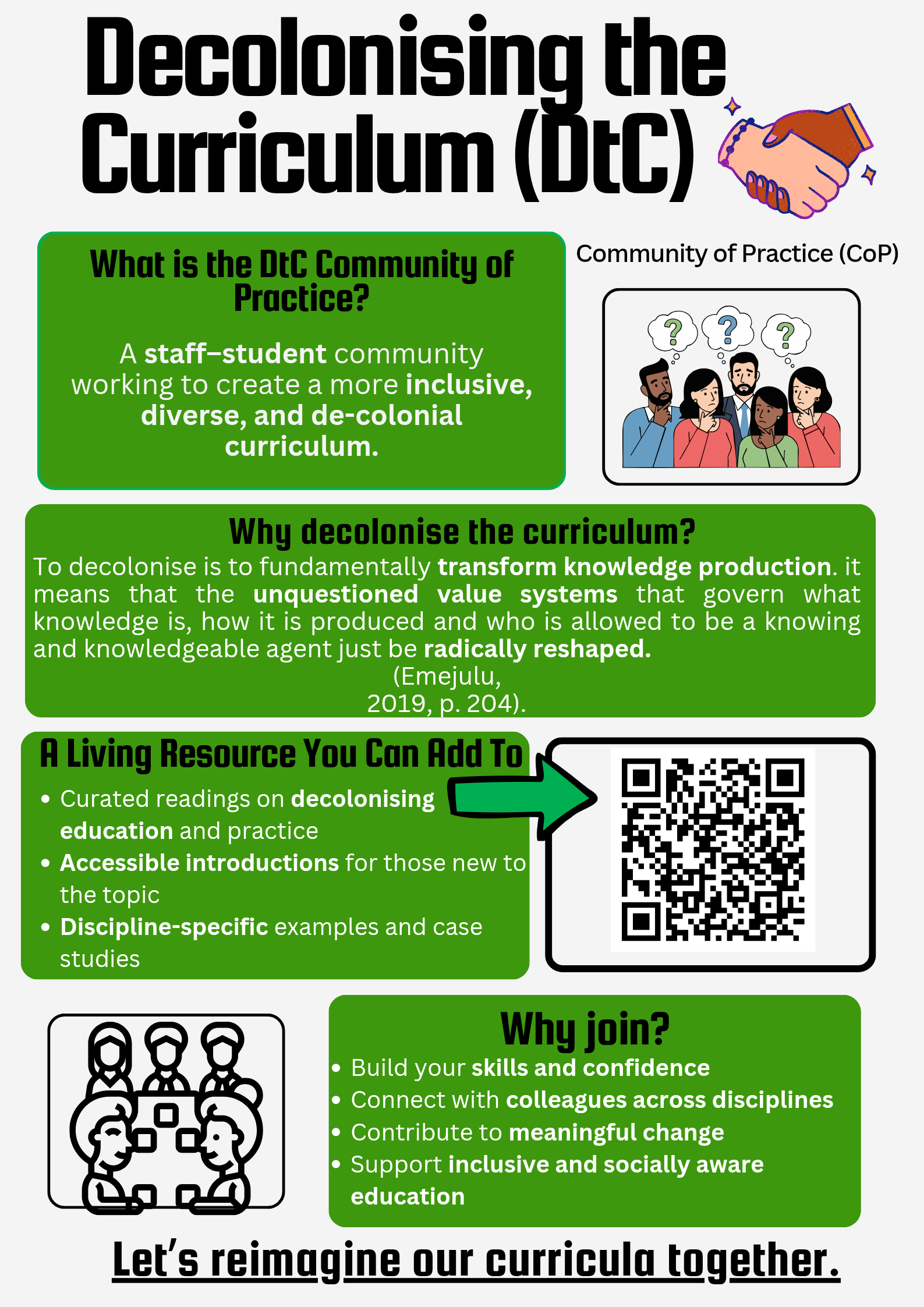
Decolonising the Curriculum (DtC)
Nafeesah Ali
This student-created poster promotes the University’s Decolonising the Curriculum Community of Practice, a staff–student community working towards a more inclusive, diverse and decolonial curriculum. It highlights a collection of resources covering decolonising education and practice, introductory material for those new to the topic, and discipline-specific examples and case studies. The poster also encourages staff and students to get involved to build their skills and confidence, connect with colleagues across disciplines and contribute to more inclusive and socially aware education.

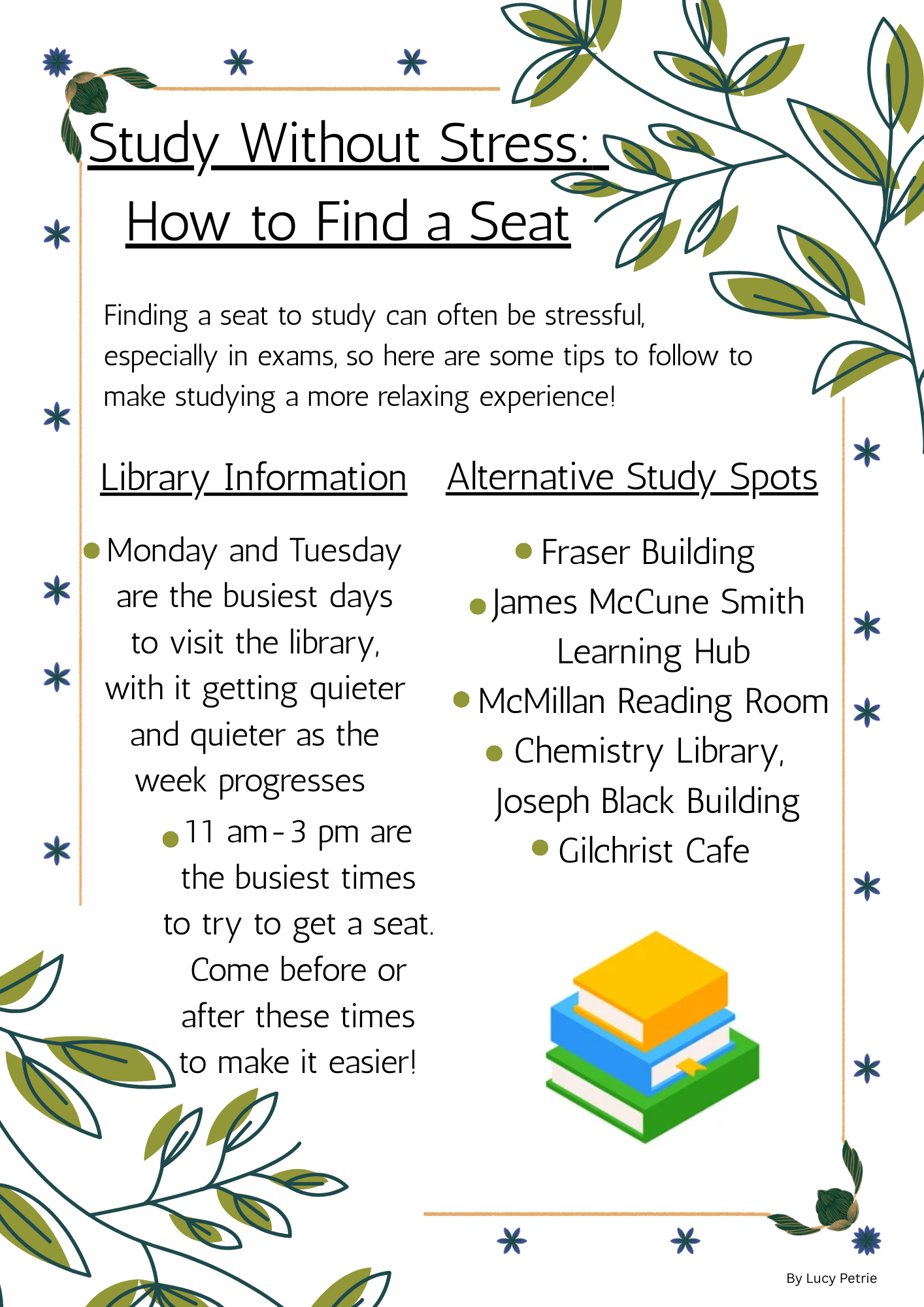
Study Without Stress: How to Find a Seat
Lucy Petrie
This student-created poster provides practical advice for finding study space during busy periods. It highlights that Monday and Tuesday are typically the busiest days in the Library, with 11am–3pm identified as the busiest time of day, and suggests visiting earlier or later where possible. It also recommends alternative study locations, including the Fraser Building, James McCune Smith Learning Hub, McMillan Reading Room, Chemistry Library in the Joseph Black Building, and Gilchrist Café.

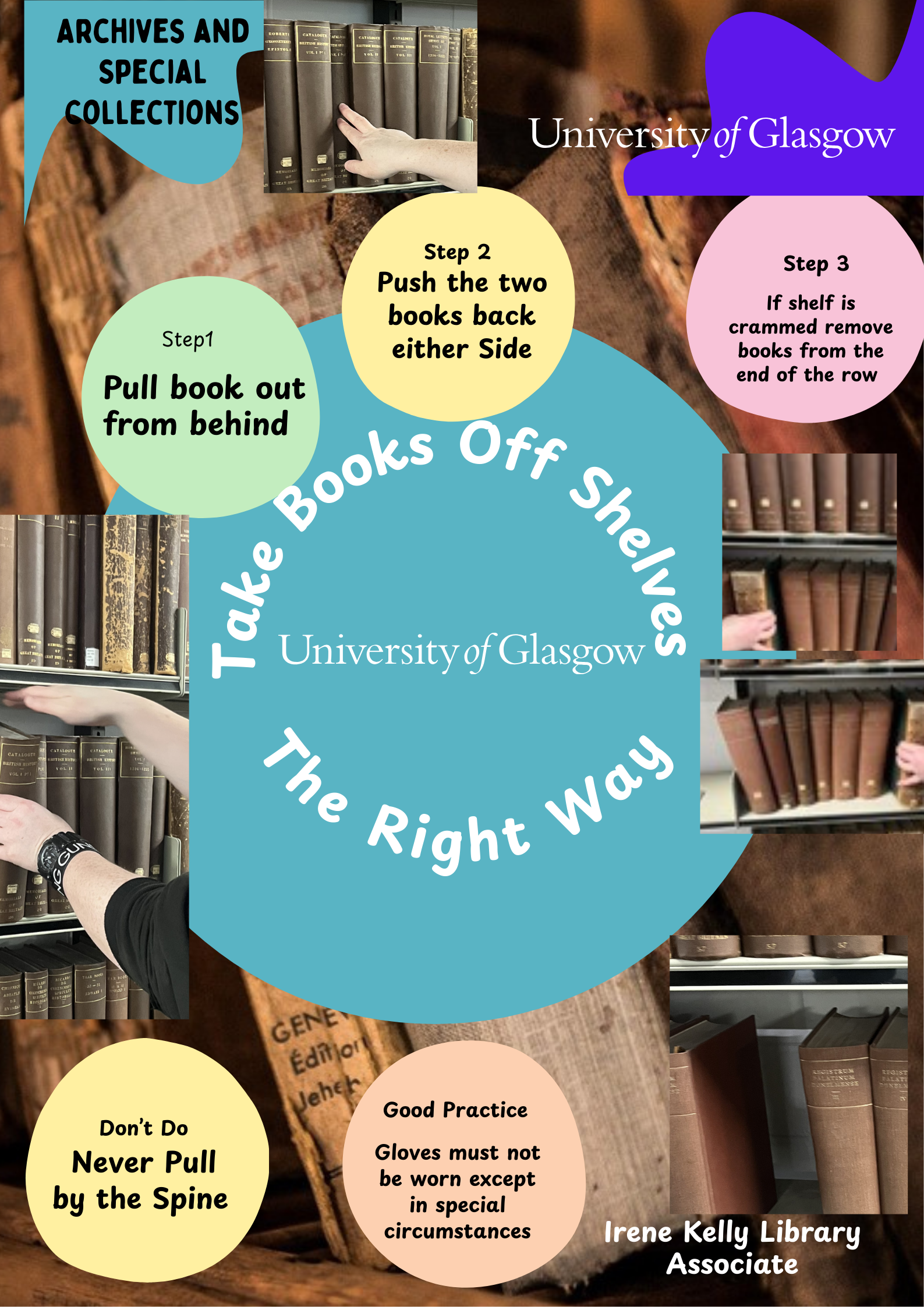
Taking Books Off Shelves the Right Way
Irene Kelly
This student-created poster provides guidance on how to safely remove books from shelves in Archives and Special Collections. It explains that books should be removed by pushing neighbouring volumes back to create space, rather than pulling directly on the spine. It also advises removing books from the end of a row where shelves are tightly packed, and highlights that gloves should only be worn in special circumstances. Photographs demonstrate the recommended handling techniques.

The University & Global Counter Culture
Aderemi Ayotunde Ojo
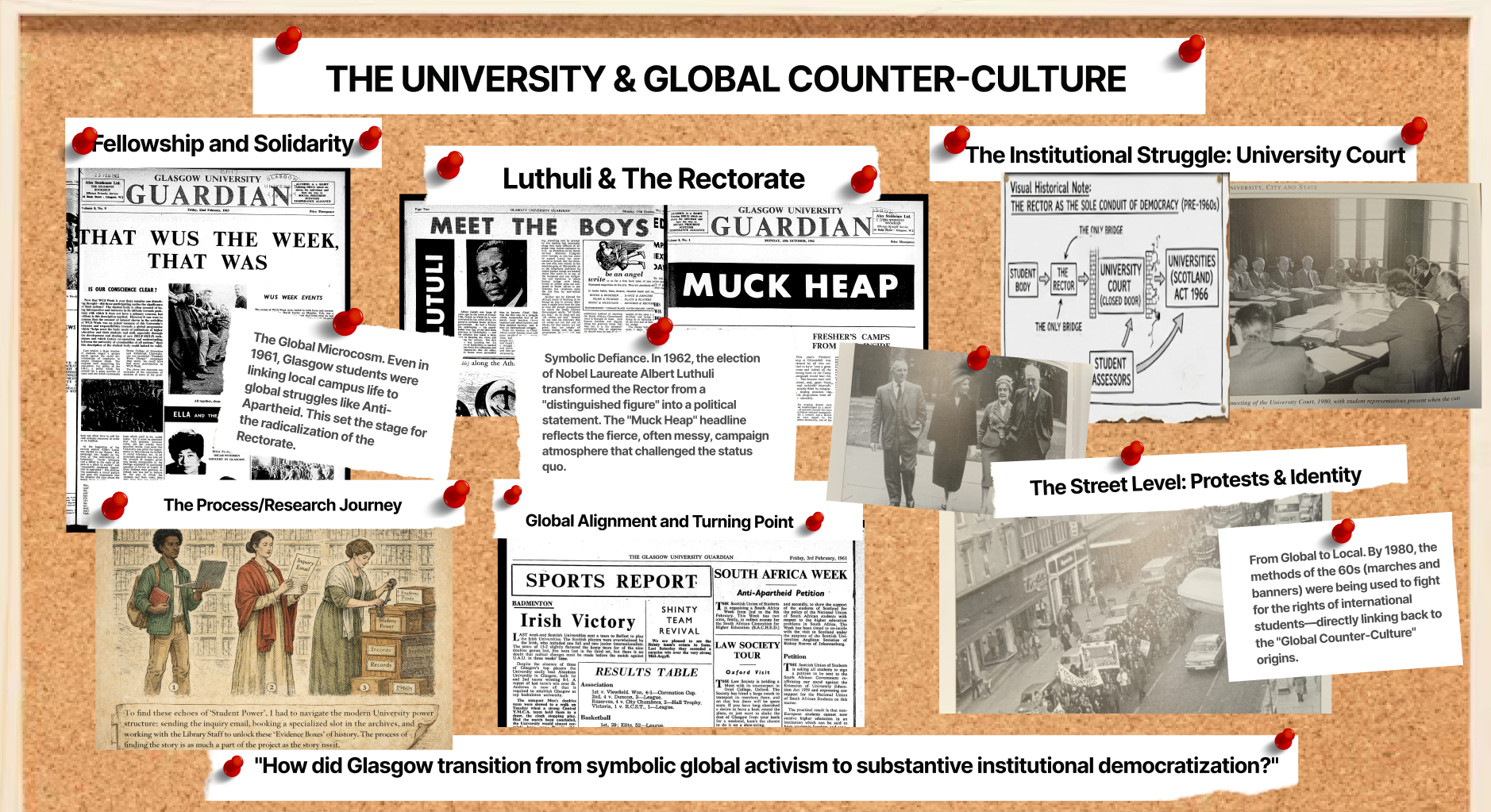
This student-created poster explores the relationship between global political movements, student activism and institutional change at the University of Glasgow. It looks at themes including fellowship and solidarity, the election of Nobel laureate Albert Luthuli as Rector, anti-apartheid activity, student representation within University governance, and later protest movements. Using historical photographs, newspaper material and archival sources, the project considers how international activism influenced campus politics and asks how Glasgow moved from symbolic global activism towards more substantive institutional democratisation.
Archives & Special Collections – Wearing Gloves While Handling Objects
Carolyn Anne Cusmano
The blog post explains that wearing gloves in Archives & Special Collections is not always the safest approach and should depend on the material being handled. Nitrile gloves are needed for particularly sensitive objects such as historic photographs with gelatin layers and books with metal bindings, where moisture and oils from the skin can cause lasting damage. For many other items, including most illuminated manuscripts, clean dry hands are preferable because gloves reduce touch sensitivity and can actually increase the risk of accidental damage. The key message is that handling requirements are decided case by case, and visitors should follow staff guidance on whether gloves are needed.

Manuscript Media
Emma Templeton
This student-created resource explores different materials used in historic manuscripts and how they should be cared for. It looks at pencil, chalk and pigments, and iron gall ink, explaining how each material was used, the types of deterioration or damage that can occur, and appropriate conservation and handling techniques. The resource also considers the effects of light, moisture, acidity and physical handling on historic paper and parchment, with practical guidance on preventing damage and preserving manuscript collections.
Archives & Special Collections Wikipedia project
Kit Hope, Shivangi Rani and Jessica Dodridg
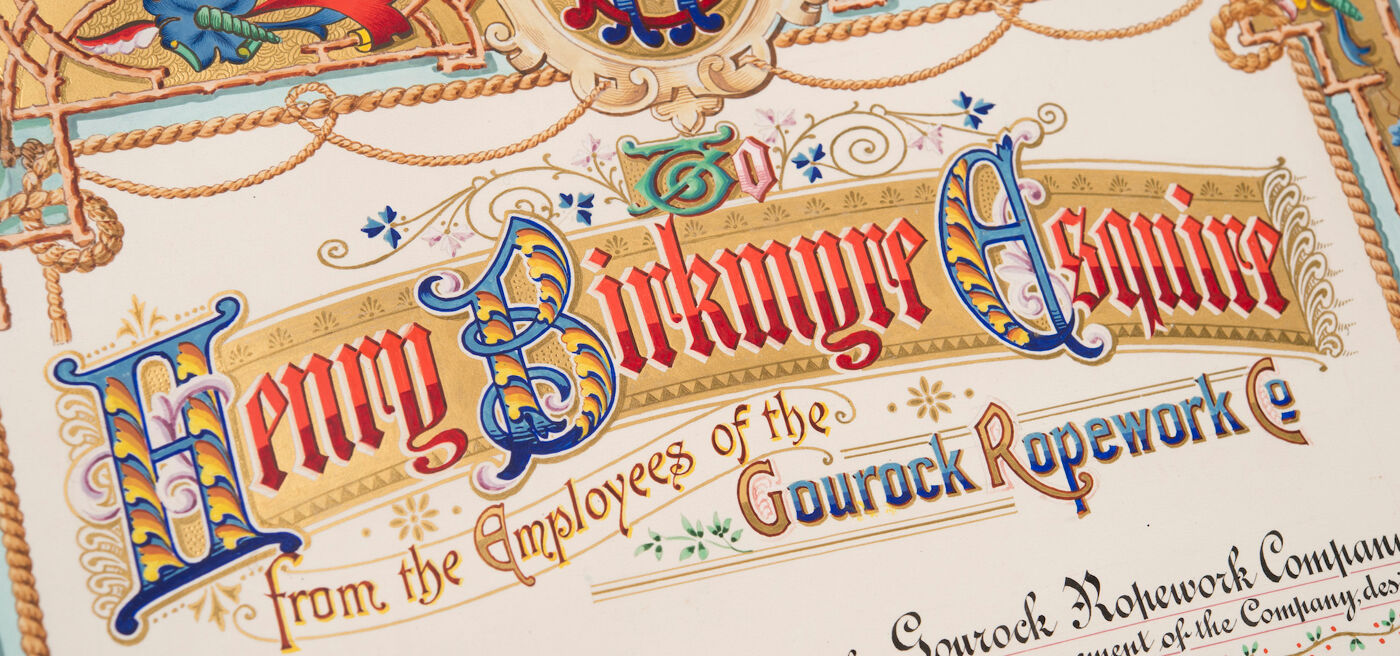
This student project reviewed and updated the Wikipedia page for the University of Glasgow’s Archives & Special Collections. The students identified areas for improvement including page organisation, the range and accuracy of information, tone, and use of sources. They added clearer information about the service’s history, enquiry and reading room services, and key collections including rare books, manuscripts, University Archives, Scottish Business Archives and Scottish Theatre Archives. The project also explored the importance of keeping widely used public information sources such as Wikipedia accurate and up to date, particularly as they may be a first point of contact for people discovering Archives & Special Collections online.
History of the University of Glasgow Reading List
Anna Lightowlers and Adam Clarke
This student project developed an expanded reading list exploring the history of the University of Glasgow as part of its 575th anniversary commemorations. Building on earlier work that identified gaps and absent voices in traditional accounts of the University’s history, the project broadened the bibliography to include more recent scholarship and perspectives from students and marginalised groups. It also considered how key works from the reading list could be promoted more widely through displays, posters, QR codes and a dedicated selection of recommended reading, making the University’s history more accessible to students, staff and the wider community.

Library Timeline
Alyssa Huskey, Clare Maren McElhaney, Megan Steketee, Katie Steketee and Chloe Newton
Develop prototypes to update and refresh the University of Glasgow timeline available at Glasgow University Library Timeline
Two prototype timelines were created:
Staff in Archives and Special Collections are planning to make the timeline publicly available later this year.

Accessibility Handbook
Elektra Sorokowski
This student project produced an accessibility handbook for the University of Glasgow Library. It brings together information about accessing the Library, accessible facilities and accommodations, emergency procedures, services available to disabled students, and the Assistive Technology Centre. It also provides contact details and links to further accessibility information.
UofG Library digital glow-up
Yoana Yavasheva
Find out why the University of Glasgow Library is moving to a new library management system. Arts Library Associate Yoana Yavasheva interviews George Macgregor, Assistant Director (Digital Library) to learn more about the benefits. The new system will be launched in July 2026 and will replace Library Search.
Book Opening Angles
Harry Cobb
This video shows how to handle books with restricted openings.