Wealth of Nations 250: What is the Wealth of Nations?
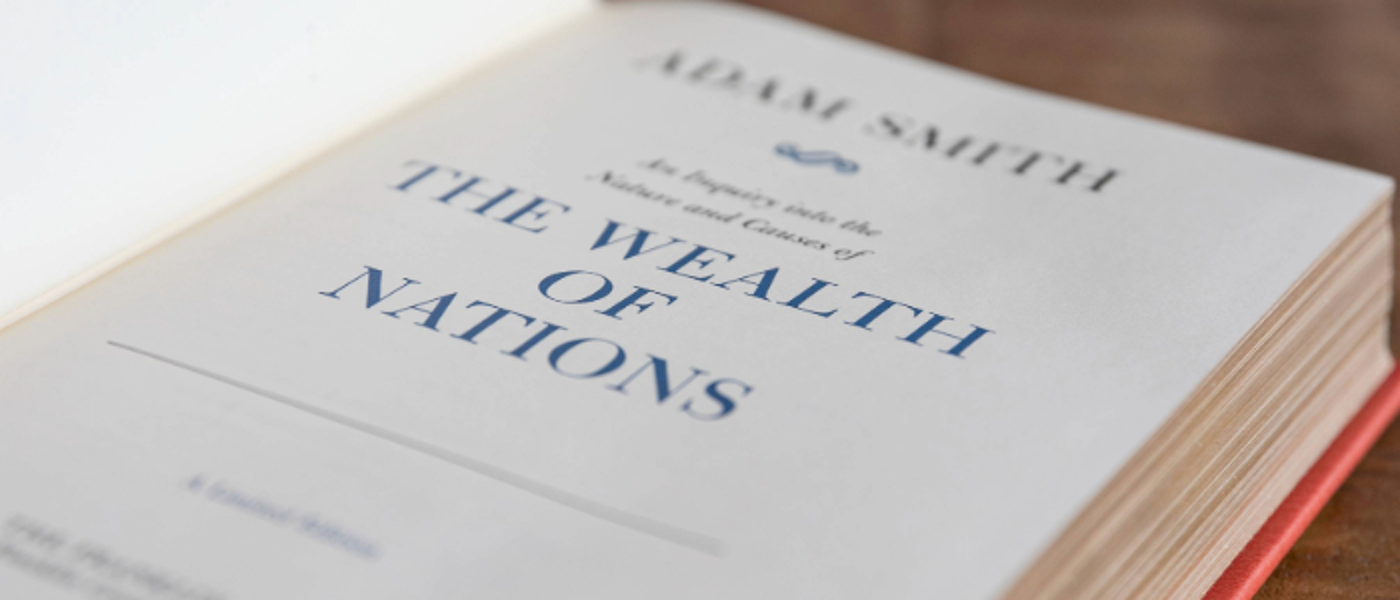
Adam Smith’s An Inquiry into the Nature and Causes of the Wealth of Nations – often known as ‘The Wealth of Nations’ – is Smith’s second and arguably most famous book. Written over the course of a decade, many of the ideas in his book were developed during his time when professor at the University of Glasgow and appear in his lecture notes from teaching here
Made up of 5 ‘books’ over 1000 pages, the Wealth of Nation is a weighty tome that at the time presenting a particular way of understanding and thinking about what wealth is, how wealth is accumulated and why some countries become more wealthy than others. In many ways this presented as a historical analysis from which the discipline of ‘Political Economy’ was born. However, his perspectives and ideas were transformational in making people think differently about these topics and this has led to Smith also being called the founder of modern day economics.
While first published in 1776, Smith continued to update the book with what he called ’additions and corrections’ throughout his life with the 5th edition printed a year before he died. In part, this reflected the huge changes happening in the world at the time, including the American and French revolutions, the beginning of the industrial revolution and key inventions that transformed modern day life, from the steam engine to the flushing toilet! His ongoing scholarship, learning and willingness to reconsider his own work in light of the seismic events that were happening around him at the time show a recognition that economic thinking must first and foremost consider context and changing industrial practices while recognising the value of understanding the history of societies
The Wealth of Nations made Smith a powerful voice during his lifetime, with politicians and business leaders citing his book, and students of his ideas going on to shape the modern world as we know it, particularly the trade politics of the British Empire which underpinned the first wave of globalization from the mid-nineteenth century. Its popularity and influence has continued throughout history with Thomas Jefferson and Napoleon Bonaparte had a copy of The Wealth of Nations in their personal libraries, and Karl Marx and Mary Wollstonecraft critiquing Smith’s ideas. And in the more recent historical present we have seen leaders across the political spectrum such as Barack Obama, Ronald Reagan and Margaret Thatcher all alluding to Smith in relation to their economic and political reforms.
As Smith’s intellectual home, the University of Glasgow celebrates the ongoing relevance of the Wealth of Nations and how it continues to provide us with ways of understanding the pursuit, pleasures, and perils of wealth today. In doing so, we engage with a unique Glasgow spirit of critical curiosity that Smith himself would uphold as being central in how we think and work towards a better economy, society, and world.
Our celebrations for 2026 invite you to think though the Wealth of Nations via three themes - the Nature of Wealth, the Causes of Wealth and the Politics of Wealth - that hold as much relevance for contemporary society as they did during Smith’s lifetime.