


Opening doors – and keeping them open
A year into her donor-funded role as Widening Participation Transitions Officer, Alice Boyd is learning more about the support Talent Scholars need and what helps them settle into university life at Glasgow.
For many students, the first couple of weeks at university pass in a rush of new faces, places and routines. Yet Alice has discovered that it is often later in the semester when students really need extra support.
“By week five or six, the deadlines are starting to loom,” she says. “The initial excitement has maybe worn off, and they’re in the new reality of what university is going to be.”
January can bring another difficult moment. After deadlines, exams and a long Christmas break, some students return wondering whether they are ready to face another semester. Around two thirds of the Talent Scholars Alice works with also have jobs alongside their studies, while others have caring responsibilities.
Finding your feet
One key initiative Alice has developed is the Talent Scholar Mentor Programme, pairing new Talent Scholars with students who are further along in their degrees.
Early questions can be very practical: where to find a tutorial room, the best spaces to study or eat on campus. As deadlines approach, conversations turn to academic work, revision and exams. Alice was surprised by how much anxiety group work caused, and provided mentors with additional guidance to help them support their mentees.
The programme also helps Alice identify where more specific support could make a difference. When several engineering students raised concerns about maths, she contacted the University’s maths adviser. “The adviser said, ‘They can do it, they just don’t think they can do it,’” says Alice. “So we’re going to run a couple of bespoke sessions where they can come along with their mentor, who is that familiar face.”
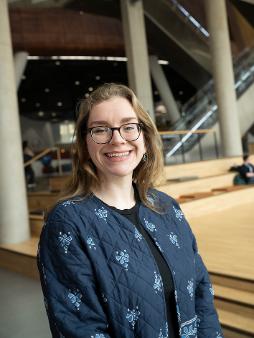 Alice has also noticed students becoming more confident. “At the Welcome event in October, mentees tended to chat mainly with their mentor because that they’d already met and begun to know each other,” she says. “But at the welcome-back event in January, there was a lot more mixing. They were getting up on their own to chat to other people.”
By January and February, mentors were also reporting fewer questions from their mentees. “They were feeling more confident and independent,” says Alice. “It’s about having that consistent point of contact, knowing that someone is always going to be on the other end of the phone or Teams.”
Part of the fabric
For the mentors, the programme has offered a new perspective on their own university experience.
One mentor told Alice that she had felt isolated during her earlier years, before the mentoring programme started. Becoming a mentor prompted her to reflect on when she began to feel she belonged, what she had achieved and how much she now had to offer someone else.
“I think I have made my way here,” she told Alice. “I think I am now part of the fabric of this place.”
Alice has also seen mentors become more confident in seeking support themselves and in taking up opportunities across the University. Some are now peer career supporters, helping fellow students with questions about work, internships and their next steps.
Passing it on
Every mentee who took part in the programme’s first year has progressed into second year, while last year’s mentors have either continued their studies or graduated. Several former mentees have now returned as mentors themselves, having valued the support they received and wanting to offer the same to someone else.
Alice is now applying what she has learned to an extended induction programme for mature students, who may be balancing university with work, caring responsibilities and family life. More than 500 mature undergraduates begin their studies at Glasgow each year.
For Alice, seeing students return as mentors is one of the clearest signs of progress: they are ready to offer the next group the support they once received.
Help students thrive at Glasgow
Your support can help students from all backgrounds find their feet, build confidence and make the most of university life. Help create opportunities for more students to belong and succeed at Glasgow.
Support the access Access To Opportunity Fund