Greening the Grey
Supported by two rounds of IAA funding, Professor Larissa Naylor of the School of Geographical & Earth Sciences developed concrete products that help “green the grey” of flood defences. Featuring textured surfaces that create habitats for marine life, they increase biodiversity along engineered coastlines. Prototype rock pools installed on Canvey Island in 2023 are already proving effective, and both the rock pools and textured concrete Ecotiles are now commercially available through industry partner Poundfield Precast.
The challenge
As climate change increases the risk of floods and extreme weather, coastal maintenance and flood prevention are becoming higher priorities for authorities at all levels.
National policies and guidance increasingly promote Green Infrastructure (GI) approaches that deliver environmental, social and economic benefits alongside their core purpose. However, green approaches in hard, or “grey”, infrastructure remain limited. In particular, there is a lack of proven textured concrete designs for flood defence schemes across the UK and Europe, which would allow infrastructure projects to adopt more ecologically friendly solutions.
Response
NatureScot funded Professor Naylor’s original BioGeo Ecotile design and trial, leading to the installation of prototype 30-by-30-centimetre concrete tiles on Edinburgh’s coastline in 2020. A second project, funded by Portsmouth City Council, developed the Portsmouth Ecoformliner, which was used to cast local concrete sea walls. However, more work was needed before larger Ecotiles could be brought to market for widespread use.
In 2021-22, an initial round of Fast Track IAA funding supported work with key partners Meshcanics Design, Poundfield Precast and ExpLearn, to develop a larger, one-by-one-metre Ecotile. The project produced the design file and manufacturing process needed to create a master mould.
A second IAA project in 2023 enabled the creation of the master mould, which was used to produce five formliners – flexible, patterned moulds to imprint the design into concrete. Poundfield Precast used the formliners to cast three rock pools – concrete cubes with the Ecotile design on the sides and a tidal pool in the top. They were installed as part of a flood defence project managed by the Environment Agency in Canvey Island in England.
In addition, two product information sheets were prepared to aid Poundfield Precast’s communication with prospective clients.
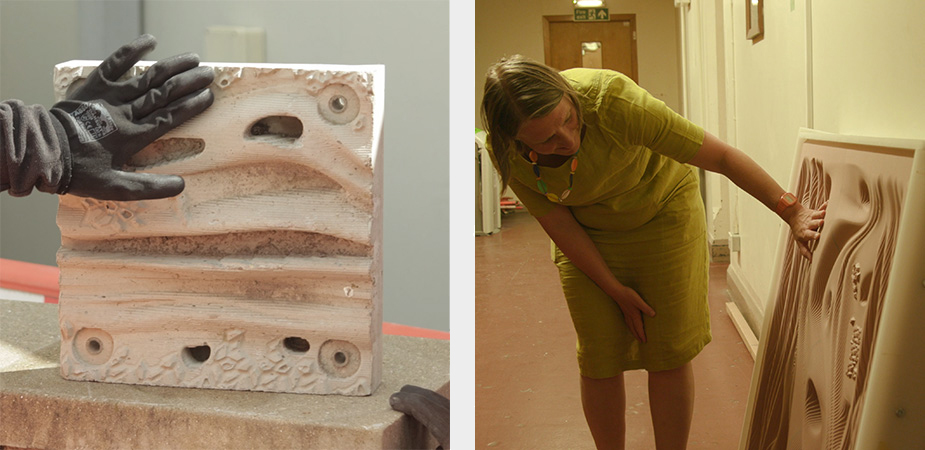
An original Ecotile and the master mould for the scaled up version.
Outcomes
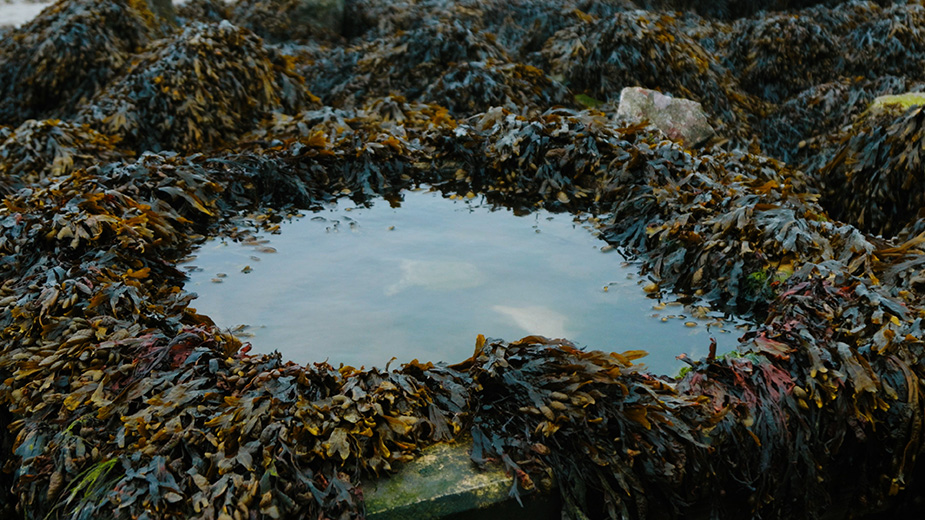
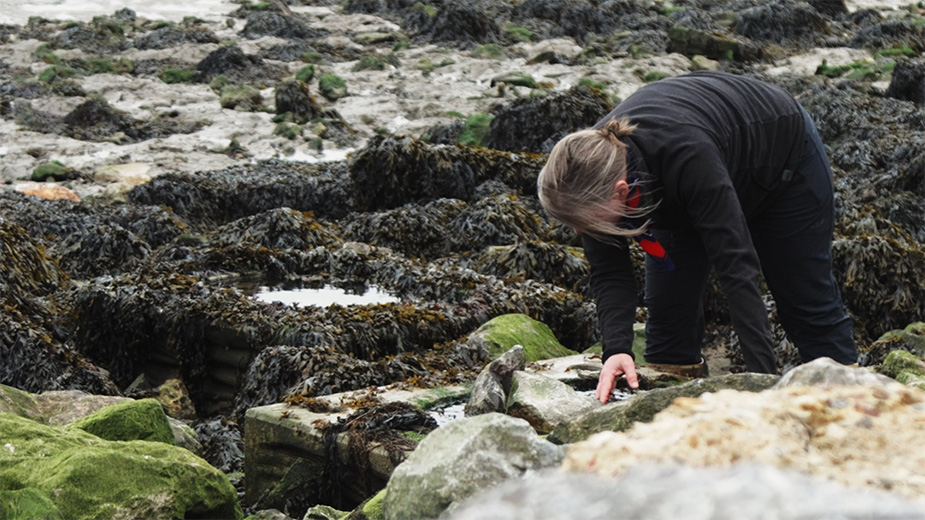
Only 2.5 years after installation, seaweeds, shrimps and other species have already colonised the rock pools on Canvey Island. “This is really important and exciting to see,” said Prof. Naylor. “It really shows that the rock pools are effective in improving biodiversity.”
The Ecotiles and rock pools are now commercially available from Poundfield Precast for use in coastal defence projects.
It's been really wonderful to see how the IAA funding was so pivotal and catalysing, going from a research project which was designed for widespread application to actually seeing it be realised." - Professor Larissa Naylor
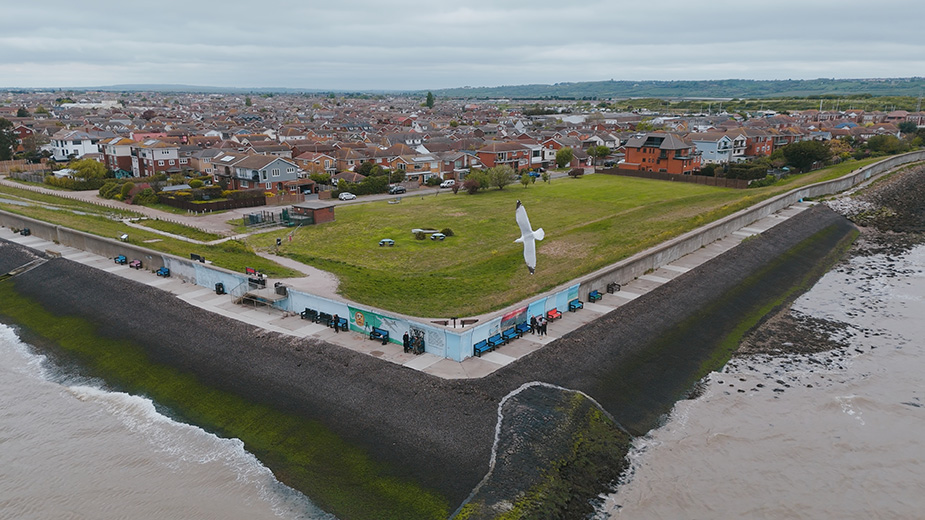
An aerial view of the flood defences at Canvey Island.
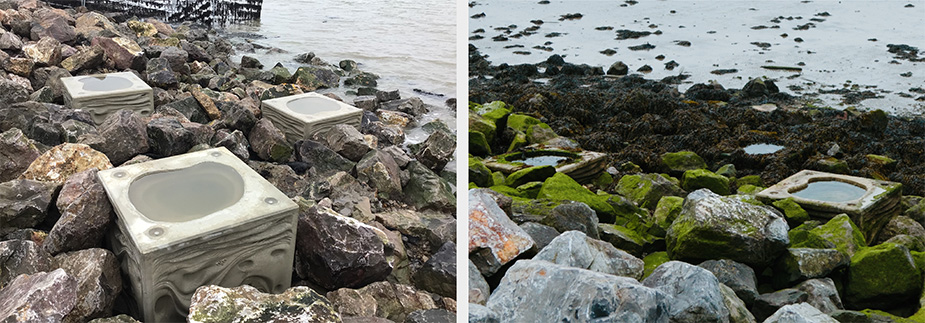
Photos of the prototype rock pools at Canvey Island, taken 2.5 years apart, showing seaweeds have colonised the lower rock pool in particular.