

Encouraging Local Trial Methodologies
Connecting Interdisciplinary Teams and Promoting Local Expertise
Foster connections with local experts to maximise Glasgow’s ecosystem for the design and conduct of trials.
Trial Methodologies
We seek for our trials to be at the forefront of cutting-edge trial methodology in design, conduct and analysis.
The HRB-TMRN Webinars and Training Events
MRC-NIHR TMRP Webinar series
Trial-related Methodology at Glasgow
Surrogate Endpoints in Clinical Trials
Surrogate Endpoints in Clinical Trials
MRC Better Methods for Health funded project (grant number MR/V038400/1) with the aims to develop extensions to core CONSORT and SPIRIT checklists for randomised trials to enable better reporting of trial protocols and reports that use surrogate endpoints.
Glasgow research team
Professor Rod Taylor, Professor of Population Health Research & Co-Director of Centre for Excellence in Trials Collaboration
Dr Anthony Manyara, Honorary Research Fellow
Publications
- Ciani O, Manyara AM, Davies P, Stewart D, Weir CJ, Young AE, Blazeby J, Butcher NJ, Bujkiewicz S, Chan AW, Dawoud D, Offringa M, Ouwens M, Hróbjartssson A, Amstutz A, Bertolaccini L, Bruno VD, Devane D, Faria CDCM, Gilbert PB, Harris R, Lassere M, Marinelli L, Markham S, Powers JH, Rezaei Y, Richert L, Schwendicke F, Tereshchenko LG, Thoma A, Turan A, Worrall A, Christensen R, Collins GS, Ross JS, Taylor RS. A framework for the definition and interpretation of the use of surrogate endpoints in interventional trials. Lancet EClinicalMedicine. 2023;65:102283
- Christensen R, Ciani O, Manyara AM, Taylor RS. Surrogate endpoints: a key concept in clinical epidemiology. J Clin Epidemiol. 2023:111242.
- Manyara AM, Davies P, Stewart D, Weir CJ, Young A, Butcher NJ, Bujkiewicz S, Chan AW, Collins GS, Dawoud D, Offringa M, Ouwens M, Ross JS, Taylor RS, Ciani O. Protocol for the development of SPIRIT and CONSORT extensions for randomised controlled trials with surrogate primary endpoints: SPIRIT-SURROGATE and CONSORT-SURROGATE. BMJ Open. 2022;12:e064304.
- Ciani O, Manyara AM, Chan AW, Taylor RS; SPIRIT-SURROGATE/CONSORT-SURROGATE project group. Surrogate endpoints in trials: a call for better reporting. Trials. 2022;23:991.
- Ciani O, Manyara AM, Taylor RS. Surrogate end points in cardio-thoracic trials: a call for better reporting and improved interpretation of trial findings. Eur J Cardiothorac Surg. 2022;62:ezac449.
- Manyara AM, Ciani O, Taylor RS. A call for better reporting of trials using surrogate primary endpoints. Alzheimers Dement. 2022 Jul 26;8(1):e12340.
- Ciani O, Manyara AM, Taylor RS. Surrogate endpoints in trials - a call for better reporting BMJ 2022; 378 :o1912 doi:10.1136/bmj.o1912
- Ciani O, Manyara A, Taylor RS. Need for better reporting of trials with surrogate endpoints: SPIRIT|CONSORT-SURROGATE extensions. J Epidemiol Community Health. 2022:jech-2022-219294 (on line).
Complex Intervention Reporting and Design
Complex intervention reporting and design
Updating the MRC guidance of complex interventions.
Glasgow research team
Professor Laurence Moore, School of Health & Wellbeing
Professor Sharon Simpson, School of Health & Wellbeing
Professor Peter Craig, School of Health & Wellbeing
Dr Kathryn Skivington Honorary Research Fellow, School of Health & Wellbeing
Publications
- Skivington K, Matthews L, Simpson SA, Craig P, Baird J, Blazeby JM, et al. Framework for the development and evaluation of complex interventions: gap analysis, workshop and consultation-informed update. Health Technol Assess 2021;25(57)
- Skivington K, Matthews L, Simpson S A, Craig P, Baird J, Blazeby J M et al. A new framework for developing and evaluating complex interventions: update of Medical Research Council guidance. BMJ 2021; 374 (doi:10.1136/bmj.n2061)
Public Health Study Reporting and Design
Public Health study reporting and design
Examines current practice and expert consensus in relation to feasibility studies, which address key uncertainties in the design and conduct of evaluations of complex public health interventions. Aims to produce guidance that will assist researchers to more efficiently and effectively develop and conduct feasibility studies, while providing peer reviewers and research funders with objective criteria against which to assess the quality of bids and publications.
Glasgow research team
Professor Sharon Simpson, School of Health & Wellbeing
Professor Laurence Moore, School of Health & Wellbeing
Dr Anne Martin, Research Fellow, School of Health & Wellbeing
Dr Grace Dibben-Santillan, School of Health & Wellbeing
Professor Peter Craig, School of Health & Wellbeing
Professor Daniel Wight, School of Health & Wellbeing
Publications
- Moore, L. , Hallingberg, B., Wight, D. , Turley, R., Segrott, J., Craig, P. , Robling, M., Murphy, S., Simpson, S. M. and Moore, G. (2018) Exploratory studies to inform full-scale evaluations of complex public health interventions: the need for guidance. Journal of Epidemiology and Community Health, 72(10), pp. 865-866. (doi: 10.1136/jech-2017-210414) (PMID:30030296) (PMCID:PMC6161652)
- Hallingberg, B., Turley, R., Segrott, J., Wight, D. , Craig, P. , Moore, L. , Murphy, S., Robling, M., Simpson, S. and Moore, G. (2018) Exploratory studies to decide whether and how to proceed with full-scale evaluations of public health interventions: a systematic review of guidance. Pilot and Feasibility Studies, 4, 104. (doi: 10.1186/s40814-018-0290-8) (PMID:29854417) (PMCID:PMC5971430)
Economic Evaluation
Economic evaluation
The Economic Evaluation alongside Clinical Trials Programme encompasses all research work associated with conducting an economic appraisal as part of a clinical trial. Although modelling methods may still be required to provide a comprehensive appraisal, the characterising feature is the inclusion of an economic component to the trial and the availability of experimental data on both costs and effects of treatment.
Glasgow research team
Programmes Lead: Professor Kathleen Boyd, Health Economics & Health Technology Assessment
Studies Within A Trial (SWATS)
SWATS
In addition to randomised trials and clinical studies that we undertake, we are also interested in trials methodology, i.e. how we design and run clinical trials in order to make them more efficient. Some of our methodology studies are standalone and others are embedded within randomised trials, known as SWATs (Studies Within A Trial).
Enhanced participant information sheet for the recruitment of caregivers to a multicentre randomised trial
Hypothesis: Caregivers/support persons who receive an enhanced PIS will be more likely to agree to participate and more likely be retained in the REACH-HFpEF trial (host trial) compared to caregivers/support persons receiving usual PIS. https://www.isrctn.com/ISRCTN15757498
MRC-NIHR Trials Methodology Research Partnership PhD Students
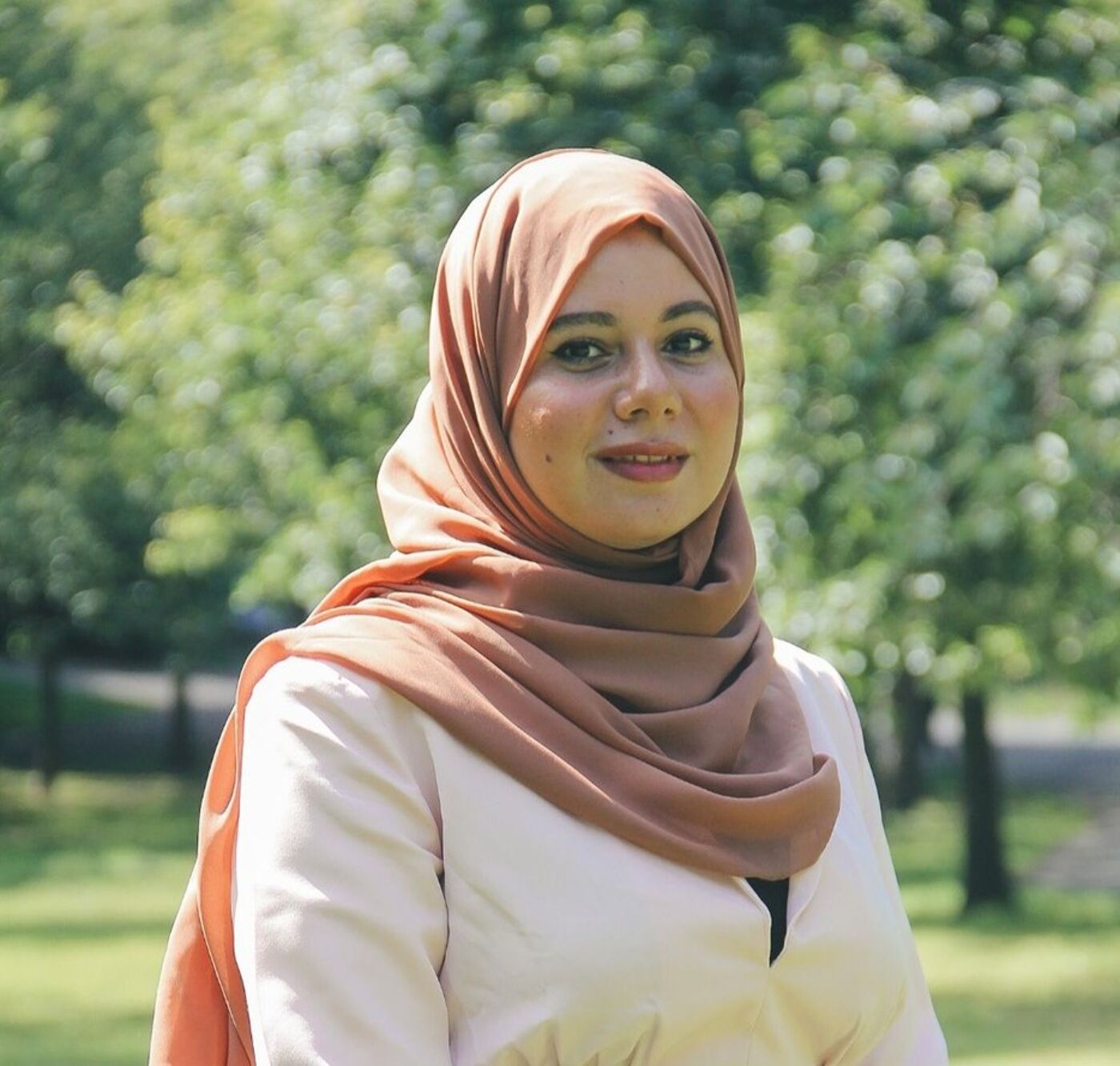
Hadeel Hussein
I am Hadeel Hussein, a medical doctor by qualification and a researcher by nature. I had my first exposure to research methods during my studies for my MBBS degree, which was the beginning of a fascination with this scientific approach to making a difference.
After completing my Master’s in Public health, I realised an academic career in medical research is what I should be pursuing. I came across my PhD project under the Trials Methodology Research Partnership and I started reading more about the topic: handling multiple outcomes in randomised clinical trials. It then became clear to me that gaining training in the trials methodology field not only creates better opportunities for my career but will also fulfil that earlier desire to make a difference by being equipped with tools of rigorous methods.
Through the journey of my first year as a TMRP DTP student at UofG, I gained knowledge and skills on both the professional and personal levels, thanks to the diverse development opportunities offered by various departments at the university. I also have a very supportive supervisory team who ensures I have all the motivation to make the best of every training opportunity that is of relevance to my field and my future career. Approaching the end of my first PGR year now, I am looking forward to having more engagement with the wider research community.

Ryan McChrystal
I’m Ryan McChrystal, a second‑year PhD student with the Health Economics and Health Technology Assessment (HEHTA) group in the School of Health and Wellbeing. My PhD focuses on trial methodology, specifically why participants drop out of clinical trials (trial attrition). The project aims to build a model that predicts attrition risk in trials of pharmacological interventions, supported by work examining what trialists consider when assessing reasons for dropout and which modelling approaches are most suitable.
Before starting my PhD, I completed a combined Master’s in Biological Sciences while working as a research assistant on bronchiectasis trials at the Northern Ireland Clinical Research Facility (NICRF) at Queen’s University Belfast. My interest in statistics and data analytics in clinical research grew during this time and led me to pursue a PhD. A colleague at the NICRF introduced me to the Trial Methodology Research Partnership (TMRP), through which I found the doctoral training opportunities.
Moving to Glasgow has been an excellent experience. The university offers strong professional and personal development resources, and the support from my supervisory team and the HEHTA community has created a great working environment. Being part of the TMRP doctoral training programme further enhances my research through training events, symposiums, conferences and regular interaction with students working on similar topics.
Through my project, supervisory support and the training provided by both the university and TMRP, my skills have developed significantly. Presenting to fellow TMRP students and sharing findings at symposiums and conferences has also provided valuable opportunities to network with researchers interested in understanding and reducing trial dropout.
As I approach the halfway point of my PhD, I appreciate the opportunities the university and TMRP have provided to help me grow as a researcher and look forward to what the remaining time will bring.
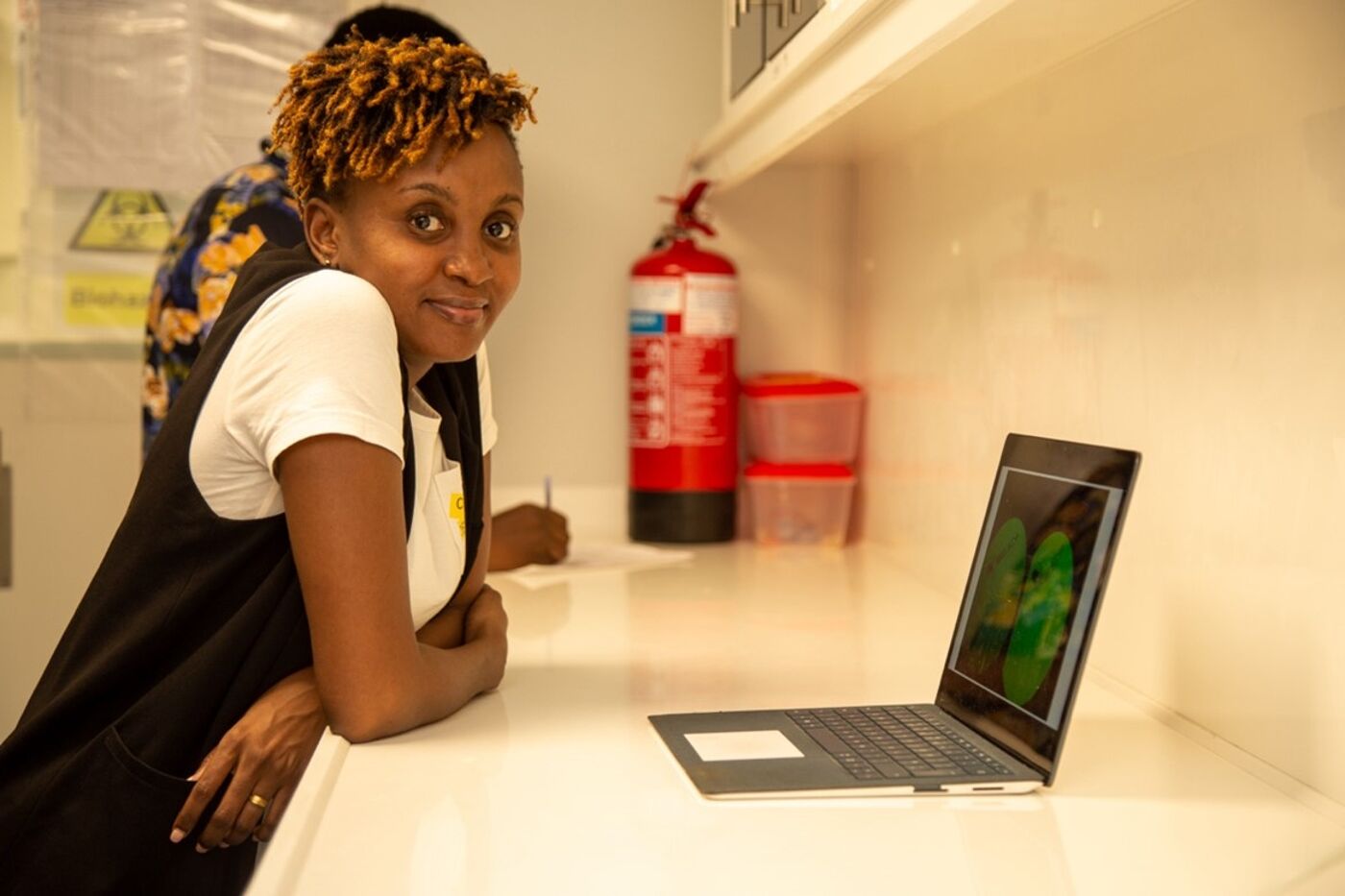
Victoria James Githu
As an African female scientist and with a profound passion for mathematics, my ultimate objective is to challenge and dispel the prevalent stereotypes against women in academia, the most prevalent one being the misguided notion that “girls cannot do mathematics”, my goal is to disprove this sentiment at every opportunity.
With a degree in Actuarial Sciences and a master’s degree in mathematical modelling, my journey in exploring Mathematics so far has become progressively enjoyable, satisfying, and challenging. I take joy in the challenge of learning how to adapt and develop quantitative approaches to global challenges, especially in the context of major health problems in my home country of Tanzania and beyond.
As a first year DTP TMRP student at the University of Glasgow and new to epidemiological trials, the University has provided me with knowledge and skills to kick start my PhD project. Thus far, working on addressing the critical issue of improving vector control trials is now a project so dear to me and looking forward to tackling this critical issue and make a meaningful contribution to the field. I wouldn’t ask for a better supervisory team, I am grateful for the unwavering support and guidance provided by them, who consistently prioritize my personal and professional development.