

UofG community unite for Lion and Unicorn premiere
Published: 2 September 2026
The UofG community of colleagues and students came together this summer for the premiere of Lion and Unicorn, a new performance created to mark the University of Glasgow's 575th anniversary.
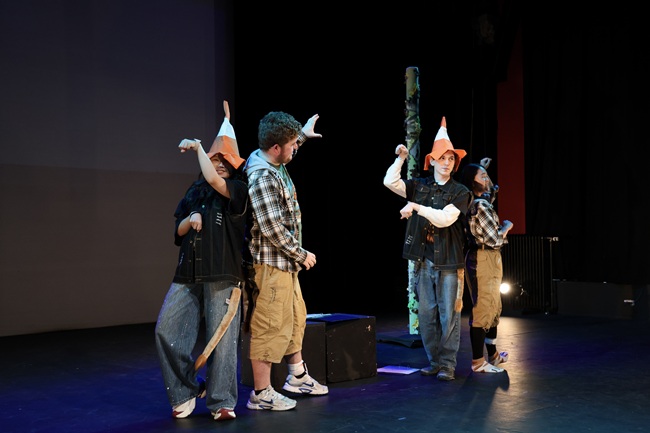
The UofG community of colleagues and students came together this summer for the premiere of Lion and Unicorn, a new performance created to mark the University of Glasgow's 575th anniversary.
The production was written and directed by Tawona Sitholé, Lecturer in Creative Practice Education with the UNESCO Chair for Refugee Integration through Education, Languages and the Arts (UNESCO RIELA).
A poet, playwright, mbira musician and educator, Dr Sitholé worked with performers, researchers, technicians and creatives from across the University and beyond to develop the production through a collaborative process of research, rehearsal and creative practice.
Dr Sitholé said: “Creating a performance like this takes generosity, courage and care. All who took part in this production, did it while they had studies, exams, work and other personal needs and duties. The relationships formed in this work will continue to grow. We were excited to contribute to the wider celebrations of this anniversary. Theatre allows us to work as play; to imagine, feel, express, and to be in wonderment of the human spirit.”
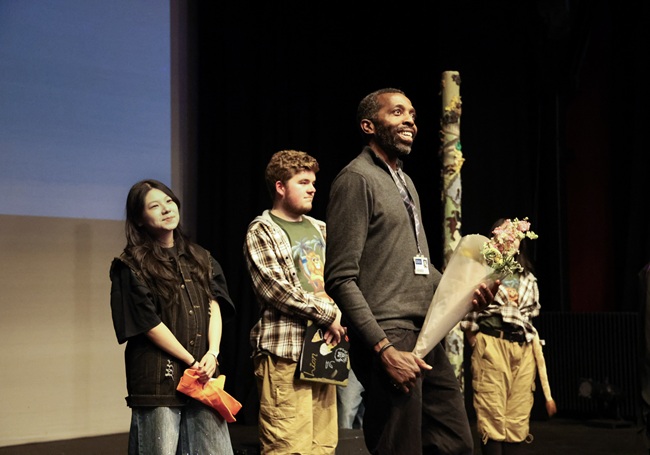
Professor Alison Phipps, UNESCO Chair in Refugee Integration through Languages and the Arts, who also helped produce the Lion & Unicorn, said: “At the heart of the work of the UNESCO Chair are the themes of forced displacement and restorative integration as well as allyship and the kinds of pedagogies which enable the difficulties of transition and forced displacement to be met and perhaps also ultimately overcome.
“The Lion and Unicorn play enables those in the cast to work in a spirit of care and by staging the story of two mythical animals, forcibly displaced in history (in actuality) from East to West and what this then becomes as a story 575 years later.”
Colleagues from Theatre Studies - including Professor Deirdre (Dee) Heddon for creative and recruitment support for the cast and Anthony (Tony) Sweeten for providing tech support for staging the play - hosted rehearsals and performances. While academics from across the University contributed research and expertise to support the project including Dr Christine Whyte (History) and colleagues in history and Professor William Cushley.
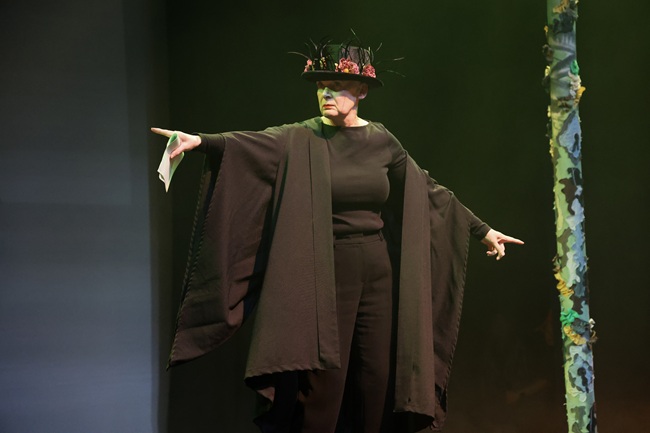
Among the cast were College of Arts & Humanities colleagues Susan Shaw, playing the narrator and Cu sidhé, a mythical hound found in Scottish folklore, and students Dylan Traynor (Skyhorse/Unicorn) and Shane Kenny (Wildcat/Lion). While Arts & Humanities student Sam Gates was responsible for the broadcast.
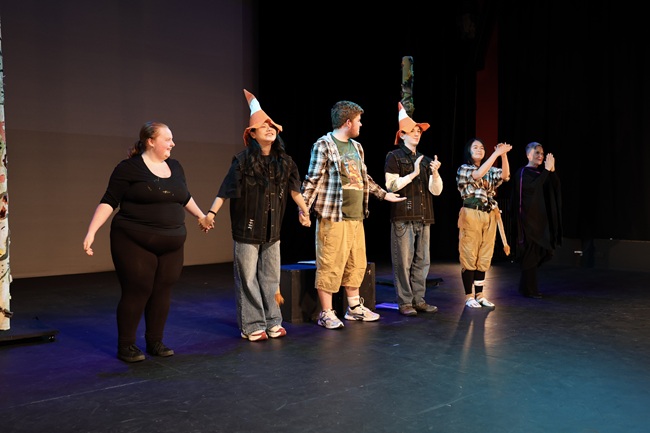
At the heart of the performance was a haiku, an unrhymed Japanese style poem format consisting of three lines:
the forest is found
by dreaming with no limit
wild and all being well
The poem reflects the themes of imagination, creativity and possibility that run through the production. Inspired by the University's 575th anniversary, the play reimagines the lion and unicorn, two of the institution's best-known symbols, as endangered species. In the story, the unicorn is threatened by a loss of imagination, while the lion is endangered by human glory-seeking.
Funded by the Ferguson Bequest, Lion and Unicorn is part of the many celebrations taking place throughout 2026 for UofG's 575th anniversary year.
CAST and BIOS
|
Skyhorse |
Yijia Yuan; Dylan Traynor |
|
Wildcat |
Hsiao-chiang Wang; Shane Kenny
|
|
Narrator and Cu sidhé |
Susan Shaw |
|
Broadcast |
Sam Gates
|
|
Racehorse commentary |
Professor Stephen Mckinney |
|
Protesters |
Pinar Aksu, Moth R.H. Fletcher |
|
Animation |
Waabanaki Citton |
|
Sound and lighting |
Anthony (Tony) Sweeten |
|
Scripting and directing |
Tawona ganyamatopé Sitholé |
|
Costume and set |
Kaje McBride Hunter and friends |
|
Music |
Dylan Traynor |
|
Producer |
Bella Hoogeveen, Susan Shaw and Professor Alison Phipps |
First published: 2 September 2026