

Professor Tom Evans
- Professor of Molecular Microbiology (Bacteriology)
- Dean of Global Engagement (Middle East & Africa) (External Relations)
telephone:
01413308418
email:
Tom.Evans@glasgow.ac.uk
RB226 Level B2, Iii - Gbrc, University Place, Glasgow G12 8TA
 https://orcid.org/0000-0002-4140-6352
Biography
Tom Evans MA PhD MBBChir FRCP is Professor of Molecular Microbiology at the University of Glasgow and a Consultant in Infectious Disease and General Medicine for Greater Glasgow and Clyde Health Board. He trained in Medicine and Biochemistry at the University of Cambridge and then specialised in Infectious Diseases at Imperial College London before moving to Glasgow in 2003. His research interests are in the immune responses to bacterial infections, particularly Pseudomonas aeruginosa and Streptococcus pneumoniae as well as the development of more effective therapies for hospital-acquired infections and antibiotic-resistant bacteria, as part of the Scottish Government funded Scottish Healthcare-associated Infection Prevention Institute (SHAIPI). He is on the Editorial Board of the Journals Immunology and Future Microbiology and is a Fellow of the European Society for Clinical Microbiology and Infectious Diseases. During the COVID-19 pandemic, he was Chair of the Scottish Government’s Clinical Cell for COVID-19, and a member of the Scottish Government Advisory Committee on COVID-19. He is currently chair of the Department of Health and Social Care’s expert Advisory Committee on Dangerous Pathogens, and is a member of the Scottish Standing Committee on Pandemic Preparedness, amongst other scientific advisory groups.
Research interests
We are interested in how bacteria trigger an immune response following infection. Initial contact with bacteria triggers a response from the innate immune system, resulting in activation of important immune defence mechanisms. One of these is activation of the inflammasome, a multi-subunit protein platform that results in production of IL-1β, a key cytokine in host defence.
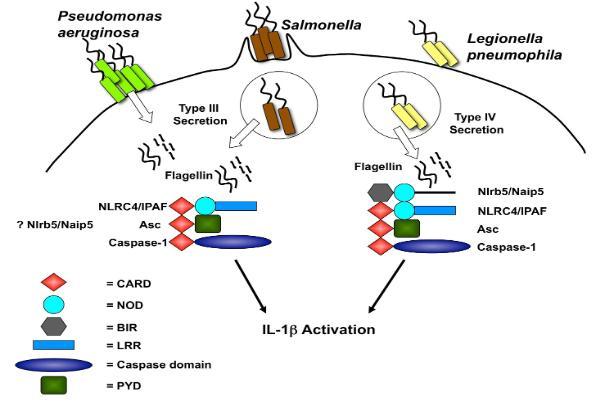
This can also lead to a form of cell death known as pyroptosis. Inflammasome activation also intersects with autophagy, a cellular process for clearing and re-using intracellular components that also is important in host defence against infection and down-regulated inflammasome activation.
The innate immune response not only provides immediate host protection but also shapes the nature of a subsequent acquired immune response. This is achieved through the production of a variety of factors by dendritic and other cells that instruct CD4+ helper T cells (Th cells) to develop into specific subsets with a characteristic ‘signature’ of cytokine production. Classically, this has been described as a binary system in which Th1 cells produce the inflammatory cytokine interferon-γ and Th2 cells produce IL-4. This in turn influences the nature of the memory immune response: Th1 effectors activate macrophages and are characteristic of the response to intracellular bacteria such as Mycobacterium tuberculosis whereas Th2 effectors promote B cell development and immunoglobulin production.
However, more recent studies have shown that this simple binary division is over simplistic, and that a range of Th cell subtypes exist that have distinct functional roles. Two such subtypes that are of great importance in host defence and inflammatory responses are Th17 and Th22 cells. Th17 cells are potent inducers of neutrophil responses and of great importance in host defence. However, they may also mediate damaging inflammatory responses. Th22 cells produce the cytokine IL-22, which acts on epithelial cells, augmenting host defence and promoting repair following injury. The development of these different lineages is in turn influenced by the cytokines produced following the interaction of pathogens with dendritic cells; for example, IL-1β is important in Th17 development.
Current Projects
We study these immune responses following infection with two human pathogens:
Pseudomonas aeruginosa, a pathogen that produces acute infections in the immunocompromised as well as chronic infections in patients with the inherited condition cystic fibrosis.
Streptococcus pneumoniae (in collaboration with Professor Tim Mitchell), the major cause of community acquired pneumonia.
Ongoing projects are:
• The role of Th17 and Th22 cells in the responses to pseudomonal infection in cystic fibrosis.
• The potential protective role of Th17 and Th22 cells in protective immunity to pneumococcal infection
• The interactions between inflammasome activation and induction of autophagy following bacterial infection
• Transcriptome of P. aeruginosa within the CF lung
Grants
Grants and Awards listed are those received whilst working with the University of Glasgow.
- Sepsis treatment by targeting antibiotic released bacterial proteins (STTAR-BacPro)
Medical Research Council
2024 - 2024
- The role of the host metabolite D-serine in development of neonatal meningitis
Glasgow Children`s Hospital Charity
2017 - 2017
- Protein Antibiotics: Discovery, mode of action and development
Wellcome Trust
2016 - 2021
- Carnegie Centenary Professorship to Professor Brett Finlay
The Carnegie Trust for the Universities of Scotland
2015 - 2015
- Overcoming invasive Pneumococcal disease - a transcriptome approach
Tenovus Scotland
2014 - 2015
- Scottish infection research network (SIRN) administration
Scottish Government
2012 - 2020
- Imaging immune cells in lung in order to understand asthma
Asthma UK
2012 - 2012
- Variation in the human pharyngeal microbiome in health and disease (ISSF Catalyst Funding)
Wellcome Trust
2011 - 2014
- The role of Th17 immunity in pneumococcal disease
Medical Research Council
2011 - 2014
- Scottish Clinical Pharmacology and Pathology Programme (SCP3) - Fellowship 2012
Medical Research Council
2011 - 2017
- The Proinflammatory Th17 Response as a Therapeutic Target in Cystic Fibrosis Lung Disease
Wellcome Trust
2010 - 2014
- Towards a better vaccine for Pneumococcal Pneumonia
Chest Heart and Stroke Scotland
2009 - 2010
- Effect of macrolides on asthma control, airway inflammation and bacterial colonisation in smokers with asthma
Medical Research Council
2009 - 2011
- Regulatory T Cell populations in patients with tuberculosis.
British Infection Society
2007 - 2009
- The influence of a dominant toll-like receptor 5 stop codon polymorphism on the development of infection in critically ill patients
Scottish Executive Health Department
2005 - 2006
- Using a novel three-dimensional cell culture model to investigate sepsis-induced renal failure
Dr Hadwen Trust for Humane Research
2004 - 2008
- The role of Na+/H+ Exchange Regulatory factor in the actions of nitric oxide at apical epithelial membranes
Biotechnology and Biological Sciences Research Council
2004 - 2007
- The role of nitric oxide in cytokine-induced renal tube cell shedding
Wellcome Trust
2003 - 2005
