

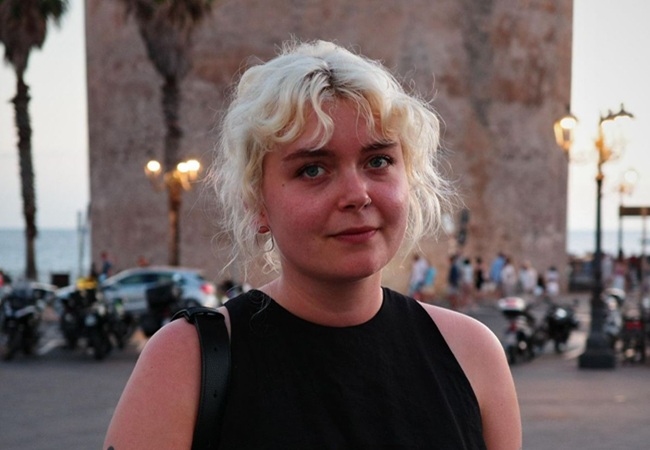
Rebecca Williamson, a third-year PhD researcher based at the School of Humanities | Sgoil nan Daonnachdan, received the Prize for her paper: 'Wilfully, Wickedly, Feloniously’: Scots Law and Abortion, 1858'.
Rebecca’s paper historicises the relationship between Scots law, abortion, and female sexuality in mid-nineteenth century Scotland. Through tracing common law precedents and analysing legal documents pertaining to two distinct yet interrelated High Court trials, 1858 is positioned as a pivotal moment in a wider shift towards regulating female sexuality through legal frameworks in relation to abortion.
Rebecca said: "It was a genuine honour to be awarded the Postgraduate Paper Prize at this year’s Social History Society Conference. This prize plays an important role in encouraging the warm, welcoming and academically nourishing space that the society fosters for PGRs.
"The breadth and quality of work presented by PGRs, academics, and independent scholars at the conference this year was astounding and truly galvanising in these times of precarity and instability. I would wholeheartedly encourage PGRs to submit their papers for the 2027 iteration of the prize; it’s a fantastic opportunity to have your work read more widely and you might just end up winning!"
The runner up was Dylan Neill Andres (University of Bristol) for his paper ‘The Outlaw Hero? Violence and Legitimacy in the Case of Henry Avery, c. 1695-1720’.
Looking over the prize as a whole, the judges said: "Both of this year’s postgraduate paper prize winners demonstrated the power of focused microhistory and concrete storytelling to intervene in wider debates."
They added: "Our winner Rebecca Williamson produced a study of abortion in 19th century Scotland and its “compelling legal complications”. The paper took in the case of Mary Bulloch, a young woman in 1858 whose unfortunate circumstances pulled in many community members around her and led to a lengthy legal case. The overall quality of papers submitted was very high, and everyone who participated should be proud of their work."