

AGRI-DRY doctoral network marks a milestone in global education and research on land sustainability in drylands
Published: 27 March 2026
The AGRI-DRY Doctoral Network, coordinated by Pompeu Fabra and Glasgow universities, is consolidating itself as a project for global training and research and becomes a hub for interdisciplinary and international collaboration.
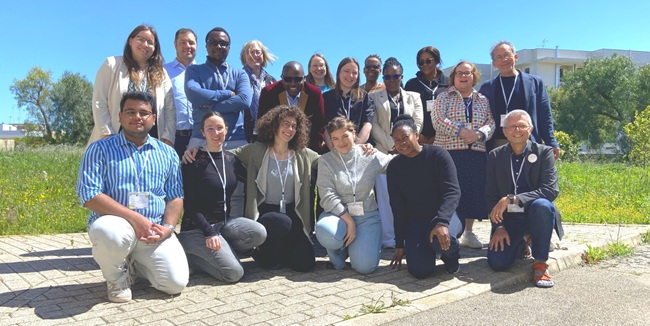
The AGRI-DRY Doctoral Network, coordinated by Pompeu Fabra and Glasgow universities, is consolidating itself as a project for global training and research and becomes a hub for interdisciplinary and international collaboration.
Since its launch in September 2024 under the Horizon Europe Marie Skłodowska-Curie Actions programme, AGRI-DRY has quickly grown into an international community of researchers and institutions working together to tackle the challenges of agriculture and sustainability in drylands of Africa and the Mediterranean.
Coordinated by Pompeu Fabra University (UPF) through the CASEs research group in the Department of Humanities (led by Marco Madella, ICREA Research Professor) and the Archaeology section of the School of Humanities at the University of Glasgow (led by Professor Nicki Whitehouse), the network brings together six academic institutions across Europe and Africa: Aarhus University (Denmark), University of Botswana, University of Glasgow, Universitat Pompeu Fabra, University of Salento (Italy), and University of the Witwatersrand (South Africa).
Together, they are training 10 predoctoral researchers in a variety of innovative and interdisciplinary approaches to agriculture and sustainability in arid regions, bridging academia, policy, archaeological evidence, and local knowledge systems.
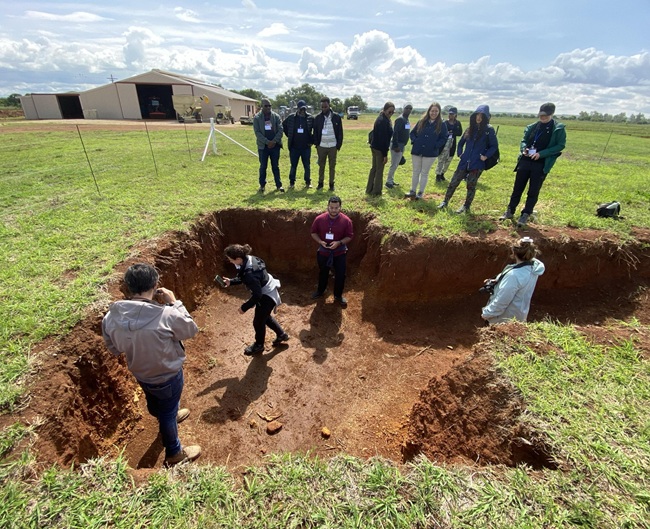
Over the first two years, its predoctoral researchers have been conducting research in the Mediterranean Basin, North Africa and the Sahara, as well as southern Africa. “These regions, representing some of the world’s most vulnerable drylands, are central to the project’s mission of understanding deep-time dynamics of sustainability and Traditional Ecological Knowledge (TEK) to address contemporary challenges of climate change, food security, and ecological resilience”, say Marco Madella and Nicki Whitehouse.
AGRI-DRY’s interdisciplinary research is structured around three key questions:
- How and why have agricultural systems emerged and developed in the light of evolving needs and changing environmental conditions?
- What impacts have these systems had on land use, ecosystems, and climate in the past and present?
- What lessons can be drawn from ancient and traditional agricultural systems for today’s policy, food production, and climate mitigation strategies?
The highlight of AGRI-DRY’s first year was the Summer School, held at the University of Salento in Lecce, Italy, from 7 to 11 April 2025, in the Mediterranean region.
The event combined field-based learning with laboratory training, offering participants the opportunity to explore key landscapes of Apulia, including karstic environments, coastal dune systems, and the Millenary Olive Trees Park. These field excursions were complemented by hands-on workshops focused on the identification of plant macro-remains and archeobotanical analysis, providing essential methodological skills for reconstructing past agricultural practices. In addition to its training components, the Summer School hosted a meeting with the EU project officer, fostering discussion on project progress, coordination, and future research directions within the AGRI-DRY network.
Reflecting on the event, AGRI-DRY predoctoral researcher Sara Krubeck (Universitat Pompeu Fabra, Spain) said: “It was an intense and inspiring week - sometimes exhausting, but absolutely worth it! I’m thrilled to be part of such a talented and motivated research team, and I can’t wait for the next AGRI-DRY network event.”
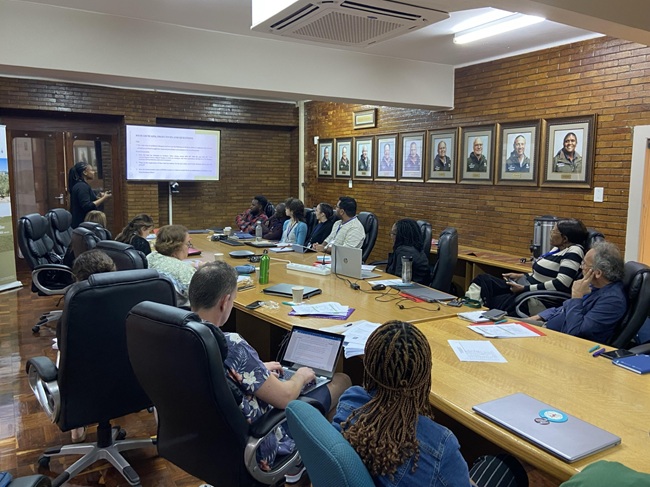
The second AGRI-DRY Summer School was held jointly at North-West University and the University of the Witwatersrand in South Africa from 10 to 15 November 2025. The predoctoral researchers explored ancient landscapes shaped by pre-colonial farming communities and observed the subsequent changes that occurred with the introduction of new crops during the colonial period.
Field-based activities and workshops focused on geology, soils, and agricultural sustainability, complemented by hands-on sessions in pollen and geochemical analysis, chronology, seed bank management, and policy-oriented outreach. Additional visits, including to the Agricultural Research Council of South Africa, provided insights into experimental crop-growing initiatives and the development of comparative seed and phytolith (siliceous remains of plant tissues) databases, offering a holistic perspective on past and present agricultural systems in southern Africa.
Reflecting on the event, AGRI-DRY doctoral candidate Mncedisi Taale (University of Botswana) said: “The experience was intellectually stimulating and deeply engaging. The week offered a rich blend of scientific and policy-oriented lectures, thematic discussions aligned with AGRI-DRY’s objectives, and scenic, informative field visits that brought theory into practice. While the schedule was intensive and demanding, it was thoughtfully designed to support Doctoral Candidates working across diverse project themes, making the overall experience both empowering and worthwhile."
The week-long programme of the schools has combined scientific training and discussion, field trips, and collaborative workshops, providing the doctoral candidates the opportunity to deepen their knowledge of cultural landscapes, archaeology, long-term ecology, traditional agricultural practices, climate change and policies. Furthermore, opportunities for doctoral candidates to present and discuss their projects as well as social events foster a strong sense of community across the network.
Looking Ahead
The network’s third Summer School is already planned for April 2026 at the University of Aarhus (Denmark), where participants will continue their training with a focus on modeling approaches, data analysis and data management.
To learn more about AGRI-DRY visit: https://agri-dry.org/
Funding acknowledgements
This project has received funding from the European Union’s Horizon Europe research and innovation programme under the Marie Skłodowska-Curie Grant Agreement No 101120560 and UKRI, the Engineering and Physical Sciences Research Council - grant number EP/Y03290X/1.
First published: 27 March 2026
<< Latest News