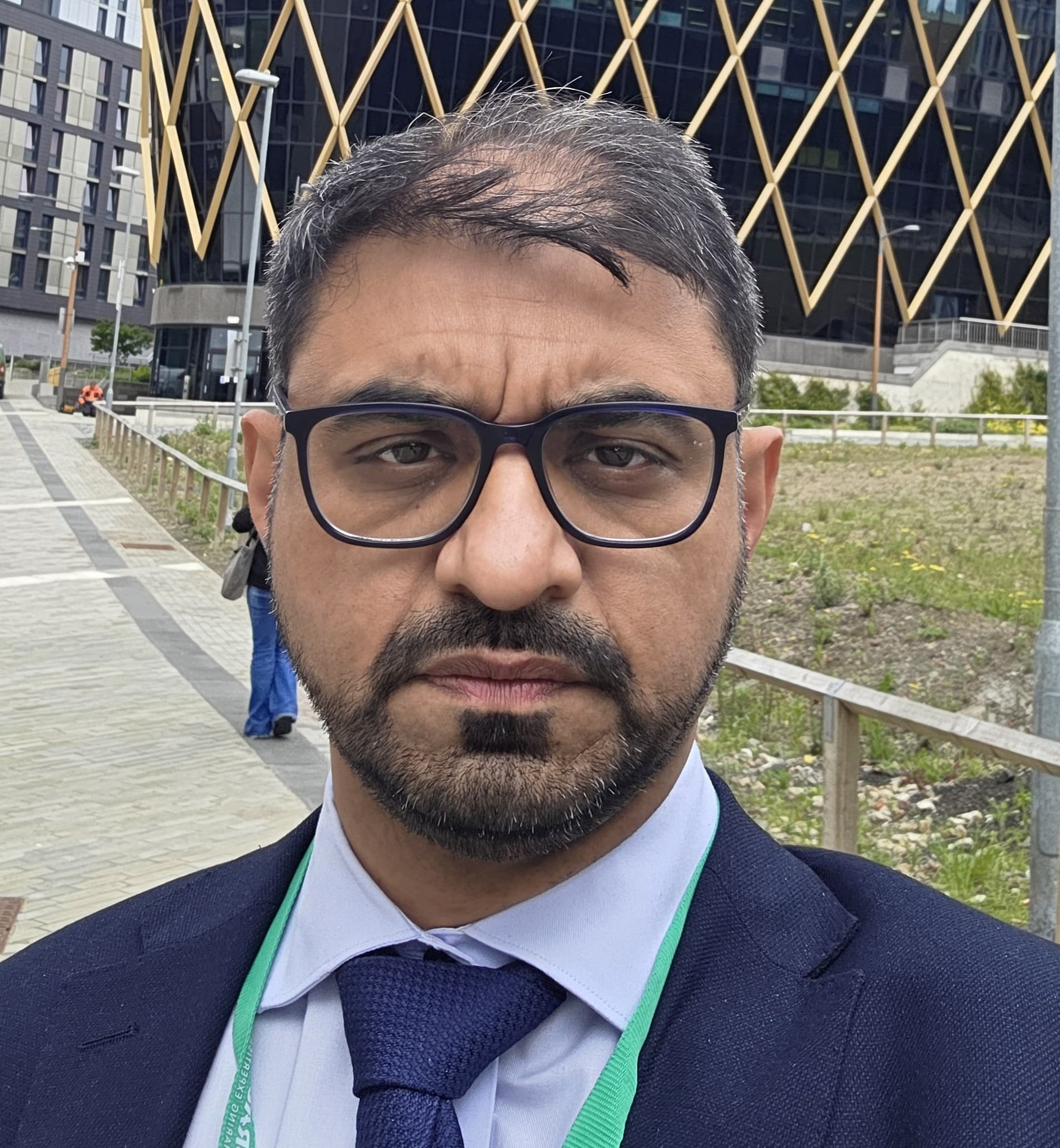
Mr Khurram Shahzad Khan
- Honorary Clinical Senior Lecturer (School of Medicine, Dentistry & Nursing)
email:
Khurram.Khan@glasgow.ac.uk
Department of General Surgery, First floor, University Hospital Hairmyres, NHS Lanarkshire, Eaglesham Road, G75 8RG
 https://orcid.org/0000-0002-8304-5970
Biography
Mr Khurram Shahzad Khan is a Consultant General and Upper Gastrointestinal Surgeon at University Hospital Hairmyres, NHS Lanarkshire, and an Honorary Clinical Senior Lecturer at the University of Glasgow. His clinical and academic interests centre on benign biliary surgery, particularly intraoperative cholangiography and laparoscopic common bile duct exploration for the single-stage management of gallbladder and bile duct stones.
He has led the development and evaluation of a cholangioscopy-assisted laparoscopic bile duct exploration service at University Hospital Hairmyres. His work brings together specialist surgical practice, outcomes research and education, with an emphasis on timely definitive treatment, operative safety and the quality of biliary care.
He is Chief Investigator of the UK-BILE Collaborative, examining bile duct stone management, training and service provision across the United Kingdom. He has also established pan-Lanarkshire clinical outcomes databases in cholecystectomy and oesophagogastric cancer, providing a foundation for collaborative research, service evaluation and supervised student and trainee scholarship.
His longstanding contribution to the University of Glasgow encompasses undergraduate research supervision, educational supervision and medical student selection. He supports students and surgical trainees in developing clinically relevant research projects through to presentation and publication. His postgraduate teaching includes leadership of upper gastrointestinal training within the Advanced Surgery Cadaver Skills course, delivered in collaboration with the University and the Royal College of Physicians and Surgeons of Glasgow.
His wider educational work includes the design and direction of accredited postgraduate courses in biliary surgery and FRCS preparation, alongside contributions to surgical assessment and national trainee selection. He is a Senior Fellow of the Higher Education Academy, a Fellow of the Academy of Medical Educators and a Fellow of the Faculty of Surgical Trainers of the Royal College of Surgeons of Edinburgh.
Through professional society leadership and collaborative academic programmes, he contributes to surgical education and the development of research opportunities for medical students and trainees.
Research interests
Benign biliary surgery and bile duct stone management
Mr Khan’s principal research focus is the safety, effectiveness and delivery of definitive treatment for gallstone disease. His work examines index-admission cholecystectomy, intraoperative cholangiography and laparoscopic common bile duct exploration, with particular interests in transcystic exploration, cholangioscopy-assisted techniques and single-stage management of gallbladder and bile duct stones.
His research addresses operative difficulty, surgical decision-making, duct clearance, postoperative complications and subsequent intervention. It also examines how patient characteristics and previous biliary treatment influence operative management and outcomes.
Biliary pathways and collaborative outcomes research
As Chief Investigator of the UK-BILE Collaborative, he leads a national evaluation of bile duct stone management, training and service provision. This programme examines variation in practice and access to treatment, with the aim of informing service development, training priorities and further collaborative research.
He has established a pan-Lanarkshire cholecystectomy outcomes database to support evaluation across three hospitals. This work includes assessment of case mix, postoperative outcomes and performance against published standards. His broader interests include treatment delays, recurrent gallstone-related admissions and the organisation of services capable of delivering timely definitive care.
Oesophagogastric cancer outcomes
His wider research examines presentation, diagnostic pathways and outcomes in oesophagogastric cancer. He has established a regional clinical database supporting studies of disease presentation, socioeconomic deprivation and clinical outcomes. His published work includes evaluation of stage migration and disruption to cancer diagnosis and treatment during the COVID-19 pandemic.
This programme links clinically relevant questions with supervised research opportunities for medical students and surgical trainees.
Surgical education and training
His educational research interests include access to surgical training, the development of operative skills and judgement, and the evaluation of educational programmes. A particular focus is training in intraoperative cholangiography and laparoscopic bile duct exploration, including how educational provision can support the safe development of specialist biliary services.
His educational scholarship includes research on surgical training and structured evaluation of postgraduate courses and student research programmes. He is interested in how supervision, feedback and opportunities for presentation and publication support the academic development of medical students and trainees.
Publications
2026
Nassar, Ahmad H. M., Lucocq, James and Khan, Khurram Shahzad  ORCID: https://orcid.org/0000-0002-8304-5970
(2026)
Fundus-first dissection: a salvage technique for the difficult laparoscopic cholecystectomy.
Surgical Endoscopy,
(doi: 10.1007/s00464-026-13262-x)
(PMID:42637947)
(Early Online Publication)
ORCID: https://orcid.org/0000-0002-8304-5970
(2026)
Fundus-first dissection: a salvage technique for the difficult laparoscopic cholecystectomy.
Surgical Endoscopy,
(doi: 10.1007/s00464-026-13262-x)
(PMID:42637947)
(Early Online Publication)
Nassar, Ahmad H.M., Elzanati, Hisham I., Khan, Khurram S. ORCID: https://orcid.org/0000-0002-8304-5970, Hayyawi, Israa H., Yehia, Ahmad M. and Omran, Asmaa H. ORCID: https://orcid.org/0000-0002-8364-851X
(2026)
Recurrent choledocholithiasis after laparoscopic bile duct exploration: incidence, risk factors, and management strategies.
Surgical Endoscopy,
(doi: 10.1007/s00464-026-12605-y)
(Early Online Publication)
2025
Miller, Gillian, Gall, Lewis S., Macdonald, Andrew and Khan, Khurram Shahzad ORCID: https://orcid.org/0000-0002-8304-5970
(2025)
Gender disparities in adult patients undergoing emergency appendicectomy: A comparative analysis.
Scottish Medical Journal, 70(1),
pp. 4-9.
(doi: 10.1177/00369330241307340)
(PMID:39773157)
Nassar, Ahmad, Hayyawi, Israa, Khan, Khurram ORCID: https://orcid.org/0000-0002-8304-5970, Attia, Abdelaziz and Omran, Asmaa ORCID: https://orcid.org/0000-0002-8364-851X
(2025)
The incidence, technical management and outcomes of impacted stones encountered during 1447 laparoscopic bile duct explorations.
Surgical Endoscopy, 39(2),
pp. 1341-1350.
(doi: 10.1007/s00464-024-11477-4)
(PMID:39762603)
Robertson, Iona, Sundarraj, Jeeva Karuniya and Khan, Khurram Shahzad ORCID: https://orcid.org/0000-0002-8304-5970
(2025)
Routine preoperative blood group and save is unnecessary for adult emergency appendicectomies: A retrospective multicentre study.
Scottish Medical Journal, 70(1),
pp. 10-14.
(doi: 10.1177/00369330241307338)
(PMID:39692381)
2024
Hayyawi, Israa, Omran, Asmaa ORCID: https://orcid.org/0000-0002-8364-851X, Khan, Khurram Shahzad ORCID: https://orcid.org/0000-0002-8304-5970 and Nassar, Ahmad
(2024)
How do Previous Biliary Interventions Affect the
Operative and Postoperative Outcomes Of Patients Undergoing
Laparoscopic Cholecystectomy (LC) and Bile Duct Exploration
(LCBDE)?
AUGIS Annual Scientific Meeting 2024, Manchester, UK, 11-13 Sept 2024.
(doi: 10.1093/bjs/znae271.290)
Hold Study and ORCID: https://orcid.org/0000-0002-8304-5970
(2024)
OGC O01 - Stomach Cancer Elective Surgery Morbidity and
Mortality at 90-Days (HOLD Study): A Prospective,
International Collaborative Cohort Study.
AUGIS Annual Scientific Meeting 2024, Manchester, UK, 11-13 Sept 2024.
Chien, S., Miller, G., Huang, I., Cunningham, D., Carson, D., Gall, L. and Khan, K.S. ORCID: https://orcid.org/0000-0002-8304-5970
(2024)
Quality assessment of online patient information on upper gastrointestinal endoscopy using the modified Ensuring Quality Information for Patients tool.
Annals of the Royal College of Surgeons of England, 106(8),
pp. 672-681.
(doi: 10.1308/rcsann.2022.0078)
(PMID:38376380)
(PMCID:PMC11528370)
Zubair, Farhan, Di Rollo, Domenic and Khan, Khurram Shahzad ORCID: https://orcid.org/0000-0002-8304-5970
(2024)
Burden and Pattern of Gallstone-Related Acute Surgical Admissions.
AUGIS Annual Scientific Meeting 2024, Manchester, UK, 11-13 Sept 2024.
Zubair, Farhan, Di Rollo, Domenic and Khan, Khurram Shahzad ORCID: https://orcid.org/0000-0002-8304-5970
(2024)
Evaluating the Outcome of Laparoscopic Cholecystectomy Against Key Performance Indicator (KPI) of the British Benign Upper GI Surgical Society (BBUGSS).
AUGIS Annual Scientific Meeting 2024, Manchester, UK, 11-13 Sept 2024.
(doi: 10.1093/bjs/znae271.299)
Zubair, Farhan, Di Rollo, Domenic and Khan, Khurram Shahzad ORCID: https://orcid.org/0000-0002-8304-5970
(2024)
Histopathological Patterns in Emergency and Elective Cholecystectomy.
AUGIS Annual Scientific Meeting 2024, Manchester, UK, 11-13 Sept 2024.
Zubair, Farhan, Di Rollo, Domenic and Khan, Khurram Shahzad ORCID: https://orcid.org/0000-0002-8304-5970
(2024)
HPB SO70 - Evaluating the Outcome of Laparoscopic Common Bile Duct Exploration Against Key Performance Indicator (KPI) of the British Benign Upper GI Surgical Society (BBUGSS).
AUGIS Annual Scientific Meeting 2024, Manchester, UK, 11-13 Sept 2024.
(doi: 10.1093/bjs/znae271.301)
Qandeel, Haitham, Hayyawi, Israa, Nassar, Ahmad H.M., Ng, Hwei J., Khan, Khurram S. ORCID: https://orcid.org/0000-0002-8304-5970, Hasanat, Subreen and Ashour, Haneen
(2024)
The rationale of sub-hepatic drainage on a specialist biliary unit: a review of 6140 elective and urgent laparoscopic cholecystectomies and bile duct explorations.
Langenbeck's Archives of Surgery, 409(1),
271.
(doi: 10.1007/s00423-024-03459-w)
(PMID:39235643)
Zubair, Farhan, Di Rollo, Domenic, Nassar, Ahmad H.M. and Khan, Khurram Shahzad ORCID: https://orcid.org/0000-0002-8304-5970
(2024)
Has the Complexity of Laparoscopic Cholecystectomies Increased Following the COVID-19 Pandemic?
AUGIS Annual Scientific Meeting 2024, Manchester, UK, 11-13 Sept 2024.
(doi: 10.1093/bjs/znae271.297)
Hayyawi, Israa, Omran, Asmaa ORCID: https://orcid.org/0000-0002-8364-851X, Al-Shaye, Ahmad, Khan, Khurram S. ORCID: https://orcid.org/0000-0002-8304-5970 and Nassar, Ahmad H.M.
(2024)
Benign Biliary Emergencies in the Elderly: Does Age Influence the Outcomes of Index Admission Surgery and One Session Management of Bile Duct Stones.
2024 Annual Congress of the Association of Surgeons of Great Britain and Ireland, Belfast, UK, 8 - 10 May 2024.
(doi: 10.1093/bjs/znae197.261)
Omran, Asmaa ORCID: https://orcid.org/0000-0002-8364-851X, Al-Shaye, Ahmad R.A., Hayyawi, Israa, Khan, Khurram S. ORCID: https://orcid.org/0000-0002-8304-5970 and Nassar, Ahmad H.M.
(2024)
Emergency vs. Elective Biliary Admissions in the Elderly on a Unit Adopting Index Admission Cholecystectomy and Bile Duct Exploration. Patients Over 70 Years with Biliary Emergencies Have More Acute Cholecystitis and Empyema and Need Significantly More Bile Duct Explorations.
2024 Annual Congress of the Association of Surgeons of Great Britain and Ireland, Belfast, UK, 8 - 10 May 2024.
(doi: 10.1093/bjs/znae197.105)
2023
Nassar, Ahmad H., Qandeel, Haitham, Khan, Khurram S. ORCID: https://orcid.org/0000-0002-8304-5970, Ng, Hwei J., Hasanat, Subreen and Ashour, Haneen
(2023)
The “Basket in Catheter” technique: Facilitating transcystic bile duct exploration and optimising the management of suspected ductal stones.
Updates in Surgery, 75(7),
pp. 1893-1902.
(doi: 10.1007/s13304-023-01610-8)
(PMID:37537316)
Nassar, Ahmad H.M., Sallam, Mahmoud, Khan, Khurram S. ORCID: https://orcid.org/0000-0002-8304-5970, Kilpatrick, Rhona, Zino, Samer and Katbeh, Tarek Z.
(2023)
A proposed difficulty grading system for laparoscopic bile duct exploration: benefits to clinical practice, training and research.
Surgical Endoscopy, 37,
pp. 7012-7023.
(doi: 10.1007/s00464-023-10169-9)
(PMID:37349591)
(PMCID:PMC10462500)
Khan, Khurram Shahzad ORCID: https://orcid.org/0000-0002-8304-5970, Gall, Lewis, McCollum, Catherine, Sundarraj, Jeeva, McGovern, Josh and Forshaw, Matthew
(2023)
SP6.5 Outcomes in Oesophagogastric Cancer up to 18 Months
Following the COVID-19 Pandemic.
ASGBI Annual Conference, 2023, 18 May 2023.
Baxter, M. A. et al. (2023) Diagnosis, treatment, and outcome of patients with oesophagogastric cancer during the COVID-19 pandemic: national study. British Journal of Surgery, 110(4), pp. 456-461. (doi: 10.1093/bjs/znad003) (PMID:36810797)
Nassar, Ahmad H.M., Gough, Vivienne, Ng, Hwei J., Katbeh, Tarek and Khan, Khurram ORCID: https://orcid.org/0000-0002-8304-5970
(2023)
Utilisation of laparoscopic choledochoscopy during bile duct exploration and evaluation of the wiper blade manoeuvre for transcystic intrahepatic access.
Annals of Surgery, 277(2),
e376-e383.
(doi: 10.1097/SLA.0000000000004912)
(PMID:33856382)
(PMCID:PMC9831050)
2022
Nassar, Ahmad H.M., Khan, Khurram S. ORCID: https://orcid.org/0000-0002-8304-5970, Ng, Hwei J. and Sallam, Mahmoud
(2022)
Operative difficulty, morbidity and mortality are unrelated to obesity in elective or emergency laparoscopic cholecystectomy and bile duct exploration.
Journal of Gastrointestinal Surgery, 26(9),
pp. 1863-1872.
(doi: 10.1007/s11605-022-05344-7)
(PMID:35641812)
(PMCID:PMC9489587)
Sundarraj, Karuniya and Khan, Khurram Shahzad ORCID: https://orcid.org/0000-0002-8304-5970
(2022)
SP10.1.9 Routine Preoperative Group and Save is not Necessary for Emergency Appendectomy in Adults – A Retrospective Multicentre Study.
ASGBI Annual Conference, 2021, 3 May 2021.
Khan, Khurram S. ORCID: https://orcid.org/0000-0002-8304-5970, Gall, Lewis S., Dreyer, Stephan, McCollum, Catherine, Chuntamongkol, Rongkagorn, Craig, Carol, MacKay, Colin, Macdonald, Andrew and Forshaw, Matthew
(2022)
Stage migration in newly diagnosed oesophagogastric cancer during the first wave of the COVID-19 pandemic.
British Journal of Surgery, 109(8),
pp. 773-774.
(doi: 10.1093/bjs/znac112)
(PMID:35616120)
Nassar, Ahmad, El Zanati, Hisham, Ng, Hwei J., Khan, Khurram S. ORCID: https://orcid.org/0000-0002-8304-5970 and Wood, Colin
(2022)
Open conversion in laparoscopic cholecystectomy and bile duct exploration: subspecialisation safely reduces the conversion rates.
Surgical Endoscopy, 36(1),
pp. 550-558.
(doi: 10.1007/s00464-021-08316-1)
(PMID:33528666)
(PMCID:PMC8741693)
2021
Sahni, Dhruv, Khan, Khurram Shahzad ORCID: https://orcid.org/0000-0002-8304-5970, Gall, Lewis, Kosk, Paulina, Forshaw, Matthew, Macdonald, Andrew, Craig, Carol and MacKay, Colin
(2021)
P-OGC78 One Year Experience of a Newly Established Super Green ERAS Pathway for Performing Oesophago-gastric Cancer Resections During the Covid-19 Pandemic.
AUGIS Annual Scientific Meeting 2021, 13 Oct 2021.
(doi: 10.1093/bjs/znab430.206)
Nassar, Ahmad H.M., Ng, Hwei J., Wysocki, Arkadiusz Peter, Khan, Khurram Shahzad ORCID: https://orcid.org/0000-0002-8304-5970 and Gil, Ines C.
(2021)
Achieving the critical view of safety in the difficult laparoscopic cholecystectomy: a prospective study of predictors of failure.
Surgical Endoscopy, 35(11),
pp. 6039-6047.
(doi: 10.1007/s00464-020-08093-3)
(PMID:33067645)
(PMCID:PMC8523408)
Khan, Khurram Shahzad ORCID: https://orcid.org/0000-0002-8304-5970, Gall, L., Chuntamongkol, R., McCollum, C., Dreyer, S., Craig, C., MacKay, C., Macdonald, A. and Forshaw, M.
(2021)
Stage Migration in Newly Diagnosed Oesophago-gastric Cancer during the first wave of COVID-19 Pandemic.
Scottish Upper GI Cancer Virtual Audit & Education Day, 29 Oct 2021.
Khan, Khurram Shahzad ORCID: https://orcid.org/0000-0002-8304-5970, Torpiano, Giuliana, McLellan, Morag and Mahmud, Sajid
(2021)
The impact of socioeconomic status on 30‐day mortality in hospitalized patients with COVID‐19 infection.
Journal of Medical Virology, 93(2),
pp. 995-1001.
(doi: 10.1002/jmv.26371)
(PMID:32729937)
Khan, Khurram Shahzad ORCID: https://orcid.org/0000-0002-8304-5970, Grayston, Alexander, Denley, Simon, Saldanha, James and Mukherjee, Arijit
(2021)
Two week rule compliance: assessing general practice use of the 'Two Week Rule' referral pathway for the suspicion of colorectal cancer.
Annals of Public Health Reports, 5(1),
pp. 172-178.
(doi: 10.36959/856/516)
2020
Khan, Khurram Shahzad ORCID: https://orcid.org/0000-0002-8304-5970, Keay, Rona, McLellan, Morag and Mahmud, Sajid
(2020)
Impact of the COVID-19 pandemic on core surgical training.
Scottish Medical Journal, 65(4),
pp. 133-137.
(doi: 10.1177/0036933020949217)
(PMID:32772846)
(PMCID:PMC7424606)
Khan, Khurram Shahzad ORCID: https://orcid.org/0000-0002-8304-5970, Reed-Embleton, Hamish, Lewis, Jen, Bain, Pamela and Mahmud, Sajid
(2020)
Angiotensin converting enzyme inhibitors do not increase the risk of poor outcomes in COVID-19 disease. A multi-centre observational study.
Scottish Medical Journal, 65(4),
pp. 149-153.
(doi: 10.1177/0036933020951926)
(PMID:32873147)
(PMCID:PMC7468667)
Khan, Khurram Shahzad ORCID: https://orcid.org/0000-0002-8304-5970, Sajid, Mohammed Ahmed, McMahon, Ross Keir, Mahmud, Sajid and Nassar, Ahmad H. M.
(2020)
Hartmann's Pouch Stones and Laparoscopic Cholecystectomy: the challenges and the solutions.
Journal of the Society of Laparoscopic and Robotic Surgeons, 24(3),
e2020.0004.
(doi: 10.4293/JSLS.2020.00043)
(PMID:32831544)
(PMCID:PMC7434399)
Reed-Embleton, Hamish, Khan, Khurram Shahzad ORCID: https://orcid.org/0000-0002-8304-5970, Mathias, Navin and Mahmud, Sajid
(2020)
Case report: incidental findings of COVID-19 infection on positron emission tomography/computed tomography for staging of a giant gastric gastrointestinal stromal tumor.
Pan African Medical Journal, 35(Sup 2),
28.
(doi: 10.11604/pamj.supp.2020.35.2.23167)
(PMID:33623553)
(PMCID:PMC7875735)
Ugwu, Ajogwu, Khan, Khurram Shahzad ORCID: https://orcid.org/0000-0002-8304-5970 and Chow, Kit
(2020)
Accuracy of ultrasound as a diagnostic tool for the assessment of occult groin hernias.
Journal of Surgery, 8(1),
pp. 38-42.
(doi: 10.11648/j.js.20200801.18)
Ahmed, Shahzad, Lawrence, Eloise, Murtaza Dar, Ghulam, Pannu, Arslan, Khan, Khurram Shahzad ORCID: https://orcid.org/0000-0002-8304-5970, Jabbar, Salman and Mirza, Ahmad
(2020)
A model for assessment of peri-operative outcomes following hepato-pancreatic and biliary surgery.
Clinical Oncology and Research, 2(6),
(doi: 10.31487/j.COR.2019.06.08)
Pannu, Arslan, Dar, Ghulam Murtaza, Ahmed, Shahzad, Hajibandeh, Shahab, Hajibandeh, Shahin, Lawrence, Eloise, Jabber, Salman, Khan, Khurram ORCID: https://orcid.org/0000-0002-8304-5970, Sharma, Rishabha and Mirza, Ahmad
(2020)
Laparoscopic peritoneal lavage versus sigmoidectomy for management of perforated diverticulitis: meta-analysis of Randomized Controlled Trials.
International Journal of Surgery Research and Practice, 7(1),
106.
(doi: 10.23937/2378-3397/1410106)
Murtaza Dar, Ghulam, Lawrence, Eloise, Ahmed, Shahzad, Pannu, Arslan, Sharma, Rishabha, Khan, Khurram ORCID: https://orcid.org/0000-0002-8304-5970, Jabbar, Salman and Mirza, Ahmad
(2020)
Major hepatic resection following portal vein embolisation: indications, technique and peri-operative outcome.
Clinical Oncology and Research, 2(6),
(doi: 10.31487/j.COR.2019.06.07)
Delisle, M. et al. (2020) Variation in global uptake of the Surgical Safety Checklist. British Journal of Surgery, 107(2), e151-e160. (doi: 10.1002/bjs.11321) (PMID:31903586)
Khan, Khurram Shahzad ORCID: https://orcid.org/0000-0002-8304-5970, El-Zanati, Hisham and Mahmud, Sajid
(2020)
Can age adjusted Charlson comorbidity index predict prognosis in hospitalised COVID-19 patients?
Annals of Public Health Reports, 4(1),
pp. 115-121.
(doi: 10.36959/856/506)
Khan, Khurram Shahzad ORCID: https://orcid.org/0000-0002-8304-5970, McLellan, Morag, Torpiano, Giuliana, Ng, ShouKee and Mahmud, Sajid
(2020)
Sensitivity of nasal and oropharyngeal swabs in diagnosing COVID-19 in hospitalised patients.
Annals of Public Health Reports, 4(1),
pp. 136-140.
(doi: 10.36959/856/509)
2019
Mirza, Ahmad, Ahmed, Shahzad, Lawrence, Eloise, Dar, Ghulam Murtaza, Pannu, Arslan, Khan, Khurram ORCID: https://orcid.org/0000-0002-8304-5970 and Jabbar, Salman
(2019)
Management and outcomes of spontaneous rupture of hepatocellular carcinoma: current practice.
Clinical Oncology and Research, 2(6),
(doi: 10.31487/j.COR.2019.06.04)
Ng, H. J., Ahmed, Z., Khan, K. S. ORCID: https://orcid.org/0000-0002-8304-5970, Katbeh, T. and Nassar, A. H. M.
(2019)
C‐reactive protein level as a predictor of difficult emergency laparoscopic cholecystectomy.
BJS Open, 3(5),
pp. 641-645.
(doi: 10.1002/bjs5.50189)
(PMID:31592082)
(PMCID:PMC6773624)
Abudeeb, Haytham, Khan, Khurram ORCID: https://orcid.org/0000-0002-8304-5970, Maung, Min, Malcomson, Lee and Brown, Alistair
(2019)
Quality optimisation in colonoscopy: a function of time of colonoscopy or bowel preparation.
Pan African Medical Journal, 32,
205.
(doi: 10.11604/pamj.2019.32.205.16016)
(PMID:31312317)
(PMCID:PMC6620080)
GlobalSurg Collaborative, ., ORCID: https://orcid.org/0000-0002-6044-4610 and ORCID: https://orcid.org/0000-0002-8304-5970
(2019)
Pooled analysis of WHO Surgical Safety Checklist use and mortality after emergency laparotomy.
British Journal of Surgery, 106(2),
e103-e112.
(doi: 10.1002/bjs.11051)
(PMID:30620059)
(PMCID:PMC6492154)
2018
Sajid, Mohammed Ahmed, Khan, Khurram Shahzad ORCID: https://orcid.org/0000-0002-8304-5970 and Hanif, Zulfiqar
(2018)
Diagnostic laparoscopy to investigate unexplained lactic acidosis in critically ill patients - a descriptive single centre cohort study.
Annals of Medicine and Surgery, 36,
pp. 231-234.
(doi: 10.1016/j.amsu.2018.11.008)
(PMID:30519464)
(PMCID:PMC6260236)
GlobalSurg Collaborative, . and ORCID: https://orcid.org/0000-0002-8304-5970
(2018)
Laparoscopy in management of appendicitis in high-, middle-, and low-income countries: a multicenter, prospective, cohort study.
Surgical Endoscopy, 32(8),
pp. 3450-3466.
(doi: 10.1007/s00464-018-6064-9)
(PMID:29623470)
(PMCID:PMC6061087)
2017
Abudeeb, Haytham, Hammad, Ahmed, Ugwu, Ajogwu, Darabnia, Jamshid, Malcomson, Lee, Maung, Min, Khan, Khurram ORCID: https://orcid.org/0000-0002-8304-5970, Mclaughlin, Clare and Mukherjee, Arijit
(2017)
Defunctioning stoma- a prognosticator for leaks in low rectal restorative cancer resection: a retrospective analysis of stoma database.
Annals of Medicine and Surgery, 21,
pp. 114-117.
(doi: 10.1016/j.amsu.2017.07.044)
(PMID:28861269)
(PMCID:PMC5567768)
Abudeeb, Haytham, Ugwu, Ajogwu, Darabnia, Jamshid, Hammad, Ahmed, Khan, Khurram ORCID: https://orcid.org/0000-0002-8304-5970, Maung, Min, McNulty, Elizabeth, Khan, Abdul Latif and Mukherjee, Arijit
(2017)
THD and mucopexy: efficacy and controversy.
Annals of Medicine and Surgery, 21,
pp. 89-92.
(doi: 10.1016/j.amsu.2017.07.050)
(PMID:28794872)
(PMCID:PMC5536384)
Moug, S. et al. (2017) Analysis of lesion localisation at colonoscopy: outcomes from a multi-centre U.K. study. Surgical Endoscopy, 31(7), pp. 2959-2967. (doi: 10.1007/s00464-016-5313-z) (PMID:27826775)
2016
Lee, M. J. et al. (2016) Academic requirements for Certificate of Completion of Training in surgical training: consensus recommendations from the Association of Surgeons in Training/National Research Collaborative Consensus Group. International Journal of Surgery, 36(Sup 1), S24-S30. (doi: 10.1016/j.ijsu.2016.08.236) (PMID:27565245)
GlobalSurg Collaborative and ORCID: https://orcid.org/0000-0002-8304-5970
(2016)
Mortality of emergency abdominal surgery in high-, middle- and low-income countries.
British Journal of Surgery, 103(8),
pp. 971-988.
(doi: 10.1002/bjs.10151)
(PMID:27145169)
Renwick, B., Beattie, C. J., Khan, K. ORCID: https://orcid.org/0000-0002-8304-5970, Mirghani, M., Velu, R., Reid, D. B. and Bain, D. J.
(2016)
The one-stop aortic surveillance clinic.
European Journal of Vascular and Endovascular Surgery Short Reports, 30,
pp. 13-15.
(doi: 10.1016/j.ejvssr.2016.01.002)
(PMID:28856295)
(PMCID:PMC5573202)
Renwick, Bryce, Beattie, Catherine, Khan, Khurram ORCID: https://orcid.org/0000-0002-8304-5970, Velu, Raj, Reid, Donald and Bain, Donald
(2016)
Intervention or surveillance? Current evidence in visceral artery aneurysms.
International Journal of Surgery and Medicine, 2(1),
pp. 34-35.
(doi: 10.5455/ijsm.artery2015)
Renwick, Bryce, Jeffrey, Sally, Janeczko, Adam, Montgomery, Sandra, Madurska, Marta, Khan, Khurram ORCID: https://orcid.org/0000-0002-8304-5970, Mirghani, Mohammed, Bain, Donald, Farrell, Suzanne and Reid, Donald
(2016)
Impact of modality of anesthesia on major amputation surgery.
Journal of Anesthesia and Critical Care, 6(2),
00224.
(doi: 10.15406/jaccoa.2016.06.00224)
Renwick, Bryce, Montgomery, Sandra, Hamid, Haytham, Khan, Khurram ORCID: https://orcid.org/0000-0002-8304-5970, Mirghani, Mohammed, Bain, Donald and Reid, Donald
(2016)
Challenges and solutions in day case EVAR.
Journal of Anesthesia and Critical Care, 6(4),
00239.
(doi: 10.15406/jaccoa.2016.06.00239)
2015
Bradley, Alison, Khan, Khurram ORCID: https://orcid.org/0000-0002-8304-5970, Madurska, Marta, Riddell, Alexis and Saldanha, James
(2015)
From cadavers to clinical practice: the anatomy of lifelong learning.
Scottish Medical Journal, 60(4),
pp. 161-163.
(doi: 10.1177/0036933015599127)
(PMID:26249664)
Yong, Z. Z., Aitken, E. L., Khan, K. H. ORCID: https://orcid.org/0000-0002-8304-5970 and Kingsmore, D. B.
(2015)
Wedge versus core biopsy at time zero: which provides better predictive value for delayed graft function with the Remuzzi histological scoring system?
Transplantation Proceedings, 47(6),
pp. 1605-1609.
(doi: 10.1016/j.transproceed.2015.03.050)
(PMID:26293021)
Iddles, Emma, Williamson, Andrew, Bradley, Alison and Khan, Khurram ORCID: https://orcid.org/0000-0002-8304-5970
(2015)
Are we meeting current standards in medicines reconciliation? A study in a district general hospital.
BMJ Quality Improvement Reports, 4(1),
u207508.w3002.
(doi: 10.1136/bmjquality.u207508.w3002)
(PMID:26734398)
(PMCID:PMC4693049)
Williamson, Andrew, Bradley, Alison and Khan, Khurram ORCID: https://orcid.org/0000-0002-8304-5970
(2015)
Using a simple handover to improve the timing of gentamicin levels.
BMJ Quality Improvement Reports, 4(1),
u207727.w3081.
(doi: 10.1136/bmjquality.u207727.w3081)
(PMID:26734400)
(PMCID:PMC4693051)
McIlveen, Erin, Khan, Khurram S. ORCID: https://orcid.org/0000-0002-8304-5970, Brown, Alistair and Bekele, Abebe
(2015)
Pre-operative patient preparation.
In: Dreyer, Jacob S. and Ball, David R. (eds.)
Critical Care Handbook for Global Surgery.
Alba Critical Care Course Design, pp. 266-277.
ISBN 9780992709945
2013
Mangera, A., Khan, K. ORCID: https://orcid.org/0000-0002-8304-5970 and Parys, B. T.
(2013)
Has the incidence of urolithiasis presenting to secondary care increased in the last 10 years?
Journal of Clinical Urology, 6(4),
pp. 239-242.
(doi: 10.1177/2051415813482460)
Articles
Nassar, Ahmad H. M., Lucocq, James and Khan, Khurram Shahzad ORCID: https://orcid.org/0000-0002-8304-5970
(2026)
Fundus-first dissection: a salvage technique for the difficult laparoscopic cholecystectomy.
Surgical Endoscopy,
(doi: 10.1007/s00464-026-13262-x)
(PMID:42637947)
(Early Online Publication)
Nassar, Ahmad H.M., Elzanati, Hisham I., Khan, Khurram S. ORCID: https://orcid.org/0000-0002-8304-5970, Hayyawi, Israa H., Yehia, Ahmad M. and Omran, Asmaa H. ORCID: https://orcid.org/0000-0002-8364-851X
(2026)
Recurrent choledocholithiasis after laparoscopic bile duct exploration: incidence, risk factors, and management strategies.
Surgical Endoscopy,
(doi: 10.1007/s00464-026-12605-y)
(Early Online Publication)
Miller, Gillian, Gall, Lewis S., Macdonald, Andrew and Khan, Khurram Shahzad ORCID: https://orcid.org/0000-0002-8304-5970
(2025)
Gender disparities in adult patients undergoing emergency appendicectomy: A comparative analysis.
Scottish Medical Journal, 70(1),
pp. 4-9.
(doi: 10.1177/00369330241307340)
(PMID:39773157)
Nassar, Ahmad, Hayyawi, Israa, Khan, Khurram ORCID: https://orcid.org/0000-0002-8304-5970, Attia, Abdelaziz and Omran, Asmaa ORCID: https://orcid.org/0000-0002-8364-851X
(2025)
The incidence, technical management and outcomes of impacted stones encountered during 1447 laparoscopic bile duct explorations.
Surgical Endoscopy, 39(2),
pp. 1341-1350.
(doi: 10.1007/s00464-024-11477-4)
(PMID:39762603)
Robertson, Iona, Sundarraj, Jeeva Karuniya and Khan, Khurram Shahzad ORCID: https://orcid.org/0000-0002-8304-5970
(2025)
Routine preoperative blood group and save is unnecessary for adult emergency appendicectomies: A retrospective multicentre study.
Scottish Medical Journal, 70(1),
pp. 10-14.
(doi: 10.1177/00369330241307338)
(PMID:39692381)
Chien, S., Miller, G., Huang, I., Cunningham, D., Carson, D., Gall, L. and Khan, K.S. ORCID: https://orcid.org/0000-0002-8304-5970
(2024)
Quality assessment of online patient information on upper gastrointestinal endoscopy using the modified Ensuring Quality Information for Patients tool.
Annals of the Royal College of Surgeons of England, 106(8),
pp. 672-681.
(doi: 10.1308/rcsann.2022.0078)
(PMID:38376380)
(PMCID:PMC11528370)
Qandeel, Haitham, Hayyawi, Israa, Nassar, Ahmad H.M., Ng, Hwei J., Khan, Khurram S. ORCID: https://orcid.org/0000-0002-8304-5970, Hasanat, Subreen and Ashour, Haneen
(2024)
The rationale of sub-hepatic drainage on a specialist biliary unit: a review of 6140 elective and urgent laparoscopic cholecystectomies and bile duct explorations.
Langenbeck's Archives of Surgery, 409(1),
271.
(doi: 10.1007/s00423-024-03459-w)
(PMID:39235643)
Nassar, Ahmad H., Qandeel, Haitham, Khan, Khurram S. ORCID: https://orcid.org/0000-0002-8304-5970, Ng, Hwei J., Hasanat, Subreen and Ashour, Haneen
(2023)
The “Basket in Catheter” technique: Facilitating transcystic bile duct exploration and optimising the management of suspected ductal stones.
Updates in Surgery, 75(7),
pp. 1893-1902.
(doi: 10.1007/s13304-023-01610-8)
(PMID:37537316)
Nassar, Ahmad H.M., Sallam, Mahmoud, Khan, Khurram S. ORCID: https://orcid.org/0000-0002-8304-5970, Kilpatrick, Rhona, Zino, Samer and Katbeh, Tarek Z.
(2023)
A proposed difficulty grading system for laparoscopic bile duct exploration: benefits to clinical practice, training and research.
Surgical Endoscopy, 37,
pp. 7012-7023.
(doi: 10.1007/s00464-023-10169-9)
(PMID:37349591)
(PMCID:PMC10462500)
Baxter, M. A. et al. (2023) Diagnosis, treatment, and outcome of patients with oesophagogastric cancer during the COVID-19 pandemic: national study. British Journal of Surgery, 110(4), pp. 456-461. (doi: 10.1093/bjs/znad003) (PMID:36810797)
Nassar, Ahmad H.M., Gough, Vivienne, Ng, Hwei J., Katbeh, Tarek and Khan, Khurram ORCID: https://orcid.org/0000-0002-8304-5970
(2023)
Utilisation of laparoscopic choledochoscopy during bile duct exploration and evaluation of the wiper blade manoeuvre for transcystic intrahepatic access.
Annals of Surgery, 277(2),
e376-e383.
(doi: 10.1097/SLA.0000000000004912)
(PMID:33856382)
(PMCID:PMC9831050)
Nassar, Ahmad H.M., Khan, Khurram S. ORCID: https://orcid.org/0000-0002-8304-5970, Ng, Hwei J. and Sallam, Mahmoud
(2022)
Operative difficulty, morbidity and mortality are unrelated to obesity in elective or emergency laparoscopic cholecystectomy and bile duct exploration.
Journal of Gastrointestinal Surgery, 26(9),
pp. 1863-1872.
(doi: 10.1007/s11605-022-05344-7)
(PMID:35641812)
(PMCID:PMC9489587)
Khan, Khurram S. ORCID: https://orcid.org/0000-0002-8304-5970, Gall, Lewis S., Dreyer, Stephan, McCollum, Catherine, Chuntamongkol, Rongkagorn, Craig, Carol, MacKay, Colin, Macdonald, Andrew and Forshaw, Matthew
(2022)
Stage migration in newly diagnosed oesophagogastric cancer during the first wave of the COVID-19 pandemic.
British Journal of Surgery, 109(8),
pp. 773-774.
(doi: 10.1093/bjs/znac112)
(PMID:35616120)
Nassar, Ahmad, El Zanati, Hisham, Ng, Hwei J., Khan, Khurram S. ORCID: https://orcid.org/0000-0002-8304-5970 and Wood, Colin
(2022)
Open conversion in laparoscopic cholecystectomy and bile duct exploration: subspecialisation safely reduces the conversion rates.
Surgical Endoscopy, 36(1),
pp. 550-558.
(doi: 10.1007/s00464-021-08316-1)
(PMID:33528666)
(PMCID:PMC8741693)
Nassar, Ahmad H.M., Ng, Hwei J., Wysocki, Arkadiusz Peter, Khan, Khurram Shahzad ORCID: https://orcid.org/0000-0002-8304-5970 and Gil, Ines C.
(2021)
Achieving the critical view of safety in the difficult laparoscopic cholecystectomy: a prospective study of predictors of failure.
Surgical Endoscopy, 35(11),
pp. 6039-6047.
(doi: 10.1007/s00464-020-08093-3)
(PMID:33067645)
(PMCID:PMC8523408)
Khan, Khurram Shahzad ORCID: https://orcid.org/0000-0002-8304-5970, Torpiano, Giuliana, McLellan, Morag and Mahmud, Sajid
(2021)
The impact of socioeconomic status on 30‐day mortality in hospitalized patients with COVID‐19 infection.
Journal of Medical Virology, 93(2),
pp. 995-1001.
(doi: 10.1002/jmv.26371)
(PMID:32729937)
Khan, Khurram Shahzad ORCID: https://orcid.org/0000-0002-8304-5970, Grayston, Alexander, Denley, Simon, Saldanha, James and Mukherjee, Arijit
(2021)
Two week rule compliance: assessing general practice use of the 'Two Week Rule' referral pathway for the suspicion of colorectal cancer.
Annals of Public Health Reports, 5(1),
pp. 172-178.
(doi: 10.36959/856/516)
Khan, Khurram Shahzad ORCID: https://orcid.org/0000-0002-8304-5970, Keay, Rona, McLellan, Morag and Mahmud, Sajid
(2020)
Impact of the COVID-19 pandemic on core surgical training.
Scottish Medical Journal, 65(4),
pp. 133-137.
(doi: 10.1177/0036933020949217)
(PMID:32772846)
(PMCID:PMC7424606)
Khan, Khurram Shahzad ORCID: https://orcid.org/0000-0002-8304-5970, Reed-Embleton, Hamish, Lewis, Jen, Bain, Pamela and Mahmud, Sajid
(2020)
Angiotensin converting enzyme inhibitors do not increase the risk of poor outcomes in COVID-19 disease. A multi-centre observational study.
Scottish Medical Journal, 65(4),
pp. 149-153.
(doi: 10.1177/0036933020951926)
(PMID:32873147)
(PMCID:PMC7468667)
Khan, Khurram Shahzad ORCID: https://orcid.org/0000-0002-8304-5970, Sajid, Mohammed Ahmed, McMahon, Ross Keir, Mahmud, Sajid and Nassar, Ahmad H. M.
(2020)
Hartmann's Pouch Stones and Laparoscopic Cholecystectomy: the challenges and the solutions.
Journal of the Society of Laparoscopic and Robotic Surgeons, 24(3),
e2020.0004.
(doi: 10.4293/JSLS.2020.00043)
(PMID:32831544)
(PMCID:PMC7434399)
Reed-Embleton, Hamish, Khan, Khurram Shahzad ORCID: https://orcid.org/0000-0002-8304-5970, Mathias, Navin and Mahmud, Sajid
(2020)
Case report: incidental findings of COVID-19 infection on positron emission tomography/computed tomography for staging of a giant gastric gastrointestinal stromal tumor.
Pan African Medical Journal, 35(Sup 2),
28.
(doi: 10.11604/pamj.supp.2020.35.2.23167)
(PMID:33623553)
(PMCID:PMC7875735)
Ugwu, Ajogwu, Khan, Khurram Shahzad ORCID: https://orcid.org/0000-0002-8304-5970 and Chow, Kit
(2020)
Accuracy of ultrasound as a diagnostic tool for the assessment of occult groin hernias.
Journal of Surgery, 8(1),
pp. 38-42.
(doi: 10.11648/j.js.20200801.18)
Ahmed, Shahzad, Lawrence, Eloise, Murtaza Dar, Ghulam, Pannu, Arslan, Khan, Khurram Shahzad ORCID: https://orcid.org/0000-0002-8304-5970, Jabbar, Salman and Mirza, Ahmad
(2020)
A model for assessment of peri-operative outcomes following hepato-pancreatic and biliary surgery.
Clinical Oncology and Research, 2(6),
(doi: 10.31487/j.COR.2019.06.08)
Pannu, Arslan, Dar, Ghulam Murtaza, Ahmed, Shahzad, Hajibandeh, Shahab, Hajibandeh, Shahin, Lawrence, Eloise, Jabber, Salman, Khan, Khurram ORCID: https://orcid.org/0000-0002-8304-5970, Sharma, Rishabha and Mirza, Ahmad
(2020)
Laparoscopic peritoneal lavage versus sigmoidectomy for management of perforated diverticulitis: meta-analysis of Randomized Controlled Trials.
International Journal of Surgery Research and Practice, 7(1),
106.
(doi: 10.23937/2378-3397/1410106)
Murtaza Dar, Ghulam, Lawrence, Eloise, Ahmed, Shahzad, Pannu, Arslan, Sharma, Rishabha, Khan, Khurram ORCID: https://orcid.org/0000-0002-8304-5970, Jabbar, Salman and Mirza, Ahmad
(2020)
Major hepatic resection following portal vein embolisation: indications, technique and peri-operative outcome.
Clinical Oncology and Research, 2(6),
(doi: 10.31487/j.COR.2019.06.07)
Delisle, M. et al. (2020) Variation in global uptake of the Surgical Safety Checklist. British Journal of Surgery, 107(2), e151-e160. (doi: 10.1002/bjs.11321) (PMID:31903586)
Khan, Khurram Shahzad ORCID: https://orcid.org/0000-0002-8304-5970, El-Zanati, Hisham and Mahmud, Sajid
(2020)
Can age adjusted Charlson comorbidity index predict prognosis in hospitalised COVID-19 patients?
Annals of Public Health Reports, 4(1),
pp. 115-121.
(doi: 10.36959/856/506)
Khan, Khurram Shahzad ORCID: https://orcid.org/0000-0002-8304-5970, McLellan, Morag, Torpiano, Giuliana, Ng, ShouKee and Mahmud, Sajid
(2020)
Sensitivity of nasal and oropharyngeal swabs in diagnosing COVID-19 in hospitalised patients.
Annals of Public Health Reports, 4(1),
pp. 136-140.
(doi: 10.36959/856/509)
Mirza, Ahmad, Ahmed, Shahzad, Lawrence, Eloise, Dar, Ghulam Murtaza, Pannu, Arslan, Khan, Khurram ORCID: https://orcid.org/0000-0002-8304-5970 and Jabbar, Salman
(2019)
Management and outcomes of spontaneous rupture of hepatocellular carcinoma: current practice.
Clinical Oncology and Research, 2(6),
(doi: 10.31487/j.COR.2019.06.04)
Ng, H. J., Ahmed, Z., Khan, K. S. ORCID: https://orcid.org/0000-0002-8304-5970, Katbeh, T. and Nassar, A. H. M.
(2019)
C‐reactive protein level as a predictor of difficult emergency laparoscopic cholecystectomy.
BJS Open, 3(5),
pp. 641-645.
(doi: 10.1002/bjs5.50189)
(PMID:31592082)
(PMCID:PMC6773624)
Abudeeb, Haytham, Khan, Khurram ORCID: https://orcid.org/0000-0002-8304-5970, Maung, Min, Malcomson, Lee and Brown, Alistair
(2019)
Quality optimisation in colonoscopy: a function of time of colonoscopy or bowel preparation.
Pan African Medical Journal, 32,
205.
(doi: 10.11604/pamj.2019.32.205.16016)
(PMID:31312317)
(PMCID:PMC6620080)
GlobalSurg Collaborative, ., ORCID: https://orcid.org/0000-0002-6044-4610 and ORCID: https://orcid.org/0000-0002-8304-5970
(2019)
Pooled analysis of WHO Surgical Safety Checklist use and mortality after emergency laparotomy.
British Journal of Surgery, 106(2),
e103-e112.
(doi: 10.1002/bjs.11051)
(PMID:30620059)
(PMCID:PMC6492154)
Sajid, Mohammed Ahmed, Khan, Khurram Shahzad ORCID: https://orcid.org/0000-0002-8304-5970 and Hanif, Zulfiqar
(2018)
Diagnostic laparoscopy to investigate unexplained lactic acidosis in critically ill patients - a descriptive single centre cohort study.
Annals of Medicine and Surgery, 36,
pp. 231-234.
(doi: 10.1016/j.amsu.2018.11.008)
(PMID:30519464)
(PMCID:PMC6260236)
GlobalSurg Collaborative, . and ORCID: https://orcid.org/0000-0002-8304-5970
(2018)
Laparoscopy in management of appendicitis in high-, middle-, and low-income countries: a multicenter, prospective, cohort study.
Surgical Endoscopy, 32(8),
pp. 3450-3466.
(doi: 10.1007/s00464-018-6064-9)
(PMID:29623470)
(PMCID:PMC6061087)
Abudeeb, Haytham, Hammad, Ahmed, Ugwu, Ajogwu, Darabnia, Jamshid, Malcomson, Lee, Maung, Min, Khan, Khurram ORCID: https://orcid.org/0000-0002-8304-5970, Mclaughlin, Clare and Mukherjee, Arijit
(2017)
Defunctioning stoma- a prognosticator for leaks in low rectal restorative cancer resection: a retrospective analysis of stoma database.
Annals of Medicine and Surgery, 21,
pp. 114-117.
(doi: 10.1016/j.amsu.2017.07.044)
(PMID:28861269)
(PMCID:PMC5567768)
Abudeeb, Haytham, Ugwu, Ajogwu, Darabnia, Jamshid, Hammad, Ahmed, Khan, Khurram ORCID: https://orcid.org/0000-0002-8304-5970, Maung, Min, McNulty, Elizabeth, Khan, Abdul Latif and Mukherjee, Arijit
(2017)
THD and mucopexy: efficacy and controversy.
Annals of Medicine and Surgery, 21,
pp. 89-92.
(doi: 10.1016/j.amsu.2017.07.050)
(PMID:28794872)
(PMCID:PMC5536384)
Moug, S. et al. (2017) Analysis of lesion localisation at colonoscopy: outcomes from a multi-centre U.K. study. Surgical Endoscopy, 31(7), pp. 2959-2967. (doi: 10.1007/s00464-016-5313-z) (PMID:27826775)
Lee, M. J. et al. (2016) Academic requirements for Certificate of Completion of Training in surgical training: consensus recommendations from the Association of Surgeons in Training/National Research Collaborative Consensus Group. International Journal of Surgery, 36(Sup 1), S24-S30. (doi: 10.1016/j.ijsu.2016.08.236) (PMID:27565245)
GlobalSurg Collaborative and ORCID: https://orcid.org/0000-0002-8304-5970
(2016)
Mortality of emergency abdominal surgery in high-, middle- and low-income countries.
British Journal of Surgery, 103(8),
pp. 971-988.
(doi: 10.1002/bjs.10151)
(PMID:27145169)
Renwick, B., Beattie, C. J., Khan, K. ORCID: https://orcid.org/0000-0002-8304-5970, Mirghani, M., Velu, R., Reid, D. B. and Bain, D. J.
(2016)
The one-stop aortic surveillance clinic.
European Journal of Vascular and Endovascular Surgery Short Reports, 30,
pp. 13-15.
(doi: 10.1016/j.ejvssr.2016.01.002)
(PMID:28856295)
(PMCID:PMC5573202)
Renwick, Bryce, Beattie, Catherine, Khan, Khurram ORCID: https://orcid.org/0000-0002-8304-5970, Velu, Raj, Reid, Donald and Bain, Donald
(2016)
Intervention or surveillance? Current evidence in visceral artery aneurysms.
International Journal of Surgery and Medicine, 2(1),
pp. 34-35.
(doi: 10.5455/ijsm.artery2015)
Renwick, Bryce, Jeffrey, Sally, Janeczko, Adam, Montgomery, Sandra, Madurska, Marta, Khan, Khurram ORCID: https://orcid.org/0000-0002-8304-5970, Mirghani, Mohammed, Bain, Donald, Farrell, Suzanne and Reid, Donald
(2016)
Impact of modality of anesthesia on major amputation surgery.
Journal of Anesthesia and Critical Care, 6(2),
00224.
(doi: 10.15406/jaccoa.2016.06.00224)
Renwick, Bryce, Montgomery, Sandra, Hamid, Haytham, Khan, Khurram ORCID: https://orcid.org/0000-0002-8304-5970, Mirghani, Mohammed, Bain, Donald and Reid, Donald
(2016)
Challenges and solutions in day case EVAR.
Journal of Anesthesia and Critical Care, 6(4),
00239.
(doi: 10.15406/jaccoa.2016.06.00239)
Bradley, Alison, Khan, Khurram ORCID: https://orcid.org/0000-0002-8304-5970, Madurska, Marta, Riddell, Alexis and Saldanha, James
(2015)
From cadavers to clinical practice: the anatomy of lifelong learning.
Scottish Medical Journal, 60(4),
pp. 161-163.
(doi: 10.1177/0036933015599127)
(PMID:26249664)
Yong, Z. Z., Aitken, E. L., Khan, K. H. ORCID: https://orcid.org/0000-0002-8304-5970 and Kingsmore, D. B.
(2015)
Wedge versus core biopsy at time zero: which provides better predictive value for delayed graft function with the Remuzzi histological scoring system?
Transplantation Proceedings, 47(6),
pp. 1605-1609.
(doi: 10.1016/j.transproceed.2015.03.050)
(PMID:26293021)
Iddles, Emma, Williamson, Andrew, Bradley, Alison and Khan, Khurram ORCID: https://orcid.org/0000-0002-8304-5970
(2015)
Are we meeting current standards in medicines reconciliation? A study in a district general hospital.
BMJ Quality Improvement Reports, 4(1),
u207508.w3002.
(doi: 10.1136/bmjquality.u207508.w3002)
(PMID:26734398)
(PMCID:PMC4693049)
Williamson, Andrew, Bradley, Alison and Khan, Khurram ORCID: https://orcid.org/0000-0002-8304-5970
(2015)
Using a simple handover to improve the timing of gentamicin levels.
BMJ Quality Improvement Reports, 4(1),
u207727.w3081.
(doi: 10.1136/bmjquality.u207727.w3081)
(PMID:26734400)
(PMCID:PMC4693051)
Mangera, A., Khan, K. ORCID: https://orcid.org/0000-0002-8304-5970 and Parys, B. T.
(2013)
Has the incidence of urolithiasis presenting to secondary care increased in the last 10 years?
Journal of Clinical Urology, 6(4),
pp. 239-242.
(doi: 10.1177/2051415813482460)
Book Sections
McIlveen, Erin, Khan, Khurram S. ORCID: https://orcid.org/0000-0002-8304-5970, Brown, Alistair and Bekele, Abebe
(2015)
Pre-operative patient preparation.
In: Dreyer, Jacob S. and Ball, David R. (eds.)
Critical Care Handbook for Global Surgery.
Alba Critical Care Course Design, pp. 266-277.
ISBN 9780992709945
Conference or Workshop Item
Hayyawi, Israa, Omran, Asmaa ORCID: https://orcid.org/0000-0002-8364-851X, Khan, Khurram Shahzad ORCID: https://orcid.org/0000-0002-8304-5970 and Nassar, Ahmad
(2024)
How do Previous Biliary Interventions Affect the
Operative and Postoperative Outcomes Of Patients Undergoing
Laparoscopic Cholecystectomy (LC) and Bile Duct Exploration
(LCBDE)?
AUGIS Annual Scientific Meeting 2024, Manchester, UK, 11-13 Sept 2024.
(doi: 10.1093/bjs/znae271.290)
Hold Study and ORCID: https://orcid.org/0000-0002-8304-5970
(2024)
OGC O01 - Stomach Cancer Elective Surgery Morbidity and
Mortality at 90-Days (HOLD Study): A Prospective,
International Collaborative Cohort Study.
AUGIS Annual Scientific Meeting 2024, Manchester, UK, 11-13 Sept 2024.
Zubair, Farhan, Di Rollo, Domenic and Khan, Khurram Shahzad ORCID: https://orcid.org/0000-0002-8304-5970
(2024)
Burden and Pattern of Gallstone-Related Acute Surgical Admissions.
AUGIS Annual Scientific Meeting 2024, Manchester, UK, 11-13 Sept 2024.
Zubair, Farhan, Di Rollo, Domenic and Khan, Khurram Shahzad ORCID: https://orcid.org/0000-0002-8304-5970
(2024)
Evaluating the Outcome of Laparoscopic Cholecystectomy Against Key Performance Indicator (KPI) of the British Benign Upper GI Surgical Society (BBUGSS).
AUGIS Annual Scientific Meeting 2024, Manchester, UK, 11-13 Sept 2024.
(doi: 10.1093/bjs/znae271.299)
Zubair, Farhan, Di Rollo, Domenic and Khan, Khurram Shahzad ORCID: https://orcid.org/0000-0002-8304-5970
(2024)
Histopathological Patterns in Emergency and Elective Cholecystectomy.
AUGIS Annual Scientific Meeting 2024, Manchester, UK, 11-13 Sept 2024.
Zubair, Farhan, Di Rollo, Domenic and Khan, Khurram Shahzad ORCID: https://orcid.org/0000-0002-8304-5970
(2024)
HPB SO70 - Evaluating the Outcome of Laparoscopic Common Bile Duct Exploration Against Key Performance Indicator (KPI) of the British Benign Upper GI Surgical Society (BBUGSS).
AUGIS Annual Scientific Meeting 2024, Manchester, UK, 11-13 Sept 2024.
(doi: 10.1093/bjs/znae271.301)
Zubair, Farhan, Di Rollo, Domenic, Nassar, Ahmad H.M. and Khan, Khurram Shahzad ORCID: https://orcid.org/0000-0002-8304-5970
(2024)
Has the Complexity of Laparoscopic Cholecystectomies Increased Following the COVID-19 Pandemic?
AUGIS Annual Scientific Meeting 2024, Manchester, UK, 11-13 Sept 2024.
(doi: 10.1093/bjs/znae271.297)
Hayyawi, Israa, Omran, Asmaa ORCID: https://orcid.org/0000-0002-8364-851X, Al-Shaye, Ahmad, Khan, Khurram S. ORCID: https://orcid.org/0000-0002-8304-5970 and Nassar, Ahmad H.M.
(2024)
Benign Biliary Emergencies in the Elderly: Does Age Influence the Outcomes of Index Admission Surgery and One Session Management of Bile Duct Stones.
2024 Annual Congress of the Association of Surgeons of Great Britain and Ireland, Belfast, UK, 8 - 10 May 2024.
(doi: 10.1093/bjs/znae197.261)
Omran, Asmaa ORCID: https://orcid.org/0000-0002-8364-851X, Al-Shaye, Ahmad R.A., Hayyawi, Israa, Khan, Khurram S. ORCID: https://orcid.org/0000-0002-8304-5970 and Nassar, Ahmad H.M.
(2024)
Emergency vs. Elective Biliary Admissions in the Elderly on a Unit Adopting Index Admission Cholecystectomy and Bile Duct Exploration. Patients Over 70 Years with Biliary Emergencies Have More Acute Cholecystitis and Empyema and Need Significantly More Bile Duct Explorations.
2024 Annual Congress of the Association of Surgeons of Great Britain and Ireland, Belfast, UK, 8 - 10 May 2024.
(doi: 10.1093/bjs/znae197.105)
Khan, Khurram Shahzad ORCID: https://orcid.org/0000-0002-8304-5970, Gall, Lewis, McCollum, Catherine, Sundarraj, Jeeva, McGovern, Josh and Forshaw, Matthew
(2023)
SP6.5 Outcomes in Oesophagogastric Cancer up to 18 Months
Following the COVID-19 Pandemic.
ASGBI Annual Conference, 2023, 18 May 2023.
Sundarraj, Karuniya and Khan, Khurram Shahzad ORCID: https://orcid.org/0000-0002-8304-5970
(2022)
SP10.1.9 Routine Preoperative Group and Save is not Necessary for Emergency Appendectomy in Adults – A Retrospective Multicentre Study.
ASGBI Annual Conference, 2021, 3 May 2021.
Sahni, Dhruv, Khan, Khurram Shahzad ORCID: https://orcid.org/0000-0002-8304-5970, Gall, Lewis, Kosk, Paulina, Forshaw, Matthew, Macdonald, Andrew, Craig, Carol and MacKay, Colin
(2021)
P-OGC78 One Year Experience of a Newly Established Super Green ERAS Pathway for Performing Oesophago-gastric Cancer Resections During the Covid-19 Pandemic.
AUGIS Annual Scientific Meeting 2021, 13 Oct 2021.
(doi: 10.1093/bjs/znab430.206)
Khan, Khurram Shahzad ORCID: https://orcid.org/0000-0002-8304-5970, Gall, L., Chuntamongkol, R., McCollum, C., Dreyer, S., Craig, C., MacKay, C., Macdonald, A. and Forshaw, M.
(2021)
Stage Migration in Newly Diagnosed Oesophago-gastric Cancer during the first wave of COVID-19 Pandemic.
Scottish Upper GI Cancer Virtual Audit & Education Day, 29 Oct 2021.
Supervision
Mr Khan welcomes enquiries from medical students and surgical trainees interested in clinical research, audit and quality-improvement projects in the following areas:
-
Benign biliary surgery: outcomes following cholecystectomy, intraoperative cholangiography and laparoscopic common bile duct exploration, including transcystic and cholangioscopy-assisted techniques.
-
Biliary care pathways: index-admission treatment, single-stage management of bile duct stones, treatment delays and recurrent gallstone-related admissions.
-
Surgical outcomes and patient safety: operative difficulty, postoperative complications and benchmarking against published standards.
-
Oesophagogastric cancer: disease presentation, diagnostic and treatment pathways, socioeconomic inequalities and clinical outcomes.
-
Surgical education: access to training, evaluation of educational programmes and the development of student and trainee research skills.
Projects may be suitable for Student Selected Components or supervised trainee research, audit and quality improvement. Proposals are developed according to the learner’s interests and experience, project feasibility, data availability and supervisory capacity, with appropriate governance arrangements.
Enquiries outlining the proposed area of interest, educational objectives and available timeframe are welcome.
Completed supervised projects
Mr Khan has supervised University of Glasgow medical students undertaking Student Selected Components (SSC), Foundation doctors, and core and higher surgical trainees in clinical research, audit, quality improvement and case-based scholarship. His supervision encompasses project development, methodological guidance, interpretation of findings and preparation for dissemination. The projects below have resulted in presentations at national or international meetings and/or publications in peer-reviewed journals.
Projects are grouped by subject and listed with the most recent outputs first. Related presentations and publications are brought together under a single project topic.
Biliary surgery and operative outcomes
-
Development of an end-of-operation risk score for Clavien–Dindo grade III–V complications following laparoscopic cholecystectomy. Presented at ASGBI 2026.
-
Incidence and determinants of ERCP following cholecystectomy: evaluation of a multi-hospital cohort. Presented at ASGBI 2026.
-
Sex-based differences in perioperative outcomes following laparoscopic cholecystectomy: a systematic review and meta-analysis. Presented at ASGBI 2026.
-
Common bile duct exploration in a district general hospital: evaluation of safety, feasibility and effectiveness. Presented at AUGIS 2025.
-
The influence of surgeon case volume on cholecystectomy outcomes: a retrospective cohort study. Presented at AUGIS 2025.
-
Subtotal cholecystectomy: evaluation of operative approaches and postoperative outcomes. Presented at AUGIS 2025 and ASGBI 2025.
-
Benign biliary surgery in patients with obesity: comparative postoperative outcomes, including patients with class II and III obesity. Presented at AUGIS 2025 and ASGBI 2025.
-
Changes in the complexity of laparoscopic cholecystectomy following the COVID-19 pandemic. Presented at AUGIS 2025, AUGIS 2024 and ASGBI 2024.
-
Transcystic bile duct exploration using single-use cholangioscopy: a single-centre retrospective case series. Presented at ASGBI 2025.
-
Cholangioscopy-assisted electrohydraulic lithotripsy for large bile duct stones: evaluation of a single-centre experience. Presented at ASGBI 2025.
-
Transvesical bile duct exploration when cystic duct access is unavailable. Presented at ASGBI 2025.
-
The influence of surgical subspecialisation on outcomes following benign biliary surgery. Presented at ASGBI 2025.
-
Readmissions following cholecystectomy: incidence, causes and healthcare burden. Presented at ASGBI 2025.
-
Benchmarking laparoscopic cholecystectomy outcomes against BBUGSS key performance indicators. Presented at AUGIS 2024.
-
Benchmarking laparoscopic common bile duct exploration outcomes against BBUGSS key performance indicators. Presented at AUGIS 2024.
-
Histopathological patterns in emergency and elective cholecystectomy. Presented at AUGIS 2024.
Biliary pathways and access to definitive treatment
-
Socioeconomic deprivation and laparoscopic cholecystectomy: case mix, access and outcomes within a universal healthcare system. Presented at ASGBI 2026.
-
Socioeconomic deprivation and time to definitive management following ERCP for common bile duct stones. Presented at ASGBI 2026.
-
Delivery of definitive gallbladder treatment following ERCP: treatment rates, delays and subsequent clinical events in a two-hospital cohort. Presented at ASGBI 2026.
-
Index laparoscopic common bile duct exploration versus an ERCP-first strategy: a retrospective comparative cohort study using propensity-based analyses. Presented at ASGBI 2026.
-
Documentation of management options before index ERCP as a potential quality indicator in bile duct stone care. Presented at ASGBI 2026.
-
Repeated biliary admissions before definitive surgery: evaluation of missed opportunities for treatment. Presented at AUGIS 2025.
-
Burden and patterns of gallstone-related acute surgical admissions. Presented at AUGIS 2024 and ASGBI 2024.
-
Index-admission management and gallstone-related patient episodes: a multicentre retrospective study. Presented at ASGBI 2024.
-
Surgical management of mild and moderate gallstone pancreatitis: audit against AUGIS guidance. Presented at ASGBI 2024.
Biliary investigations and gallbladder dysfunction
-
Prevalence and clinical significance of extra-biliary findings on MRCP. Published in Cureus, 2025; presented at ASGBI 2024 and AUGIS 2023.
-
HIDA scan utilisation and its influence on the management of gallbladder dysmotility: multicentre cohort evaluations. Presented at AUGIS 2025 and AUGIS 2023.
-
Outcomes of laparoscopic cholecystectomy for biliary dyskinesia. Presented at AUGIS 2025 and AUGIS 2023.
-
Biliary hyperkinesia and the potential role of cholecystectomy. Presented at AUGIS 2025 and AUGIS 2023.
-
Diagnostic performance of MRCP in patients stratified by risk of choledocholithiasis. Presented at AUGIS 2023 and ASGBI 2023.
-
The role of MRCP in acute gallstone pancreatitis. Presented at AUGIS 2023 and ASGBI 2023.
-
Inpatient MRCP waiting times and hospital length of stay. Presented at AUGIS 2023 and ASGBI 2023.
-
Morphine versus pethidine for biliary colic before and after cholecystectomy: systematic review and clinical evaluation. Presented at AUGIS 2023.
Oesophagogastric cancer and diagnostic pathways
-
Post-endoscopy upper gastrointestinal cancer: incidence and root-cause analysis within a Scottish health board. Presented at ASGBI 2026.
-
The Edinburgh Dysphagia Score as a triage tool for oesophageal cancer. Presented at AUGIS 2025.
-
Prevalence and clinicopathological characteristics of early-onset oesophagogastric cancer. Presented at AUGIS 2025.
-
Investigation pathways for dysphagia: evaluation of direct access to endoscopy. Presented at ASGBI 2024.
-
Effectiveness of internal vetting of general practitioner referrals for suspected oesophagogastric cancer. Presented at ASGBI 2024.
-
General practitioner compliance with Scottish referral guidelines for suspected oesophagogastric cancer. Presented at ASGBI 2024.
Endoscopy and acute upper gastrointestinal bleeding
-
Diurnal variation in adenoma detection during colonoscopy: a multicentre retrospective cohort study. Presented at ASGBI 2025.
-
Photodocumentation in upper gastrointestinal endoscopy: compliance with BSG and AUGIS recommendations. Presented at ASGBI 2024.
-
Acute upper gastrointestinal bleeding presenting on admission versus developing during hospitalisation: comparison of clinical outcomes. Presented at ASGBI 2024.
-
Expansion of low-risk criteria within Glasgow-Blatchford scoring for acute upper gastrointestinal bleeding. Presented at ASGBI 2024.
-
Management of acute upper gastrointestinal bleeding against national standards. Presented at AUGIS 2023.
Patient information and informed consent
-
Quality of informed consent for cholecystectomy: comparison between biliary and non-biliary surgeons. Presented at TUGSS 2026 and ASGBI 2025.
-
Quality of online patient information on laparoscopic cholecystectomy: assessment using the modified EQIP tool. Presented at AUGIS 2025.
-
Quality of online patient information on upper gastrointestinal endoscopy: assessment using the modified EQIP tool. Published in Annals of the Royal College of Surgeons of England, 2024; presented at AUGIS 2021.
-
Quality of online patient information on inguinal hernia repair: systematic analysis using the modified EQIP tool. Published in Annals of the Royal College of Surgeons of England, 2022; presented at ASGBI 2021.
-
Improving consent for laparoscopic cholecystectomy. Presented at ASGBI 2020.
Perioperative practice and quality improvement
-
Compliance of cholecystectomy operation notes with GIRFT standards: comparison between biliary and non-biliary surgeons. Presented at AUGIS 2025.
-
Routine preoperative blood group and save testing for elective and emergency cholecystectomy: a retrospective multicentre study. Presented at ASGBI 2025.
-
Routine preoperative blood group and save testing for emergency appendicectomy: a retrospective multicentre study. Published in Scottish Medical Journal, 2025; first published online in 2024.
-
Serial lactate measurement in patients with sepsis admitted under acute general surgery. Presented at AUGIS 2023.
-
Improving the quality of general surgical operation notes: audit and subsequent evaluation of a complete audit cycle. Presented at AUGIS 2022 and ASGBI 2020.
-
Routine preoperative blood group and save testing for elective laparoscopic cholecystectomy. Presented at ASGBI 2020.
-
Routine preoperative blood group and save testing for elective hernia repair. Presented at ASGBI 2020.
-
Gentamicin prescribing practice: a clinical audit. Presented at ASGBI 2018.
-
Efficiency of minor operations lists: evaluation in a district general hospital. Presented at ASGBI 2018, receiving the Best Oral Poster Presentation award in Quality Improvement.
-
Improving the timing of gentamicin levels through structured handover. Presented at the International Forum on Quality and Safety in Healthcare, 2016; published in BMJ Quality Improvement Reports, 2015.
-
Medicines reconciliation in a district general hospital: evaluation against current standards. Published in BMJ Quality Improvement Reports, 2015.
Emergency general surgery and surgical education
-
Gender disparities in adult patients undergoing emergency appendicectomy. Published in Scottish Medical Journal, 2025.
-
Bilirubin as a predictor of complicated acute appendicitis. Presented at ASGBI 2025.
-
Abdominal radiography in the emergency department: compliance with RCR iRefer guidance. Presented at ASGBI 2022.
-
Clinical utility of abdominal radiography in acute general surgical admissions. Presented at ASGBI 2022.
-
Foundation Year 1 doctors’ confidence and knowledge in performing digital rectal examination. Presented at ASGBI 2021.
-
Non-operative technical skills training: exploration of intraoperative decision-making. Presented at RCSEd Professionalism and Excellence Conference, 2015.
Case-based scholarship
-
Spontaneous common bile duct perforation without choledocholithiasis. Presented at AUGIS 2025.
-
Sigmoid diverticular perforation mimicking Boerhaave syndrome. Presented at ASGBI 2024.
-
Omental infarction mimicking acute cholecystitis. Presented at ASGBI 2024.
-
Colonoscope incarceration within an inguinal hernia. Presented at ASGBI 2024.
-
Metastatic invasive lobular breast carcinoma mimicking a healed gastric ulcer. Presented at ASGBI 2024.
-
Laparoscopic cholecystectomy in a patient with a ventriculoperitoneal shunt. Presented at AUGIS 2023.
-
Retrograde transhepatic duodenal and antegrade common bile duct stenting in malignant duodenal stricture. Presented at AUGIS 2023.
-
Percutaneous transgastric ERCP for common bile duct stones. Presented at ASGBI 2023.
-
An intraoperative finding of an aneurysmal right hepatic artery. Presented at ASiT 2020.
Teaching
University of Glasgow teaching and supervision
Mr Khan contributes to undergraduate education through Student Selected Components supervision, educational supervision and medical student selection. He has supervised SSC projects since 2015, supporting students in developing clinical research questions, critically appraising evidence, analysing data and communicating their findings. Supervised projects have led to peer-reviewed publications, national and international presentations, and prizes.
His educational supervision provides longitudinal academic and professional support, with an emphasis on constructive feedback and individual development. He also contributes to MBChB admissions through structured interview panel work.
Postgraduate course development and leadership
He develops and directs accredited postgraduate courses in intraoperative cholangiography, laparoscopic common bile duct exploration and FRCS examination preparation. His responsibilities include curriculum design, faculty recruitment, teaching, assessment and evaluation, with successive course deliveries informed by delegate feedback and faculty review.
As Upper GI Lead for the Advanced Surgery Cadaver Skills course, delivered in collaboration with the University of Glasgow and the Royal College of Physicians and Surgeons of Glasgow, he contributes to postgraduate training in operative anatomy and surgical technique. His wider teaching encompasses advanced biliary surgery, endoscopy and case-based preparation for specialist surgical examinations.
Clinical supervision, assessment and selection
He provides educational supervision for Foundation doctors and core and higher surgical trainees and is a JAG-certified endoscopy trainer. His clinical teaching combines supervised practice, simulation and case-based discussion to develop procedural skills and operative judgement.
He contributes to professional assessment as an MRCS Examiner for the Royal College of Physicians and Surgeons of Glasgow and to national selection through Core Surgical Training and General Surgery ST3 recruitment panels.
Research education and educational approach
He supervises medical students and trainees undertaking research, audit and quality-improvement projects, supporting their progression from a clinical question to presentation and publication. As founding director of the Surgical Research Society’s inaugural Virtual Medical Student Research Symposium, he led programme development, academic review, faculty recruitment and structured evaluation, providing opportunities for students to present their work and receive feedback.
His teaching emphasises clear expectations, graded responsibility and feedback linked to progression. In operative training, particular attention is given to decision-making, recognising limitations and seeking assistance. His educational practice is supported by Senior Fellowship of the Higher Education Academy and Fellowships of the Academy of Medical Educators and the Faculty of Surgical Trainers of the Royal College of Surgeons of Edinburgh.