Openness in animal research
We are committed to being open and transparent about the research we conduct involving animals and have signed the Concordat on Openness on Animal Research in the UK promoted by the Understanding Animal Research organisation.
Much of our research at Glasgow involves studying lab-grown cells, human-derived tissues or computer models, but often useful knowledge can only be gained by understanding how a disease or drug functions in a living organism.
Animals are only used in research at Glasgow when there is no other suitable alternative available, and we are committed to the principles of the three Rs – replacement, refinement and reduction.
The welfare of our research animals is very important and we provide high-quality in-house veterinary care and housing facilities. Where necessary our animals receive anaesthesia and pain relief to minimise their discomfort and distress and they are humanely euthanised at the end of their lives.
All of our scientists who are engaged in animal research are properly trained and licensed and we work under the strict legislation and guidance issued by the Home Office.
We believe animals have made and continue to make a huge contribution to our understanding of human and animal health. Without their contribution many of the medicines and therapies we have at our disposal, and much of our knowledge, just wouldn’t exist.

The animals we use
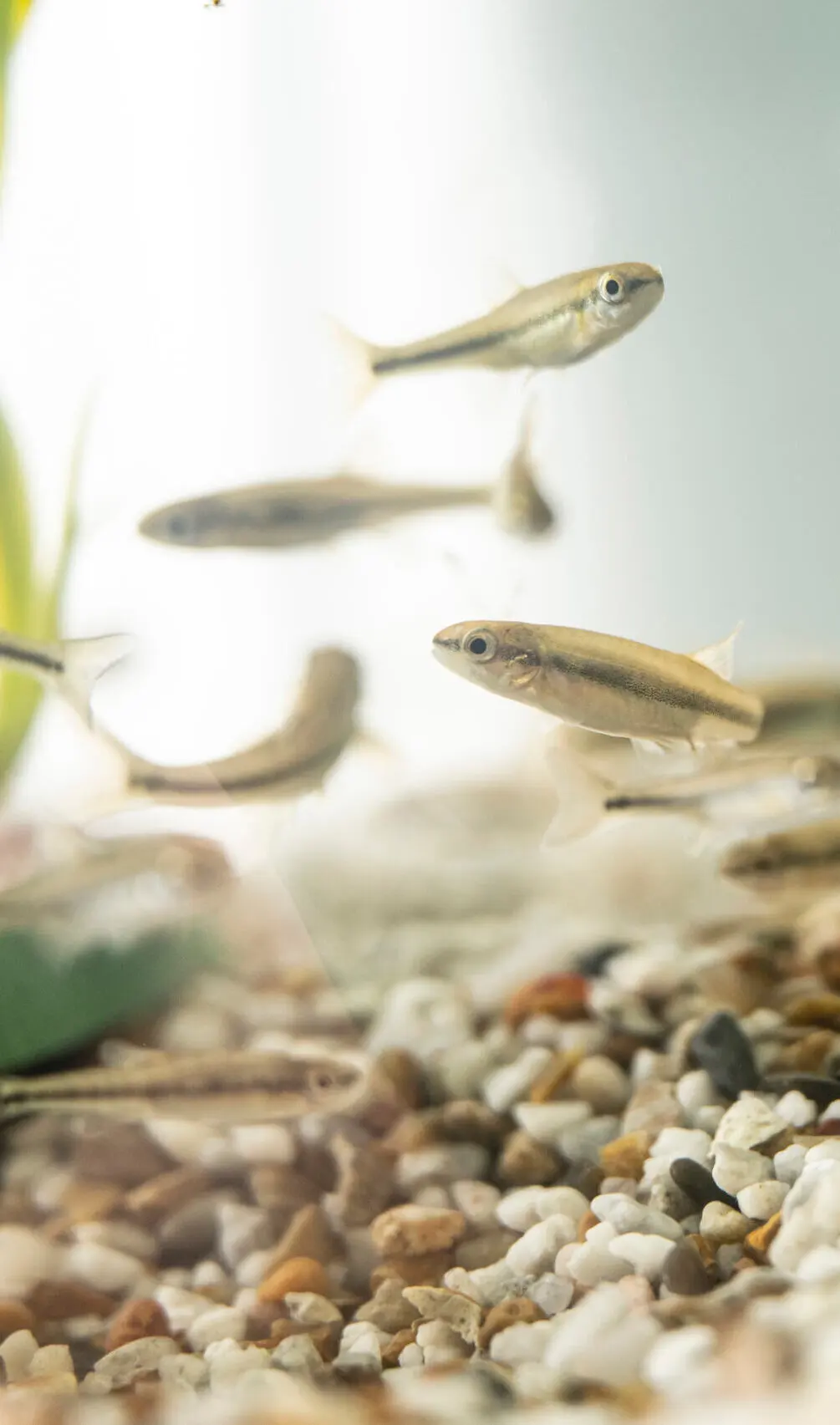
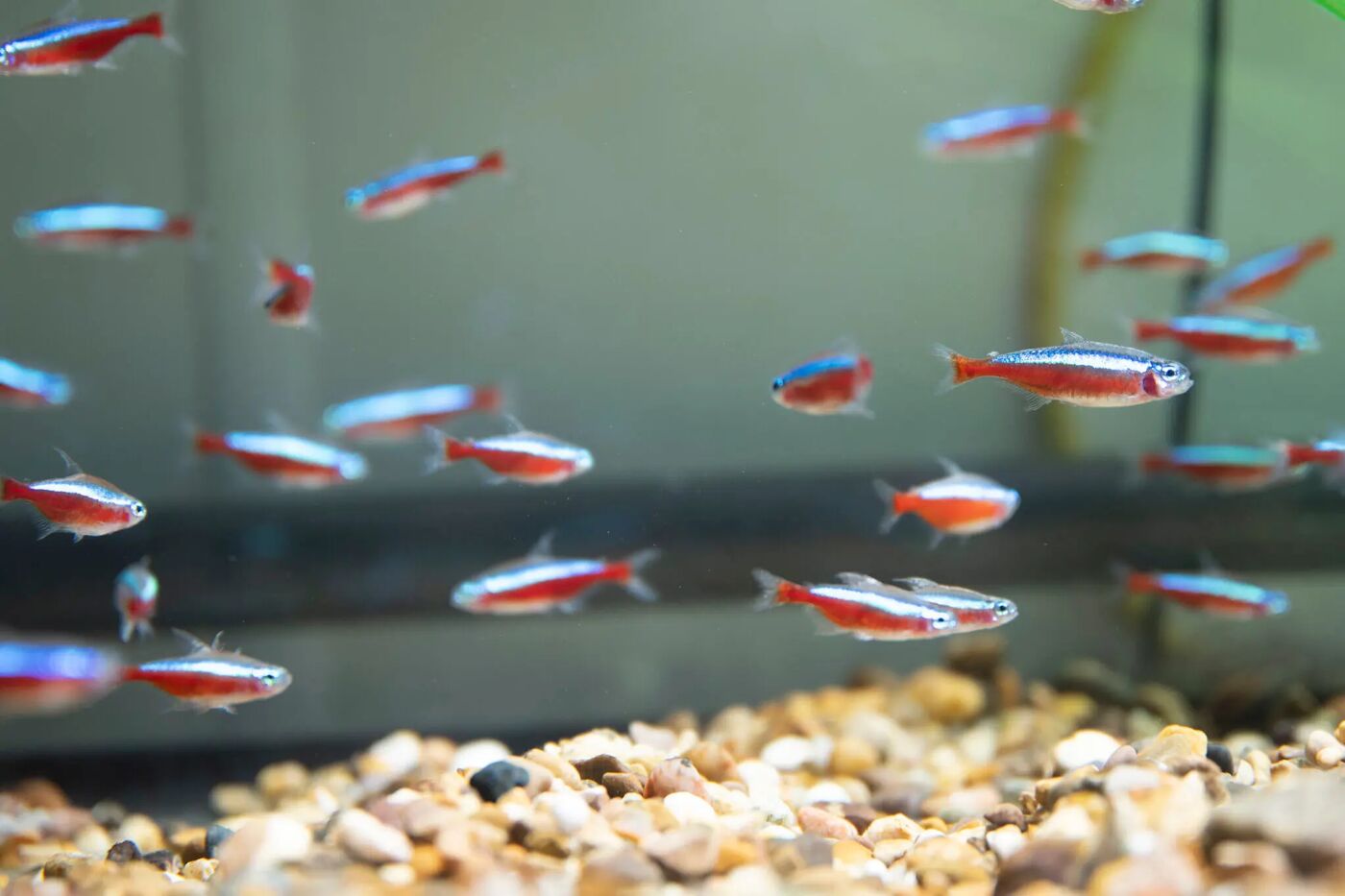
The University uses a variety of mammals, birds, fish and amphibians for research purposes and procedures.
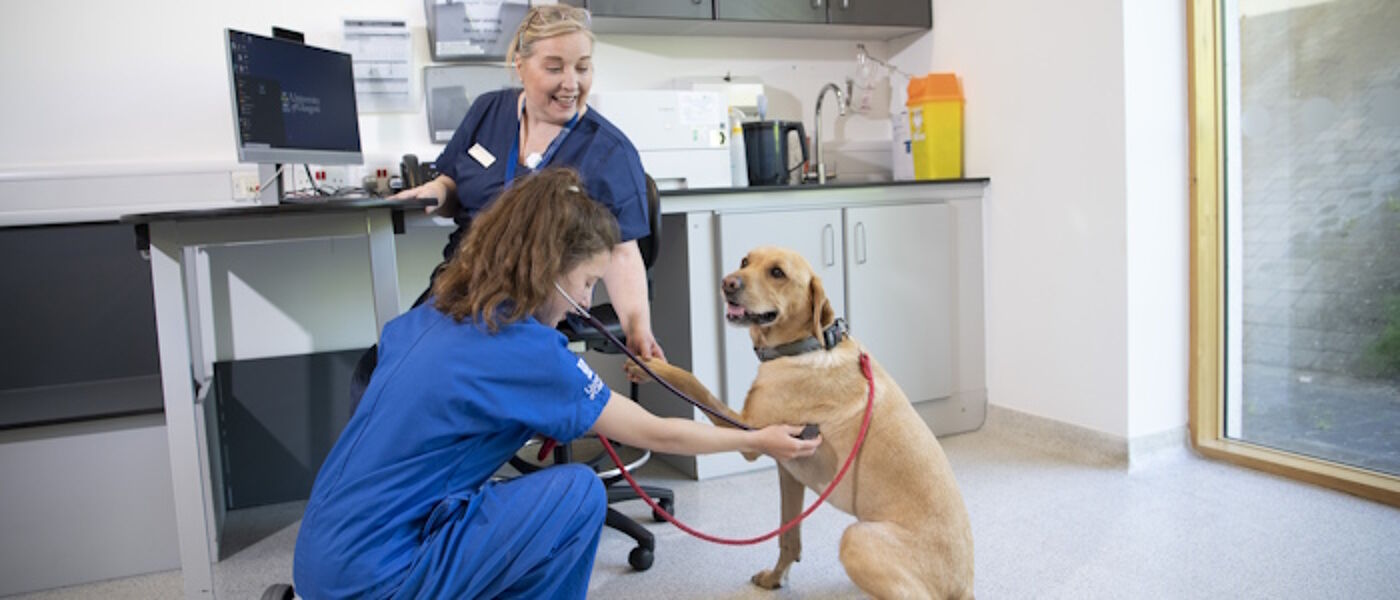
All our animals are housed in proper facilities and are cared for by a team of veterinary surgeons, animal care staff and support staff who are all fully-qualified and trained. Our facilities are regularly inspected by the Home Office.
The Number of procedures involving animals under the Animals (Scientific Procedures) Act 1986, on Home Office project licences held under the University of Glasgow establishment licence.
Procedures conducted at The University of Glasgow

| Species | 2021 | 2022 | 2023 | 2024 | 2025 |
|---|---|---|---|---|---|
| Mice* | 96,784 | 102,685 | 97,206 | 91,199 | 87,791 |
| Rats | 1,554 | 1,119 | 880 | 1020 | 714 |
| Hamsters | 252 | 423 | 141 | 258 | 262 |
| Gerbils | 65 | 39 | 46 | 22 | 0 |
| Fish | 3,775 | 3,059 | 2,788 | 5,992 | 5818 |
| Bird | 380 | 680 | 646 | 831 | 841 |
| Sheep | 341 | 60 | 227 | 128 | 0 |
| Rabbit | 108 | 133 | 147 | 42 | 72 |
| Cattle | 12 | 6 | 6 | 5 | 95 |
| Dogs | 2 | 6 | 23 | ||
| Frogs | 6 | 4 | |||
| Wilds Rodents | 262 | ||||
| Total | 103,271 | 108,204 | 102,089 | 99,509 | 96,038 |
* Mice used by the University of Glasgow and CRUK Scotland Institute.
Severity levels of animal research
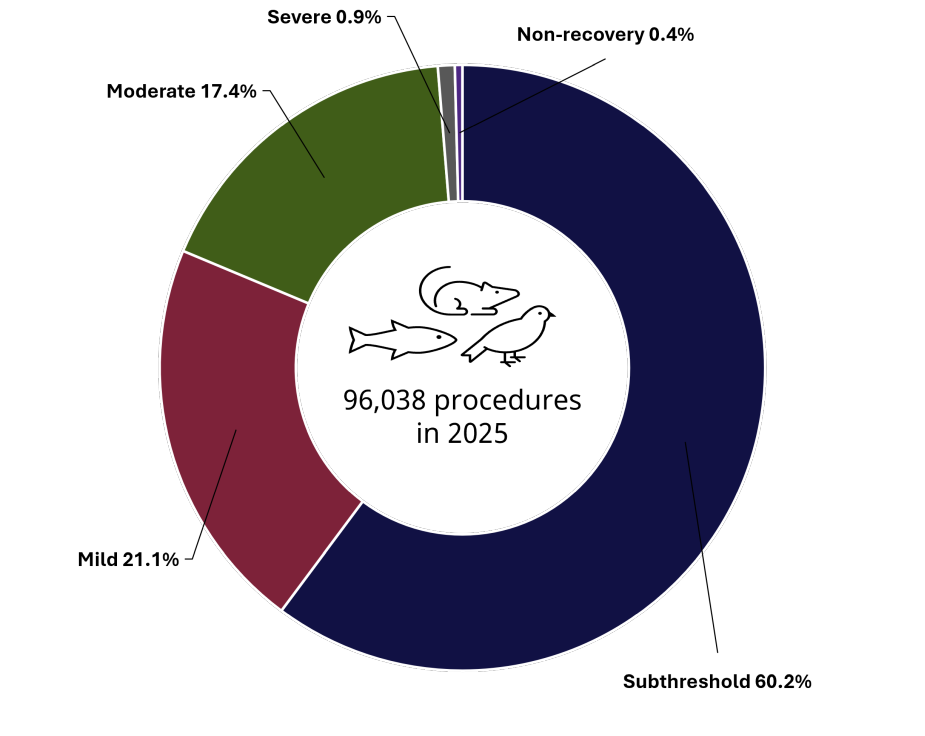
Any activity that can cause an animal pain, suffering or distress is referred to as a ‘procedure’. A procedure can be as mild as an injection or as severe as a surgical intervention. All procedures are defined by the Home Office using different classifications – Subthreshold, Mild, Moderate, Severe and Non-recovery. Most research at the University of Glasgow is either mild or subthreshold.
The levels of severity animals experience are:
- Subthreshold: where the animals do not suffer
- Mild: causes short-term mild pain, suffering or distress
- Moderate: causes short-term moderate pain, suffering or distress or long-lasting mild pain, suffering or distress
- Severe: causes short-term severe pain, suffering or distress, or long-lasting moderate pain, suffering or distress
- Non-recovery: the animal is placed under general anaesthetic before the start of the procedure and is humanely killed without ever regaining consciousness
Severity of procedures carried out in 2025
|
2025 |
Number of procedures |
% |
|
Sub threshold |
57807 |
60.2 |
|
Mild |
20213 |
21.1 |
|
Moderate |
16746 |
17.4 |
|
Severe |
871 |
0.9 |
|
Non recovery |
401 |
0.4 |
|
Total |
96038 |
|
ARRIVE guidelines
The University of Glasgow has signed up to the 'Animal Research: Reporting In Vivo Experiments (ARRIVE) Guidelines'. This is a 20-point checklist for researchers designed to improve the reporting of animal research.
Find out more about the guidelines on the ARRIVE Guidelines website
More from the University
For more information about UK legislation on animal research
To find out more about how scientists are finding new ways to carry out research without using animals
For more information about why animal research is carried out, how it has contributed to medical treatments and the types of procedures undertaken