In this episode, we explore the story, challenges, and outcomes of the VERIS project — VERIS – Voices of Palmyra: Engaging in Tangible Memorial Heritage in Social Innovation for Refugee Inclusion — through a conversation with Patrick M. Michel, Oana Șerban, and Brittnee Leysen. Together, they reflect on the collaborative process behind VERIS, a CIVIS Open Lab, the inclusion of Syrian refugees in participatory heritage practices, and the opportunities and limits of using virtual reconstruction as a tool for cultural memory and social innovation.
Starting from the reconstruction of tangible heritage associated with Palmyra, the discussion addresses a central question: how can digitally mediated encounters with endangered or destroyed cultural sites become a point of departure for recovering intangible heritage — memories, narratives, identities, and lived cultural practices? The episode also unpacks the ethical, methodological, and practical challenges of working with displaced communities, co-creation, trauma-sensitive engagement, and digital representations of cultural loss.
VERIS emerged from a strong interdisciplinary and inter-university collaboration under the umbrella of CIVIS – Europe’s Civic University Alliance, bringing together University of Lausanne, represented by Patrick M. Michel, University of Bucharest, represented by Oana Șerban, and University of Glasgow, represented by Brittnee Leysen.
This conversation offers insight into how heritage, technology, and civic engagement can intersect to support refugee inclusion, cultural resilience, and new forms of participatory knowledge-making.
VERIS - Voices of Palmyra : Engaging (in)tangible memorial heritage in social innovation for refugee inclusionThe scope of the project is to link the (in)tangible cultural heritage of the Temple of Baalshamîn and the Palmyra civilization with the narratives of refugees of Middle East whose countries have been affected by wars, in order to strengthen the social inclusion of such vulnerable extra-European groups across Europe and to raise the awareness on the essential role of culture in bridging and bonding communities with traumatic pasts. VERIS is the result of a powerful network, under the umbrella of CIVIS, Europe’s Civic University Alliance, gathering, for this particular research, The University of Lausanne, represented by Patrick M. Michel, The University of Bucharest, represented by Oana Șerban, and the University of Glasgow, represented by Brittnee Leysen. A massive support has been provided by JRS - Jesuits Refugee Service, one of the key-partners of our VERIS project, as well as by the UNESCO Chair in Interculturality, Good Governance and Sustainable Development of the Faculty of Philosophy, University of Bucharest.
VERIS has at its heart 6 major objectives:
To fill in the gaps between tangible and intangible cultural heritage
To explore the motifs that Syrian refugees used on the embroidery
To collect narratives of refugees
To host one exhibition of engaging (in)tangible heritage
To analyse the relationship between tangible and intangible cultural heritage related to traumatic memories
To develop a toolkit of social inclusion for Syrian refugees
Biographies of the speakers

Oana Șerban teaches Modern Philosophy, Aesthetics, Biopolitics and Cultural Studies at the University of Bucharest, Romania, as titular professor of the Faculty of Philosophy and the UNESCO Chair in Interculturality, Good Governance and Sustainable Development. She is Director of CCIIF – The Research Center for the History of Philosophical Ideas (UB). She has authored Cultural capital and creative communication. (Anti)Modern and (Non)Eurocentric Perspectives (Routledge, 2023), After Thomas Kuhn. The Structure of Aesthetic Revolutions (De Gruyter, 2022), Artistic Capitalism (Paralela 45, 2016), and co-edited different volumes of philosophy, culture and aesthetics, from which the most recent are Rethinking Modernity, Transitions and Challenges (Cambridge, Ethics International Press), Bordering the European Identity (Bucharest University Press 2018), Octavio Paz: Culture and Modernity (Bucharest University Press, 2017), Culture and Religion in the Balkans. Philosophical Approaches (Bucharest University Press, 2015). Currently, she is interested in the biopolitical potential of modern art, explored in one of her studies, published in the volume Philosophy and Film: Bridging Divides (ed. Christina Rawls, Diana Neiva, Steven Gouveia) (Routledge, 2019), and continued in her capacity as director of a research project on Biopolitical Art in the Post-Holocaust Time. Forthcoming volumes at Edinburgh University Press and Suny Press include her latest studies on biopolitical art and Italian biopolitics. She teaches Holocaust studies framed as a biopolitical history of antisemitism and antihumanism. In this field, she is interested in topics such as the impardonable and limits of forgiveness, the origins of totalitarianism, hospitality and hostility in the 20th century, the aestheticization of violence, cultural memory and remembrance. Oana Șerban has translated different authors such as Gilles Lipovetsky, Michel Foucault, Sylvain Tesson and Jean d’Ormesson. In the context of the VERIS project, a CIVIS Open Lab, she led the Romanian team representing the University of Bucharest, ensuring the research on the biopolitical gaps between the tangible and intangible cultural heritage.
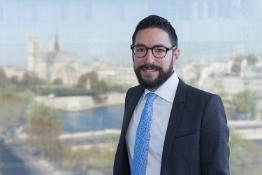
Patrick Maxime Michel (1983) studied classical archaeology and ancient history at the University of Lausanne and specialised in Assyriology at the University of Geneva. It was at this university that he completed his doctoral thesis in 2012 (published in 2014). He also studied in Rome as a member of the Swiss Institute and a guest of the Pontifical Biblical Institute. In 2021, he obtained a DAS in cultural property law.
He has participated in several excavation campaigns in Syria with the American University of Beirut. From 2013 to 2014, he held a fellowship at Venice International University. He is also a member of the scientific committee of the ALIPH Foundation and a member of the board of the Arttech Foundation.
Having taught in Switzerland (Universities of Geneva and Bern) and abroad (La Sapienza University of Rome, Harvard and Zayed University, Abu Dhabi) Mr Michel is now a Seniot lecturer and researcher in ancient history and leads the Collart-Palmyra project at the University of Lausanne, which enables the 3D visualisation of Paul Collart’s archives documenting the now-destroyed sanctuary of Baalshamîn in Palmyra. He is also the director of the NUCLEUS faculty centre, a centre of expertise tasked with bringing together faculty members active in or concerned with the impact of digital technology in the fields of research and teaching. Finally, he is co-leader of the OpenLAb VERIS project within the CIVIS alliance and director of Voix de Palmyre at the University of Lausanne working for inclusion of Refugees in Academic programmes in order to keep cultural memory.
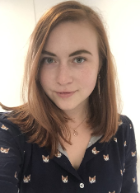
Dr. Brittnee Leysen is a researcher, educator, and entrepreneur whose work explores cultural heritage, memory, migration, and identity across international and community contexts. She has collaborated on projects connected to UNESCO and refugee-focused initiatives, with particular interests in intangible cultural heritage, language, belonging, and the ways people navigate place and displacement. Alongside her academic and public engagement work, Brittnee is the founder of
PURR Glasgow, Scotland’s first cat-only grooming salon, where she combines research-informed thinking with animal welfare and entrepreneurship. Her work sits at the intersection of academia, social impact, and creative innovation.
First published: 22 May 2026