

From the uplands to the lowlands: exploring peatland projects in the Humber catchment
Published: 8 September 2026
Members of the RESPECT project travelled to the Yorkshire Dales and Humberhead Levels to learn about collaborative approaches to peatland funding and governance
Jill Robbie, Miranda Geelhoed and Alex Skarlatos-Currie
Peatland restoration comes with many technical challenges from access to challenging terrain, to selecting appropriate techniques to measuring emission reductions and monitoring long-term outcomes. Our recent field trip to upland and lowland peatlands in the Humber catchment provided an opportunity to see innovation in action. Yet the trip also highlighted that success depends on more than technical progress. Laws, policies, funding arrangements and economic incentives all shape what is possible in terms of peatland management and restoration, as do the conditions for collaboration.
RESPECT – Rapid Engagement with Stressed Peatland Environments and Communities in Transformation – is an interdisciplinary research project exploring how agricultural peatlands in Scotland and England can be protected, restored and managed sustainably. As part of this work, we are researching what legal, policy and governance reforms are required to facilitate peatland restoration on agricultural land.
Yorkshire Dales: long-term projects require long-term funding
Our first stop was the Yorkshire Dales, where representatives from the Yorkshire Peat Partnership and Yorkshire Wildlife Trust guided us through restoration sites at Snaizeholme and Fleet Moss.
The visit provided an opportunity to think about peatland restoration in the uplands, and about the role that environmental and agricultural policy and funding plays in shaping restoration on the ground. In particular, the Nature for Climate Peatland Capital Grant Scheme has been an important source of public funding, but there is currently no commitment to continue it beyond 2027. Instead, post-Brexit agricultural policy is likely to become increasingly instrumental for peatland restoration, with funding being delivered through Landscape Recovery and Countryside Stewardship schemes.
These schemes differ greatly. Countryside Stewardship provides relatively short-term, accessible funding for specific actions by farmers. Landscape Recovery, by contrast, aims to support large-scale and long-term (~30 year) projects involving multiple landowners and public and private partners. Funding is intended to be more closely linked to environmental outcomes and landscape-scale change.
For farmers, the potential rewards of Landscape Recovery could be substantial. Yet, nothing is set in stone. Bespoke contracts for Landscape Recovery projects are negotiated with Natural England or the Environment Agency over lengthy periods and public funding will not necessarily be guaranteed for the full duration of the project.
For those leading restoration projects, this creates a tricky situation: what happens when one source of funding ends before another is ready to take its place? Gaps in funding are not simply a financial problem. They can also mean losing the staff, expertise and relationships with partners that have been built to deliver restoration. The current approach raises important questions about how long-term peatland action in support of national targets can be delivered when funding remains subject to change.
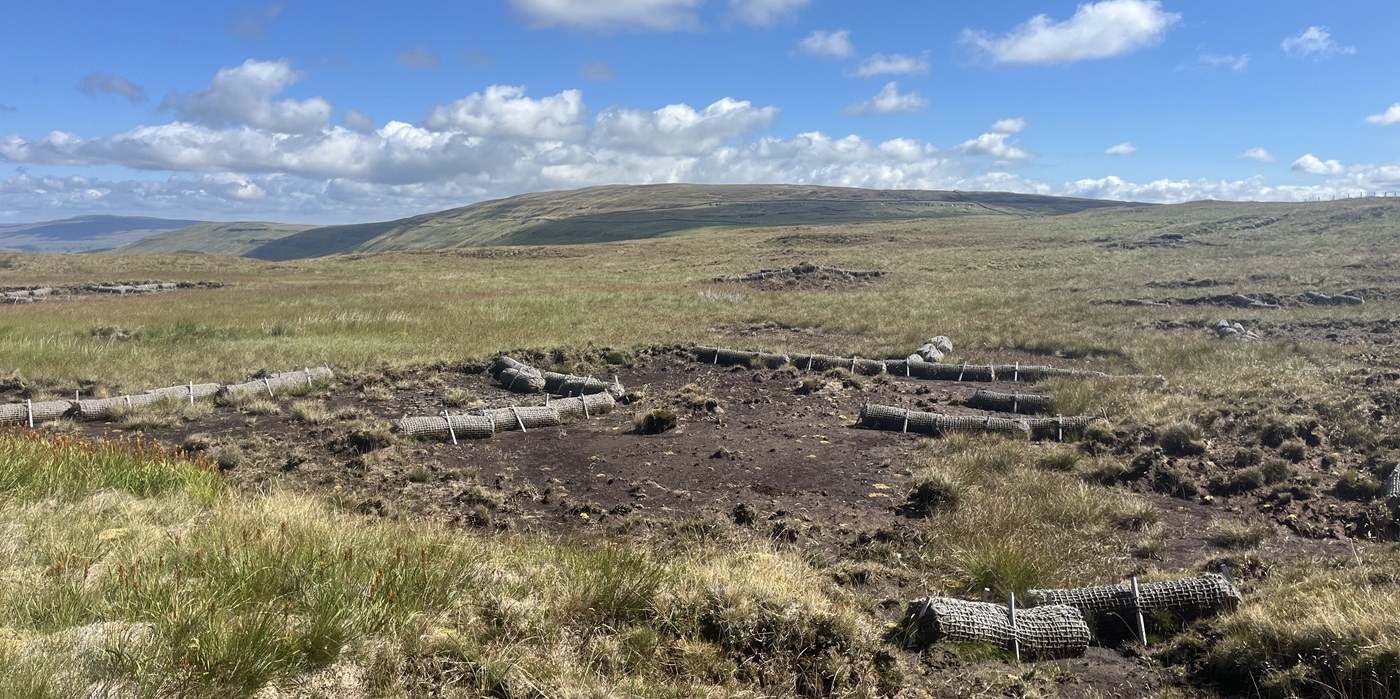
Peatland restoration at Snaizeholme Estate (Photo credit: Miranda Geelhoed)
The Humberhead Levels: impacts of rewetting across ownership boundaries
From the uplands of the Yorkshire Dales, we travelled to the very different lowland landscape of the Humberhead Levels. These flat lands were drained in the 17th century by Cornelius Vermuyden, a Dutch engineer specialised in large-scale drainage works. On our journey to Hatfield Moors we passed through arable fields and grasslands around Thorne and Crowle Moors and the Swinefleet area nearer the River Humber. Peatlands were everywhere but often you wouldn’t know it by just looking at them.
At Hatfield Moors, restoration is taking place within a nature reserve largely owned and managed by Natural England who kindly hosted the visit. The focus is on restoring – through revegetation and rewetting – the raised bog that has been damaged by historical peat milling. But restoring peatland within a nature reserve does not necessarily stop at the reserve boundary. Rewetting can affect water levels on neighbouring agricultural land, potentially making surrounding fields wetter. This means restoration requires conversations with the farmers who manage this land.
In addition, since 2023, for the areas surrounding Hatfield and Thorne Moors, Lowland Agricultural Peat (LAP) pilots are being developed to explore how arable fields and grassland with peat might be managed differently, notably by raising water levels. The availability of additional management payments under Countryside Stewardship Higher provide farmers with greater scope to consider alternative management approaches.
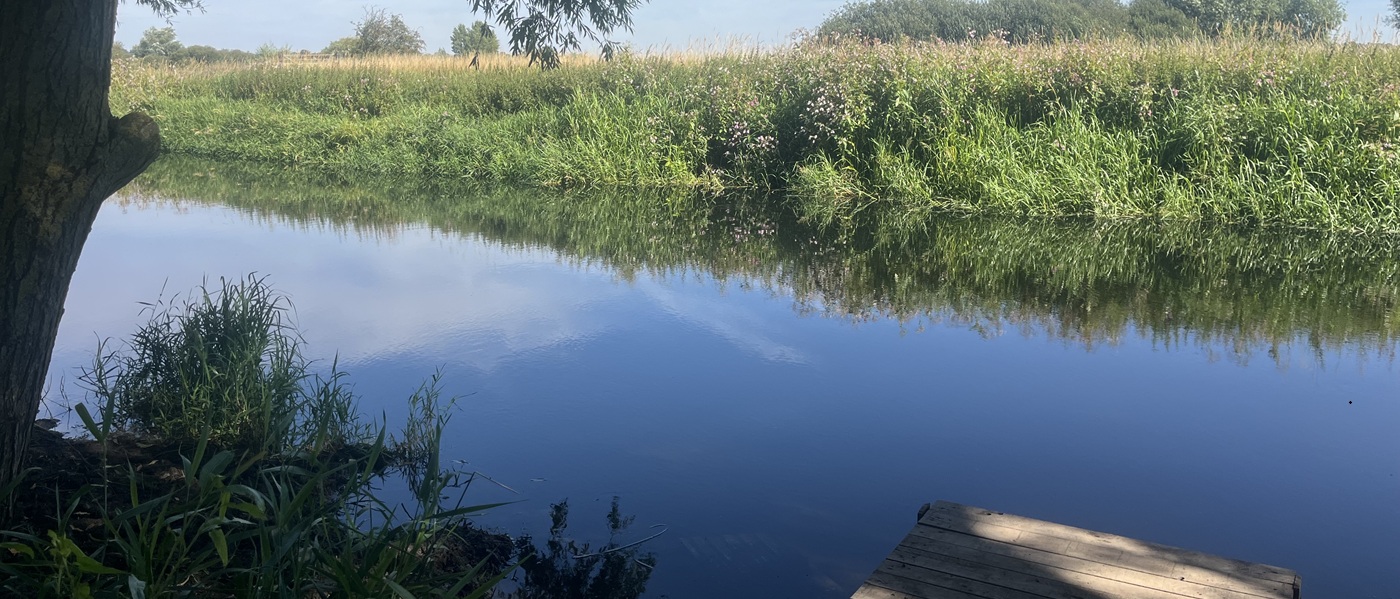
Lowland agricultural peatlands in the Humberhead Levels (Photo credit: Miranda Geelhoed)
Restoration depends on people: supporting collaboration across landscapes
Despite the stark differences between the English upland and lowland contexts, a common theme emerged during the trip: successful restoration depends heavily, and possibly increasingly so, on collaboration.
In the uplands, new Landscape Recovery schemes require cooperation between multiple landowners, environmental organisations and public bodies. In the lowlands, changes in water management create interdependencies across landholdings, highlighting the important role of public Internal Drainage Boards and other organisations in bringing people together.
Whilst decisions by individual landholders remain important, effective peatland restoration and management demands collective action. Carbon may be an important driver of public peatland policy, but carbon may not motivate all individuals to come to the table. Farmers may be concerned with agricultural production and viable livelihoods, environmental organisations with biodiversity and habitat recovery, and drainage authorities with flood risk and national security. Effective peatland governance therefore needs to provide space for these different motivations and priorities.
The RESPECT project
The RESPECT project will continue to examine how these different perspectives can be brought together to support sustainable peatland management and restoration. We will do this through ongoing engagement with policymakers, landholders, communities and partner organisations.
If you would like to receive updates about RESPECT, please subscribe to our newsletter or follow us on LinkedIn.
First published: 8 September 2026