

About

This year, the Lovelace-Hodgkin Symposium on AI Ethics focuses on Making the Invisible, Visible: AI, Stories, Power & Participation. Bringing together voices from technology, storytelling, healthcare, environment, culture, communities and the arts, the symposium explores the hidden systems, assumptions, impacts and exclusions that shape artificial intelligence.
Across the day, participants will move from understanding how AI works, to examining what it obscures, to asking who gets to tell the story and how communities can reclaim visibility and participation. Through interactive talks, games, creative activities, artworks and film, we will explore topics including large language models, missing data, cyber resilience, surveillance, mapping, environmental and cultural impacts, and community-led approaches to knowledge and representation.
The day will conclude with a screening of LifeMosaic’s documentary Mapping & Monitoring in Indigenous Territories, followed by a discussion with producer Michael Watts, drawing together the day’s themes of participation, power, knowledge and visibility.
Join us! Tickets are £5, which helps encourage people to attend the places they book, and will be donated towards a community project with the Children’s Wood Charity. We do not want cost to be a barrier: if the ticket price is difficult for you, please contact us, and we will be happy to help.
For a more detailed programme and to learn about our exciting lineup of speakers, please visit our programme page. The Lovelace-Hodgkin Symposium is financially supported by the Centre for Data Science and AI and The University of Glasgow.
About the Children’s Wood donation
Ticket donations will go towards work with the Children’s Wood Charity around community mapping, participation and shared care of local green space. This connects with some of the symposium’s wider themes, including visibility, mapping, drones, the view from above, and how communities can represent places on their own terms.
Date: 13 October 2026, Glasgow University Union
Book your tickets here!
To ask a question or join the mailing list, please email us here.
Meet the team
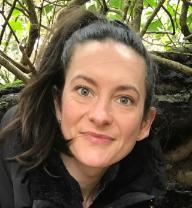 Dr Ciorsdaidh Watts (Co-creator of the Lovelace-Hodgkin Symposium, AI Ethics, Literacy & Impact Theme Lead at the Centre for Data Science & AI)
Hi. I’m Ciorsdaidh (pronounced Kirsty, it’s a Scottish Gaelic name) and I work as a Senior Lecturer in organic chemistry at the University of Glasgow. My background is in medicinal chemistry, particularly cancer research. I also love teaching, having a particular interest in technology-enhanced learning. In 2025 I co-created the MOOC, AI Ethics, Inclusion & Society that is available online via FutureLearn. I am also a LearnSci Digital Champion, having worked with this partner industry to develop and deliver online, interactive lab learning across undergraduate teaching in chemistry.
I am also an advocate for the inclusion of ethics within scientific discourse and higher education, and for this reason, one of my role models in chemistry is Dorothy Hodgkin. Not only did she pursue and achieve excellence in her field, she also considered real people and their experiences and was a proponent of social justice and equality throughout her life. I believe it is essential to think critically about any emerging technology and consider the possible impacts on society, especially marginalised and minority groups. As a mother of two gorgeous children (one of whom lives with significant disabilities), as a scientist and human, questions of inclusion, equality, and responsible AI in education are important to me. You can connect with me on LinkedIn @Ciorsdaidh Watts.
 Dr Lydia Bach (Co-creator of the Lovelace-Hodgkin Symposium, AI Ethics, Literacy & Impact Theme Lead at the Centre for Data Science & AI)
As the Equality, Diversity and Inclusion Officer within the College of Science and Engineering, I am passionate about improving my work environment, making it inclusive for all irrespective of their background. I see myself as an agent of change, leading organisational and cultural transformation by understanding data, highlighting disparities, encouraging dialogue and setting up initiatives on crucial equality issues.
I see AI as both a tool and a challenge in the pursuit of equality and diversity within academia and beyond. While AI has the potential to enhance accessibility in education and personalise learning, for example, it also poses ethical dilemmas and risks exacerbating existing inequalities. The Lovelace-Hodgkin Symposium will be an opportunity to consider the importance of ethical considerations and inclusive practices in the development and use of AI across society. My hope is that we can gain a greater understanding of how we can use AI as a force for positive social change to create a more equitable inclusive society.
Nick Smoliak (Student Intern AI Ethics, Student Support Lead)
I moved from Canada to the UK in 2019 and initially worked as a chef in London. During COVID, I retrained as a physics teacher, which I did for two rewarding years. Two years ago, my wife and I moved to Glasgow, where I studied Nuclear and Environmental Physics on the COP26 climate leadership scholarship. 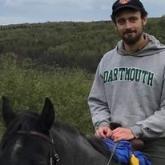
Now, I’m pursuing a PhD with the Deep Nano research group as part of the ElectroMed project, focusing on improving biosensors using machine learning and device simulation methods.
My background in teaching and current research on AI led me to engage with the Lovelace-Hodgkin Symposium and the overall pursuit of a framework for the ethical use of AI in higher education and research.
Abbie Thorpe (Student Intern AI Ethics, Student Support Lead)
I’m Abbie, I’m 23 and recently graduated in Law from the University of Glasgow! I am now undertaking a Master’s Degree at Glasgow in technology ethics and law.
I have been most drawn to ethical arguments, and so AI is an extremely relevant and contested topic when it comes to discussing morality.
I believe we are all aware of the rapid growth of AI, but not all of us talk about it - and we should be talking about it. I am very much looking forward to learning more and passing on what I know!