

Scientists find a natural ‘brake’ in the immune cells that fuel gut inflammation
Published: 27 November 2026
A new study has revealed that some of the immune cells that fuel gut inflammation in people with inflammatory bowel disease (IBD) also activate a natural ‘brake’ within themselves
A new study has revealed that some of the immune cells that fuel gut inflammation in people with inflammatory bowel disease (IBD) also activate a natural ‘brake’ within themselves.
The research – led by the University of Glasgow, in collaboration with the University of Edinburgh and published in Science Immunology – suggest that strengthening this natural brake could offer a new way to treat IBD in future.
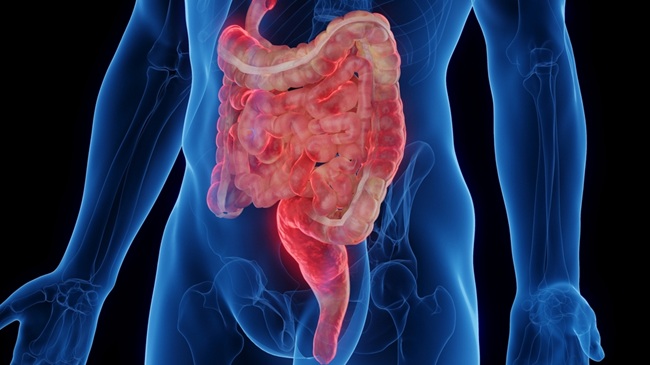
IBD is a chronic illness where the body’s immune system mistakenly attacks the digestive tract, leading to unpredictable attacks of inflammation. Diagnosis and monitoring of the condition often rely on colonoscopies, where a small camera is used to examine the gut. More than half a million people in the UK live with IBD, and around 25,000 people in the UK are diagnosed with it each year.
The study identified a group of monocytes, a type of white blood cell that accumulates in the inflamed gut of people with IBD, where they produce particularly high levels of inflammatory signals that may contribute to ongoing inflammation.
The researchers found that these same cells also switch on an enzyme called ACOD1, which produces itaconate, a naturally occurring molecule that helps put the brakes on inflammation, preventing the cells’ inflammatory response from becoming excessive.
The researchers found higher levels of itaconate in the stool and inflamed bowel lining of people with IBD, suggesting that this natural brake is already active during disease, even while inflammation continues. To investigate further the research team then studied the mechanism in mice and mice cells, and were able to show that mice lacking ACOD1 went on to develop more severe bowel inflammation, demonstrating the enzyme’s protective role.
By identifying this mechanism within inflammatory cells, the study provides a basis for investigating whether strengthening the ‘brake’ could help control gut inflammation, paving the way for the development of more targeted treatments.
Dr Gareth-Rhys Jones, a gastroenterologist at the University of Glasgow who co-led the study with Dr Calum Bain, said: “Current treatments for Crohn’s disease and ulcerative colitis already block some of the inflammatory chemicals produced by these cells. What caught our attention was that these highly inflammatory cells were also switching on a brake of their own. We’d now like to know whether strengthening that brake could help people with IBD.”
Derek McEwan, CEO & Founder of the Catherine McEwan Foundation, a charity set up for people for anyone affected by Inflammatory Bowel Disease, said: “For the more than 50,000 people living with Crohn’s or Colitis in Scotland, research like this brings real hope. Living with IBD can be unpredictable, exhausting and life-changing, and the need for better, more targeted treatments has never gone away.
“Understanding how the body may naturally regulate inflammation opens up exciting possibilities for the future. While there is still work to do, discoveries like this bring us another step closer to changing lives, improving outcomes and giving the IBD community hope for a better tomorrow.”
Enquiries: ali.howard@glasgow.ac.uk or elizabeth.mcmeekin@glasgow.ac.uk
First published: 27 November 2026