

New research challenges long-held beliefs about Robert Burns and Jamaica
Published: 30 October 2026
A new UofG study provides the most detailed analysis to date of Robert Burns’s connections with Jamaica and relationship to the Atlantic slavery system.
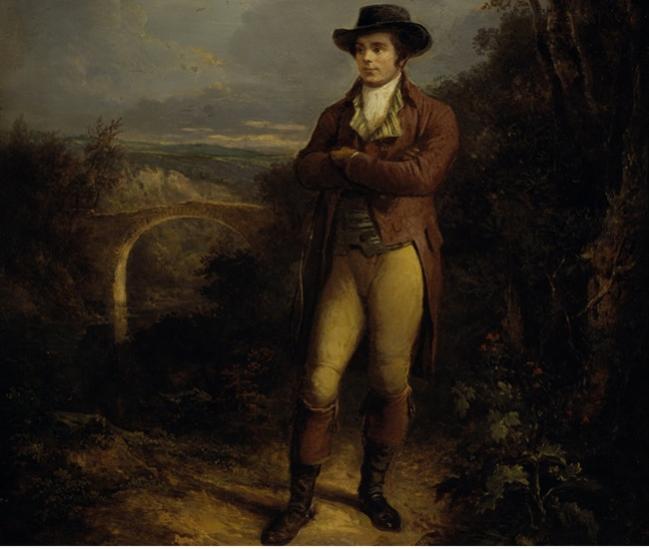
A new study by academics at the University of Glasgow provides the most detailed analysis to date of Robert Burns’s connections with Jamaica and relationship to the Atlantic slavery system.
Drawing on newly examined correspondence, shipping records and plantation documents, the research clarifies longstanding questions about Robert Burns’s cancelled voyages to Jamaica in 1786. The article re-examines his connections with Jamaica between 1786 and 1834, focusing on his cancelled plans to emigrate in the broader context of Scottish migration to the Caribbean. The cultural memory of these events, as well as how they have been interpreted in heritage settings, is examined.
The research is published in the Burns Chronicle by leading historian Dr Stephen Mullen and Scottish Literature expert Dr Craig Lamont is entitled “Historicising Robert Burns’s Jamaica, 1786-1834”.
Dr Mullen, Lecturer in History, School of Humanities | Sgoil nan Daonnachdan and Dr Craig Lamont, Lecturer in Scottish Studies, School of Critical Studies say about their article: “By distinguishing between Robert Burns’ symbolic associations with Jamaica in 1786 from material complicity with chattel slavery, these findings provide clarity in an ongoing debate. If Burns is cited in future as representative of Scotland’s connections with Caribbean slavery, this distinction should be explained.”
In 1786, Robert Burns considered emigrating to Jamaica as Mossgiel farm was failing and he faced personal difficulties, including concerns about supporting Jean Armour who was pregnant with his twins. The traditional narrative that he booked passage on three separate ships (Nancy, Bell, Roselle) is challenged. Mullen and Lamont’s analysis of the documentary evidence, including newly discovered shipping advertisements, indicate only one confirmed booking: aboard the Bell, scheduled to sail on 17 October 1786.
A new periodisation of departure has been established, which provides clarity as to Burns’s motives and when he abandoned his plans. His cancellation of the solitary voyage he booked was influenced by professional and familial considerations, the article argues.
While Burns planned to work as a bookkeeper, supervising enslaved people on a Jamaican plantation, he never profited from plantation slavery nor participated in the slave trade, the article adds. His engagement with the Douglas family (Scottish planters in Jamaica) did not legally bind him to travel. The article clarifies that Burns’s only material complicity was the purchase of a passage ticket to Jamaica on the Bell, which he ultimately did not use, incurring a significant personal financial loss.
The success of Poems, Chiefly in the Scottish Dialect, otherwise known as the Kilmarnock Edition (published 31 July 1786) and the first Edinburgh Edition (published 14 April 1787) provided him with an alternative. Profits from publishing exceeded what he could have earned in Jamaica. The article notes: “The relative worth of these profits, if compared to average earnings in 2024, was £1.76m. Had he remained on a Scottish book-keeper’s starting salary of £30, it would have taken him almost twenty-nine years to earn this type of wealth.”
The article notes how recent heritage and institutional narratives have sometimes exaggerated Burns’s connection to slavery, using him as a symbol for Scottish complicity, despite no evidence of direct involvement. The authors argue for an evidence-based approach to interpreting Burns, arguing he should no longer be viewed as emblematic of Scottish complicity with chattel slavery.
The authors advocate a more accurate and responsible public history as bicentenaries of abolition approach in 2033. The British government passed the Slavery Abolition Act 1833, which freed all enslaved people in the British West Indies in 1834. After emancipation, a system of apprenticeship was established, where emancipated Africans were required to continue working for their former masters (which ended in 1838).
The article concludes: “The man [Robert Burns] who rejected a lucrative offer to go to Jamaica at a time of personal crisis, and had no material connection to the African slave trade or chattel slavery, should no longer serve as the emblem for the Scots who did.” Dr Mullen and Dr Lamont says they hope their new research: “establishes a model with implications how Burns and Caribbean slavery is interpreted in civic Scotland”.
Burns Chronicle
Published continuously since the 1890s, the Burns Chronicle is the oldest journal of Scottish literature in the world. Now published by Edinburgh University Press as a peer-reviewed publication, it has reached 130 years of unbroken history.
The full article is available here - “Historicising Robert Burns’s Jamaica, 1786-1834”.
First published: 30 October 2026