

£1.4M new network aims to strengthen UK electronic materials sector
Published: 22 October 2026
Researchers from the University of Glasgow are set to lead a new partnership which aims to strengthen the UK’s sovereign capabilities in the development, manufacture, and commercialisation of electronic materials.
Researchers from the University of Glasgow are set to lead a new partnership which aims to strengthen the UK’s sovereign capabilities in the development, manufacture, and commercialisation of electronic materials.
The Responsible and Resilient Electronic and Electromagnetic (RaRE) Materials Network Plus is one of four new national networks announced today (Thursday 22 October) which, alongside nine new partnerships, will share in £12.8m in funding to connect research and industry.
The awards form part of the National Materials Innovation Programme (NMIP), funded by UK government and delivered by Innovate UK and EPSRC.
NMIP, part of UK Research and Innovation’s Industrial Strategy 8 Advanced Manufacturing Programme, brings together people, expertise and investment to help UK materials innovation become real-world impact.
The £1.4m RaRE Network unites more than 50 partners across industry, academia and government with over £1m in partner support.
Together, as the UK’s first network dedicated to electronic materials, they will work to tackle a longstanding challenge for the country’s research landscape – the disconnect between research in applied materials and electronics design and integration.
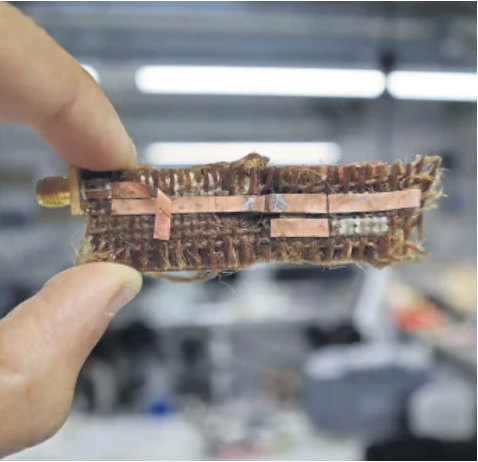
Low-waste materials: helping scale bio-based and sustainable electronics, such as circuit boards on degradable plant based materials
The UK’s electronics and technology sector is vital to the country’s economy, supporting 100,000 jobs and contributing £100bn each year. However, the sector is currently vulnerable to challenges caused by shocks in global supply chains, like the £22bn loss suffered by UK carmakers during chip supply shortages in 2021.
Similar vulnerabilities continue to affect key sectors including telecommunications, defence and energy, many of which depend on secure and sustainable materials supply chains.
The Network will tap into the expertise of its members to develop new solutions to supply chain challenges and strengthen the UK’s resilience. RaRE’s co-investigators from the Universities of Glasgow, Oxford, Southampton and Loughborough will find new ways to develop knowledge exchange between the country’s experts in semiconductors, heterogeneous integration, interconnects and system design, and design tools.
Ultimately, RaRE aims to create a long-term positive impact by de-risking ambitious research and providing national and global leadership in the field of sustainable and circular electronics.
Professor Mahmoud Wagih is the network’s principal investigator. He will lead the University of Glasgow’s contribution to RaRE, in partnership with colleagues from the School of Chemistry and the Adam Smith Business School.
Professor Wagih said: “Electronics have the most cross-cutting impact across the advanced materials spectrum, from enabling connectivity across the electromagnetic spectrum and transforming computing, to powering a sustainable and resilient grid.
“Pulling advanced materials innovation from chemistry and material science to electronic engineering practice will be essential to unlocking national growth and creating a resilient and sustainable supply chain.
“We are pleased to be coordinating the electronics work stream of the National Materials Innovation Programme, and look forward to fostering new connections towards launching inter-disciplinary research and advancing the underlying people and skills."
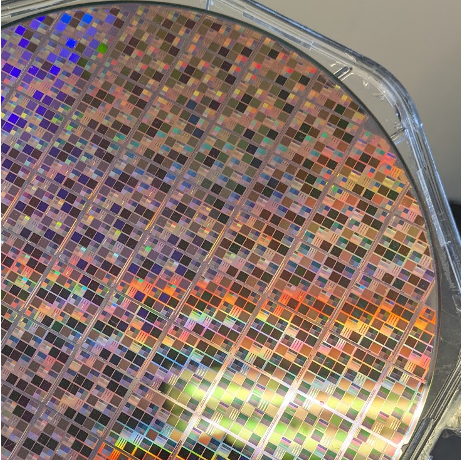
The RaRE materials network will advance emerging semiconductors both wafer-scale and using large-area processing.
The Network will have two key areas of focus. The first will centre on creating new links between researchers working across advanced connectivity, quantum technologies and next-generation power electronics, providing a unique interface between materials research and emerging electronic systems.
The second focus area will work to strengthen the UK’s electronic materials community, providing new opportunities for skills development, career progression and collaboration across academia and the public and private sectors.
Professor Dimitra Georgiadou of the University of Southampton said: “There are exciting initiatives across emerging electronic materials, from 2D materials and organic semiconductors to solution-processable metal oxides and quantum-dot nanocrystals, and in developing scalable, greener manufacturing routes for next-generation devices, where our Southampton team and partners are active.
“Through the RaRE Network Plus, we look forward to connecting these capabilities with applications in RF and wireless technologies, neuromorphic computing and sensing, while strengthening links with the UK and Southampton’s wider ecosystem, from fundamental research to training programmes.”
Professor Lucia Corsini of the University of Oxford said: “Materials innovation is a key lever for achieving a circular economy in electronics. The University of Oxford is thrilled to join the RaRE Network Plus, bringing expertise in circular economy design, circular business models and sustainability assessment, whilst building on existing initiatives on circular electrical and electronic equipment.
“We look forward to embedding systems-level approaches to circularity. Linking materials, product design, manufacturing and waste management, along with tools such as AI and prospective Life Cycle Assessment, we aim to help develop more resilient supply chains that reduce mining of critical raw materials towards sustainable and circular electronics."
Professor William Whitlow of Loughborough University said: “Materials for manipulating electromagnetic waves are essential for unlocking advanced connectivity technologies. We are delighted to work on connecting researchers and end-users in electromagnetic and telecommunications with emerging technologies in material science.
“Loughborough is pleased to take part and linking major initiatives across manufacturing technologies, defence and electromagnetic, and space technologies."
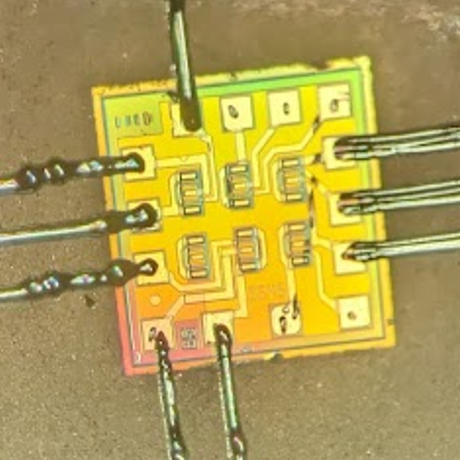
A silicon chip connected to a bio-based carrier using printed ink-based tracks
Jane Nicholson, Executive Director for Research at EPSRC said: “The UK has outstanding materials research and ambitious businesses with the potential to turn new discoveries into better products, services and technologies.
“This investment will create the connections needed to bring those communities together, helping research address real-world challenges and progress towards economic, societal and environmental benefit.”
First published: 22 October 2026
Related links