

European Solar Telescope reaches milestone on road to construction
Published: 9 October 2026
A groundbreaking international solar telescope project involving researchers from the University of Glasgow’s School of Physics & Astronomy has taken an important new step towards construction.
A groundbreaking international solar telescope project involving researchers from the University of Glasgow’s School of Physics & Astronomy has taken an important new step towards construction.
The European Solar Telescope, or EST, is expected to be the largest solar telescope ever built in Europe, capable of imaging the Sun in unprecedented detail. Once the construction of the telescope on Roque de los Muchachos Observatory on La Palma, Spain is complete, it will enable valuable new insights into the solar drivers of space weather.
Accurately monitoring the main sources of space weather – including the solar flares that cause ever-shifting bursts of radiation and outflows of particles and magnetic field from the Sun - can help scientists on Earth better understand and predict geomagnetic storms which can interfere with terrestrial and orbital technology.
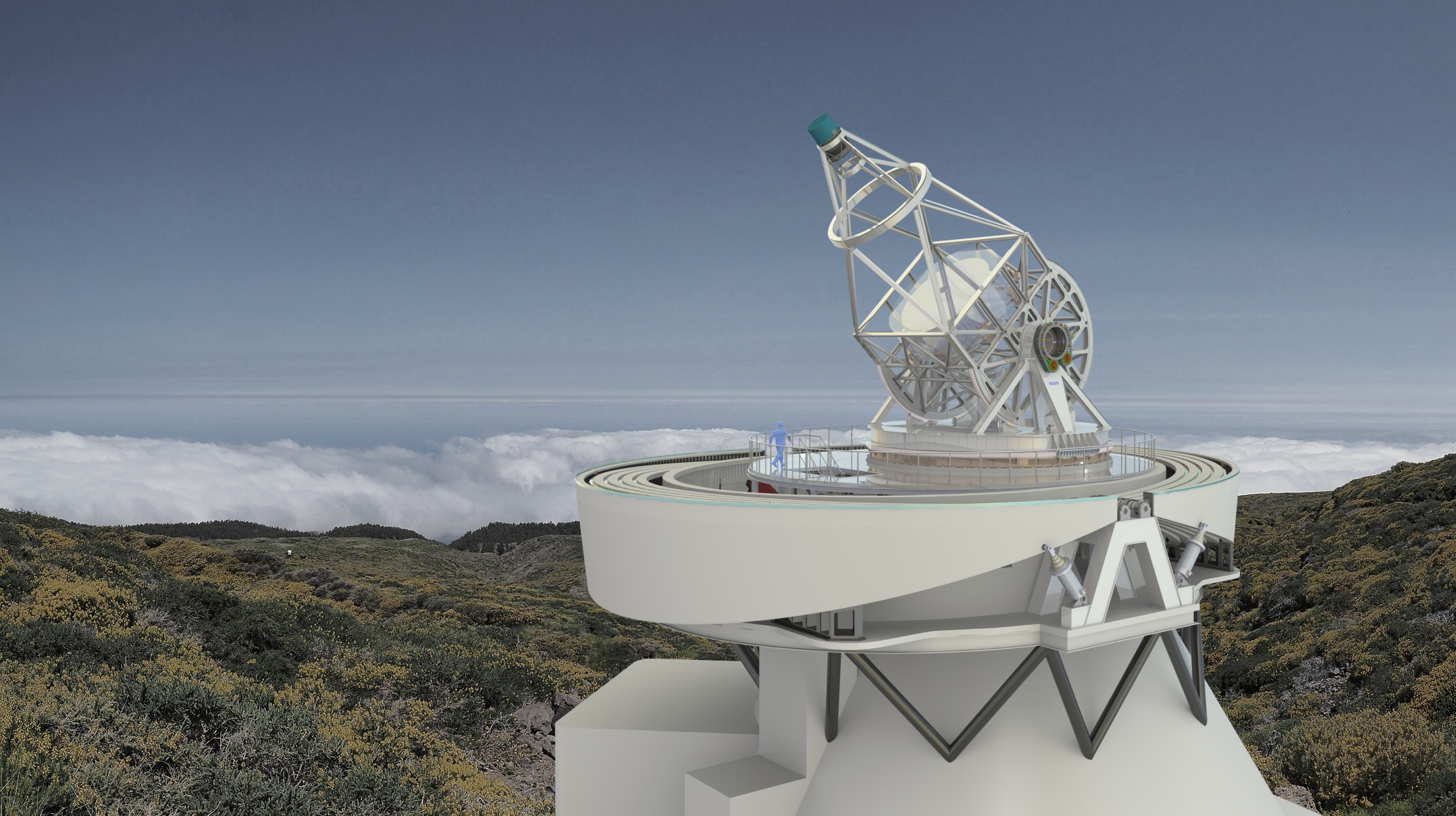
The EST project, which was launched in 2008, has been granted Landmark status by the European Strategy Forum on Research Infrastructures (ESFRI). The status is granted to research infrastructures which have reached an advanced stage of planning and European member states agree to treat them as strategic assets.
The Landmark designation for EST has been warmly welcomed by researchers from the University of Glasgow, who are part of the UK consortium which has supported EST’s development since its inception.
The UK Universities Consortium, or UKUC, brings together researchers from the Universities of Aberystwyth, Durham, Exeter, Glasgow, Queens University Belfast, Sheffield University, MSSL/UCL and RAL.
The University of Sheffield’s Robertus Erdelyi, the principal investigator of UKUC, said: “Reaching this milestone is the result of many years of excellent work by many people and institutions in the UK and across Europe. To support and advance EST, UKUC has been formed and is led by the University of Sheffield.”
The School of Physics & Astronomy’s Professor Lyndsay Fletcher leads the University of Glasgow’s contribution to UKUC. She said: "This is an important milestone for EST because it recognises the maturity of the project and the strong European partnership that has been built around it over many years. There's still work to do before construction can begin, but Landmark status demonstrates that the scientific case is compelling and that Europe sees EST as a priority for the future.
"One of the most exciting aspects of EST is its ability to measure magnetic fields in the Sun's chromosphere, a part of the solar atmosphere that is central to understanding how solar flares develop and release enormous amounts of energy. Combined with its advanced adaptive optics, EST will allow us to observe solar activity with around four times greater resolution than is currently possible, helping us answer long-standing questions about how energy moves through the Sun's atmosphere.
"At Glasgow, we're already using the highest-resolution solar observations currently available to study flares and test the science that EST will make possible, and a new project recently funded by STFC will help us further develop our expertise in this field of research.
“The multidisciplinary expertise of the researchers that make up UKUC will help enable the major step forward for solar physics that EST will provide. The consortium’s contributions will help strengthen the case for continued UK involvement and investment in a project that will benefit researchers across Europe for decades to come."
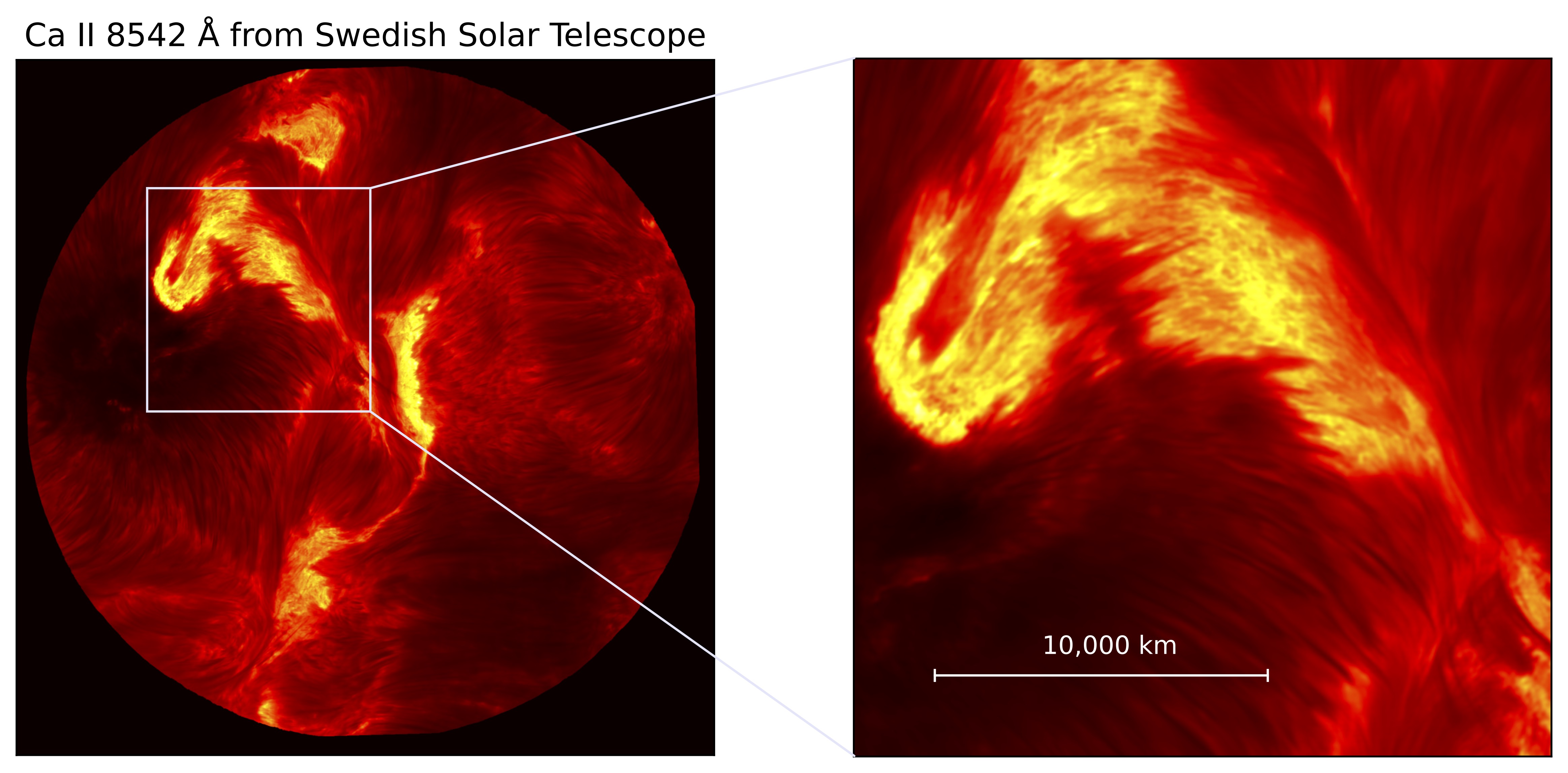
Image credit: SST / Rosseland Centre for Solar Physics, University of Oslo and Samantha Cook / School of Physics and Astronomy, University of Glasgow
EST will provide astronomers with unprecedented insights into the Sun and its effects on the near-Earth space environment. It will complement and enhance space missions by delivering crucial ground-based data to better understand solar phenomena that directly affect space weather conditions.
EST’s 4.2-metre mirror and instruments are designed to observe the solar atmosphere at multiple heights simultaneously and at different wavelengths. Researchers will be able to follow the emergence of magnetic fields at the solar surface, study how energy is transported to the higher atmosphere, and how it is released during solar flares.
These processes are central to understanding solar activity, including the mechanisms behind solar flares and eruptions. The Sun is the only star whose surface and lower atmosphere can be examined in such detail. EST will therefore help researchers investigate physical processes that are also relevant far beyond solar physics. Its ground-based observations will complement those of solar space missions.
EST Coordinator Manuel Collados said: “EST is, by its very nature, a European project. No single institution or country could undertake an infrastructure of this scale and ambition alone. Its recognition as an ESFRI Landmark is therefore a recognition of the strength of the European partnership that has been built around the project. The task before us now is to turn that shared scientific ambition into the long-term commitments needed to bring EST into construction”.
Héctor Socas-Navarro, Director of the EST Foundation, said: “Becoming an ESFRI Landmark is a major milestone for EST. It is a recognition of the European relevance of this research infrastructure. The EST community has built, over many years, a remarkable European collaboration around a common scientific goal. Landmark status recognises the maturity and strategic relevance that the project has now reached within the European research infrastructure landscape.”
Coordinated by the EST Foundation, with strong support and commitment from the Instituto de Astrofísica de Canarias, EST brings together institutions from across Europe.
The European Solar Telescope Canarian Foundation steers the project through its current phase and is preparing the steps towards construction. The telescope will provide European researchers with a shared observing facility, built around scientific questions that existing instruments cannot yet fully address.
First published: 9 October 2026