

Vaccinating dogs, not people, holds key to ending rabies deaths in Kerala
Published: 8 September 2026
A new study has found that expanding dog vaccination, rather than introducing routine pre-exposure vaccination for children, is the most effective and cost-effective way to eliminate rabies deaths in people in Kerala, India
A new study has found that expanding dog vaccination, rather than introducing routine pre-exposure vaccination for children, is the most effective and cost-effective way to eliminate rabies deaths in people in Kerala, India.
The research, led by the University of Glasgow in collaboration with researchers from the Directorate of Medical Education, Kerala University of Health Sciences, School of Public Health, Directorates of Health and Animal Husbandry in Kerala and The London School of Economics and Political Science is published in Lancet Regional Health. This study also found that the addition of routine pre-exposure rabies vaccination would cost millions but would prevent few additional deaths.
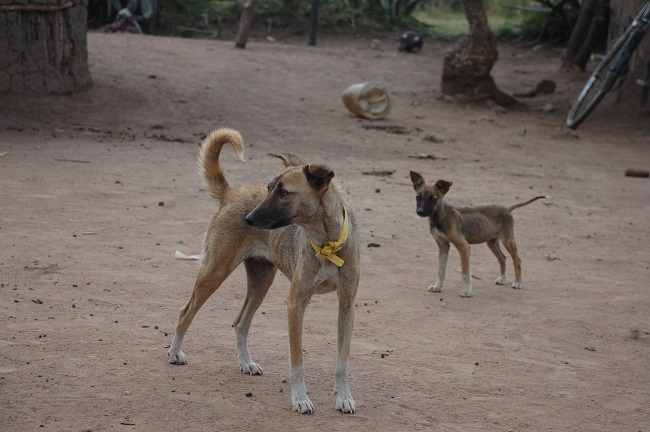
The research addresses an ongoing public health issue in Kerala, where human rabies deaths continue to occur despite widespread access to lifesaving treatment after animal bites. Rabies is always fatal once symptoms develop, but is entirely preventable through timely vaccination.
Currently, post-exposure prophylaxis (PEP) is given free of charge to almost one million people in Kerala every year and the state has one of the highest vaccination completion rates in India. Despite this, Kerala reported 33 human rabies deaths in 2025, including deaths among children.
Rabies causes an estimated 59,000 deaths globally each year, with India accounting for the largest share of the burden. The WHO's "Zero by 30" strategy aims to end human deaths from dog-mediated rabies by 2030.
The ongoing deaths in Kerala have prompted debate over whether adding routine pre-exposure prophylaxis (PrEP) – vaccinating people in advance, before any bite occurs — could provide an additional layer of protection.
However, the study found that introducing routine PrEP would cost an additional $10M and would provide very little additional benefit (preventing fewer than 10 additional deaths) when access to PEP is already strong.
The research suggests that, by contrast, increasing vaccination coverage among dogs produced dramatically larger reductions in human deaths at a much lower cost.
Under scenarios where 70% of dogs were vaccinated, the study’s mathematical model predicted that annual rabies deaths in Kerala would fall to near zero within around three years.
The study’s analysis also showed that switching to the WHO-recommended one-week PEP regimen could save around US$6.3 million (INR 580 million) over ten years without increasing the risk of death.
The research also uncovered evidence that Kerala's dog population may be substantially larger than current official estimates. The patterns observed by the researchers in rabies surveillance data suggests that the unowned dog population may be around five times larger than the official census estimate, giving a total dog population of around 2.3 million animals across the state. The researchers suggest that underestimating dog numbers could mean vaccination campaigns are reaching a smaller proportion of the population than intended and are therefore less impactful.
Martha Luka, PhD researcher at the University of Glasgow's School of Biodiversity, One Health & Veterinary Medicine and lead author, said: "Rabies deaths are entirely preventable, and while Kerala has already made major investments in human rabies prevention, avoidable deaths still occur every year.
"Our findings suggest that introducing routine pre-exposure vaccination for children is unlikely to be the best use of resources in a setting where access to post-exposure vaccines is already high, and that the fastest path towards eliminating rabies deaths is sustained investment in dog vaccination as well as continued access to post-exposure vaccines.”
Professor Katie Hampson, Professor of Disease Ecology and Public Health at the University of Glasgow, added: "It was interesting to find that current estimates of Kerala's unowned dog population may be too low, meaning it is harder to achieve the vaccination coverage needed to stop transmission. Improving dog population estimates and finding effective ways to vaccinate unowned dogs should be treated as a priority, as the evidence consistently shows that mass dog vaccination is key to preventing deaths.
"Vaccinating dogs protects entire communities by preventing infections before they reach people, and our analysis shows that strengthening dog vaccination and maintaining equitable access to post-exposure vaccines will save more lives than introducing population-wide pre-exposure vaccination."
The researchers stress that their findings do not mean PrEP should never be used, and that pre-exposure vaccination may still have an important role for specific high-risk groups, including some tribal and remote communities where access to healthcare can be more challenging.
Professor Zinia from Kerala said “Even in such communities the same barriers that make it hard for people to access post-exposure prophylaxis may also limit the uptake of PrEP and deprive them of the early protection at the time of an exposure. Eliminating the virus at the source, by dog vaccination will be a better way to protect these marginalised communities - It not only ensures equity for vulnerable people but addresses a larger equity to all forms of life in the true spirit of One Health.”
“The implications extend well beyond Kerala, including across many countries where access to PEP may be even more challenging. Sustained dog vaccination offers a powerful, equitable, and population-level solution.”
For the study, the researchers assessed rabies prevention strategies in Kerala over a ten-year period (2026-2035), comparing routine childhood pre-exposure vaccination, alternative post-exposure treatment regimens, and different levels of dog vaccination coverage.
The study, ‘Pre-exposure prophylaxis as a complementary vaccination strategy to reduce rabies in Kerala, India: a cost-effectiveness modelling study,’ is published in Lancet Regional Health. The study was funded by the Wellcome Trust and the Indian Council of Medical Research-Department of Health Research.
Enquiries: ali.howard@glasgow.ac.uk or elizabeth.mcmeekin@glasgow.ac.uk
First published: 8 September 2026