

International study reveals differences in the health of porpoises in the North Sea
Published: 10 June 2026
Porpoises that strand in the Netherlands have, on average, a lower BMI than their counterparts in Scotland and elsewhere. This is according to an international study led by Utrecht University in collaboration with the Scottish Marine Animal Stranding Scheme (SMASS), based at the University of Glasgow.
Porpoises that strand in the Netherlands have, on average, a lower BMI than their counterparts in Scotland and elsewhere. This is according to an international study led by Utrecht University in collaboration with the Scottish Marine Animal Stranding Scheme (SMASS), based at the University of Glasgow.
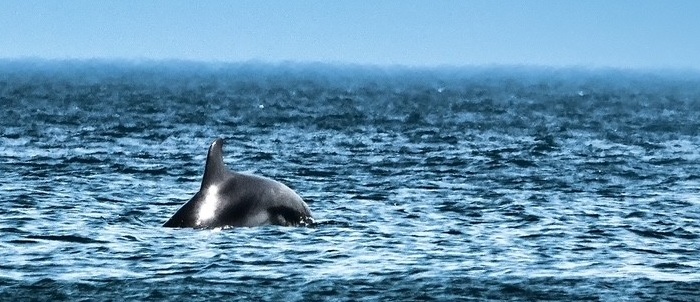
As part of the study, the researchers analysed the Body Mass Index (BMI) of 1,700 porpoises that were stranded or found as bycatch in the North Sea between 1990 and 2023. This is the first time that data from multiple countries has been compiled on this scale.
Previous studies on body condition were limited to individual regions. The researchers found differences in BMI between regions, seasons, age groups, sex and cause of death. Young porpoises had a lower BMI, particularly in summer, whilst the lowest values in adult animals were found in late summer and early autumn. It also emerged that animals that died from an acute cause, such as bycatch or predation, had a higher average BMI than animals that died following illness or other long-term health problems.
The study shows that the physical condition of porpoises is not the same throughout the North Sea. In particular, the lower BMI of porpoises from the southern North Sea suggests that animals in different parts of the North Sea live under different conditions. The researchers therefore conclude that regional differences in physical condition should be better taken into account in research into the effects of human activities at sea.
This is the first time we have been able to compare the condition of porpoises across the entire North Sea on such a large scale. The results clearly show that there are significant regional differences, and this is essential for a better understanding of how these animals live and respond to their environment. Further research is needed to explain why porpoises that strand along the Dutch coast in particular have a relatively low BMI compared to their counterparts in other areas of the North Sea.
The results provide reference values for the BMI of porpoises in the North Sea. These data can be used in future models to predict how disturbance—for example, from shipping, offshore activities or other human interventions—affects porpoise populations. Animals with a lower BMI have fewer energy reserves and are therefore likely to be more vulnerable to disturbance.
According to the researchers, the results underscore the importance of international studies and tailored approaches to the management and protection of porpoises. By taking into account health differences between regions and seasons, policymakers can better assess where and when human activities are likely to have the greatest impact on these protected marine mammals.
Mariel Ten Doeschate, Research Associate at the University of Glasgow’s School of Biodiversity, One Health and Veterinary Medicine said: “To understand and protect marine mammals effectively, we need to assess populations at spatial scales that are ecologically relevant, or in other words: look at the ocean as animals experience it, rather than along the arbitrary national borders we tend to look at them. This research was a great collaboration between several stranding schemes in Europe. It builds on our earlier North Sea wide study of stranding patterns, but takes the next step by diving into the health of the individual animals.
“We found that body condition varies both throughout the year and across different parts of the North Sea. Because body condition is closely linked to an animal’s health and its ability to cope with additional stress, it provides a powerful indicator for identifying where and when porpoises may be most vulnerable. These insights can be directly used to inform policy, and guide where and when we manage human pressures most effectively.”
This research was made possible thanks to close collaboration between various stranding networks, universities and organisations: Museum Vest, Observatoire Pelagis, part of La Rochelle University, the Royal Belgian Institute of Natural Sciences (RBINS), the Scottish Marine Animal Stranding Scheme (SMASS), part of the University of Glasgow, the UK Cetacean Strandings Investigation Programme (CSIP), part of the Zoological Society of London (ZSL), the University of Liège, the University of Copenhagen, and Wageningen Marine Research.
Enquiries: ali.howard@glasgow.ac.uk or elizabeth.mcmeekin@glasgow.ac.uk
First published: 10 June 2026