

University of Glasgow GeoAI researcher selected for national DAFNI Fellowship
Published: 14 May 2026
A School of Geographical & Earth Sciences researcher has been named as the recipient of a fellowship from DAFNI, the Data & Analytics Facility for National Infrastructure.
A School of Geographical & Earth Sciences researcher has been named as the recipient of a fellowship from DAFNI, the Data & Analytics Facility for National Infrastructure.
Dr Mingshu Wang, Reader in Geospatial Data Science at the University of Glasgow, is one of 10 UK researchers selected to become new DAFNI Fellows, following a competitive national process which attracted 116 applicants.

The Fellowship will support Dr Wang’s work on GeoAI-enabled workflows for decision-ready infrastructure evidence, developing analysis-ready datasets, reproducible models and transparent workflows to support scenario-based analysis of UK infrastructure systems.
The funds also support networking across government, industry and academia; building valuable networks by collaborating with influential stakeholders during workshops, conferences, and community engagement activities.
The DAFNI platform, backed by funding from EPSRC and STFC, supports research that aims to provide the UK with a world-leading infrastructure system that is more integrated, efficient, powerful, reliable, resilient and affordable. It is enabling the community to conduct research that is able to generate new insights at a higher level of detail and accuracy than ever before.
The DAFNI fellowship programme focuses on infrastructure resilience, interdisciplinary research, and engagement across academia, government, and industry. It offers the dual benefit of funding and an exciting opportunity for successful applicants to further their research and careers in infrastructure.
Dr Wang’s research sits at the intersection of GeoAI, spatial data science, and infrastructure systems, with a focus on how transport, urban, and environmental networks respond to disruption and shape socio-economic outcomes. He works on developing scalable and interpretable machine learning approaches tailored to geospatial data.
He said: “I’m pleased and proud to join colleagues from across the UK as a DAFNI Fellow, which will help expand the scope of my research by supporting new work to develop GeoAI-enabled workflows for scenario-based analysis of UK infrastructure systems. I’ll work to contribute analysis-ready datasets and reproducible, containerised models to the DAFNI platform, supporting transparent and reusable infrastructure analytics.
“Over the course of my Fellowship, I’ll focus on connecting advanced data science with real-world decision-making, working with partners across academia, government, and industry. Through workshops, open tools, and community engagement, I will aim to strengthen DAFNI as a platform for collaborative, evidence-based infrastructure resilience research.”
Brian Matthews, DAFNI Leader, says, “Our new DAFNI Fellows initiative represents the dual benefit of funding and an exciting opportunity for successful applicants to further their research and careers in infrastructure. The fellowship scheme will help further the aims of the Centre of Excellence, identifying research approaches to the challenges of safeguarding the security and resilience of national infrastructure. In addition, we operate a ‘once a DAFNI Fellow, always a DAFNI Fellow initiative’, ensuring strong connections for the future.”
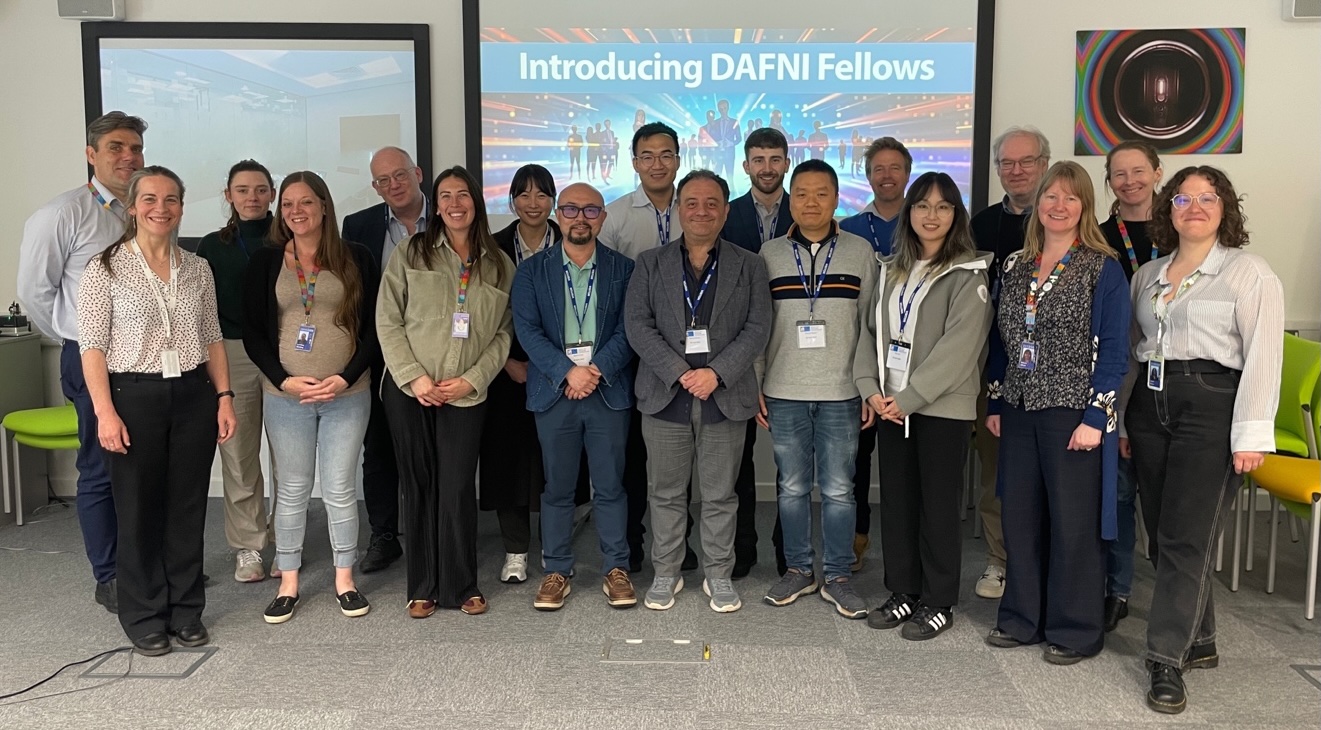
Fellows will receive training and guidance from the DAFNI team to integrate their data, models, and research outputs into the DAFNI platform for long-term accessibility and reuse.
Skills development & leadership opportunities will also be evidenced as Fellows will contribute to workshops, white papers, reports, and the annual DAFNI conference – building leadership, communication and technical skills.
First published: 14 May 2026