

Innovative heart failure treatment proves transformative for patients
Published: 11 May 2026
A newly developed heart failure device and medication combination, which allows patients to receive treatment from the comfort of their own home, has been called “game-changing” after a UK-wide trial found that it is safe and effective to use
A newly developed heart failure device and medication combination, which allows patients to receive treatment from the comfort of their own home, has been called “game-changing” after a UK-wide trial found that it is safe and effective to use.
Results from the landmark University of Glasgow-led SUBCUT HF II trial, which were presented at the European Society of Cardiology Heart Failure Congress 2026 in Barcelona, detail how a wearable mini-pump alongside innovative new medication can improve the lives of patients with worsening heart failure, allowing them to return home from hospital days earlier than would normally be expected.
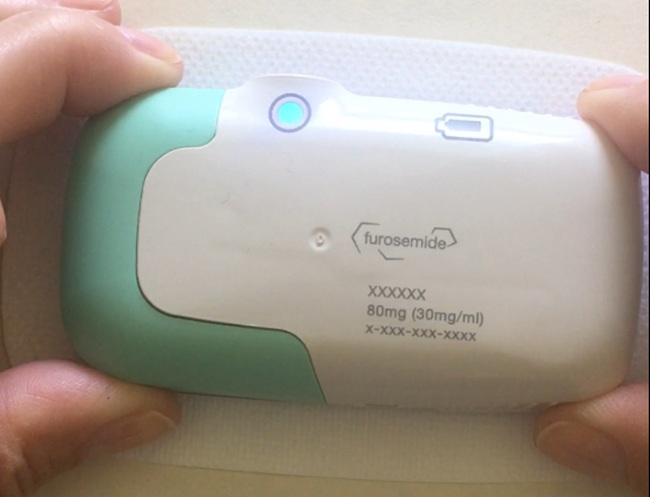
The device and drug combination, designed by SQ Innovation Inc, was trialled at 20 hospitals across the UK and allowed participants to be discharged from hospital after around two days – an average of 5 days earlier than would normally be expected in the UK – where they were able to safely continue the reminder of their treatment at home.
The trial, which was co-sponsored by NHS Greater Glasgow & Clyde, recruited 172 heart failure patients to the trial, with around half (92 patients) placed on the device arm of the trial and the other group (80 patients) receiving care as usual. The study found that those on the device arm of the trial were no more likely to become unwell after treatment and showed similar recoveries to patients who received standard care. Additionally, the research showed the device was well-tolerated by patients, was found to be easy to use with few complications.
Heart failure is a condition where the heart does not pump blood around the body as efficiently as it should. As a result, fluid often gathers in the lungs or legs, causing shortness of breath and/or swollen legs. The first line of treatment is diuretic tablets, or ‘water tablets’, which make patients pass more urine. However, if there is significant swelling and fluid build-up in the body, these tablets are less effective and patients are typically admitted to hospital for treatment with intravenous diuretics to relieve congestion, resulting in prolonged stays in hospital.
Currently, patients admitted to hospital in the UK with fluid overload require on average around 9-10 days of treatment with furosemide – representing a significant burden for patients, their families and the NHS. In the UK, heart failure accounts for 1 million annual NHS inpatient bed days.
Retired railway traffic coordinator Stephen Allan, 65, from Clarkston near Glasgow, was diagnosed with heart failure in 2015. After almost a decade of treatment, which included having a pacemaker fitted and taking a number of medications, the impact of Stephen’s condition caused him to be admitted to hospital with significant fluid retention in 2024.
Initially treated with intravenous diuretics before joining the SUBCUT HF II study, Stephen was one of the patients asked to trial the new device and drug treatment method. After being shown how to use the device, and monitored in hospital for a short period, Stephen was able to return home where he successfully completed his treatment.
He said: “I had been having lots of problems with fluid retention in my legs that my normal medication alone couldn’t get under control. In April 2024 it got so bad I had to go into hospital for treatment on a drip. After being asked to be part of the trial, they showed me how to use the device myself and make it work – I found it easy to use and had no problems.
“The greatest thing about it is the new treatment method gave me the freedom to get home to family and be more comfortable. Using the device also means that you are not taking up a bed in hospital, which feels like a good thing to be able to do as well. Overall the treatment worked really well, and I’m now on medication to keep my symptoms under control.”
Led by Dr Ross Campbell and Professor Mark Petrie from the University of Glasgow, the SUBCUT HF II research team trialled the innovative SQ Innovation Inc drug and device combination across multiple hospital sites around in the UK, to assess whether patients with heart failure could safely be managed at home instead of in hospital, allowing them to continue with their daily lives.
Participants on the device arm of the trial were given a new skin-friendly version of furosemide, alongside a wearable mini-pump to administer the medication. The innovative mini-pump, similar to wearable devices used for diabetes treatment, is fitted with a small needle to deliver furosemide under the patient’s skin to help reduce fluid build-up. Patients were shown how to attach the pump and apply the medication in hospital before being monitored for 24 hours ahead of discharge to ensure they were able to continue the treatment safely at home. Patients (or their family members) then administered the mini-pump themselves.
The research team say this innovative treatment option could also help reduce the strain on hospital beds by removing the need for lengthy inpatient treatment.
Dr Ross Campbell, Clinical Senior Lecturer at the University of Glasgow and Consultant Cardiologist at the Queen Elizabeth University Hospital, co-lead author of the study, said: “This study has shown that we can successfully and safely manage patients with heart failure in their own home, and moreover, that patients are able to administer treatment themselves. This represents an entirely new treatment pathway for the management of patients with heart failure, one that patients have been requesting for decades, but that we have been unable to deliver until now.
“The study was delivered by a key partnership between the NHS and the University of Glasgow alongside industry and has shown how effective this new treatment can be for heart failure in a real-world clinical setting.”
Professor Mark Petrie, Professor of Cardiology at the University of Glasgow and co-lead author of the study, said: “The results of SUBCUT HF II demonstrate a leap forward in our ability to treat patients with heart failure in a way that benefits them and the NHS. The study demonstrates how safe and effective this treatment method can be, as well as how simple to use the device and drug combination were for patients at home.”
The results from ‘SUBCUT HF II: a multicentre randomised controlled trial of SUBCUTaneous furosemide to support early discharge in patients admitted to hospital due to Heart Failure’ were presented at Heart Failure 2026, the annual congress of the Heart Failure Association (HFA) of the European Society of Cardiology (ESC), in Barcelona, Spain on May 9, 2026 at 13:15 CET.
Enquiries: ali.howard@glasgow.ac.uk or elizabeth.mcmeekin@glasgow.ac.uk
First published: 11 May 2026