

New song hopes to reawakens the story of Glasgow’s first working class martyrs
Published: 1 May 2026
A powerful new song recalling the struggle and sacrifice of the Calton Weavers will have its first public premiere in Glasgow, hoping to highlight through music nearly 240 years of radical working-class history.
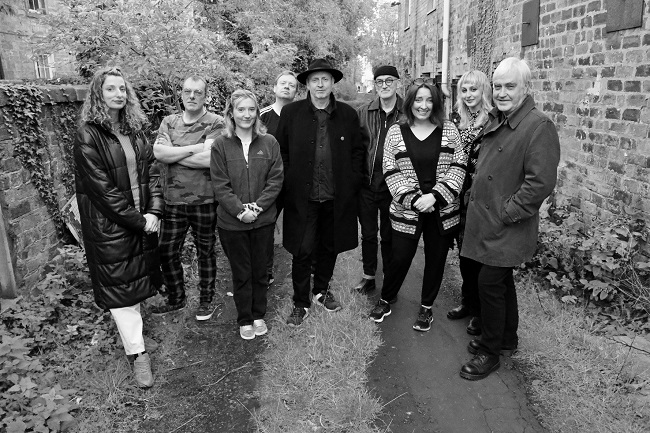
A powerful new song recalling the struggle and sacrifice of the Calton Weavers will have its first public premiere in Glasgow, hoping to highlight through music nearly 240 years of radical working-class history.
The Broken Stones of the Calton Weavers is a new composition by The Tenementals, a group of musicians and academics known for telling the history of Glasgow through song.
The song takes its inspiration from the Calton Weavers, hardworking cotton workers who were at the centre of Scotland’s earliest major industrial dispute. During a strike over wages and conditions in 1787, troops fired on demonstrators in the Calton area of Glasgow, killing six men. Three of the Weavers are buried in the Calton Burial Ground with a campaign to restore the men’s memorials launched in 2023.
The Tenementals is led by University of Glasgow’s Professor David Archibald and the band has been described as bringing “fresh life to the city’s past through rock music”.
Professor Archibald said: “This May we will be giving The Broken Stones of The Calton Weavers its first public airing. It’s inspired by the neglect of the burial ground where three of the six massacred weavers lay buried. As we say in the song ‘Who is remembered? Who is forgotten?’ Glasgow likes to think of itself as a people’s city, a radical city and yet these men whose actions were key in forging the modern labour movement are largely ignored. We want to help rectify that.
The song includes words carved in stone from the memorial: “Well never swerve/well steadfast be/we’ll have our rights/ we will be free.”
Professor Archibald added: “Not only did the Weavers suffer an injustice in life, they continue to suffer an injustice in death. In the aftermath of the incident, the soldiers who killed the Weavers were awarded the Freedom of the City. Glasgow City Council should take a small step to rectify this injustice by granting the Weavers the belated Freedom of the City.”
Jim Lister on behalf of the Calton Weavers Commemoration Committee said: “The neglect of the Calton Weavers’ burial place is a disgrace to the memory of Glasgow’s first working class martyrs.
“This song by The Tenementals ensures their story is heard by new and diverse audiences while connecting their struggle to present day campaigns for justice.”
The Tenementals first attracted wide public attention in 2024 with the release of their debut album Glasgow A History (Vol. I of VI) which invited listeners to imagine the city’s past as a living soundtrack and received extensive critical acclaim, at home and internationally.
The first album reimagined moments from Glasgow’s radical history through original songs and set out the band’s long-term vision of producing a multi volume musical history of the city that infuses academic research with the energy and reach of a live rock band.
This approach forms part of wider research led project by Professor Archibald and The Tenementals which explores how history can be created and communicated beyond conventional academic formats. Often described by the band as “wild research”, the project asks what history might look, sound and feel like if made by a rock band and uses music performance and popular culture as legitimate forms of historical enquiry.
The Broken Stones of the Calton Weavers will feature on The Tenementals’ forthcoming second album which is supported by Creative Scotland and scheduled for release on Strength in Numbers Records in February 2027.
The album continues the band’s commitment to producing high quality original music that carries civic purpose while reaching audiences far beyond traditional heritage and academic settings.
Professor Archibald, who is also Professor of Political Cinemas at the University of Glasgow, added: “Music allows history to be encountered emotionally and intellectually. We want people to have a good time while also grappling with difficult histories. There is no contradiction between enjoyment and political thought – we want people to dance to the beat of Glasgow’s radical past.”
The song will be launched at The Great May Day Cabaret on 4 May 2026 where The Tenementals will headline International Workers’ Day celebrations in Glasgow.
It was first performed at the Scottish Trade Union Congress President’s Dinner on 21 April, ensuring its first audiences are trade unionists for whom the legacy of the Weavers continues to matter.
Proceeds from the May Day event will contribute directly to funding much needed interpretive signage at the Calton Burial Ground on the Calton Weavers.
With the consent of The Tenementals, the Calton Weavers Commemoration Committee will host the song on its website as a gateway for those encountering this history for the first time. An accompanying music video is in development and will be released later to extend the project’s reach through social media and partner organisations.
“This is about radical futures as much as radical pasts,” said Mr Lister. “The Weavers’ story reminds us that history is something we inherit but also something we are responsible for carrying forward.”
The Tenementals:
Supported by Creative Scotland, The Tenementals’ second album builds on the band’s established practice of combining original music historical research and public engagement to bring Scotland’s radical working-class history to wide and diverse audiences. Featuring The Broken Stones of the Calton Weavers single, the project demonstrates how artist led work can generate lasting civic value by connecting creative practice with heritage partnerships live performance and digital dissemination.
More on The Tenementals at www.tenementals.com
@tenementals on Facebook, Instagram, Blusky and Threads
The Broken Stones of the Calton Weavers features:
- Bob Anderson – drums
- David Archibald – vocals
- Ronan Breslin – keys
- Mark Ferrari – bass guitar/vocals
- Therese Martin – vocals
- Olivia McLean – cello
- Simon Whittle – guitars/vocals
- Ivor Marples – saxophone
- Clare Thomas - coronet
The Calton Weavers
The Calton Weavers’ strike of 1787 was the earliest major industrial dispute in Scottish history, when troops fired on demonstrators, killing six. The Calton weavers became Scotland's first working-class martyrs. Ultimately the strike contributed to a workers movement which achieved fundamental changes in the relationship between workforce and employers
In September 1797, the 39th (East Middlesex) Regiment of Foot arrived on the eastern outskirts of the old Glasgow town centre to crush an industrial strike over wages and conditions.
As a disturbance flared up at Drygate Brig, now the site of the Drygate and Tennent Caledonian breweries, they unleashed a volley of musket fire. Three men died instantly. Another three died later in hospital.
Their courage inspired weavers and other workers across the west of Scotland to organise a wave of resistance against exploitation in the years and decades that followed, culminating in the 1820 Scottish Insurrection.
The Calton Weavers Commemoration Committee (CWCC) was launched in 2023 to restore their place in history and create a lasting memorial to their courage and sacrifice.
First published: 1 May 2026