

UofG to lead new project to boost fish welfare, Amazonian livelihoods and rainforest conservation
Published: 29 January 2026
The University of Glasgow is to lead a new project which aims to improve fish welfare in the global ornamental fish trade, while strengthening incomes for traditional fishing communities in the Brazilian Amazon
The University of Glasgow is to lead a new project which aims to improve fish welfare in the global ornamental fish trade, while strengthening incomes for traditional fishing communities in the Brazilian Amazon.
The project, which is funded by £980,000 from UK Research and Innovation (UKRI) and which also supports rainforest conservation, will bring together experts in biology, economics and social science from the UK, Brazil and Norway.
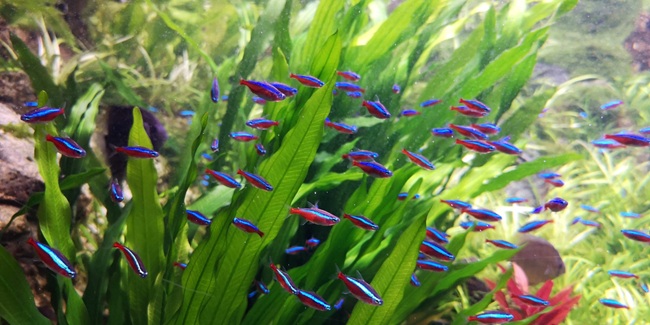
The two-year project – which begins this month and runs for two years – aims to design practical, low‑cost changes that reduce stress and mortality for wild‑caught fish during capture, transport and holding.
Each year, the ornamental fish trade moves millions of tropical fish to home aquariums worldwide, generating $15–20 billion in economic value. In the rural communities of the Brazilian Amazon the trade provides over half of household income, and is one of the few sustainable livelihood options available. Because the trade depends on healthy rivers and intact forests, it also creates a powerful incentive to preserve Amazonian rainforest.
However, shifting market demands, low and inconsistent compensation for fishers, and growing concerns about fish welfare have contributed to a decline in Brazilian exports. Retailers increasingly perceive Brazilian‑sourced fish as arriving in poor condition, pushing buyers toward farmed alternatives and threatening both local livelihoods and the conservation benefits linked to wild, low‑impact fisheries. Women, who participate directly in the fishery, are particularly vulnerable to these market shifts.
By working hand-in hand with Amazonian fishing communities, the interdisciplinary team aims to map the supply chain and pinpoint “bottlenecks” where poor fish welfare and economic inefficiency intersect.
Goals include developing and testing low‑cost practice changes that could reduce stress and mortality; equipping fishers with easy‑to‑use tools to monitor fish condition in real time; and studying UK consumer and retailer preferences – including their willingness to pay for higher‑welfare fish.
The project will also model ecological and economic outcomes to guide long‑term sustainability and policy options, including the possibility of using welfare‑linked certification.
Two species – the cardinal tetra (Paracheirodon axelrodi) and dwarf cichlids (Apistogramma spp.) – will be used to assess welfare across different behaviours and handling needs. The team will also create a welfare scoring system so fishers can rapidly identify and release compromised fish, or adjust handling to increase survival and quality.
Professor Shaun Killen, project lead and Professor of Ecophysiology at the University of Glasgow’s School of Biodiversity, One Health & Veterinary Medicine, said: “This project is about finding practical ways to make the ornamental fish trade work better for everyone involved.
“By working directly with Amazonian fishing communities, we want improve welfare for wild-caught fish, improve the reliability of incomes for fishers, and help maintain the strong link between sustainable livelihoods and rainforest conservation. Importantly, the solutions we’re developing are designed to be low-cost, evidence-based, and feasible to implement in real supply chains.”
Professor Kath Sloman, project co-lead and Professor of Aquatic Biology at University of the West of Scotland, said: “Improving the welfare of fish transported within the ornamental trade is of vital importance. Not only does it improve the lives of the fish people keep in their home aquaria, but it contributes to the sustainability of the fishery and the Amazonian rainforest.”
Co‑leads of the project include the University of the West of Scotland, the State University of Vale do Acaraú in Brazil and the University of Bergen; and key partners include the National Institute of Amazonian Research (INPA), the Ornamental Aquatic Trade Association (OATA), Waltham Petcare Science Institute, the Office of the Secretary of Fisheries in Amazonas State, Federal University of Amazonas and Institute Piaba.
enquiries: ali.howard@glasgow.ac.uk or elizabeth.mcmeekin@glasgow.ac.uk
First published: 29 January 2026