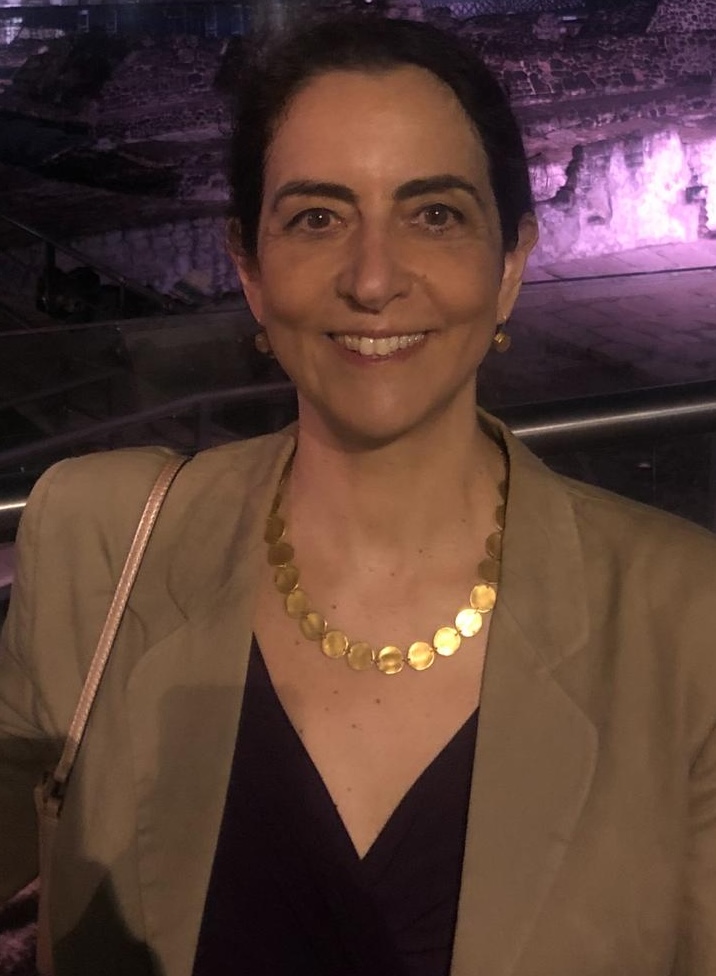
Teresa da Silva Lopes
Supported by The William Lind Foundation
Teresa da Silva Lopes is Professor of International Business and Business History at the University of York, and Director of the Centre for the Evolution of Global Business and Institutions (CEGBI). Her research lies at the intersection of business history, international business, with a particular focus on multinational enterprises, free-standing companies, risk governance, and the historical evolution of corporate responsibility.
She has published widely in leading journals and edited volumes, including Business History Review and the Journal of International Business Studies, and has held senior leadership roles in the global business history community. She is currently the Appointed Historian at the Academy of International Business and is a Fellow of the Academy of Social Sciences. Her work combines archival depth with conceptual innovation, using historical evidence to inform contemporary debates on capitalism, sustainability, and corporate legitimacy. She is currently developing several projects on philanthropy, organisational innovation, and global business in historical perspective.
This project examines the philanthropic ethos embedded in Scottish-linked free-standing companies operating in Africa from the late nineteenth century to the interwar period. It explores how humanitarian, moral, and developmental aspirations were articulated, institutionalised, and contested within firms whose organisational structures separated legal domicile, finance, strategic control, and overseas operations across space.
The research focuses on the African Lakes Corporation and its associated ventures, complemented by a comparative analysis of other Scottish companies with activities in Africa such as James Finlay & Co. Drawing on extensive archival evidence, the project reconstructs how philanthropic aims shaped governance arrangements, investment decisions, labour practices, and relationships with colonial states and local communities. It treats philanthropy not as a mere rhetorical device, but as a constitutive dimension of corporate strategy under conditions of political risk and institutional uncertainty.
By combining business history and international business perspectives with insights from imperial and humanitarian history, the project revisits the free-standing company as an organisational form and refines existing theories of multinational enterprise. In doing so, it reframes global business history as a history not only of capital and control, but also of moral aspiration, experimentation, and contested responsibility.
I am delighted to have received The University of Glasgow Library Visiting Research Fellowship, supported by the Lind Foundation. This fellowship will enable me to undertake sustained archival research in the unique collections of the African Lakes Corporation and James Finlay & Co. These sources allow me to reconstruct how Scottish firms experimented with philanthropy, governance, and organisational forms in Africa, producing insights that are impossible to obtain from published materials alone.