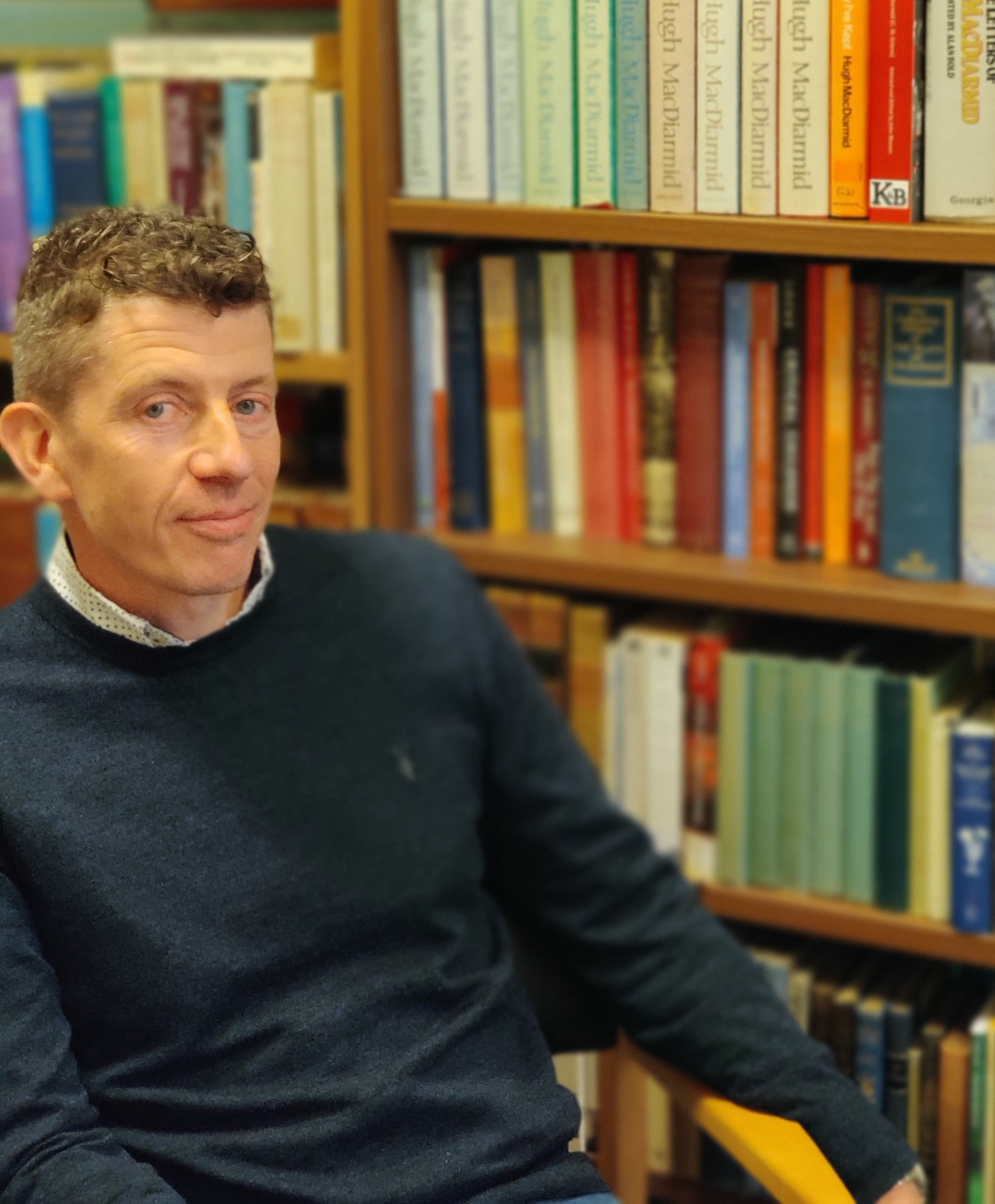
Andrew Nash
Supported by The University of Glasgow Library
Andrew Nash is Reader in Book History and Director of the London Rare Books School in the School of Advanced Study, University of London. His research interests span the history of the book and publishing since 1800, Scottish literature, and Victorian literature. He is a Fellow of the English Association and past editor of the Review of English Studies. Recent publications include The Cambridge History of the Book in Britain, Volume 7: the Twentieth Century and Beyond (2019), co-edited with Claire Squires and I.R. Willison, and The British Publishing Industry in the Nineteenth Century, 4 vols (2024), co-edited with David Finkelstein.
During his Visiting Research Fellowship, Andrew will be working on the business records of the Glasgow publisher Blackie & Son, part of the Scottish Business Archive. The research will inform his current project, Publishing Locations: Scottish Literature and Culture c.1880-1939. The project seeks to map the interdependence of local, national, and international publishing contexts in the production and dissemination of Scottish literature and culture in the period. Though based in Glasgow throughout its history, Blackie & Son opened a London office in 1837 and by the turn of the century had branches in India and Canada. It nevertheless continued to produce most of its books from its printing and binding works in Bishopbriggs, built in 1929, and from the 1890s drew inspiration for its binding designs from the Glasgow School of artists. The extensive records in the archive, including stock and impression books, production ledgers, author agreements, and company history material, will shed light on the firm’s operation as it diversified its products and exploited an expanding international market for books.
I am delighted to be offered this fellowship which will enable me to spend concentrated time working on archive materials that have been underexplored. The records of Blackie & Son – a major Glasgow publishing and printing firm – will offer valuable source material in support of my larger examination of the intersection between publishing locations and late-nineteenth and early-twentieth century debates over the cultural and economic condition of Scotland.