

Transforming cancer care in Nigeria
We’re delighted to announce our World Changing Alumni Award winner for 2025 is Deborah Adeniran (MSc 2024). Deborah is a leader in cancer healthcare provision in Abuja, Nigeria, and has also founded the pioneering organisation CancerAid_Africa with the aim of transforming cancer care across the entire continent. Avenue spoke to Deborah about her motivations and hopes for the future.
“Cancer care in sub-Saharan Africa is at a primitive level, partly because of cultural and religious sentiments around the illness and also because of lack of hospital infrastructure. Not every hospital has even the equipment to diagnose cancer – we only have one PET scan machine in our whole region and some people travel for days to get a scan. Nigeria has a population of over 230 million and almost 300,000 new cancer cases every year, but these are still under-recorded.
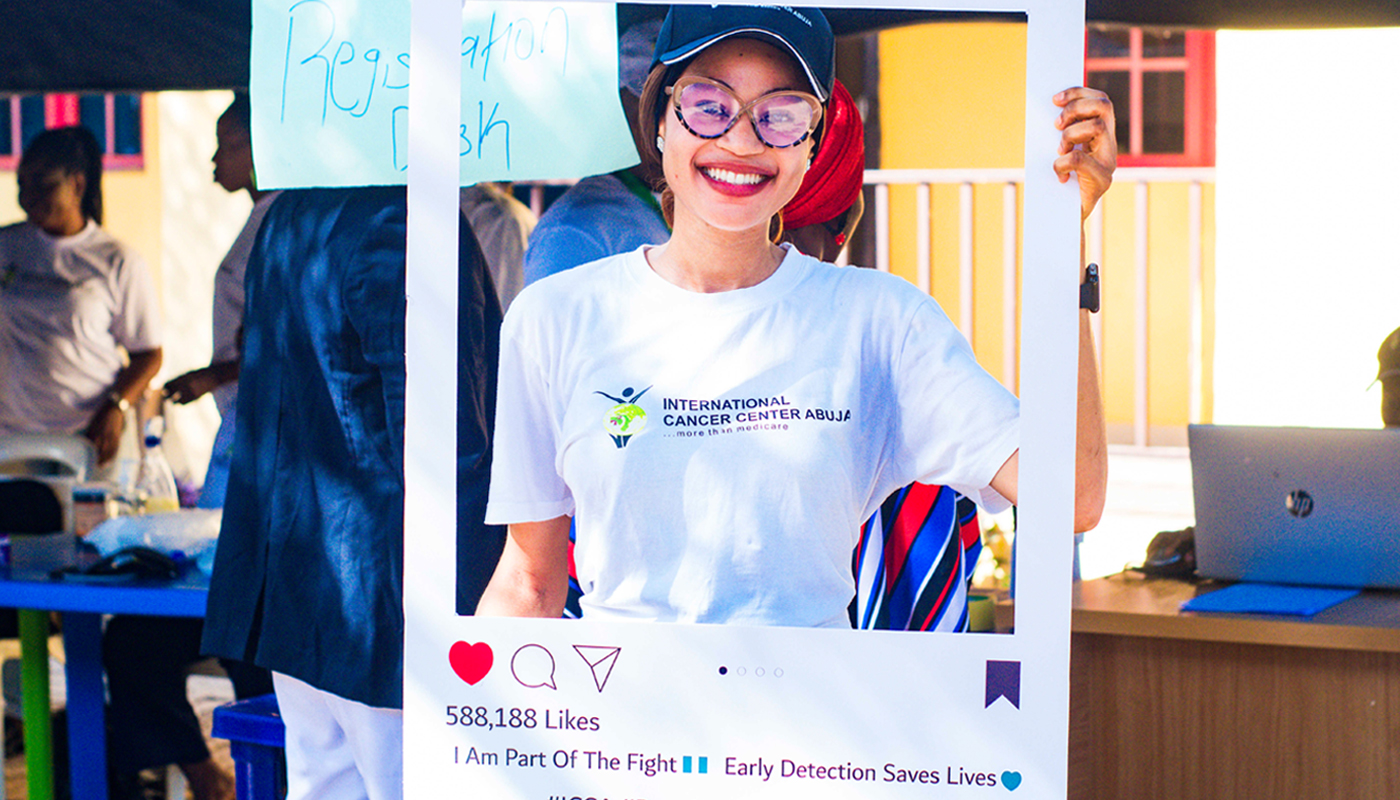
I design and lead programmes at the International Cancer Centre Abuja (ICCA). Since 2009, we've been able to reach thousands of people with our community programmes. We also have a patient aid fund, where we designate a particular amount of money every year to help subsidise cancer treatment, because it can be very expensive here.
Facing the challenges
It is very difficult translating research and data into care delivery. We as researchers, scientists and advocates do our best, but this is a setting that is resource limited, so you are competing for funding with the country’s security fund, the educational fund and so on.
Also, people often think cancer is a kind of spiritual attack and not culturally acceptable; this makes our work difficult. We are trying to overcome this one step at a time, and that is why we even go into secondary schools, to catch them young.
I'm driven by passion for my people and the communities I serve. I saw many people who had dreams and visions die, before they could even have an opportunity to achieve them, from diseases that are preventable. Experiences like this have led me to where I am now.
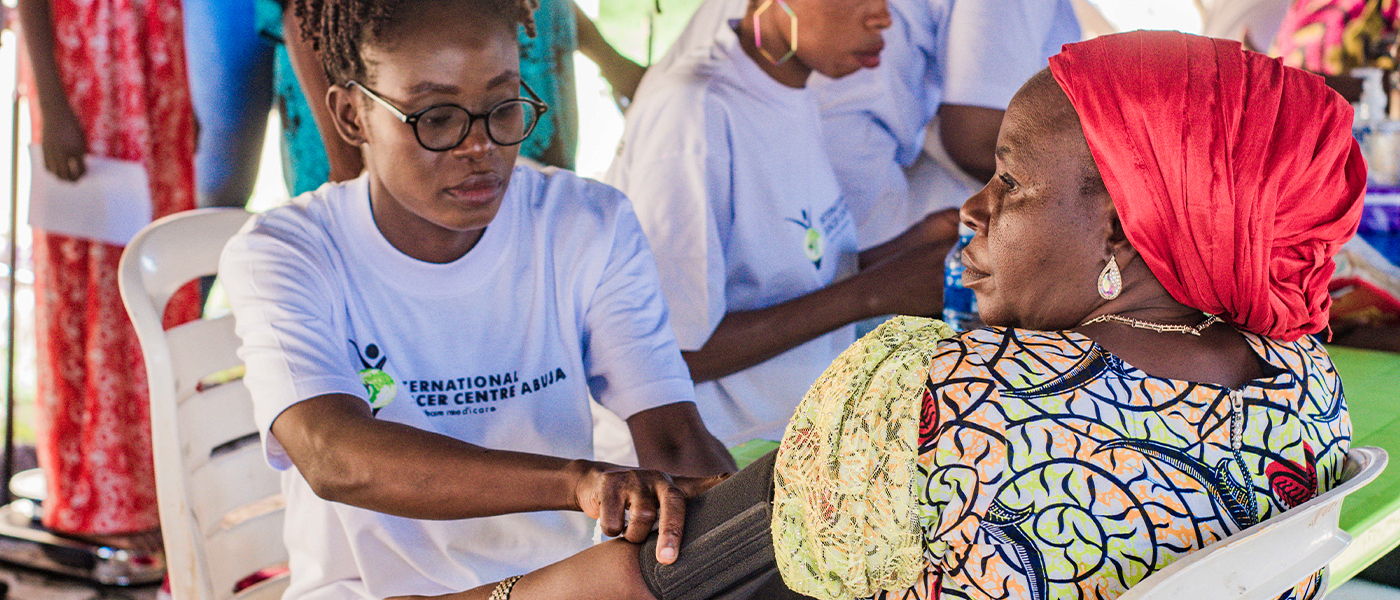 A community medical outreach at Kagini village, where ICCA screened over 200 people and identified five cases of Stage 1 cancer.
"Winning the World Changing Alumni Award means that I feel seen. I believe the recognition from the award will help me to do better in the coming years, for the people and for the world, one patient at a time.”
A profound impact
Apart from the people we reach, we also make sure we impact hospitals and oncology clinics. We run seminars for caregivers which equip them in oncopsychology, we are also involved in policy making and we partner with government to work on the cancer control plan. So, really, the impact is all around.
My proudest achievement is the change we see on a daily basis and the lives we have saved. This year, we've been able to reach over 1,000 people for screening and over half of these people actually went to a hospital for further screening and diagnosis, which is huge. Last month, we went to a very rural community, reached about 200 people and were able to pick up Stage 1 cancer in five of them.
A seed sown in Glasgow
I was awarded a Chevening Scholarship to study in Glasgow – without it, I wouldn't have been able to afford the tuition fees. I have a lot of good memories of the University campus –The Hunterian, Zoological Museum ... it’s beautiful. One of the experiences that stood out for me about the city was going to watch the Celtic–Rangers game and seeing the passion the people exude.
"I was looking for a place that would challenge me and help me see cancer care from a world-class perspective – UofG did just that. I think the University of Glasgow is the greatest university in the world.”
I really hope that cancer care in Africa will get better in the coming years and people will have more access to basic and comprehensive care. I hope that five years from now, we'll have good policies, improved funding, better infrastructure and groundbreaking researchers. I see myself maybe spearheading some of this, and maybe doing a PhD at some point. I would love to come back to Glasgow for that!"
This article was first published in January 2026.