


The University at 575: powered by students
In our final feature celebrating the milestone of 575 years in existence for the University, we focus on what life at UofG means, and has meant, to our students – all 350,000+ who have passed through our doors since they opened in 1451.
The first student community
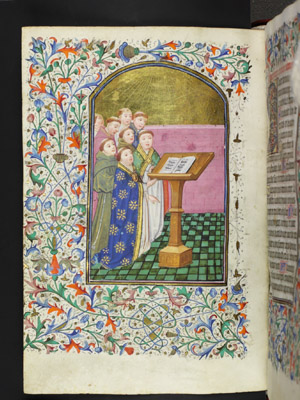
In its earliest years, the University was a small community of four teachers and just ten to twenty students, some as young as ten years old. Education was limited to a select elite who studied in and spoke Latin, the shared language of scholarship across Europe.
University life was also deeply religious, with scripture reading and prayer at its heart. Teachers and students would attend church together twice every Sunday and ate together at a common table, reinforcing a close-knit academic and spiritual community.
Growing numbers
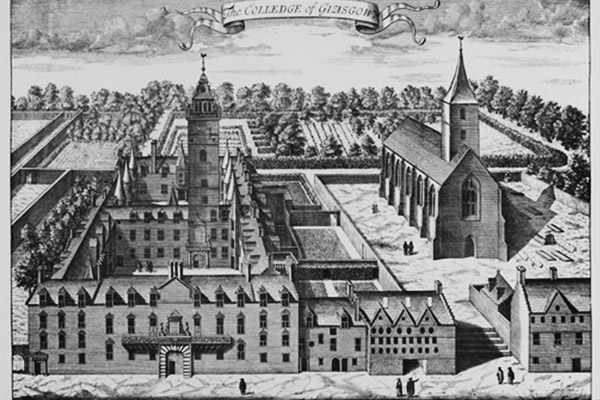
From 1560 to 1690, the University underwent major change. Fundraising for new accommodation took place amid religious and political turmoil, and state-of-the-art facilities in a quadrangle layout were completed in 1690. By 1702, the ‘Old College’, as the University on the High Street became known, housed 400 students, with live-in accommodation for 40 and others boarding nearby.
Official records rarely show individual students’ perspectives. Our understanding of University life comes largely from sources left by professors, which reveal their views on how a Glasgow student should live and learn.
A new chapter at Gilmorehill
Nineteenth-century Glasgow was the self-confident ‘second city of the Empire’, with a vibrant economic and cultural life. New educational approaches emerged to meet the challenges of the industrial age. The professors sold the Old College site to make way for the growing railway network and to fund campus expansion. They chose the fresh air of Gilmorehill in the west end to escape the city-centre pollution which had impacted University life for decades.
On the High Street campus, societies dedicated to academic, social and political pursuits were well established, meeting in the many taverns and venues in the city centre. The move to Gilmorehill transformed this arrangement. New university spaces now had to accommodate teaching, meetings, public lectures and ceremonial events, leaving student societies to compete for room within an increasingly complex campus timetable.
In 1885, students and alumni gathered in the Bute Hall to find a way forward.
Students find their voice
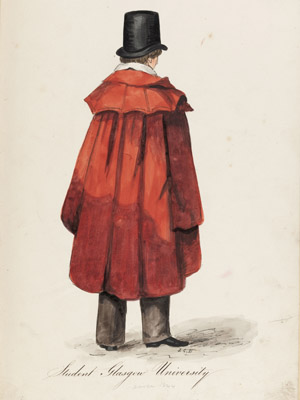
Glasgow University Students’ Representative Council (SRC) first met on 9 March 1886.
Its foundational aims were “to represent the Students in such matters as affect their interests, to afford a recognised means of communications between Students and the University authorities and to promote social and academic unity among the Students.”
At its inaugural meeting, Robert Mark Wenley was elected the first President. Wenley later became Professor of Philosophy at the University of Michigan and was awarded an honorary degree by the University of Glasgow in 1901, during its 450th anniversary.
The SRC at 140
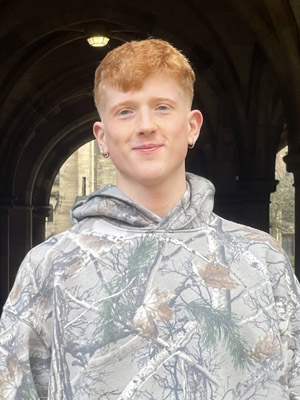
Today, the SRC elects up to 49 students each year to represent UofG’s student population. It also provides student opportunities and community engagement in the form of over 300 clubs and societies, as well as free professional and confidential advice, a second-hand book marketplace and events running throughout the year.
SRC President for 2025–26 Duncan Calvert (MA 2025, left) underlines how the mission of the SRC has broadened since its early days. “It provides students with a voice, right up and down the University’s governance structure – from class reps to school reps; welfare and equal opportunity reps, and sabbatical officers. It all gives students a lot more power in determining what the university and student experience is like.
At the heart of student life
Alongside the SRC, our three other student bodies have been enriching the student experience at UofG for many generations, giving opportunity beyond the books and lecture halls. The presidents of Glasgow University Union (GUU), Queen Margaret Union (QMU) and Glasgow University Sports Association (GUSA) are unequivocal about the community spirit and benefits that each of their organisations offers.
Below, Angus, Lucy, Karl and Duncan, the 2025–26 presidents, talk about the best things about leading their respective student bodies and the individuals from the University’s past who inspire them most.
Angus Macdonald, GUU President
For Angus Macdonald (MA 2025, MSc 2026), President of the GUU, the union remains one of the University’s most important spaces. “We’re one of the main social hubs on campus,” he says. The GUU provides opportunities for students to connect, running events like Hive, Sports Wednesdays, Beer Bar quizzes and open mics. Giving people the chance to get to know each other outside of lecture halls is, says Angus, "my definition of what the student experience really is,” and he hopes that alumni will carry the GUU with them through their lives after university.
Lucy Stobie, QMU President
The QMU also sees its role as creating a welcoming and inclusive environment for students. President Lucy Stobie (MA 2025) describes it as an amazing hub for students, where they can come to socialise, study or just relax and eat. “It also means a lot to me that it’s a live music venue on the campus,” she says, “and I think it makes concerts accessible to students.”
Karl Kirkpatrick, GUSA President
Sport, meanwhile, offers another valuable route into becoming part of the community at UofG. “We're the oldest of the four student bodies,” says GUSA President Karl Kirkpatrick (MA 2024), “and one of our biggest strengths is the breadth of activity that we have on offer. We’ve got 51 clubs with 4,500 student members. As well as that, we have another 5,500 students who go to the gym or play sport outwith one of our clubs.” The GUSA clubs run a packed timetable of events and socials to ensure that the fun and friendship of sport at UofG is "just as important as the training and competition aspect.”
Duncan Calvert, SRC President
SRC President for 2025–26 Duncan Calvert (MA 2025) underlines how the mission of the SRC has broadened since its early days. “It provides students with a voice, right up and down the University’s governance structure – from class reps to school reps; welfare and equal opportunity reps, and sabbatical officers. It all gives students a lot more power in determining what the university and student experience is like."
This feature was first published in October 2026.