


Lines in the snow
Earlier this year, Avenue was contacted with the story of a discovery. While clearing a relative’s possessions, alumnus Alan Shearer found a long-forgotten autograph book containing a compelling, handwritten poem. His investigations into the writer led him to the tragic story of two young UofG grads who perished in the Cairngorms 100 years ago – with one leaving behind the poem which uncannily foretells his death.
By Alan G Shearer (BVMS 1966)
Amongst my mother-in-law's possessions, there was an autograph book dating from her years at the University of Glasgow from 1929–32. One entry intrigued me – a copy of a poem written by a man named Hugh Barrie. I thought it was a beautiful poem, and my mother-in-law notes in the autograph book that he contributed the poem to the summer edition of the 'Glasgow University Magazine' shortly before his death.
Upon further research I discovered the poem had also been published in ‘Airdrie Bards Past and Present’ by James Knox in 1927, only a year before Hugh Barrie died at the young age of 22. The poem, which you can click below to read, envisages what is to happen upon his death and is both prophetic and very moving.
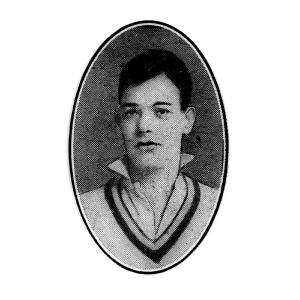
Hugh Barrie (above) was born on 9 November 1905 and came from Airdrie, where his parents were both teachers. He graduated MA in 1925 and then matriculated as a medical student in October 1926. Barrie was also at this time Assistant Editor of the 'Glasgow University Magazine', where the poem was published in 1927.
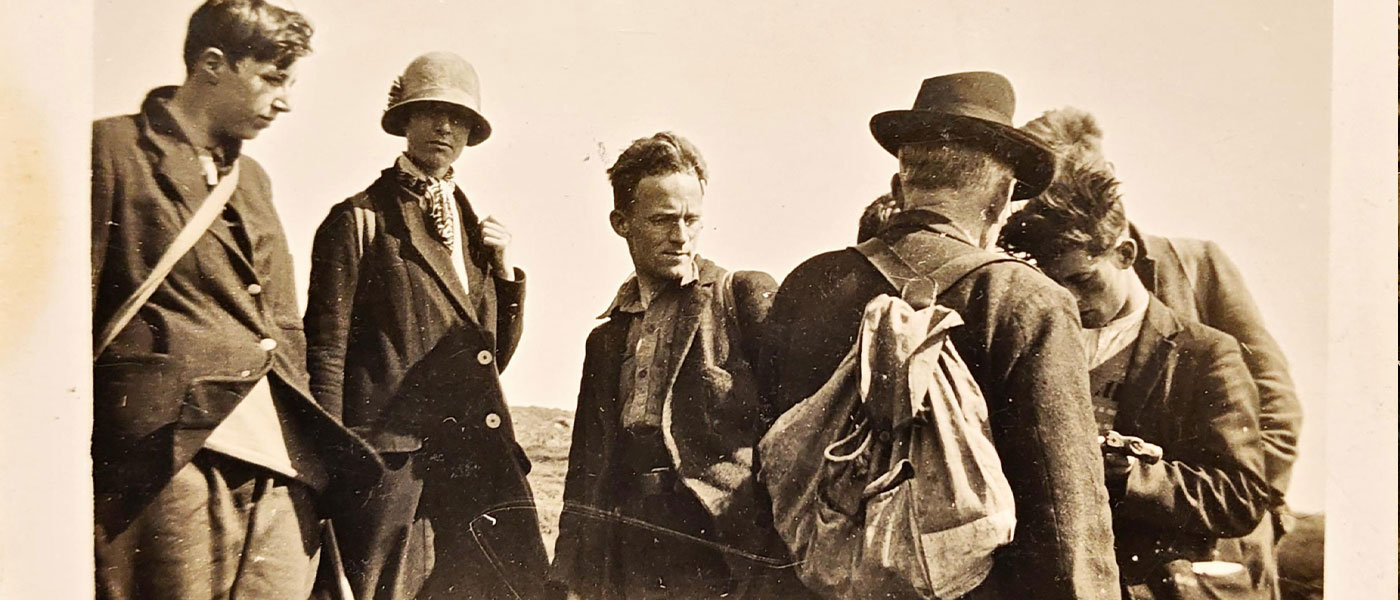
Thomas Baird (below centre) was born on 5 April 1905 and was from Baldernock, near Glasgow. He also graduated MA in 1925, then joined the Geology department as an Assistant Demonstrator under Professor Gregory. He was interested in rock formations and, when on the hills, often collected samples of rocks.
Both men were keen mountaineers. They had planned to start a University mountaineering club, but it was many years before the Glasgow University Mountaineering Club was formed; whether due to the ensuing tragedy or not, it was not properly established until 1940.
The fatal trip
In late 1927, Baird and Barrie planned an expedition to the Eastern Cairngorms. Both were cadets in the Officers' Training Corps at the University and it can be assumed that their plans would have been well thought out.
On 28 December, they arrived in Aviemore in the Scottish Highlands, where they bought food for their outing. They walked to Whitewell, where they had arranged to stay overnight in an outhouse. The following day, they departed from Whitewell early, leaving a note to say they would be returning late on 2 January. They were not seen by anyone that morning; however, an estate keeper saw their footprints in a light covering of snow.
They left no details of their intended route at Whitewell, but they had previously informed friends of their intention to go through the Lairig Ghru – a high and remote mountain pass – to Corrour Bothy. A diary was later recovered when Thomas Baird’s body was discovered, which seemed to confirm that they stayed at Corrour, so there is little doubt about their proposed destination that day. They had indicated to friends that they intended to climb the Devil’s Point and then Cairn Toul and Braeriach on their return journey, ending at Glen Einich, presumably at the Upper or Lower Bothy (the latter known locally as “Dunc’s bothy”).
From Whitewell, the story of what the two men did is largely conjecture, although the diary recovered helps solve some pieces of the puzzle. From Whitewell to Corrour would have taken approximately five hours. They would have passed the Tailors’ Stone, where three tailors died in a blizzard whilst returning from New Year festivities in Rothiemurcus many years before, and they would presumably have arrived at Corrour Bothy before dark. The diary found confirms they stayed in Corrour that night. It is almost certain that they had the bothy to themselves, although there was no visitor book in Corrour at that time to confirm this; the first one was introduced by the Cairngorm Club only a few months later.
The diary found confirms that on the 30th, they climbed Devil’s Point (a euphemistic name for Bod an Diabhail). The weather was good that day and continued so into the next day. The entry in the diary was unclear about what the men did on the 31st, and so more speculation is required. One possibility is that they climbed Carn a’Mhaim, which sits opposite the Devil’s Point, or they might have chosen to climb Ben MacDui or Monadh Mor. These possibilities would be consistent with their intention to climb Cairn Toul and Braeriach on their return journey as indicated previously to their friends. Monadh Mor would have been a longer day, which may have appealed to Baird and Barrie, involving a walk up Glen Guisachan (the 'Glen of the Pine Trees', although there have been no trees there for at least 100 years). Carn a’Mhaim would have been an easier climb.
A cold New Year
Whatever else they did on 31 December, they would have seen in the New Year in Corrour Bothy, there being nowhere else to go. It is thought that in those days the bothy would have been in fairly good condition, but entries in Baird’s diary apparently showed that the men had a miserable stay there. Their thermometers registered sub-zero temperatures and they had difficulties with their Primus oil stove, which suggests they were unaware of any logs stored in the loft of the bothy.
On New Year's Day, they would have had to set off early to make the most of the daylight, intending to climb Cairn Toul and Braeriach on the way back to Glen Einich. It is difficult to understand the timing of events on the day The men must have expected to get to Glen Einich by dark, around 4pm on the 1st, but instead Baird was found at approximately 11am on the following day, above the Lower Bothy.
They must have realised the peril they were in, but had no choice but to struggle on.
We do not know what the snow was like on the Braeriach plateau, but it may very well have been deep, and the going would have been extremely hard. We know that an exceptionally severe blizzard struck in the afternoon and the conditions would immediately have deteriorated, particularly given the altitude. Professor Gregory of the University of Glasgow wrote an analysis of the event in 1928 in which he states that both men were strong mountaineers and that they were accustomed to ice-work. It is unclear, therefore, why an ice axe was left at Whitewell and only one ice axe and a walking stick were taken on the expedition. This was midwinter and the climbing involved being at 4,000 ft for a considerable distance. It is also unclear whether they had crampons or a rope, both of which would have been invaluable.
The men might have tried to construct a snowhole for shelter, but with only one ice axe and a walking stick, this would have been almost impossible. They must have realised the peril they were in, but had no choice but to struggle on.
It must have been a slow and painful descent in the terrible conditions. The men's rucksacks were found on the slope of Braeriach at about the 2,500ft level, near Coire Bogha-Cloche – they must have been exhausted and needed to reduce their load. Barrie succumbed to the elements and fell in a peat bog near the Upper Bothy, and it is likely that Baird continued on to the Upper Bothy only to find it empty and locked.
Baird, in desperation, must have carried on towards the Lower Bothy but was unable to make it; he collapsed just before he got there. When found, he had injuries to his hands and knees suggestive of a fall. That could explain the loss of the ice axe which was later found on the slopes of Braeriach.
A twist to the tale
There was a further twist to this tragedy. In the Lower Bothy was Affleck Gray, a well-known author, journalist and mountaineer, with his brother and a friend. They themselves had extreme difficulty getting to the Lower Bothy through the blizzard on 1 January from Aviemore. On 2 January, they were preparing to leave. Gray's brother was keen to go above the bothy to view the huge snow wreath which had formed at Coire Dhondail through the winter and had built up even more in the blizzard but instead he decided to stay with the others tidying the bothy before departure. If he had gone to look at the wreath, he would almost certainly have found Baird.
The Gray group left the bothy at 10am and on the way down Glen Einich met Alastair Cram and Edward Maconnachie who were on a walk up the glen. They chatted and then went their separate ways. Cram and Maconnachie, after stopping at the Lower Bothy, continued on up the glen where they came upon Baird, still alive. Baird's identity was confirmed from items found in his wallet. They carried him to the bothy. Cran set off for help and Maconnachie stayed with Baird. Shortly after Cram left, Baird sadly passed away. When Cram returned with Dr Balfour, the local GP, and helpers, it was too late.
But for a stroke of the sheerest ill-fortune, they might well have reached the sheltering warmth of another bothy only a short distance from where they perished. Affleck Gray
It was quickly realised that Baird had not been alone given he and Barrie had left the note at Whitewell. Local searching revealed nothing, and further searches were conducted over the following days so far as the weather permitted over a wide area including Braeriach, the Sgorans, Cairntoul and Devil's Point.
Later, when the snow had largely gone, searching had recommenced and the ice axe was found on the slopes of Braeriach on 24 March 1928. The men's rucksacks were found on Braeriach near Coire bogha-cloiche, suggesting that had been their way down off Braeriach. Baird's rucksack contained no stone samples, unusually for him.
On 25 March, Hugh Barrie's body was found in a peat bog near the Upper Bothy.
Affleck Gray, in a letter to ‘The Herald’, said how much he regretted not being aware of the tragedy which had unfolded so near to him and his companions. He thought that, had they known, they might have been able to help. He had not learnt of the tragedy until 8pm on 2 January 1928. He noted that the blizzard had raged with exceptional severity on 1 January and was followed by calm weather and a rapid thaw.
"Find me a windswept boulder for a bier"
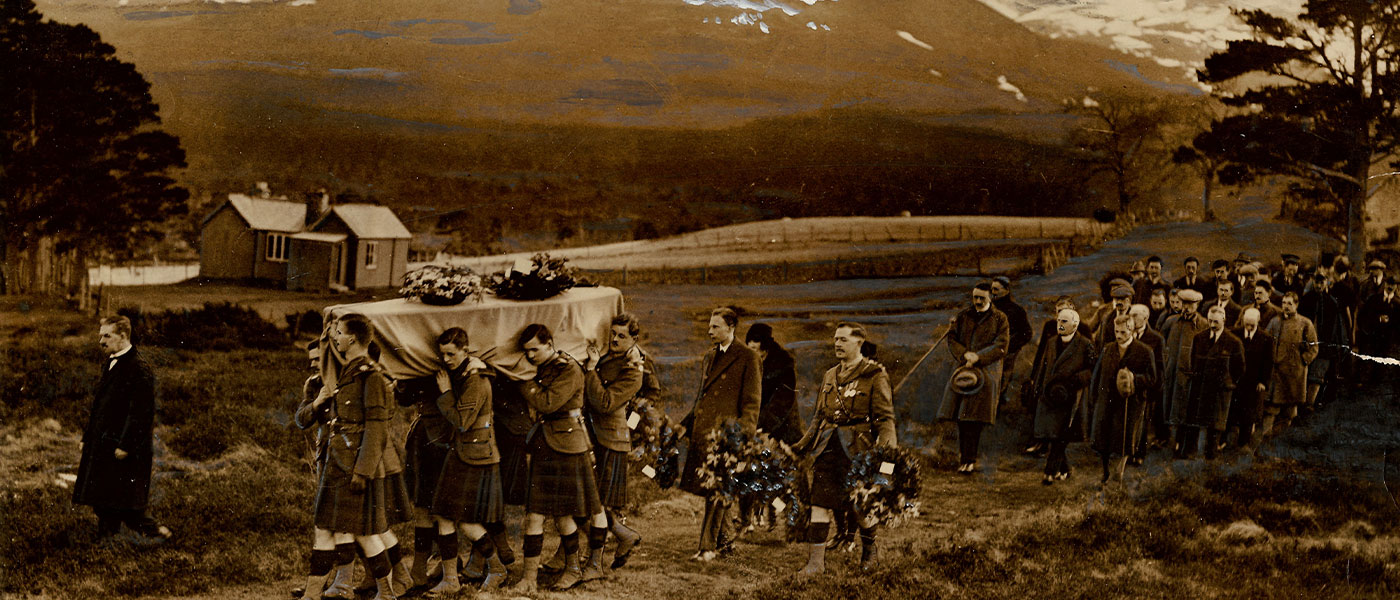
Hugh Barrie's funeral near Aviemore in the Scottish Highlands on 27 March 1928.
Thomas Baird's body had been returned to Glasgow to be interred in a family grave at Baldernock. Hugh Barrie's body, at the request of his family, was laid to rest on 27 March 1928 within a cairn at Upper Tullochgrue Farm, on the road to Glen Einich in the Cairngorms, in a manner prophetically described by Barrie himself in his poem of 1927.
The line from the poem, "Find me a windswept boulder for a bier", was inscribed on the cairn together with both men's names and the Glasgow University Officers' Training Corps coat of arms.
There are still unanswered questions about what precisely happened that day. What is clear is that that two fine young University of Glasgow graduates died in a ferocious blizzard in the Cairngorms in early January 1928, and that is a tragedy.
This article was first published in October 2026.