

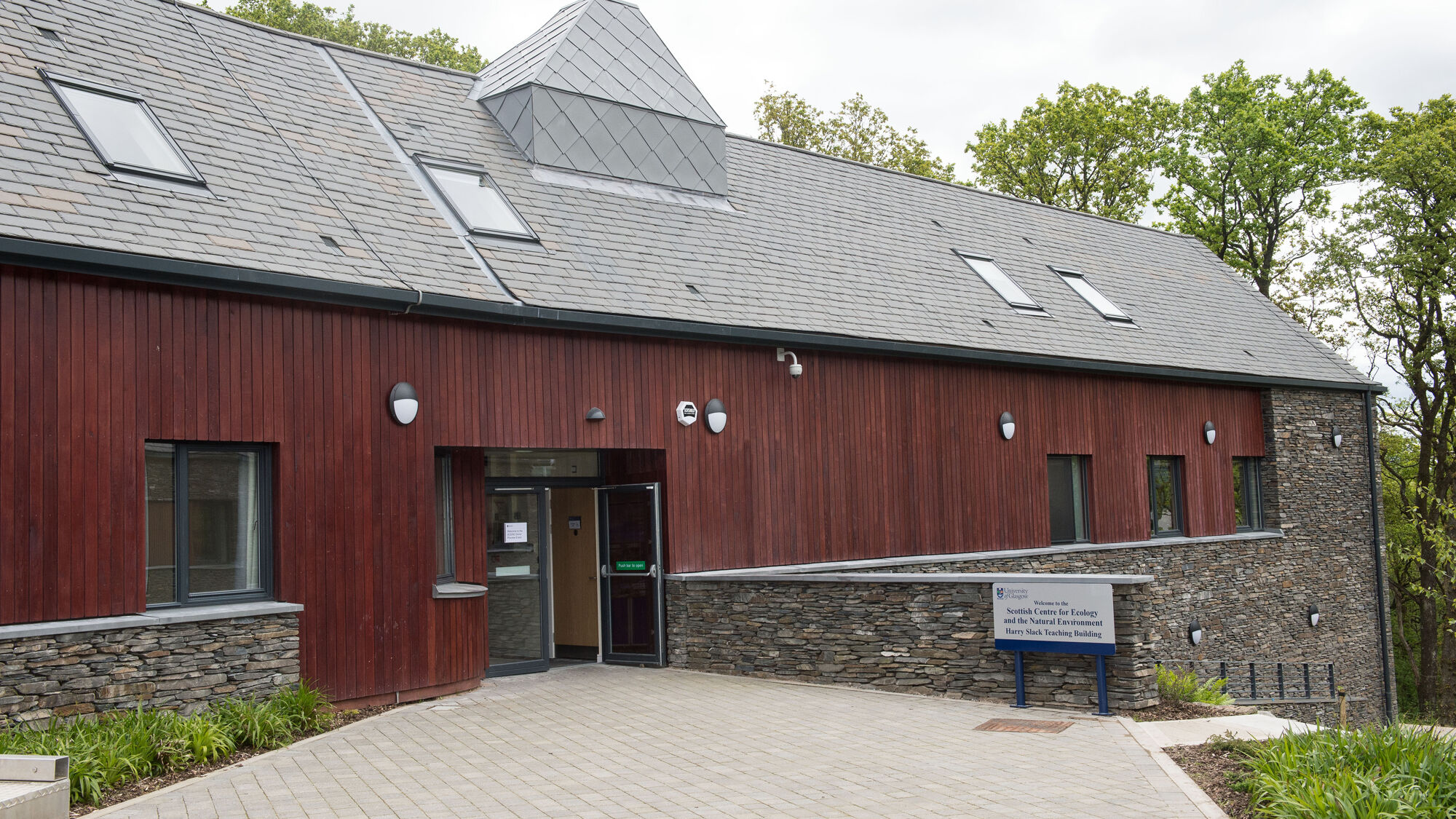
80 Years of Discovery at SCENE
For eight decades, students and researchers at SCENE (the Scottish Centre for Ecology and the Natural Environment) have been learning from the natural world around Loch Lomond. As the University’s field station celebrates its 80th anniversary, Professor Chris Harrod is looking ahead to what the next generation might discover.
When Professor Chris Harrod first arrived at the University of Glasgow’s field station on Loch Lomond, he was a 26-year-old Environmental Science student with a passion for the ecology of fish. It was 1996, and Chris had come to SCENE on an undergraduate placement. He found himself working alongside scientists and using techniques he had previously encountered only in books.
“It was a kind of Road to Damascus moment,” he remembers. “I knew once I’d been here that this was what I wanted to do.”
Thirty years later, Chris is Director of SCENE and is watching new generations of students make discoveries of their own.
When the natural world becomes real
Established in 1946 on the eastern shore of Loch Lomond, SCENE gives students access to lochs, streams, forests and a remarkable range of habitats. For Chris, experiencing these environments first-hand is fundamental to becoming an ecologist.
“You can read about ecology in a textbook or on a PowerPoint,” he says. “In the real world, the boundaries are quite blurred. It’s less precise.”
Students put the methods they have learned into practice, gathering and analysing their own data. Even statistics can suddenly click when, as Chris puts it, “blood, sweat and tears have gone into collecting that data”.
He remembers taking two students out onto Loch Lomond to collect the zooplankton they had become fascinated by in lectures. “They actually started crying, they were so overwhelmed,” says Chris. “They had huge smiles on their faces.” Both went on to base their projects on zooplankton. Moments like this, Chris believes, can help students discover where their own curiosity might lead.
“I knew once I’d been here that this was what I wanted to do.”
Professor Chris Harrod, Director of SCENE
Built for discovery
That experience has itself been made possible by generations of supporters.
When Chris first came to SCENE, he remembers brilliant people and science, alongside leaking roofs and damp bedrooms. A major donor-supported redevelopment transformed the site into the purpose-built research, teaching and residential facility that students use today.
Living and working together is part of the experience, giving students time to follow ideas, build confidence and form friendships and professional relationships that can last for years. “The donors have made this possible,” he says. “We couldn’t have done it without them.”
At a time when many universities are reducing field teaching, facilities like SCENE are becoming increasingly rare. Its expertise, facilities and field sites now support universities from across the UK.
Understanding a changing world
SCENE’s 80-year history gives researchers something particularly crucial to us all: the ability to understand how the natural world is changing over time.
Research at SCENE on endangered Atlantic salmon has revealed more about their migration around the coasts of the UK and Ireland, with implications for conservation, marine planning and the development of renewable energy. Decades of research into bird populations are now helping scientists explore how wildlife responds as urban development increasingly encroaches on rural landscapes.
As SCENE looks towards its centenary, those questions are becoming more urgent. Climate change, changing land use, renewable energy and pressures on biodiversity all require decisions grounded in a detailed understanding of how ecosystems work.
“We do stuff that helps us understand how the world functions, how things have evolved, and how different ecosystems interact,” says Chris. That knowledge also has practical value for “the offshore power industry, fishers, conservationists – all those people who rely on the natural world.”
One of his ambitions for SCENE’s next chapter is the State of the Loch project. Although Loch Lomond is Great Britain’s largest freshwater lake by surface area, there is still no comprehensive contemporary picture of its ecological health. The project would combine SCENE’s long environmental record with technologies including environmental DNA and remotely operated underwater vehicles to create a baseline from which future change can be measured.
“We’re standing on the shoulders of giants,” says Chris. “I hope that people in the future see the same – that the work we’ve done has been fundamental.”
The questions have changed over 80 years. SCENE’s role in helping us understand the natural world, and shape its future, matters more than ever.
Support a more sustainable future
From understanding our changing natural world to developing new ways to respond to the climate emergency, research and innovation at Glasgow are helping to shape a more sustainable future.
Through the Chancellor’s Fund, you can support projects across the University that are tackling environmental sustainability and responding to some of the challenges facing our planet today.