

UofG researchers help uncover the story of Ireland's remarkable Iron Age bog body
Published: 19 November 2026
Archaeologists Professor Susanna Harris and PhD researcher Nysa Loudon contributed specialist textile analysis, revealing new insights into the life and death of the Ballymacombs More Woman, discovered in Northern Ireland in 2023.
Ulster Museum recently hosted a unique public event modelled on a modern coroner's investigation into the remains known as the “Ballymacombs More Woman”. This was a young woman who lived and died during the Iron Age and whose remains were discovered near Bellaghy in 2023.
While not an inquest, the event adopted the structure and methodology of a contemporary coroner’s investigation and was conducted as an educational and investigative exercise. The Lady Chief Justice had been consulted and the event proceeded with her imprimatur as part of the judiciary's outreach programme.
Drawing upon the latest archaeological, forensic and scientific evidence, it sought to address the same fundamental questions that lie at the heart of every coroner's investigation: who the deceased was, where and when she died, and by what means she came by her death.
The event brought together researchers, museum professionals, forensic experts and members of the public to consider the evidence assembled during a major international research programme led by National Museums NI. By presenting the findings within the structure of a public hearing, the evidence could be examined in an accessible and transparent manner while acknowledging that many of the uncertainties associated with a death more than 2,000 years ago can never be resolved with complete certainty.
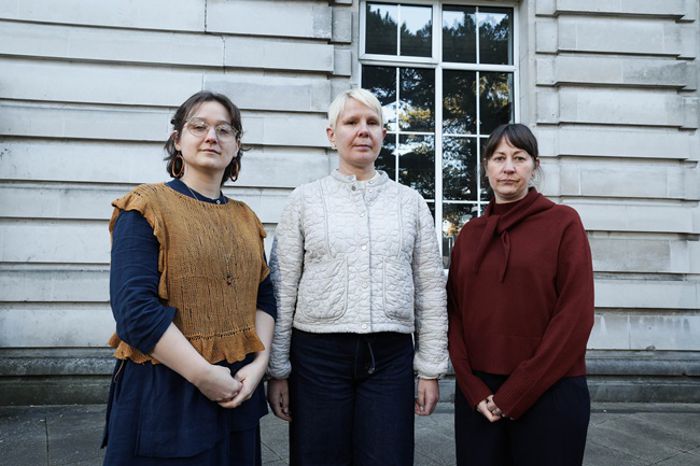
Left to right: UofG's Nysa Loudon, UofG's Professor Susanna Harris & Niamh Baker, National Museums NI. Credit Ulster Museum
Susanna Harris, Professor of Archaeology at the University of Glasgow, and PhD researcher Nysa Loudon said: “We were asked to analyse fibrous material found with the body. It is made using a technique called twining, which creates a border with a loose, hanging fringe.
“We were able to radiocarbon date the twining made from plant fibres to between 363 BC and 160 BC, matching the date range established for the body. Based on its proximity to the remains and the radiocarbon dates, we consider the body and twining to be contemporary and potentially connected. The fabric may have formed part of a garment, body adornment or a decorative feature placed on the ground.
“This project demonstrates how specialist archaeological techniques can contribute to wider archaeological and forensic investigations. Working alongside colleagues from different disciplines has helped us place the textile evidence within the broader story of Ballymacombs More Woman. We are grateful to National Museums NI for involving us in this project.”
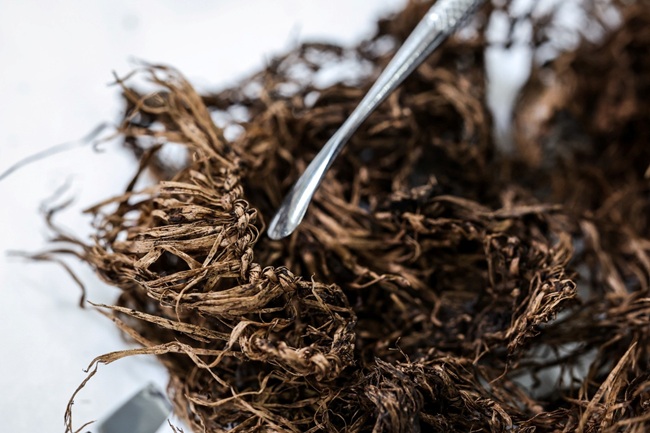
Woven artefact found with the Ballymacombs More Woman. Credit Ulster Museum
To find out more about the Ballymacombs More Woman event and its conclusions follow this link
First published: 19 November 2026
<< Latest news