

Complicating Greece: The Making of Past, Place, and Present; or, Making the Familiar Strange
Published: 15 October 2026
University of Glasgow Archaeology undergraduate, Gillian Heggarty, shares her experiences during an undergraduate summer school at the British School of Athens this summer.
It was a wonderful experience on how the past that we encounter archaeologically is inseparable from the places through which it is encountered and the historical processes that brought those places into the present. She explains these experiences in her own words:
“I share my experiences on the British School at Athens’ undergraduate summer school, The Archaeology and Topography of Greece, which ran between 17th August – 5th September 2026. The course took participants on a three-week tour of archaeological sites, museums, and landscapes in Athens, Attica, Central Greece, and the Peloponnese, spanning prehistory to the formation of the modern Greek state. To cover the trip in its entirety would be impossible; instead, I have focused on a selection of examples that best illustrate the wider themes explored here.
Even to those who have never visited, Greece seems familiar. Its archaeological landscape contains some of the most recognisable sites and monuments in the world, encountered repeatedly through tourism and popular culture and embedded so deeply in the collective imagination that their familiarity can easily be taken for granted. Although not from a Classics background, when I arrived in Athens to participate in the British School at Athens’ three-week intensive undergraduate summer school, The Archaeology and Topography of Greece, I already knew about many of the places and objects we would explore and had visited some of the sites before. What followed, however, was less an encounter with a familiar archaeological past than a sustained complication of it. The opportunity to go ‘behind the ropes’ allowed me quite literally to see familiar places differently, but it also began to destabilise that apparent familiarity in a wider sense. Moving through sites, monuments, museums and landscapes from this different perspective repeatedly raised questions not just about what survives, but about why some things are preserved while others are not, what is reconstructed, and how the pasts visible in Greece today came to appear as they do. Nowhere was this tension between familiarity and strangeness made more apparent than at the Parthenon (Figure 1).
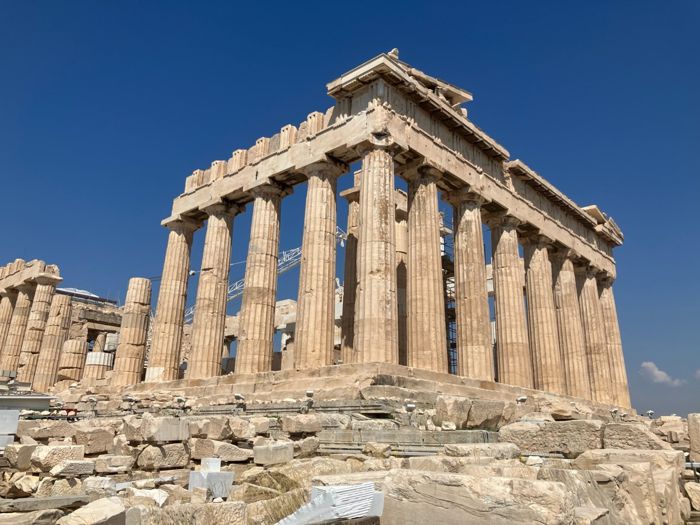
Figure 1: The Parthenon, Athens, as seen from the visitor route on the Acropolis. Photo credit: G. Haggerty, August 2026
On previous visits, I had encountered the Parthenon as it is presented to contemporary audiences: an apparently self-evident and largely uncomplicated monument of Classical Athens, closely associated with Athenian democracy and invested with wider ideas about civilisation, democracy and the inheritance of the Classical past. This time, however, that apparently straightforward identity began to be dismantled. Discussion of its long history of reuse, alteration, destruction, and reconstruction drew attention to the deliberate choices involved in its modern archaeological treatment, including extensive anastylosis: what to recover, what to retain, and what to reconstruct (Figure 2). Contained within this single monument, then, was a question that would recur throughout the summer school: how curatorial choices determine which parts of a complicated and contested past are made visible in the present.
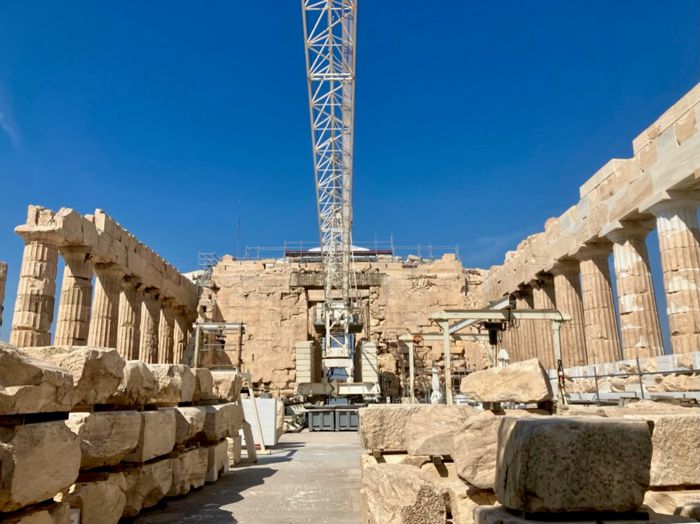
Figure 2: Inside the Parthenon: an active site of conservation, restoration, and anastylosis Photo credit: G. Haggerty, August 2026
The same questions took on a different form in museums, where selection and interpretation are more overtly part of how the past is presented. At Athens’ National Historical Museum, the Greek War of Independence occupied a substantial part of the displays, represented through weapons and other military material, personal objects and artworks from the period. Yet surprisingly little narrative connected them. Portraits of notable figures, including women such as Laskarina Bouboulina - Greek naval commander and one of the first women to attain the rank of admiral (Figure 3) - were often identified by little more than a name, while the significance of objects and events was frequently left for the visitor themselves to supply. This created an interesting tension: a particular national past was presented in considerable material detail, while familiarity with the narratives underpinning it was assumed. Curation therefore lay not only in what had been selected for display, but in what was foregrounded and explained, and what was left unsaid.
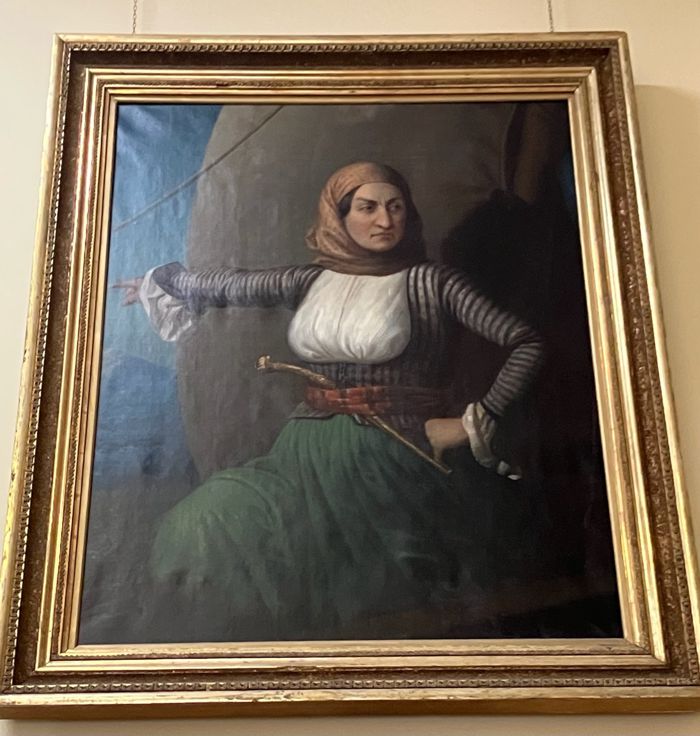
Figure 3: Portrait of Bouboulina, National Historical Museum, Athens Photo credit: G. Haggerty, August 2026
Beyond the museum, it also became increasingly apparent that the archaeological landscape was itself curated and not simply a neutral representation of what had happened to survive. Travelling through Greece exposed us to extraordinary chronological depth, from prehistoric landscapes to the material remains of Classical, Roman and later Greece. Yet that depth was far from evenly visible. Early Christian and Byzantine remains were present in the landscape, as were traces of Venetian presence and influence, complicating any idea of a simple passage from an ancient Greece to a contemporary one. Yet the material traces of Greece’s post-Classical past did not always fall neatly into discrete chronological or cultural categories. The fortifications at Methoni, for example, were shaped by successive phases of Venetian and Ottoman rule, while the Bourtzi itself dates to the Ottoman period (Figure 4). Such examples complicated my growing impression of the comparative elusiveness of the centuries of Ottoman rule: Ottoman material was not entirely absent but could be less immediately legible and less explicitly foregrounded among the sites we encountered. What therefore emerged was an archaeological landscape better understood as not just a palimpsest but a curated palimpsest, shaped as much by the subsequent histories of its remains as by their original formation: excavation and demolition, preservation and loss, restoration and reconstruction. Curation, in this wider sense, thus raised the fundamental question of how particular pasts had become materially visible and why that process was so uneven, with the landscape itself bearing the consequences of later decisions about which pasts, which places and which monuments were to be recovered, restored, and made legible.
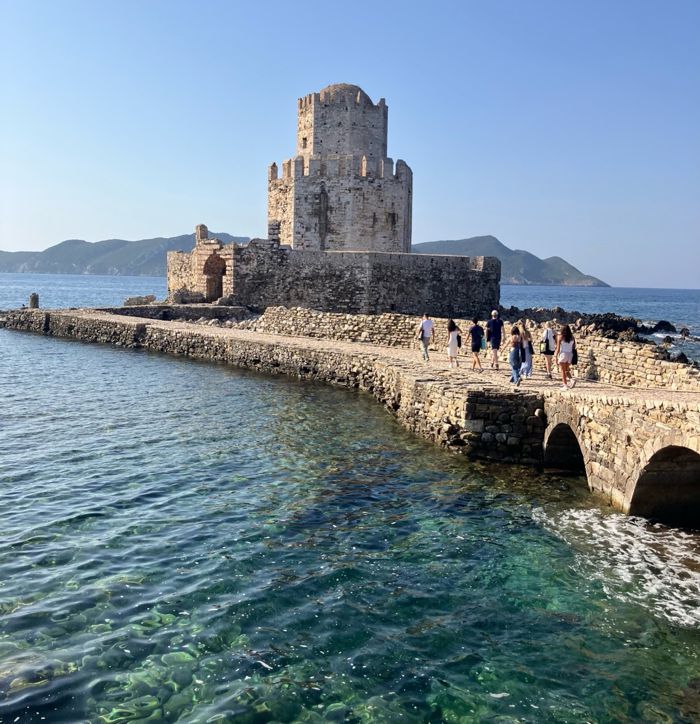
Figure 4: The Bourtzi at Methoni Castle, Southwestern Peloponnese Photo credit: G. Haggerty, September 2026
It also became increasingly apparent that the contemporary experience of a site and its surrounding landscape is not necessarily a reliable guide as to how it was experienced in the past. This was brought into focus at the Temple of Apollo Epikourios at Bassai. Reaching the temple today means driving high into the mountains of Arcadia, and our own visit, accompanied by thunder rumbling atmospherically in the distance, only heightened the impression of encountering a remote monument in a windswept and thoroughly isolated landscape. Standing there, however, prompted me to consider whether ‘remoteness’ was really an intrinsic property of a place or an expression of the relationship between that place and the routes, settlements and centres of activity around it. The sense of physical isolation we experienced at Bassai was real, but it belonged to Bassai as encountered in the present; it could not tell us how the sanctuary was situated within the inhabited and connected landscape of antiquity. Furthermore, our contemporary encounter was mediated even here: the temple itself is enclosed within a vast shelter which is necessary to protect it from the harsh mountain environment, but which inevitably alters the relationship between monument and landscape (Figure 5). All this served as a reminder that being physically present at an archaeological site does not necessarily provide a transparent view into the past or bring us any closer to the world in which those remains once made spatial sense.
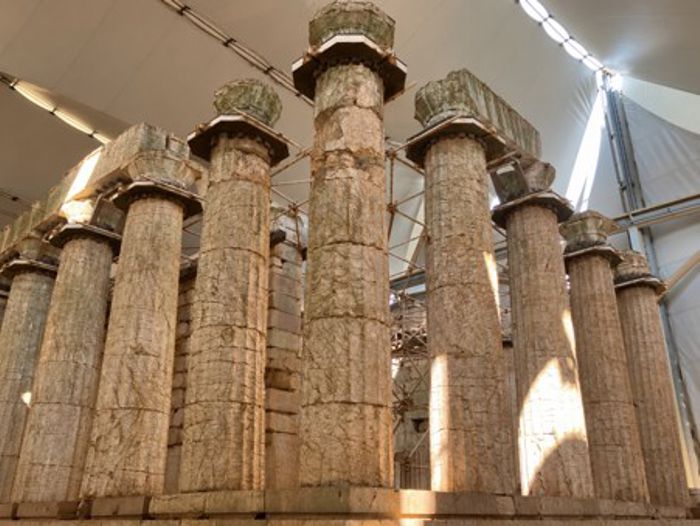
Figure 5: Temple of Apollo Epikourios at Bassai within its protective shelter Photo credit: G. Haggerty, September 2026
Together, these encounters repeatedly challenged the apparent straightforwardness of the relationship between archaeological remains, the places in which they are encountered, and the pasts they are understood to represent. They also reinforced the fact that archaeological, museological, and heritage management practices have done more than transmit an existing past and identity into the present; instead, they have actively participated in making particular pasts materially and conceptually prominent, and these pasts have in turn been mobilised in the construction of national identity. This is an idea I had already encountered in various guises throughout my studies at Glasgow, but one I now had the opportunity to explore at length in an entirely different context. Three weeks of intensive in-situ, embodied learning offered the opportunity to observe these relationships emerge repeatedly and at very different scales, in a setting far removed from the one in which I began my undergraduate studies two years ago. Moving between sites, monuments, collections and landscapes made tangible something more difficult to appreciate in the abstract: that the past encountered archaeologically is inseparable from the places through which it is encountered and the historical processes that brought those places - and the sites and monuments contained within them - into the present. By the end of the course, Greece had become considerably more complicated, as the relationship between past, place and present that underpinned its familiarity no longer appeared as natural or self-evident as it had even three weeks previously”
Acknowledgements
I am grateful to the British School at Athens for the bursary support that helped make my participation possible, and to everyone involved in organising and teaching the summer school.
First published: 15 October 2026
<< Latest news