

University of Glasgow reinforces commitment to Africa–Europe research partnerships
Published: 24 June 2026
The University of Glasgow has reaffirmed its commitment to strengthening equitable research partnerships across Africa and Europe, supporting collaborative efforts to address the world’s biggest challenges.
The University of Glasgow has reaffirmed its commitment to strengthening equitable research partnerships across Africa and Europe, supporting collaborative efforts to address the world’s biggest challenges.
The Second Africa–Europe Clusters of Research Excellence (CoRE) Conference – hosted by the University of Glasgow – highlighted the value of long-term collaboration between institutions across the two continents in advancing research, strengthening capacity and fostering more equitable international partnerships.
Bringing together academic and research expertise from Africa and Europe, the Clusters – developed in 2023 – are tackling challenges that affect millions of lives, including infectious and non-communicable diseases, climate change, food systems and genomics.
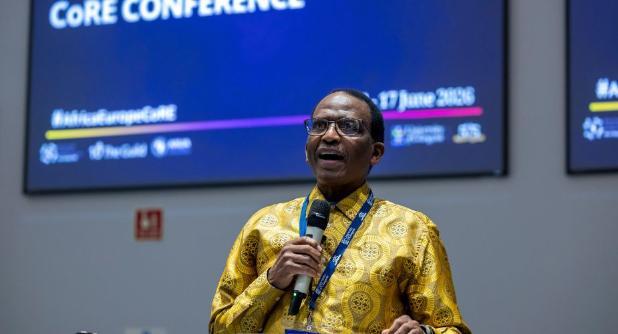
A strong example of the partnership in action is the Non-Communicable Diseases (NCDs) and Multimorbidity Cluster, co-led by the University of Glasgow alongside partners from Kenya, Senegal, Nigeria, South Africa, France and Poland. The Cluster is tackling the growing burden of NCDs – including cardiovascular disease and inflammatory disorders – which are now among the leading causes of death across Africa.
Cardiovascular disease is a particular focus. Despite carrying 25% of the global disease burden, African populations remain significantly underrepresented in the research that shapes international clinical guidelines and treatment strategies. This evidence gap limits the development of effective, context-specific approaches to prevention and care.
By bringing together researchers and clinicians from across Africa and Europe, the Cluster is generating new evidence, strengthening research capacity through training and mentoring, and expanding opportunities for scientific collaboration. Its work is helping to ensure that African data and perspectives are better represented in global health research, while raising the profile of cardiovascular health in Africa through publications in leading international journals. In doing so, the Cluster is building the knowledge, expertise and partnerships needed to improve cardiovascular health outcomes and advance more equitable global health research.
The Africa-Europe CoRE is a flagship initiative of the African Research Universities Alliance (ARUA) and The Guild of European Research-Intensive Universities – two networks representing many of Africa and Europe's leading research-intensive universities. Together, ARUA and The Guild are working to strengthen long-term, equitable collaboration between institutions on both continents, helping to ensure that research agendas are shaped jointly and that the benefits of research are shared more fairly among partners.
Through collaborative research, training and knowledge exchange, the Clusters will contribute to the African Union’s Agenda 2063 ambition of building a knowledge-based economy and society, while supporting the European Union’s Global Gateway commitment to sustainable development and international partnerships.
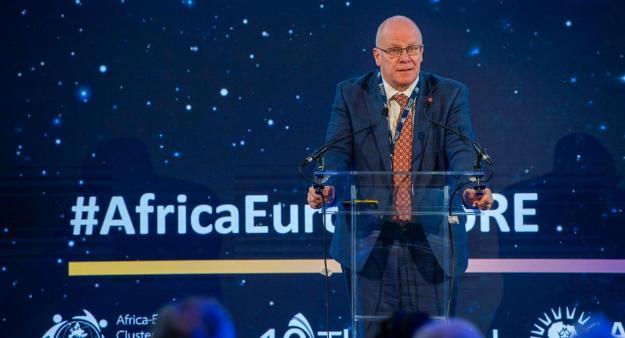
Professor Andy Schofield, Principal and Vice Chancellor of the University of Glasgow, said: “The Africa-Europe partnership highlights what is possible when researchers come together as equal partners, bringing different expertise, perspectives and lived experiences to address shared challenges.
“The University of Glasgow is proud to support and help lead this collaboration, which is not only generating world-class research but also building lasting relationships, strengthening research capacity and creating opportunities for future generations of researchers across Africa and Europe."
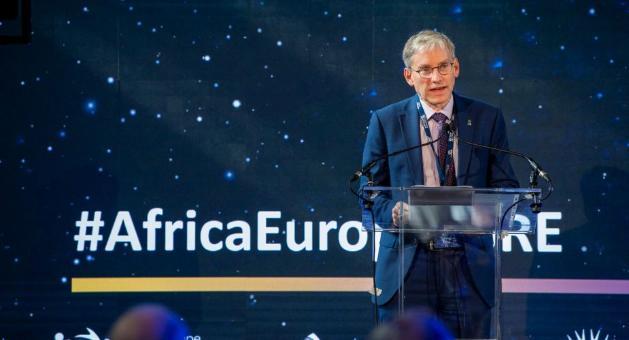
Professor Sizwe Mabizela, Vice Chancellor of Rhodes University and ARUA Board Chair, said: “The Second Africa-Europe Conference has been a tremendous success, reflecting the continued growth and maturity of the partnership between ARUA and The Guild.
“No single country, institution, or region can address the challenges facing humanity in isolation. It is through stronger collaboration, shared expertise, and collective action that we can make a meaningful contribution.
“For ARUA, this partnership presents a valuable opportunity to advance research, innovation, and capacity building across Africa. By empowering our next generation of scholars, researchers, and innovators, we aim not only to contribute to Africa’s development but also to generate solutions that benefit humanity as a whole."
Professor Anders Hagfeldt, Chair of The Guild and Vice Chancellor of Uppsala University, added: “It has been immensely valuable to reaffirm the commitment of our two networks to this unique project of collaboration, one that brings together leading researchers and university leaderships across Africa, Europe and beyond to address some of our fundamental concerns together.
“Despite current geopolitical tensions our common challenges only intensify, and they need urgent answers. I have been encouraged by the tremendous progress I have seen by our researchers in working together, and the joint sense of purpose of our university leaderships.
“I look forward to continuing to see how ARUA and The Guild, and our universities, can continue to support our researchers in their efforts to scale up their work to transform science for the benefit of our societies."
The conference brought together researchers and university leaders to reflect on progress to date, share emerging findings and explore new opportunities for collaboration and impact.
First published: 24 June 2026