

Finding our voice: bringing Gaelic to life at Glasgow
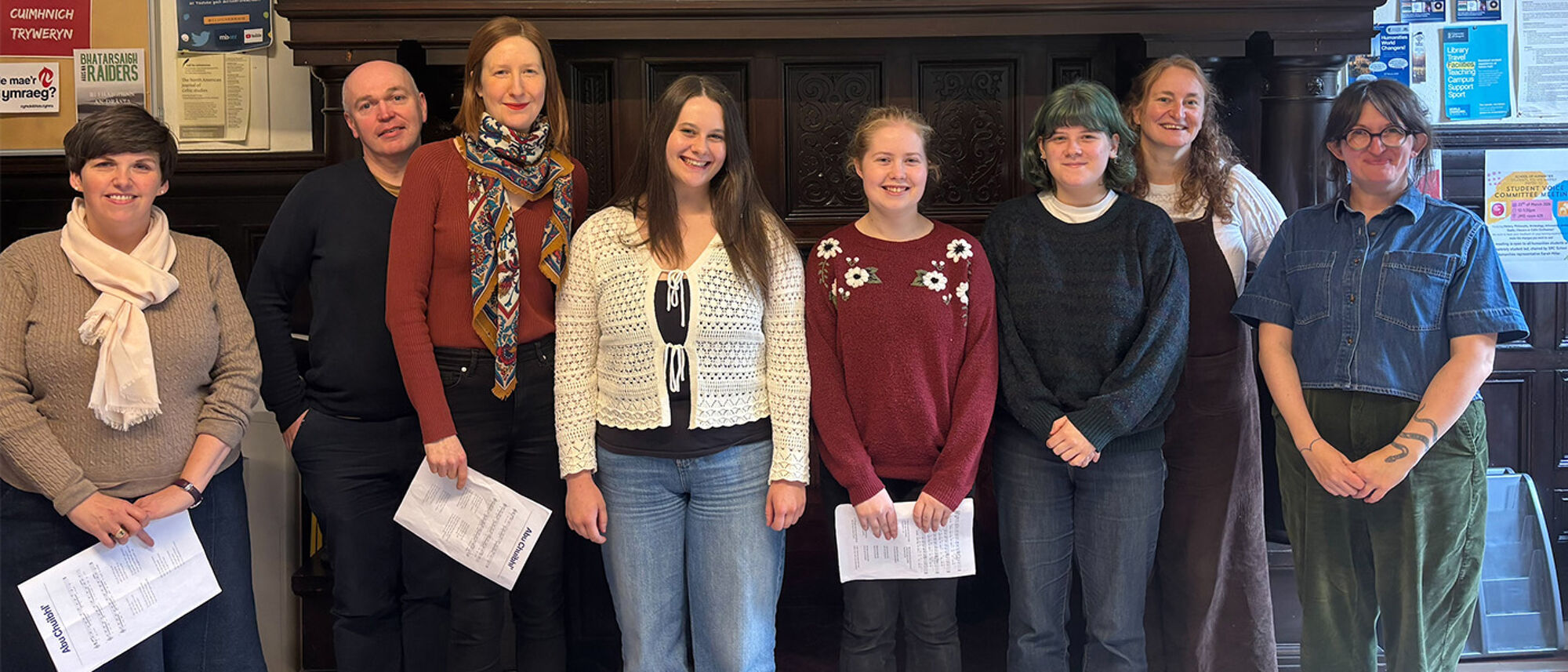
Scotland’s first university Gaelic Choir is bringing together staff and students, fluent speakers and those beginning their Gaelic language journey. With support from the Chancellor’s Fund, this growing community is finding its voice.
More than 40 people arrived for the first rehearsal of the University of Glasgow Gaelic Choir in March. After a few warm-ups, conductor Katie Cooper brought those individual voices together.
“I thought, ‘Oh, this actually works,’” recalls Dr Kathleen Reddy, who helped establish the Choir alongside Gillebride MacMillan. “‘This sounds like a choir. This might actually go somewhere.’” There was a buzz, Kathleen recalls, and people were keen to come back the following week. Scotland’s first university Gaelic Choir had found its voice.
“We’re very grateful for the ongoing support,” says Gillebride. “And we hope the audiences enjoy hearing Gaelic song.”
Building community through song
There is a long tradition behind what happened in that rehearsal room.
Gaelic singer, songwriter and academic Gillebride explains: “Gaelic choirs initially started in towns and cities. They gave people who had moved away from Gaelic-speaking areas like Uist and Skye a reason to meet fellow speakers and sing together.”
Today, the Choir is bringing that tradition into a university setting. Interest in Gaelic language courses and activities is growing across the University, while Gaelic-speaking staff can be found in disciplines far beyond Celtic & Gaelic.
Third-year Celtic Studies student Lynwen Verbeek joined after studying Gaelic for two years. Other members are experiencing the language, and singing, for the first time. At a recent rehearsal, Lynwen found herself sitting beside someone who had never spoken Gaelic before.
“I really like that everyone’s in that together,” she says. “Some people are amazing singers and some have only just started singing.”
For Gillebride, that openness is part of what makes the Choir special. “I think it’s important that staff and students are there at the same time, feeling on the same level,” he says. “It's community building at the heart.”
One rehearsal in the University Chapel captured that spirit perfectly for Lynwen. Only a few weeks after the Choir began, Katie asked everyone to stand in a circle to sing a round as a vocal warm-up.
“I was so amazed that everyone had the confidence to just go for it,” Lynwen remembers. “It was all echoing around the chapel, and it made me feel a bit emotional.”
Helping a new choir grow
Support from the Chancellor’s Fund, alongside other University funding, enables the Choir to work with professional conductor Katie Cooper.
“Without that, it wouldn’t be a choir, it would be a singing group,” says Gillebride.
Katie brings years of choral experience to the rehearsals, developing individual voices while bringing them together as an ensemble. Lynwen also sings under Katie in two auditioned University choirs and sees a different approach here: “It’s much more relaxed. The emphasis is on getting people singing, building confidence and making it safe to get things wrong.”
With regular rehearsals and performances funded for at least the next two years, the Choir has time to develop its repertoire and discover what it can become. Invitations are already arriving: in its first year, it has been approached to perform at three different events, including the University’s Giving Day on 5 November.
Bring more ideas to life
From new communities like Glasgow’s Gaelic Choir to projects across the University, your support for the Chancellor’s Fund can help promising ideas take shape and grow.