Zoology BSc/MSci
Zoology is the scientific study of all aspects of animals, their structure, function, ecology and evolution.
You’ll take part in field courses on Loch Lomond and at the Field Studies Council centre at Millport in the Firth of Clyde.
We also have an Exploration Society to help you organise and conduct scientific expeditions to all parts of the world.
- September start
- Session dates
- Zoology BSc (Hons): C300 4 year degree
- Zoology MSci: 5 year degree
Applications to the MSci are not taken via UCAS: you may apply for transfer mid-BSc.
- Glasgow: Gilmorehill campus
- Professionally accredited
- Study abroad available
Life Sciences at Glasgow
Our flexible Life Sciences degrees challenge you to apply the theory of the classroom in practical situations, in the lab or in the field. We offer an extremely wide range of courses in human and animal biology, biomolecular sciences, infection and immunity.
Our aim is to offer internationally competitive degrees that meet the needs of today’s science graduates. To achieve this aim, we utilise the research and teaching strengths of the College of Medical, Veterinary & Life Sciences to provide our graduates with the skills necessary for success in any chosen career.
We have a large and diverse student body, which includes Scottish, UK, EU and international students. We regularly welcome visiting and exchange students, and we believe in the many advantages our students gain from adding an international dimension to their studies.
Our strengths include:
- substantial flexibility within our range of degree programmes
- an opportunity for you to gain experience working or studying abroad
- annual field courses to destinations around the globe
- access to the University’s world-renowned museums of Anatomy and Zoology
- top-quality student experience.
Our museums
The Hunterian at the University of Glasgow is home to over a 1.5 million magnificent items, ranging from meteorites to mummies and Mackintosh drawings to moose antlers. The Zoology, Palaeontology, Entomology, Geology and Anatomy collections are a fantastic resource for Life Sciences students. The majority of these natural sciences collections can be accessed through The Hunterian Collections Study Centre at Kelvin Hall, or viewed at the Hunterian Museum in the Gilbert Scott Building. There are also two departmental museums:
Zoology Museum
Around a thousand animal specimens are on display in this museum at the heart of the Graham Kerr Building, the displays give a taxonomic introduction to the animal kingdom along with information about endangered species and the threats they face. The museum is a popular place to study and is used for a variety of teaching purposes and other events as well as being open to the general public.
Anatomy Museum
Both anatomy and pathology preparations are displayed in this museum, many dating back to William Hunter’s collection from the mid-1700s and covering all aspects of the human body. Although historic the collections are still used for teaching and research, as they have considerable importance in the history and development of medicine. The museum is used as a teaching and study space for medical, dental and anatomy students but is not open to the general public apart from during special events.
Programme structure
Year 1
You will be given a general introduction to all aspects of modern biology and encouraged to acquire general scientific skills.
Year 2
In semester 1, you will develop your knowledge of fundamental aspects of biology. In semester 2, you will be introduced to specialist subject areas according to your interests (eg animal biology; biomolecular sciences; human biology; infection biology).
You will also study other subjects in years 1 and 2: see Flexible degrees.
Years 3, 4 and 5
If you progress to Honours (years 3 and 4) fieldwork becomes an important component of your study mix. Specific topics you may study include invertebrate and vertebrate biology; ecology; molecular ecology; animal physiology; parasite biology; and marine biology. You will obtain a wide range of practical skills covering lab work, fieldwork experimental design and data analysis.
Fieldwork opportunities in some final year courses include international and national residential field courses.
A major component of your final year is an independent research project, which can be carried out in the laboratory or in the field, at home or abroad. This project will give you the chance to research something new, and the results sometimes contribute to scientific publications.
You can take Zoology as an MSci, which includes an additional placement year, between year 3 and the final year of the degree. This is normally spent doing research in industry or some other organisation such as a research institute in the UK or overseas.
The list of available final-year optional courses is subject to change each year. Places on optional courses may be limited, so you are not guaranteed a place on a particular final-year option.
+++
Ecology and Conservation of African Ecosystems field course to Kenya
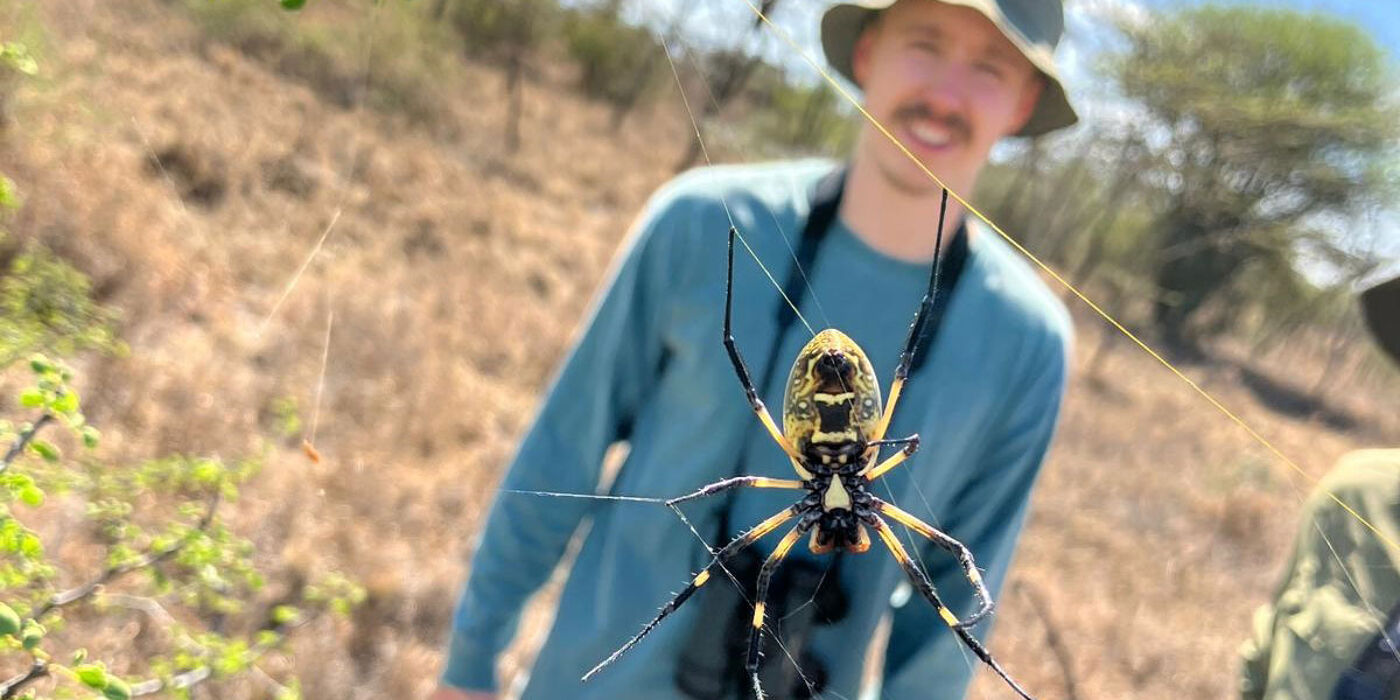
A highlight of the final year of our undergraduate degree in Zoology is the opportunity for students to participate in the field course of Ecology and Conservation of African Ecosystems.
The course takes place at the Mpala Research Centre, a unique research field station with more than 30 years of experience hosting undergraduate field courses. The station is located in the stunning landscape of Laikipia county, a grassland-dominated ecosystem that hosts all of the iconic African wildlife, from elephants to giraffes, from lions to wild dogs, from hornbills to Martial eagles.
Students live in basic-yet-very-comfortable accommodation, surrounded by many local and international researchers who use the station for their own scientific projects. Students will experience field research at its best, while also having the opportunity to experience the local customs at traditional small village communities, visit nearby conservation NGOs, hike on mount Kenya.
A life-changing experience is awaiting you!
---
Course details
Year 1
And dependent on entry grades in Chemistry either:
or
Students then choose an additional 40 credits from a range of science and non-science courses.
Year 2
Students are encouraged to choose other Biology courses for their remaining 60 credits.
Year 3
Year 4 (placement year)
Year 5
All students will undertake a research project consisting of one of the following types:
- Life Sciences Investigative Honours Project
- Life Sciences Outreach Honours Project
- Life Sciences Dissertation Honours Project
- Life Sciences Internship Honours Project
The remaining 60 credits are made up of three Life Sciences course options.
Programme alteration or discontinuation
The University of Glasgow endeavours to run all programmes as advertised. In exceptional
circumstances, however, the University may withdraw or alter a programme. For more information,
please see: Student contract.
Our international links
Research projects may be undertaken on a wide range of topics in a variety of international locations: recent examples include marine turtle breeding in Cyprus and tree frog behaviour in Trinidad. You may also have the opportunity to take an optional overseas field course.
Entry requirements
for entry in 2026
Summary of entry requirements for Zoology
SQA Higher entry requirements
- ABBB is the minimum requirement from S5 to be reviewed for an S6 offer
- Offers are not guaranteed to applicants who meet the minimum from S5
- Typically offers will be made at AAAAA by end of S6. B at Advanced Higher is equivalent to A at Higher
- Additional requirements: Higher Biology or Chemistry. (A in either).
SQA Higher adjusted entry requirements* (by end of S5 or S6)
- MD20: BBBB (also other target groups*)
- MD40: AABB (ABB S5 minimum for consideration)*
- Additional requirements: Higher Biology or Chemistry. Successful completion of Top-Up or one of our Summer Schools.
See Access Glasgow for eligibility.
Widening Participation Articulation Programmes
The University has bespoke HNC Articulation Programmes running at various colleges, offering direct entry to Year 2 of this degree.
A-level standard entry requirements
- AAB – BBB
- Additional requirements: A-level Biology or Chemistry.
IB standard entry requirements
- 34 (6,5,5)
- Additional requirements: HL Biology or Chemistry.
Entry requirements for advanced entry to Zoology
Applicants who achieve exceptional grades in their Advanced Highers, A-levels or International Baccalaureate may be considered for advanced entry, meaning that an Honours degree can be completed in three years instead of the normal four years, or four years for five-year integrated Masters programmes.
Choose point of entry 2nd year on your UCAS application to indicate you wish to be considered for advanced entry.
SQA Higher requirements for advanced entry
- Advanced Highers – AAA including Biology and Chemistry attained in one exam year and at the first attempt.
- Applicants must also meet the standard offer threshold with S5 grades to be considered for advanced entry.
A-level requirements for advanced entry
- Three A-levels at grades A*AA which include Biology and Chemistry attained in one exam year and at the first attempt.
IB requirements for advanced entry
- 38 points with three Higher Level subjects at 6,6,6 including Biology and Chemistry attained in one exam year and at the first attempt.
Admissions guidance
Glasgow International College
International students with academic qualifications below those required should contact our partner institution, Glasgow International College, who offer a range of foundation certificates.
English language
For applicants from non-English speaking countries, as defined by the UK Government, the University sets a minimum English Language proficiency level.
English language requirements
International English Language Testing System (IELTS) Academic and Academic Online (not General Training)
- 6.5 with no subtests under 6.0
- IELTS One Skill Retake Accepted
- Tests must have been taken within 2 years 5 months of start date. Applicants must meet the overall and subtest requirements using a single test.
+++
Common equivalent English language qualifications for entry to this programme
TOEFL (ibt, mybest or athome)
Tests taken up to 20 January 2026
- 90 Overall, no subtest lower than Reading 20; Listening 19; Speaking 19; Writing 21
- Tests must have been taken within 2 years 5 months of programme start date. Applicants must meet the overall and subtest requirements using a single test, this includes TOEFL mybest.
Tests taken from 21 January 2026
- 92 Overall, no subtest lower than Reading 22; Listening 20; Speaking 23; Writing 21
- Tests must have been taken within 2 years 5 months of programme start date. Applicants must meet the overall and subtest requirements using a single test, this includes TOEFL mybest.
Pearsons PTE Academic
- 59 with minimum 59 in all subtests
- Tests must have been taken within 2 years 5 months of start date. Applicants must meet the overall and subtest requirements using a single test.
Cambridge Proficiency in English (CPE) and Cambridge Advanced English (CAE)
- 176 overall, no subtest less than 169
- Tests must have been taken within 2 years 5 months of start date. Applicants must meet the overall and subtest requirements using a single test.
Oxford ELLT
- 7 overall with no subtest less than 6
- Tests must have been taken within 2 years 5 months of start date. Applicants must meet the overall and subtest requirements using a single test.
LanguageCert Academic SELT
- 70 overall with no subtest less than 60
- Tests must have been taken within 2 years 5 months of start date. Applicants must meet the overall and subtest requirements using a single test.
Password Skills Plus
- 6.5 overall with no subtest less than 6.0
- Tests must have been taken within 2 years 5 months of start date. Applicants must meet the overall and subtest requirements using a single test.
Trinity College Tests
- Integrated Skills in English II & III & IV: ISEII Distinction with Distinction in all sub-tests
- Tests must have been taken within 2 years 5 months of start date. Applicants must meet the overall and subtest requirements using a single test.
University of Glasgow Pre-sessional courses
- Tests are accepted for 2 years following date of successful completion.
School Qualifications
- IGCSE English First Language, grade C
- IGCSE English Second Language, grade A
- A Level English, grade C
- International Baccalaureate English A SL5 or HL5
- International Baccalaureate English B SL6 or HL5
- SQA National 5 English or ESOL, grade B
- SQA Higher English or ESOL, grade C
International School Qualifications
- Brunei: O-Level English Language 1120 grade B and above
- Denmark: Studentereksamen English at 7
- European Baccalaureate: English as Language 1 pass, if taken as Language 2 grade 7, if taken as Language 3 grade 7.5
- Finland: Ylioppilastutkinto / studentexamen English grade C or 4
- France: International Option Baccalaureate (OIB) / Baccalauréat Français International (BFI) grade 12
- Gambia, Ghana, Liberia, Nigeria, Sierra Leone: West African Examination Council (WAEC) / Senior Secondary School Certificate English grade C6
- Germany: German Abitur English Grade 11
- Hong Kong: Hong Kong Diploma of Secondary Education, English Language grade 4
- India: Central Board of Secondary Education (CBSE) / All India School Certificate (ISC) English at 80%
- Kenya: Kenya Certificate of Secondary Education (KCSE) English grade B
- Netherlands: Voorbereidend Wetenschappelijk Onderwijs (VWO) grade 7
- Norway: Vitnemal English grade 4 or above
- Singapore: Cambridge International O Level English Language (1128 Singapore only) at Grace C; Singapore Integrated Programme Secondary 4 English Language at grade B
- South Africa: National Senior Certificate (NSC) / Independent Exam Board (IEB) Grade 4 (English as Home Language) OR Grade 4 (English as First Additional Language)
- Sweden: Avgangsbetyg / Fullständigt Slutbetyg fran Gymnasieskolan English grade VG
- Zimbabwe: Zimbabwe General Certificate of Education at English at Ordinary Level grade C
---
+++
Alternatives to English Language qualification
- Degree from majority-English speaking country (as defined by the UKVI including Canada if taught in English)
- students must have studied for a minimum of 2 years at Undergraduate level, or 9 months at Master's level, and must have completed their degree in that majority-English speaking country within the last 6 years.
- Undergraduate 2+2 degrees from majority-English speaking country (as defined by the UKVI including Canada if taught in English)
- students must have completed their final two years study in that majority-English speaking country within the last 6 years.
For international students, the Home Office has confirmed that the University can choose to use these tests to make its own assessment of English language ability for visa applications to degree level programmes. The University is also able to accept UKVI approved Secure English Language Tests (SELT) but we do not require a specific UKVI SELT for degree level programmes. We therefore still accept any of the English tests listed for admission to this programme.
---
+++
Pre-sessional courses
We would strongly encourage you to consider the pre-sessional courses at the University of Glasgow's English for Academic Study (EAS) Unit. Our Pre-sessional courses are the best way to bring your English up to entry level for University study. Our courses give you:
- direct entry to your University programme for successful students (no need to take IELTS)
- essential academic skills to help you study effectively at University
- flexible entry dates so you can join the right course for your level.
For more detail on our pre-sessional courses please see:
- English for Academic Study: Pre-sessional courses
We can also consider the pre-sessional courses accredited by the below BALEAP approved institutions to meet the language requirements for admission to our postgraduate taught degrees:
- Heriot Watt
- Kingston Upon Thames
- Middlesex University
- Manchester University
- Reading University
- Edinburgh University
- St Andrews University
- UCL
- Durham
---
FAQs
What do I do if...
my language qualifications are below the requirements?
The University's School of Modern Languages and Cultures offers a range of Pre-sessional courses to bring you up to entry level. The course is accredited by BALEAP, the UK professional association for academic English teaching.
my language qualifications are not listed here?
Please contact External Relations
If you require a Tier 4 student visa, your qualification must be one of the secure English language tests accepted by UK Border Agency:
- UK Border Agency Tier 4 English Language requirements
- UKBA list of approved English language tests [pdf]
Visa requirements and proof of English language level
It is a visa requirement to provide information on your level of English based on an internationally recognised and secure English language test. All test reports must be no more than 2 years old. A list of these can be found on the UK Border Agency website. If you have never taken one of these tests before, you can get an initial idea of your level by using the Common European Framework self-assessment grid which gives you a level for each skill (e.g. listening B1/writing B2 etc.) However, please note that this is not a secure English language test and it is not sufficient evidence of your level of English for visa requirements.
Further information about English language: School of Modern Languages & Cultures: English for Academic Study
Career prospects
Your qualification is an entry point to a wide range of careers that demand the analytical and science-based communications skills developed during this degree programme. Our graduates are employed in research underpinning environmental management/monitoring, agriculture, fisheries and wildlife conservation. Others find careers in teaching in a variety of educational establishments, in museums and in the media. Many choose to continue on to postgraduate study.
Accreditation
This programme has been accredited by the Royal Society of Biology.
Degrees and UCAS codes
When applying you will need to know the UCAS code for the subject or subject-combination that you wish to apply to:
BSc (Hons)

MSci
Applications to the MSci are not taken via UCAS: you may apply for transfer mid-BSc
Fees and funding
Tuition fees
How and when you pay tuition fees depends on where you’re from: see Tuition fees for details.
Scholarships
The University is committed to supporting students and rewarding academic excellence. That's why we've invested more than £1m in additional scholarship funding in recent years.
University of Glasgow/Glasgow International College University Degree Progressi
The University of Glasgow has a number of University Degree Progression Scholarships available to international students progressing directly from Glasgow International College (GIC) to register on a full-time Undergraduate degree at the University of Glasgow in Academic Year 2026/27.
World Changers Glasgow Scholarship UG (EU)
The University of Glasgow continues to be committed to ensuring a strong relationship with our existing and future EU students, and supporting EU talent to make their home at the University of Glasgow.
We appreciate the challenging financial implications that have arisen for our European applicants, and are therefore delighted to offer the World Changers Glasgow Scholarship UG (EU) to new incoming EU students starting an undergraduate programme for Academic Session 2026-27. The scholarship is awarded as a tuition fee discount of £5,000 for every year of study and is subject to satisfactory progress for consecutive years of study. This discount cannot be combined with another University scholarship.
World Changers Global Excellence Scholarship
The University of Glasgow has a number of World Changers Global Excellence Scholarships available to new International and EU Undergraduate students for 2026 entry.
The scholarship is awarded as an annual tuition fee discount, based on the academic college of your chosen degree:
- £10,000 per year of study for students in:
- College of Medical, Veterinary & Life Sciences
- College of Science and Engineering
- £7,000 per year of study for students in:
- College of Arts
- College of Social Sciences
Scholarships are renewable each year, subject to satisfactory academic progress.
World Changers RUK Excellence Scholarship
The RUK Excellence Scholarship of £1,000 for each year of study will be awarded to first degree new entrants who have attained academic excellence in one sitting at A Level.
Beaconhouse Schools
The University of Glasgow offer a 15% discount on the first year of tuition fee to students from Beaconhouse Schools and who enrol on an undergraduate programme at the University of Glasgow. The discount does not apply to Veterinary Medicine, Medicine and Dentistry programmes.
World Changers RUK Access Bursary
The bursary supports talented students who may not be able to take their place at University for reasons of financial hardship. It is available to new entrant full-time, undergraduate students of the University of Glasgow who are fully registered for the up coming academic session, ordinarily domiciled in England, Wales or Northern Ireland and paying full annual tuition fee.
Care Experienced and Estranged Student Bursary
The University of Glasgow is offering five bursaries specifically for Care Experienced and Estranged Students. These bursaries aim to support students who have been in care or are living independently due to family estrangement. Definitions of these terms are provided below, and further details are available here.
Care Experienced
"Care-experienced" refers to anyone who has ever been in care, regardless of the duration. This includes individuals who have been in the care of a local authority at any stage, whether through residential care, foster care, kinship care, or under a supervision requirement at home. This category also includes those who have been adopted from care.
Estranged
Estranged students are young people studying independently without family support due to a breakdown in family relationships. These students often have limited or no contact with their families, and any contact that does occur is usually infrequent or strained. Causes of estrangement may include emotional or physical abuse, conflicting family expectations, personality clashes, or differing values.
Each bursary is typically valued at £1,500 per year for each consecutive year of the degree programme.
James McCune Smith Undergraduate Scholarship
The University of Glasgow has up to 30 undergraduate scholarships available for students of African/African-Caribbean backgrounds. The scholarship supports students who could face financial difficulties taking up their place to study at the university. The value of the scholarship is £4,000, paid in instalments for year one of undergraduate study. The scholarship is open to new applicants to the university for 2026 entry. Current students who have previously been in receipt of the award may reapply, however, preference will be given to applicants entering their first year of study.
Cowrie Foundation Scholarship - CLOSED
The University of Glasgow and The Cowrie Scholarship Foundation (CSF) will offer a scholarship to support Black African and Caribbean heritage applicants from socio-economically challenged backgrounds. Applicants must be ordinarily resident in the UK and commencing an undergraduate study programme.
The Cowrie Scholarship Foundation wants to fund 100 Black British students through UK universities in the next decade. More information on the Foundation can be found here.
Undergraduate Talent Scholarships
The University of Glasgow is awarding c.50 undergraduate Talent Scholarships to support students who could face financial difficulties in taking up their place to study at the University for 2026 entry. The value of each scholarship is typically £1,500 p.a. for each year of the degree programme, subject to satisfactory progress. Talent Scholarships are available to students entering any of the University's Colleges.
Dental School students are eligible for a Talent Scholarship in their first year of study only. They are eligible for the NHS Dental Student Support Grant in the following years.
The Education Matters Talent Scholarship
Education Matters is a charity dedicated to promoting and advancing education for individuals in the UK facing obstacles in accessing educational opportunities.
Thanks to the generous support of Education Matters, the University of Glasgow is pleased to offer two enhanced Talent Scholarships (£8,000 per annum for the duration of the awardee’s degree) for students commencing their studies in the 2026/27 academic year.
Travel Bursaries
The University of Glasgow is offering travel bursaries to assist with public transport travel costs, to support undergraduate students who could face financial difficulties in taking up their place to study at the University for 2026 entry. The value of the bursary is 50% of your monthly public transport travel costs to get to University, up to a maximum value of £50 per month. Priority is given to new entrants to the Univeristy. Continuing students previously in receipt of the bursary can apply, however, preference will be given to new entrants.
The Scottish Government’s Young Persons’ Free Bus Travel scheme gives free bus travel to young people under 22 years of age. Please note that if you are under 22 years of age and can reasonably travel to Campus by bus, you will not be considered for the travel bursary.
GyanDhan Scholarship
The GyanDhan Scholarship 2026 is a test-based program for students across the globe, reflecting GyanDhan’s commitment to rewarding talent fairly. Open to students at both undergraduate and postgraduate levels, it supports higher studies in India and abroad, ensuring that ambition isn’t limited by past academic scores.
Sanctuary Scholarships
The University of Glasgow Sanctuary Scholarship has been created to support applicants with Refugee or Asylum Seeker status who are currently living in the UK and hold an offer to study with us in the 2026/27 academic year. The scholarship is open to prospective undergraduate and postgraduate taught students at the University of Glasgow applying for entry in September 2026/27. Please note that you must have applied to the University before submitting an application for this scholarship.
The scholarship will meet the cost of tuition fees for the duration of your programme, for applicants who are unable to access mainstream funding through Student Awards Agency Scotland (SAAS) or Student Finance. The Sanctuary Scholarship also provides a £5,000 per year stipend, to assist with study costs.
This scholarship is not available to PGdip, PDGE or part time programmes.
Undergraduate students with refugee status (or equivalent) and access to funding, are eligible to apply for the scholarship and would receive the £5,000 stipend towards study costs only, if successful.
Postgraduate Taught Masters students with refugee status (or equivalent) and access to funding, are eligible to apply for the scholarship and would receive the £5,000 stipend towards study costs and a partial tuition fee waiver, to cover any shortfall not met by your Postgraduate Masters tuition fee loan.
The Clan Gregor Society Prize
The Clan Gregor Society is offering an award incoming students to the University of Glasgow who descend from Clan Gregor. Students will be asked to submit an application highlighting areas of consideration such as academic excellence and financial need. The award is open to both Undergraduate and Postgraduate applicants who are joining us for 2025/26 entry.
The Dima Alhaj Scholarship
This scholarship is now closed.
The Dima Alhaj Scholarship was set up in 2024 in memory of a University of Glasgow alumna. After graduating, Dima worked in Gaza with the World Health Organization as a patient administrator at the limb reconstruction centre, as part of the trauma and emergency team and was tragically killed in Gaza in November 2023.
The University is offering the Dima Alhaj Scholarship to 1 undergraduate applicant and 1 postgraduate taught applicant joining us in September 2026. Please note that you must have a programme application in progress before applying for this scholarship. If you have not yet started a programme application, please submit this first and then return to complete the scholarship application process.
This scholarship is not available to PhD, PGdip, PDGE or part time programmes.
This scholarship can not be combined with any other University of Glasgow scholarship. In the event you are offered 2 scholarships, the lower value scholarship will be removed from your student account.
Travel Bursary for Forced Migrants
The University of Glasgow is offering travel bursaries to assist with public transport travel costs, to support undergraduate and postgraduate students are currently asylum seekers and who could face financial difficulties in taking up their place to study at the University for 2026 entry. The value of the bursary is 50% of your monthly public transport travel costs to get to University, up to a maximum value of £50 per month.
Glasgow Highland Society Scholarship
The University of Glasgow is excited to promote this scholarship opportunity on behalf of the Glasgow Highland Society.
The Glasgow Highland Society is offering multiple grants of up to £500 for new and continuing students of Glasgow university who fit the eligibility requirements of the scholarship
The scholarships above are relevant to this programme. For more funding opportunities search the scholarships database
How to apply
Full-time students must apply through the Universities & Colleges Admissions Service (UCAS).
SQA applicants who are eligible for our Widening Participation programmes are encouraged to participate in one or more of these programmes, including Summer School, to support your application and the transition to higher education.
International students to Arts, Engineering, Law, Nursing, Science, and Social Sciences can also apply using The Common Application: however, if applying to more than one UK university, we recommend using UCAS. Applications to Dentistry, Education, Medicine, and Veterinary Medicine must be made through UCAS.
Application deadlines
- 15 October: if including Dentistry, Medicine, Veterinary Medicine or also applying to Oxford or Cambridge
- 14 January: all other UK applicants (unless otherwise stated on the UCAS website)
- 30 June: international students.
We do not usually accept any applications after these deadlines.
It's your responsibility to ensure the accuracy of your application before submission. Requests to correct application content, change degree programme or change college of entry, will not be accepted after these deadlines. This policy is in place to ensure fairness and consistency to all applicants, and no exceptions will be made.
- Apply at www.ucas.com or through your school or college
- Contact UCAS on 0871 468 0468
- Apply at commonapp.org (international students to certain areas only)
How to apply for Advanced Entry
Apply for year 2 (Y2) on your UCAS application. If the specific subject is unavailable for Advanced Entry or your application for year 2 entry is unsuccessful, you will be automatically considered for year 1 entry. You do not have to submit a separate UCAS application.
More information about this programme
Subject league tables

Guardian University Guide [Zoology]

Times & Sunday Times Good University Guide [Biological Sciences]

Complete University Guide [Biological Sciences]

QS World University Rankings [Biological Sciences]

Times Higher Education World University Rankings [Life Sciences]