Medical Genetics & Genomics MSc(MedSci)
Genomics, with its new advanced technologies, is transforming every area of healthcare, from research and diagnostics to treatment, across a vast range of conditions. This MSc attracts a diverse, international student cohort each year and many graduates now hold influential roles worldwide, including positions in the WHO, UNESCO and HUGO-International. The programme offers cutting-edge teaching delivered by a multi-award-winning team with extensive academic and health service experience. Students benefit from numerous included laboratory practicals and hands-on training with professional genomics software and databases. The MSc is designed to equip graduates with a range of essential skills and a strong working knowledge of the key genetic and genomic principles, preparing them for a wide variety of careers.
- Academic contact: mvls-medgen@glasgow.ac.uk
- Teaching start: September
- Glasgow: Gilmorehill campus and Glasgow: Queen Elizabeth University Hospital
- MSc (Med Sci): 12 months full-time: (24 months part-time by special arrangement)
Why this programme
- A fully up-to-date Medical Genetics and Genomics degree delivered by dedicated, multi-award-winning teaching and clinical staff of the University, with considerable input from hospital-based Regional Genetics Service clinicians and clinical scientists.
- Learn directly from NHS staff about the latest developments to the service at the West of Scotland Genetic Services, Queen Elizabeth Campus.
- The academic programme lead, Dr Leah Martin, and clinical director, Prof Edward Tobias, both hold international leading roles in genomics education.
- Explore the effects of mutations and variants as well as the current techniques used in NHS genetics laboratory diagnostics and recent developments in diagnostics (including microarray analysis and the use of massively parallel [“next-generation”] sequencing).
- Accredited by the Royal Society of Biology for the purpose of meeting, in part, the academic and experience requirement for the Membership and Chartered Biologist (CBiol).
- Develop your skills in problem solving, experimental design, evaluation and interpretation of experimental data, literature searches, scientific writing, oral presentations, poster presentations and team working.
- Lay the academic foundations on which you may build in pursuing research at PhD level in genetics or related areas of biomedical science or by moving into related careers in diagnostic services.
- Gain hands-on experience and guidance in using software and online resources for genetic diagnosis and for the evaluation of pathogenesis of DNA sequence variants.The widely used textbook “Essential Medical Genetics” is co-authored by a member of the core teaching team, Professor Edward Tobias.
- Access new developments in medical genetics incorporated into the lectures and interactive teaching sessions very soon after they are presented at international meetings or published.
- Collaboration between staff from the University of Glasgow and the NHS West of Scotland Genetics Service enables the MSc in Medical Genetics and Genomics to provide a state-of-the-art view of the application of modern genetic and genomic technologies in medical genetics research and diagnostics, and in delivery of a high quality genetics service to patients, as well as in design of targeted therapies.
- The full spectrum of genetic services is represented, from patient and family counselling to diagnostic testing of individuals and screening of entire populations for genetic conditions: eg the NHS prenatal and newborn screening programmes.
- Based on the south side of the River Clyde in the purpose-built Teaching & Learning Centre, at the Queen Elizabeth University Hospital (we are located 4 miles from the main University Campus).
- The Centre also houses state of the art educational resources, including a purpose built teaching laboratory, computing facilities and a well equipped library.
- Close collaboration between university and hospital staff ensures the Medical Genetics MSc provides an up-to-date representation of the practice of medical genetics and you will have the opportunity to observe during clinics and visit the diagnostic laboratories at the new Southern General Hospital laboratory medicine building.
- For doctors: The Joint Royal Colleges of Physicians’ Training Board (JRCPTB) in the UK recognises the MSc in Medical Genetics and Genomics (which was established in 1984) as counting for six months of the higher specialist training in Clinical Genetics.
- The Medical Council of Hong Kong recognises the MSc in Medical Genetics and Genomics from University of Glasgow in it's list of Quotable Qualifications.
- Watch our recent Ask your Academic webinar on YouTube and BiliBili.
Meet our students
Programme structure
Semester 1
- Genetic risk and genetic counselling
- This course is designed to give students a working knowledge of the principles and practice of genetic risk assessment and genetic counselling. Students will develop an understanding of inheritance, risk communication, ethical considerations and patient-centred care, enabling them to evaluate and communicate genetic and genomic information in clinical and healthcare settings.
- Laboratory Genetics: from genotype to therapy
- This course is designed in collaboration with the West of Scotland Centre for Genomic Medicine (the NHS regional genetics service for a population of almost 3 million) to give students a working knowledge of the laboratory methods, technologies and workflows typically used in diagnostic genetics laboratories. Students will develop the knowledge and skills required to evaluate, select and interpret genetic and genomic investigations, and to understand their application in genomic medicine.
Semester 2
Core
- Case Investigations in Medical Genetics
- Students will work in groups to investigate complex clinical case scenarios: decide appropriate testing, analyse results from genetic and genomic tests, reach diagnoses where appropriate and, with reference to the literature, generate a concise and critical group report
- Disease Screening in Populations
- This course will cover the rationale for, and requirements of, population screening programmes to detect individuals at high risk of particular conditions, who can then be offered diagnostic investigations. Students will work in groups to investigate, and report on, a screening programme of their choice from any country.
- SNP Assay Design and Validation
- Students will work independently to develop and validate a polymerase chain reaction (PCR)-based assay for a single nucleotide polymorphism (SNP).
Optional (students choose 1 from the list)
- The Cancer Microenvironment and Biomarkers
- This course will focus on key aspects of the tumour microenvironment, including tumour-stroma interactions; angiogenesis; invasion and metastasis; and infiltration of immune cells. The course will also highlight the processes involved in the study of existing and development of new biomarkers for cancer and introduce the rapidly expanding field of immunotherapy.
- Clinical Genomics
- This course, taught by the programme's clinical director, will provide an overview of the clinical applications of genomic approaches to human disorders, particularly in relation to clinical genetics. It will include discussion of the methods, capabilities and terminology of the new technologies. Tuition and much hands-on experience will be provided in the use of several key international genomics databases and in genomic data analysis, including the interpretation of next generation sequencing reports.
- Complex Disease Genomics: linking genome to phenome
- This course will provide students with an overview of the current status and future potential of genetics for complex diseases (focusing on cardiovascular, metabolic and psychiatric illness). It will cover key concepts of genome-wide association studies (GWAS), post-GWAS analyses, polygenic risk scoring, and Mendelian randomisation.
- Omic analyses for the biomedical sciences: from genomics to metabolomic
- An introduction to workflows for the resolution and characterisation of complex mixtures of biomolecules, from DNA to small molecule metabolites. The course will emphasise the potential and challenges of omic approaches and will include data handling tasks and demonstration.
Semester 3 (Summer)
- Medical Genetics Dissertation
- The course will provide students with the opportunity to carry out an independent investigative project in the field of Medical Genetics and Genomics.
Teaching and Learning Methods
A variety of methods are used, including problem-based learning, case-based learning, lectures, tutorials and laboratories. These are supplemented by a wide range of course-specific electronic resources for additional learning and self-assessment. As a result, you will develop a wide range of skills relevant to careers in research, diagnostics or clinical genetics. These skills include team-working, data interpretation and experimental design. You will use the primary scientific literature as an information resource, although textbooks such as our own Essential Medical Genetics will also be useful. You will have the options of: attending genetic counselling clinics and gaining hands-on experience and guidance in using software and online resources for genetic diagnosis and for the evaluation of pathogenesis of DNA sequence variants.
There are weekly optional supplementary tutorials on topics that are selected by students.
Electronic Resources
- Access to a continually updated Moodle (virtual learning environment) with extensive additional teaching and self-assessment materials.
- An online web-portal with regularly updated direct links to >70 worldwide genetic databases & online algorithms (plus the latest new genetics discoveries), all easily accessible and grouped into useful categories.
Programme alteration or discontinuation
The University of Glasgow endeavours
to run all programmes as advertised. In exceptional circumstances, however, the University may withdraw
or alter a programme. For more information, please see: Student contract.
Career prospects
Graduate jobs can be found in the UK, Europe, North America, Middle East, South Asia and East Asia in overseas hospitals, life science companies, the NHS and academia.
Research: About half of our graduates enter a research career and most of these graduates undertake and complete PhDs in fields such as genetics, cancer studies, biosciences, neuroscience and genome science and technology. One or two graduates have also progressed on to graduate entry routes to medicine.
The MSc in Medical Genetics and Genomics facilitates acquisition of skills relevant to a career in research in many different bio-molecular disciplines.
Diagnostics: Some of our graduates enter careers with clinical genetic diagnostic services, often within NHS laboratories.
Several graduates have become heads of diagnostic services or laboratories, around the world.
Clinical genetics: Those of our graduates with a prior medical / nursing training often utilise their new skills in careers as clinical geneticists or genetic counsellors.
Other: The focus of teaching is on using the current technologies for genetic diagnostics within health service laboratories.
Many of these technologies are also used in diverse areas of biomedical science research and in forensic DNA analysis.
Graduate jobs can be found in the UK, Europe, North America, Middle East, South Asia and East Asia in overseas hospitals, life science companies, the NHS and academia. Many have entered careers in education; industry, particularly with companies providing or developing genetics and genomics-related medical services; medicine and scientific publishing.
Example job positions include:
- genetic technologist, medical technical officer (NHS), R&D lab technician, product development technician, trainee clinical scientist (NHS), university laboratory officer, university lecturer
What our students say
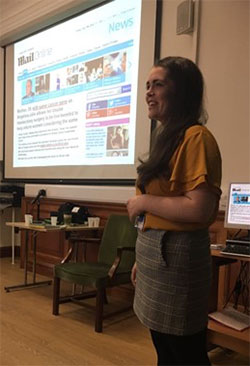 Kathleen Murphy MSc Medical Genetics 2013, now Clinical Scientist in Aberdeen
My proudest moment to date was graduating with my MSc in 2013. I would describe the course as intensive and challenging, thanks to the hardworking and supportive staff that are committed to ensuring students have the best experience and who continually take feedback to improve outcomes. You are encouraged to reflect upon your work as part of this MSc; an essential skill as a healthcare professional; and as a result will grow and develop into a better scientist, with support and extensive feedback on how your work can be improved. The diagnostic focus of the teaching is unique compared with other Masters Courses and perfect for anyone who is motivated by working for the benefit of patients in the NHS environment.
Shortly after graduation, I was offered the role of Genetic Technologist at Sheffield Diagnostic Genetics Service as part of the sequencing team, where I was responsible for NGS lab work and sequencing analysis. The practical skills and knowledge gained from the MSc allowed me to hit the ground running and contribute to the team with a small amount of training.
The following year I was accepted onto the Scientist Training Programme in Genomics at Manchester Centre for Genomic Medicine, which includes work-based training across a wide range of services. The confidence I gained in my presentation skills throughout the MSc in Medical Genetics allowed me to take part in public engagement and inter-professional teaching as part of my scientist training, to educate the public and other healthcare workers about genomics. My Glasgow MSc covered the background of so much of the work I do on a daily basis and the notes still come in handy for my revision 6 years later!
As I am about to take up a Clinical Scientist post in an NHS laboratory, I reflect on how I will always be grateful to the outstanding (and award-winning!) MSc teaching staff, as without them I would not be here today. Over the last few years, I’ve come to realise the MSc has an excellent reputation for producing high quality graduates throughout the world, and Glasgow graduates are never hard to find in the world of Genomics, wherever you end up!
 Joseph Ogbede (MSc Medical Genetics & Genomics, 2017), currently undertaking a PhD in Genome Science and Technology, University of British Columbia, Vancouver, Canada
I really enjoyed my time during the MSc program, which I have always missed. The friendly and supportive staff, the fantastic class-mates and the unforgettable outdoor events especially the ‘away-day’ made my study experience rewarding. Among all the skills I acquired during the MSc program, the scientific writing has been wonderfully helpful. The critical feedback from essays and assignments, though sometimes as a student I did not like them (especially when against my expectations), actually turned out to be very useful to me as a PhD student, as I have become very logical and careful while writing. Having come from biochemistry background with little knowledge of genomics and bioinformatics, the program made me develop a stronger interest in the field, and not only that, but equipped me with impressive knowledge of human genetics, molecular diagnosis and data analysis. In fact, my experience during the MSc program has made me an independent student today. So I think there is no alternative to the University of Glasgow’s MSc Medical Genetics and Genomics program!
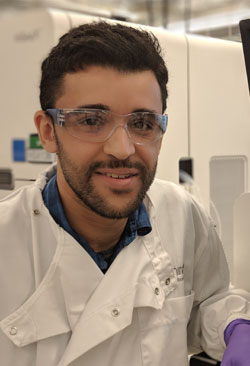 Souhile Alalem (MSc Medical Genetics & Genomics, 2017) is currently working on genomics using next generation sequencing at Illumina
The MSc in Medical Genetics and Genomics offered me the chance to study human genetics in a great depth. The research-led teaching has helped me significantly, as the information we got was up to date and relevant. Although this MSc is greatly focused on human genetics and diagnosis, there were also other important topics discussed, such as genomics and biotechnology. I was deeply interested in genomics and NGS, and the way it was taught made me even more interested. As such, I chose to start my career in genomics, and couldn’t find a better place to do this other than Illumina itself. The Clinical Genomics course taken during my MSc helped me to be more employable, as it gave me the theoretical and practical knowledge necessary to succeed in this field.
Alisha Aman (MSc Medical Genetics & Genomics, 2016), currently PhD student at the University of Glasgow
After the MSc I initially worked as a research assistant at the Institute of Cardiovascular and Medical Sciences, University of Glasgow and have now embarked on a PhD within that department. My work encompasses wet lab work in genetics and data analysis in genomics. My MSc in Medical Genetics and Genomics helped me a great deal in developing my knowledge in this field along with my interpersonal skills and preparing me to face the professional world. I also managed the role of the head/Editor-in-chief the university’s student science magazine, theGIST: Glasgow Insight into Science and Technology, which further helped to enhance my science communication skills. Moving to a different continent and adjusting in a new culture does prove to be very challenging but the staff in the MSc programme made sure I always felt at home. Without their constant support and counselling, managing my studies, extra-curricular activities, and preparing for my dissertation and job interviews while trying to adjust in a new country would never had been possible. Apart from academics, this program has given me a wonderful experience in so many cultures and I had a chance to make life-long friends from around the world! All in all, the MSc was one of the most wonderful, fun-filled, and intellectually stimulating years for me.
Sharri Cyrus (MSc in Medical Genetics & Genomics, 2016), currently pursuing a PhD in Medical Genetics at the University of British Columbia
The MSc in Medical Genetics and Genomics is one of my best academic experiences. The teaching staff was always engaging and very approachable. If you had any question at all, you just had to ask, and they would take the time to explain and make sure any doubts were resolved. The programme fostered a lot of group work, which provided great opportunities to build communication skills, draw on, and maximise the strengths of others and to learn from each other as we had differing academic backgrounds. I particularly liked the problem based learning component, as the cases brought together the theoretical aspects learnt in class into a practical scenario which aided in further cementing concepts. I came from a limited genetics background, and by the end of my MSc year, I was well equipped with a knowledge base that has served me very well in my current studies investigating the genetic causes of rare overgrowth syndromes. I would recommend this programme to anyone who wants to pursue a career in the many fields of medical genetics. You definitely will not regret it!
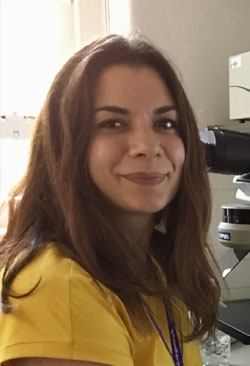 Maria Louizou (MSc Medical Genetics & Genomics, 2015), currently working as a Healthcare Scientist at Kings College
I completed my MSc in Medical Genetics and Genomics four years ago and since then I have been working at the Oncology Cytogenetics Department of King’s College Hospital, first as a Genetic Technologist and currently as a Healthcare Scientist. Through the MSc, not only did I gain solid knowledge in genetic conditions, genetic technologies and their application in Medical Genetics but I also developed a critical way of thinking and valuable skills which I apply daily in my professional life. I recently started preparing my portfolio for my registration as a Clinical Scientist in which i am including case studies and essays I did during the course as evidence of in-depth understanding of different aspects of the field!
Caitlin Fleming-Knox (MSc in Medical Genetics & Genomics, 2018), currently undertaking STP in NHS Manchester Genomic Diagnostic Laboratories
I thoroughly enjoyed my year in Glasgow doing the MSc in Medical Genetics and Genomics. The staff provided thorough and thoughtful feedback on written assignments, which helped me to develop my critical writing skills. The many opportunities to present allowed me to grow in confidence and enhance my presentation skills. I had previously considered the NHS England Scientist Training Programme (STP) in Genomics, but knew I didn’t know enough about genetics in the context of human disease and healthcare, as my undergraduate degree in Biomedical Sciences didn’t cover this. The MSc provided me with extensive knowledge of medical genetics and I made use of this in my application to the STP. I was successful in gaining a place in my preferred location in the Manchester Genomic Diagnostic Laboratories. Even now I continue to use knowledge gained during the course, and I still access the course content as I find the lectures/videos excellent at explaining the more complicated concepts in genetics.
Danielle Patchell (MSc Medical Genetics and Genomics 2018) currently working as a Laboratory Scientist for Genomics Medicine Ireland (GMI)
GMI is located in Dublin, Ireland and has an aim of sequencing 10% of the Irish population to generate a high quality genomic database and to uncover genetic variants associated with up to 60 disease phenotypes. I moved to Glasgow from Ireland in 2017 to start the MSc and it was one of the best decisions I have made. I chose to carry out this Masters degree because I wanted to gain a greater understanding about the advances being made in genomic analysis and the impact new analytic technology has on healthcare. My favourite aspect of the Masters degree was the Problem Based Learning module (Case Investigations)! Although challenging, this module allowed me to put all the knowledge I gained from lectures and tutorials into practice whilst also strengthening the essential skills needed to work effectively and efficiently within a team. PBL allowed me to act in various roles within my team such as chairperson and secretary but also taught me how to be constructive with criticism and how to deal with criticism during peer assessments. Team work is a huge part of the GMI ethos and engaging with and learning from my peers during our PBL sessions really allowed me to prepare for working within a strong team environment. I opted to study the Clinical Genomics module led by Prof. Edward Tobias during the second semester. The practical elements of this module were hugely beneficial in understanding genomic data analysis and interpretation. Although I am not personally analysing the sequence data in GMI, I am glad that I have an understanding of what is necessary to carry out data analysis and relate sequence data to potential disease phenotypes. Last but certainly not least, I could not speak more highly of the MSc. staff and lecturers! From providing support when it was needed, to organising days out for the class, I will always look back on the year I spent in Glasgow University with the fondest of memories and I owe that to the staff and class of 2018!
Fees & funding
Tuition fees for 2027-28
MSc(MedSci)
Home & RUK
- Full-time fee: £12,063
International & EU
- Full-time fee: £31,515
Fee status
Deposits
International and EU applicants are required to pay a deposit of £2000 to secure a place on this programme.
Deposits: terms & conditions
The following guidelines will apply in determining whether a deposit will be refunded. Where the deposit is refunded, a 25% administration fee will be deducted unless otherwise stated.
a: Deposits WILL be refunded to applicants under the following circumstances:
- Where the University is unable to offer you a place on the programme as specified on the offer. A full refund will be issued in this case.
- Death of a close family member (parent/guardian, grandparent, sibling, spouse, child/dependent). Official evidence (signed and stamped) must be provided.
- SERIOUS ill health of the applicant or a close family member (parent/guardian, grandparent, sibling, spouse, child/dependent). Official evidence (signed and stamped) must be provided.
- Applicant does not meet conditions of offer. This may be academic or language test requirements. Satisfactory evidence must be uploaded to the student’s applicant self-service to prove that they have not met the conditions of their offer (note that applicants who do not meet the language condition of their offer must show reasonable attempt to meet this, i.e. they must provide at least two language tests which were taken after the date the deposit was paid).
- Visa / ATAS refusal: we will only consider a refund if the visa / ATAS refusal was based on matters outside of the applicant’s control.
- If a refund request is received within 14 days of the deposit being received a full refund will be issued under the Consumer Protection Regulations.
b: Deposits WILL NOT be refunded to applicants under the following circumstances:
- An applicant decides not to attend the University for any reason not outlined above.
- Personal financial constraints / unsuccessful scholarship application.
- Applicant has decided to defer – in this situation the University will retain the deposit and hold it against the applicant’s account to secure their place for the following year of entry. You may defer twice. After the second deferral standard conditions will apply.
- There is still time to meet the English language test requirement before the final upload date. Please see section a) 4.
- Visa / ATAS was applied for too late. Please see section a) 5.
- Any documents used for admission are proven to be fraudulent. We work in partnership with Qualification Check to check academic qualifications. English language qualifications are verified with the provider.
- The refund request is received more than 30 days after the official course start date as outlined in your offer email.
Timeframe for requesting a refund
Refund requests must be received no later than 30 days after the official course start date as outlined in your offer email. As per section b)7 above the request will be denied.
Receiving a refund
- To comply with Money Laundering Regulations, the University will pay all refunds to the original payer using the source payment details. This is known as a “return to source” payment.
- All appropriate documentation and evidence relating to the original payment must be provided, when requested.
- All payments and refunds are in GBP currency - the University is not responsible for any exchange rate fluctuations or beneficiary bank charges associated with the refund.
- Where University approved payment methods have not been used, this may cause significant delays or prevent payment altogether.
- We will aim to issue the deposit refund within 8 weeks of receipt of information per point 2 above. At peak times this may be longer.
How to request a deposit refund
Please go to our enquiry form and select 'Fees and Deposit' as the enquiry reason and then 'Can I have a deposit refund?'.
Please upload all supporting documentation to your applicant self-service portal before submitting the above request.
Additional fees
- Fee for re-assessment of a dissertation (PGT programme): £370
- Submission of thesis after deadline lapsed: £350
- Registration/exam only fee: £170
Funding opportunities
Banco de Mexico
The Mexican National Bank (Banco de Mexico) provides special loans for students who wish to undertake a programme of postgraduate study. The University of Glasgow in partnership with Bank of Mexico FIDERH is offering a fee discount to holders of a Bank of Mexico FIDERH loan. See the FIDERH website for further information.
The Snowdon Trust Master’s Scholarship
The Snowdon Trust Master’s Scholarship is accelerating exceptional Disabled Students through masters’ programmes into leadership positions to create change.
Do you have ambitions to change the world? Are you pioneering in your field? Are you creating change for Disabled People? Let us open some doors.
We are searching for individuals who choose to use their lived experience of disabling barriers to make a difference. To create change.
Please see Snowdon Trust, Investing in Disabled Students website for more details.
CONACyT (Consejo Nacional de Ciencia y Tecnologia) / FUNED Agreement
CONACYT offers a non-refundable scholarship, a monthly stipend and medical insurance of an approximate total of $20,000 USD (in the case of the UK, no medical insurance grant is given since students are already covered by the National Health System) The University of Glasgow offer a 30% discount to all successful CONACyT scholars who enrol at the University of Glasgow to complete a postgraduate programme.
ANID (la Agencia Nacional de Investigación y Desarrollo)
The University of Glasgow offers a 25% discount to all successful ANID scholars who enrol at the University of Glasgow to complete a postgraduate programme.
(Please note that this scholarship was previously known as CONICyT)
World Changers Glasgow Scholarship
The University of Glasgow is proud to announce the World Changers Glasgow Scholarship for September 2027/ January 2028 entry to acknowledge incredible applicants from India, Singapore, Nigeria, Thailand, Pakistan, Malaysia, Vietnam, Israel, Jordan, Palestinian Territories, Syria, Chile, Brazil, Lebanon, Colombia, Mexico, Indonesia and Kenya. The scholarship is awarded as a £5,000 tuition fee discount and will automatically awarded to all eligible applicants.
University of Glasgow African Excellence Award
The University of Glasgow African Excellence Award aims to support high achieving students from across Africa in their journey to become Future World Changers. We are looking for students who wish to undertake Masters level study (postgraduate diploma or certificate programmes are not eligible for this scholarship), to further develop their knowledge and skills, in order to positively contribute to their community in the future.
The University is offering up to 16 scholarships for International students from Africa, starting a one year postgraduate taught Masters programme, in any discipline for academic session 2027/28. The scholarship is a 75% fee waiver.
University of Glasgow Caribbean Excellence Award
The University of Glasgow Caribbean Excellence Award aims to support high achieving students from across the Caribbean in their journey to become Future World Changers. We are looking for students who wish to undertake Masters level study, to further develop their knowledge and skills, in order to positively contribute to their community in the future.
The University is offering up to 4 scholarships for International students from the Caribbean, starting a one year postgraduate taught Masters programme, in any discipline for academic session 2027/28. The scholarship is a 75% tuition fee waiver.
Postgraduate Access Scholarship
The University of Glasgow is pleased to be offering Postgraduate Access Scholarships to support Home students who could face financial difficulties in taking up their place to study at the University. Applications are particularly welcomed from applicants who met any of our widening participation criteria, or equivalent, at undergraduate level. The value of each scholarship is £4,000 and they are for students undertaking a one or two year Taught Masters programme. For two year Taught Masters programmes, the scholarship is available in year one only.
University of Glasgow is committed to support as many self-funded students as possible which is why UofG discounts and scholarships cannot be combined with one another or any external sponsorship discounts (with the exception of Alumni Discount). This scholarship can not be awarded in conjunction with the Glasgow (UK) Excellence Award. In the case that you are awarded both, our team will get in touch with you to clarify which scholarship you would like to accept.
Fulbright Commission
The US-UK Fulbright Commission hosts both the Fulbright scholarship programme and the EducationUSA advising network for the UK. The Commission focuses on opportunities and exchanges between the USA and the UK, as part of a global programme. The Fulbright Awards are now open and there are several postgraduate or research project awards available. The US-UK Fulbright Commission is committed to growing the numbers of applications and participants in the UK Fulbright Postgraduate programme from under-represented groups and to continuing fair access to the programme.
The Humanitarian Scholarship
This scholarship is not available to PhD, PGdip, PDGE or part time programmes.
This scholarship can not be combined with any other University of Glasgow scholarship. In the event you are offered 2 scholarships, the lower value scholarship will be removed from your student account.
Glasgow Excellence Award (UK)
The University of Glasgow has a total of 40 Glasgow Excellence Scholarships available to UK students entering any of the University’s Colleges.
World Changers Postgraduate Sport Excellence Scholarship
The World Changers Postgraduate Sport Excellence Scholarship recognises exceptional international student-athletes who have demonstrated excellence in both their academic studies and sporting performance. The scholarship is designed to support talented athletes who will make a significant contribution to the University of Glasgow's Performance Sport Programme while pursuing their degree.
World Changers Glasgow Scholarship PGT (EU)
The University of Glasgow continues to be committed to ensuring a strong relationship with our existing and future EU students, and supporting EU talent to make their home at the University of Glasgow.
We appreciate the challenging financial implications that have arisen for our European applicants, and are therefore delighted to offer the World Changers Glasgow Scholarship PGT (EU) to new incoming EU students starting an postgraduate programme for Academic Session 2027-28. The scholarship is awarded as a tuition fee discount of £5,000 for every year of study and is subject to satisfactory progress for consecutive years of study. This discount cannot be combined with another University scholarship with the exception of the Alumni Discount.
World Changers China Excellence Award
Our World Changers China Excellence Award aims to support exceptional students from the country in their journey to become Future World Changers. We are looking for students who wish to undertake Masters level study (postgraduate diploma or certificate programmes are not eligible for this scholarship), to further develop their knowledge and skills, in order to positively contribute to their community in the future.
The University is offering up to 12 scholarships for International students from China, starting a one year postgraduate taught Masters programme, in any discipline for academic session 2027/28. The scholarship is awarded as a tuition fee waiver of £12,500 for one year only.
GREAT Scholarships 2027
In partnership with the British Council and the GREAT Britain Campaign, University of Glasgow is offering 3 scholarships to students in Pakistan, Bangladesh and Vietnam applying for postgraduate courses in any subject (excluding MBA and MSc Research courses). All eligible courses can be viewed under the 'eligible programmes' tab on this webpage.
The scholarship offers financial support of £10,000 fee waiver to students pursuing one-year postgraduate study in the UK.
Global Leadership Scholarship
The University of Glasgow has several Global Leadership Scholarships available to International and EU fee students starting a postgraduate taught Masters programme in any discipline for Academic Session 2027/2028. The scholarship is awarded as a tuition fees discount for one year only.
World Changers India Excellence Award
Our World Changers India Excellence Award aims to support exceptional students from the country in their journey to become Future World Changers. We are looking for students who wish to undertake Masters level study (postgraduate diploma or certificate programmes are not eligible for this scholarship), to further develop their knowledge and skills, in order to positively contribute to their community in the future.
The University is offering up to 12 scholarships for International students from India, starting a one year postgraduate taught Masters programme, in any discipline for academic session 2027/28. The scholarship is awarded as a tuition fee waiver of £12,500 for one year only.
Chevening Scholarship
Chevening Scholarships are the UK government's global scholarship programme, funded by the Foreign, Commonwealth and Development Office (FCDO) and partner organisations. The scholarships are awarded to outstanding scholars with leadership potential. Awards are typically for a one year Master’s degree at universities across the UK. There are over 50,000 Chevening Alumni around the world who together comprise an influential and highly regarded global network.
For further information, please refer to the Chevening website.
DAAD-University of Glasgow 1-year Master’s grant
The University of Glasgow will offer a full tuition waiver to those students that successfully apply and are nominated by DAAD to the University. DAAD offers a monthly stipend and travel bursary, as well as health, accident, and personal liability insurance coverage in addition to the full tuition fee waiver from the University of Glasgow.
Wichtige Hinweise zu DAAD-Stipendien - DAAD (general info on DAAD tuition fee reimbursement)
Current list of tuition reduction / waiving offers (not including U Glasgow yet) : Stipendien für ein Masterstudium im Ausland - DAAD - Deutscher Akademischer Austauschdienst
Erasmus+ Master Degree Loans
Erasmus+ Master Degree Loans are EU-guaranteed loans with favourable pay-back terms. They’re designed to help prospective students finance their Master’s courses in an Erasmus+ Programme country while leaving as little of a lasting economic footprint as possible.
The scheme is designed to provide postgraduate students with the means to pay their tuition and living expenses – thereby allowing individuals to focus on their degree instead of managing their bank balance. The programme aims to be as inclusive as possible, working under the following guidelines:
- No need for collateral from students or parents - ensuring equality of access
- Favourable, better-than-market interest rates
- Pay-back terms that allow graduates up to two years to find work before beginning repayment.
Please visit the Erasmus+ Master Degree Loans website for more information.
Postgraduate Student Loan (Scotland and EU)
Eligible full-time and part-time students, undertaking an eligible postgraduate course, can apply for a tuition fee loan up to a maximum of £7,000 towards their course. Eligible full-time postgraduate students can apply for a living-cost loan of up to £4,500.
This support extends to online Masters or Postgraduate Diplomas, and not to the online Postgraduate Certificate courses.
For more information visit the SAAS website.
Postgraduate Loans for Welsh Students
If you are a Welsh student looking to study a postgraduate programme* in Glasgow then you can apply for a student loan in exactly the same way as you would for a Welsh University.
* does not apply to Erasmus Mundus programmes
For more information visit Student Finance Wales
Postgraduate Tuition Fee Loans England only (PTFL)
If you’re an English student looking to study a taught Masters programme in Glasgow then you can apply for a student loan. Students from England are able to apply for a non-means tested Postgraduate Master’s Loan of up to £11,570 to help with course fees and living costs. You have to repay your Postgraduate Master’s Loan at the same time as any other student loans you have. You’ll be charged interest from the day you get the first payment.
If you’re studying by distance learning, you can also apply.
Colfuturo Fundacion para el Futuro de Colombia
The University of Glasgow offer discounts to all successful Fundacion para el Futuro de Colombia (Colfuturo) scholars who enrol at the University of Glasgow to complete a postgraduate programme.
Commonwealth Scholarship Schemes
Commonwealth Scholarships enable talented and motivated individuals to gain the knowledge and skills required for sustainable development, and are offered to citizens from low and middle income Commonwealth countries. The majority of Scholarships are funded by the UK Foreign, Commonwealth & Development Office (FCDO), with the aim of contributing to the UK’s international development aims and wider overseas interests, supporting excellence in UK higher education, and sustaining the principles of the Commonwealth.
Postgraduate Student Loan (NI)
If you are a Northern Irish student looking to study a taught Masters programme* in Glasgow then you can apply for a student loan in exactly the same way as you would for a University in Northern Ireland.
Northern Irish students are able to apply for non-means-tested tuition fee loans of up to £5,500, to help with the costs of funding.
For more information visit www.studentfinanceni.co.uk/types-of-finance/postgraduate .
* does not apply to Erasmus Mundus programmes
Carnegie Masters Grants
If you have any questions about the scheme or would like to discuss your eligibility before applying, please contact: grants@carnegie-trust.org, the Scholarship team at the University of Glasgow will not be able to provide further information on this scheme.
Postgraduate study can open doors to better careers, new opportunities and higher earning potential, however cost can be a major barrier. Funding options for study at this level in Scotland are limited, but the new Carnegie Masters Grant from Carnegie Education Fund (CEF) help to address this problem.
This new scheme helps students from low-income Scottish households undertake masterʼs programmes of study at Scottish universities. It helps to cover the cost of tuition fees and, in some cases, will offer additional support for study costs.
The scheme aims to:
- Support people from low-income backgrounds who want to return to higher education to upskill or reskill to change career.
- Increase the numbers of low-income students undertaking postgraduate study in Scotland
- Equip graduates with the skills and expertise to meet current and emerging skills gaps in Scotland.
About Carnegie Education Fund Carnegie Education Fund is an independent charitable trust that aims to support participation in and improvement of Scotlandʼs higher education system through grants and research. It was established in 1901 as the Carnegie Trust for the Universities of Scotland (SC015600).
Alumni Discount
To recognise our returning University of Glasgow graduates, we are pleased to offer a 15% tuition fee discount to eligible self-funded alumni starting a Postgraduate Taught (PGT) Masters or Postgraduate Research (PGR) programme in the 2027/28 academic year.
Sanctuary Scholarships
The University of Glasgow Sanctuary Scholarship has been created to support applicants with Refugee or Asylum Seeker status who are currently living in the UK and hold an offer to study with us in the 2027/28 academic year. The scholarship is open to prospective undergraduate and postgraduate taught students at the University of Glasgow applying for entry in September 2027/28. Please note that you must have applied to the University before submitting an application for this scholarship.
The scholarship will meet the cost of tuition fees for the duration of your programme, for applicants who are unable to access mainstream funding through Student Awards Agency Scotland (SAAS) or Student Finance. The Sanctuary Scholarship also provides a £5,000 per year stipend, to assist with study costs.
This scholarship is not available to PGdip, PDGE or part time programmes.
Undergraduate students with refugee status (or equivalent) and access to funding, are eligible to apply for the scholarship and would receive the £5,000 stipend towards study costs only, if successful.
Postgraduate Taught Masters students with refugee status (or equivalent) and access to funding, are eligible to apply for the scholarship and would receive the £5,000 stipend towards study costs and a partial tuition fee waiver, to cover any shortfall not met by your Postgraduate Masters tuition fee loan.
The Clan Gregor Society Prize
The Clan Gregor Society is offering an award incoming students to the University of Glasgow who descend from Clan Gregor. Students will be asked to submit an application highlighting areas of consideration such as academic excellence and financial need. The award is open to both Undergraduate and Postgraduate applicants who are joining us for 2025/26 entry.
The Dima Alhaj Scholarship
The Dima Alhaj Scholarship was set up in 2024 in memory of a University of Glasgow alumna. After graduating, Dima worked in Gaza with the World Health Organization as a patient administrator at the limb reconstruction centre, as part of the trauma and emergency team and was tragically killed in Gaza in November 2023.
The University is offering the Dima Alhaj Scholarship to 1 undergraduate applicant and 1 postgraduate taught applicant joining us in September 2027. Please note that you must have a programme application in progress before applying for this scholarship. If you have not yet started a programme application, please submit this first and then return to complete the scholarship application process.
This scholarship is not available to PhD, PGdip, PDGE or part time programmes.
This scholarship can not be combined with any other University of Glasgow scholarship. In the event you are offered 2 scholarships, the lower value scholarship will be removed from your student account.
Travel Bursary for Forced Migrants
The University of Glasgow is offering travel bursaries to assist with public transport travel costs, to support undergraduate and postgraduate students are currently asylum seekers and who could face financial difficulties in taking up their place to study at the University for 2027 entry. The value of the bursary is 50% of your monthly public transport travel costs to get to University, up to a maximum value of £50 per month.
The scholarships above are relevant to this programme. For more funding opportunities search the scholarships database
Entry requirements
2.2 Hons (or non-UK equivalent) in Biomedical Sciences, Medical Sciences, Pharmacy, Medicine, or Biological Science subjects including Genetics, Molecular Biology, Biomolecular Sciences or equivalent degrees with significant teaching in Genetics and Molecular Biology.
English language requirements
For further information about English language requirements, please contact the Recruitment and International Office using our enquiry form
For applicants from non-majority English speaking countries, as defined by the UK Government, the University sets a minimum English Language proficiency level.
Accepted English Language Tests
We accept a wide range of English language tests for entry to this programme. Tests must have been taken within 2 years 5 months of programme start date, and requirements must be met using a single test.
IELTS Academic/IELTS Academic for UKVI/ IELTS Academic online
- 6.5 overall with no subtest less than 6.0
- IELTS One Skill Retake Accepted
- We do not accept General Training
TOEFL iBT (including MyBest and Home Edition)
Test taken up to 20 January 2026
- 90 overall with no subtest less than Reading 20; Listening 19; Speaking 19; Writing 21
Tests taken from 21 January 2026
- 92 overall with no subtest less than 4.5
PTE Academic (test centre only)
- 65 overall with no subtest less than Reading 60; Listening 60; Speaking 65; Writing 60
- We do not accept the online PTE Academic
Cambridge C1 Advanced and C2 Proficiency
- 176 overall with no subtest less than 169
Oxford ELLT
- 7 overall with no subtest less than 6
LanguageCert Academic/Academic SELT/ Academic Online
- 70 overall with no subtest less than 65
Password Skills Plus
- 6.5 overall with no subtest less than 6.0
Trinity College Integrated Skills in English II
- 96 overall with no subtest less than 90
Kaplan Test of English
- Any two subtests at 480 or higher, and any two subtests at 450 or higher
PSI Skills for English
- B2 Pass with Merit
Duolingo English Test
- 120 overall with writing at 120 and no subtest less than 110
Oxford Test of English Advanced
- 140 Overall with any two subtests at 126 or higher, and any two subtests at 136 or higher
Alternatives to English Language test
Degree from majority-English speaking country (as defined by the UKVI including Canada if taught in English)
- students must have studied for a minimum of their final year at Undergraduate level, or 9 months at Master's level, and must have completed their degree in that majority-English speaking country within 6 years of programme start.
TNE degree from UK university taught at a campus outside of the UK
- students must be awarded the degree by the UK university and must have completed the degree within 6 years of programme start.
Pre-sessional courses
The University of Glasgow accepts evidence of the required language level from the English for Academic Study Unit Pre-sessional courses. We would strongly encourage you to consider the pre-sessional courses at the University of Glasgow's English for Academic Study (EAS) Unit. Our Pre-sessional courses are the best way to bring your English up to entry level for University study and remain valid for 2 years following date of successful completion.
Our courses give you:
- direct entry to your University programme for successful students (no need to take IELTS);
- essential academic skills to help you study effectively at University;
- flexible entry dates so you can join the right course for your level.
For more detail on our pre-sessional courses please see: https://www.gla.ac.uk/schools/mlc/eas/pre-sessionalcourses/
We can also consider the pre-sessional courses accredited by the below BALEAP approved institutions to meet the language requirements for admission to our postgraduate taught degrees:
- Heriot Watt
- Kingston Upon Thames
- Middlesex University
- Manchester University
- Reading University
- Edinburgh University
- St Andrews University
- UCL
- Durham
International students
We are proud of our diverse University community that includes students and staff from more than 140 different countries.
How to apply
To apply for a postgraduate taught degree you must apply online. We cannot accept applications any other way.
Please check you meet the Entry requirements for this programme before you begin your application.
Documents
As part of your online application, you also need to submit the following supporting documents:
- A copy (or copies) of your official degree certificate(s) (if you have already completed your degree)
- A copy (or copies) of your official academic transcript(s), showing full details of subjects studied and grades/marks obtained
- Official English translations of the certificate(s) and transcript(s)
- One reference letter on headed paper
- Evidence of your English language ability (if your first language is not English)
- Any additional documents required for this programme (see Entry requirements for this programme)
- A copy of the photo page of your passport
You have 42 days to submit your application once you begin the process.
You may save and return to your application as many times as you wish to update information, complete sections or upload supporting documents such as your final transcript or your language test.
For more information about submitting documents or other topics related to applying to a postgraduate taught programme, see how to apply for a postgraduate taught degree
Guidance notes for using the online application
These notes are intended to help you complete the online application form accurately; they are also available within the help section of the online application form.
If you experience any difficulties accessing the online application, see Application System Help.
- Name and Date of birth: must appear exactly as they do on your passport. Please take time to check the spelling and lay-out.
- Contact Details: Correspondence address. All contact relevant to your application will be sent to this address including the offer letter(s). If your address changes, please contact us as soon as possible.
- Choice of course: Please select carefully the course you want to study. As your application will be sent to the admissions committee for each course you select it is important to consider at this stage why you are interested in the course and that it is reflected in your application.
- Proposed date of entry: Please state your preferred start date including the month and the year. Taught masters degrees tend to begin in September. Research degrees may start in any month.
- Education and Qualifications: Please complete this section as fully as possible indicating any relevant Higher Education qualifications starting with the most recent. Complete the name of the Institution (s) as it appears on the degree certificate or transcript.
- English Language Proficiency: Please state the date of any English language test taken (or to be taken) and the award date (or expected award date if known).
- Employment and Experience: Please complete this section as fully as possible with all employments relevant to your course. Additional details may be attached in your personal statement/proposal where appropriate.
Reference: Please provide one reference. This should typically be an academic reference but in cases where this is not possible then a reference from a current employer may be accepted instead. Certain programmes, such as the MBA programme, may also accept an employer reference. If you already have a copy of a reference on letter headed paper then please upload this to your application. If you do not already have a reference to upload then please enter your referee’s name and contact details on the online application and we will contact your referee directly.
Application deadlines
For entry in September 2027
International & EU applicants
+++
International application rounds
Round 1: 1 October 2026 to 5 November 2026
You will receive our decision on your application by 18 December 2026.
Round 2: 6 November 2026 to 17 December 2026
You will receive our decision on your application by 3 March 2027.
Round 3: 18 December 2026 to 4 February 2027
You will receive our decision on your application by 8 April 2027.
Round 4: 5 February 2027 to 25 March 2027
You will receive our decision on your application by 6 May 2027.
Round 5: 26 March 2027 to 13 May 2027
You will receive our decision on your application by 10 June 2027.
Round 6: 14 May 2027 to 8 July 2027
You will receive our decision on your application by 29 July 2027.
As we receive a high volume of applications, prospective students are only allowed to apply to each programme once per year.
---
UK applicants
- 24 August 2027
More information about this programme

Postgraduate events