Medical Visualisation & Human Anatomy MSc
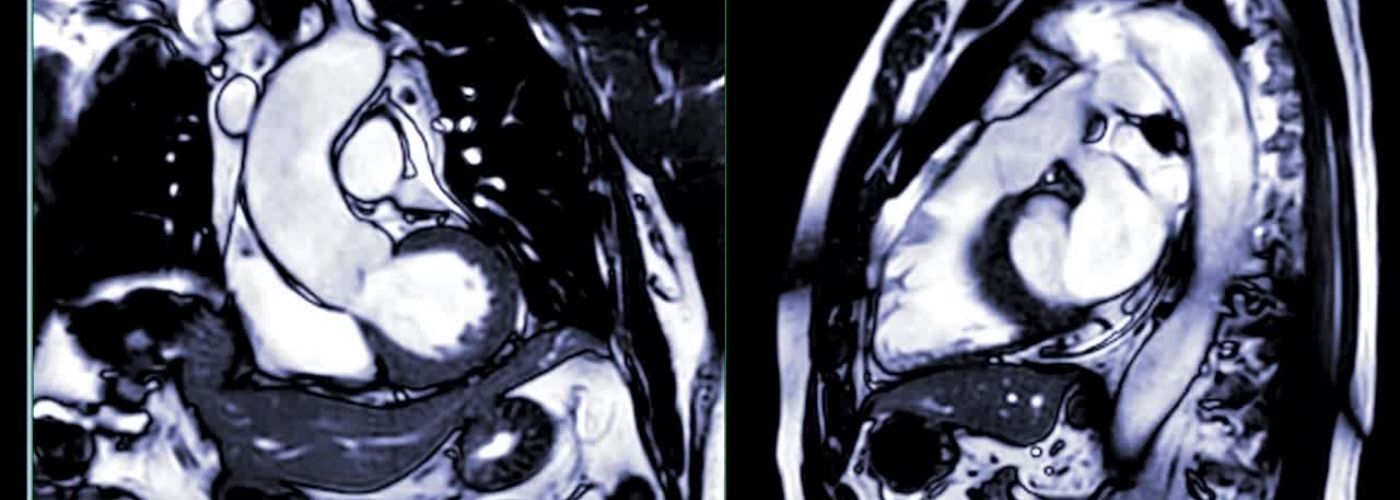
Offered jointly by The University of Glasgow and the famous Glasgow School of Art, the aim of this programme is to dissect and examine human anatomy and reconstruct it in a real-time 3D environment for use in education, simulation, and training.
- Academic contact:
University of Glasgow: jenny.clancy@glasgow.ac.uk
Glasgow School of Art: m.poyade@gsa.ac.uk - Teaching start: September
- Glasgow School of Art and Glasgow: Gilmorehill campus
- MSc: 12 months full-time
Why this programme
- Learn to combine actual cadaveric dissection with 3D digital reconstruction, interaction and visualisation.
- Undertake cadaveric dissection of key areas of the human body and examine prosections.
- Gain 3D visualisation skills specific to applications in the medical, biomedical, anatomy, or health domains.
- Get access to a wide range of digital interaction technologies including virtual and augmented reality, stereographic 3D and haptic devices and become involved in the design and development of related visualisations and/or applications eg visualising current life science research, creating patient information applications or training applications for medical practitioners, diagnostic and clinical applications, medical visualisation and simulation.
- Each student has a dedicated PC for their studio work due to the studio based teaching approach at The Glasgow School of Art.
- Access is available to the Laboratory of Human Anatomy at The University of Glasgow, one of the largest in Europe.
- Opportunities are avalailable to have your work published in journals, books and conference proceedings / presentations through collaborative research projects.
- Benefit from guest lectures by practitioners, researchers and experts through our excellent industry connections from research and commercial projects.
- Projects are supervised by leading scientists across the College of Medical, Veterinary and Life Sciences.
- This programme and teaching staff are accredited by the Institute of Medical Illustrators.
- The staff in Simulation and Visualisation have expertise in 3D modelling, Human-Computer Interaction, Virtual Reality, Augmented Reality and in the use of games and related technology to support education and learning.
Watch the programme directors and students tell you more
Programme structure
Your time is split between The Glasgow School of Art (School of Simulation and Visualisation) at Pacific Quay in the City Centre and The University of Glasgow (Anatomy Facility), Gilmorehill Campus in the west end.
The programme is structured into three compulsory stages:
- Stage 1: digital technologies applied to medical visualisation (at The School of Simulation and Visualisation)
- Stage 2: human anatomy (Anatomy facility at The University of Glasgow)
- Stage 3: self-directed final project, supported throughout with individual supervision.
Stage 1
- Academic Skills for Masters Research - Here you will be taught core research skills for masters research. You will conduct a literature review and develop a research proposal for a project of your choosing. This review and project proposal may optionally be taken further in Stage 3 of the MSc
-
Medical Visualisation - This course is taught in three distinct strands:
- Volumetric Visualisation will show you how to work with 3D medical scan data (such as CT, MRI or confocal microscopy image) and transform these into 2D images for easily interpretation or 3D models for use in the creation of animations or interactive applications
- 3D modelling focusses on the creation of 3D models for use in animations or interactive applications. Models can be created from scratch, working from reference drawing, photographic images, or from 3d models generated from volumetric visualisation. Attention to detail in use of professional workflows and processing for optimization and efficiency are important considerations.
- Interactive application development uses modern ‘game engine’ technology (e.g. Unity3D) to develop 3D interactive applications for desktop or mobile devices. Tools such as Unity are now widely used across many disciplines for creating 3D applications for training, education and visual communication.
- During Stage 2, additional classes in the creation of Augmented and Virtual Reality applications are offered, and have proven very popular.
Stage 2
Introduction to anatomy
- Examine key concepts in anatomy, learning about the broad structure and organisation of the human body and examine the different systems. Designed to enable those not familiar with the human body with an excellent overview of the terms and definitions of anatomy
- Learn about how legislation and laboratory practice, and health and safety is practiced and conducted in a human anatomy laboratory
- Explore the ethical issues around body and organ donation
- Interactive sessions will ensure there is active student engagement and participation while you learn about the human body from enthusiastic and experienced staff
- Examine prosections and become introduced to anatomical specimens
Structure and function of the human body
- Examine a wide range of body systems and receive exposure to many prosections across all areas of the human body
- Examine related clinical imagery and visualisations and illustration techniques related to identifying anatomical structures and relevant clinical applications
- Learn anatomy using specimens that have been professionally dissected and preserved. This gives an unrivalled learning opportunity and exposure to the anatomy of the human body.
- Cadaveric dissection techniques
- Undertake cadaveric dissection on specific areas of the human body
- Experience immersive anatomy with hands on experience of dissection
Stage 3 Research Project
In stage three you will complete a self-directed final project, supported throughout with individual supervision.
Past projects have included:
- Numerous life science projects from anatomical, anthropological, molecular, cell biology, genetics and virus research
- Patient education tools
- Public engagement activities
- Clinical applications across surgical specialties including plastics, otorhinolaryngology, neurosurgery, orthopaedics and dentistry
- Applied veterinary medicine, surgery and public health projects
By utilising tools like 3D visualisation, augmented and virtual reality, confocal microscopy, animations, cross platform apps and interactive educational tools, these cross College projects have been brought into the digital age.
Working with active researchers and subject specialists across such a diverse range of areas, these projects undertaken in the last third of the degree offer an opportunity to engage much more deeply with educational and research activities from a chosen speciality.
All students have two supervisors – one from the College of Medical, Veterinary and Life Sciences and one from The School of Simulation and Visualisation of The Glasgow School of Art. This offers subject specialists to facilitate your development as an independent researcher developing digital tools and technologies within your chosen domain.
Programme alteration or discontinuation
The University of Glasgow endeavours
to run all programmes as advertised. In exceptional circumstances, however, the University may withdraw
or alter a programme. For more information, please see: Student contract.
Career prospects
Career opportunities exist within diverse fields like and many of our graduates have gone on to work in a range of areas related to anatomical education, medical illustration, digital life sciences and interactive media.
Other former students now work in teaching roles in Universities across the world or have progressed onto Doctoral, Medical or Dental studies.
Graduate employers include:
- Interns, Clinical Assistants and Clinical Researchers at Toshiba Medical Visualisation Systems
- Research Prosector (GU)
- 3D printing industry
- Demonstrators in Anatomy
- PhD studies - medical history, medical visualisation
- Medical School
- Dental School
- Digital Designer at Costello Medical
- Lead Designer at Open Bionics
- Founder of Axial Medical Printing Ltd
- Digital Technician at University of Leeds
- Digital Specialist at Royal College of Surgeons and Physicians Glasgow
- Researcher and Factual Specialist at BBC
- Graduate Teaching Assistants
- Freelance Medical Illustration
- Numerous successful placements on PhD programmes (medical visualisation, anatomy, anatomy education, medical humanities)
- Canon Medical Research Europe
- Outcome Health (formerly ContextMedia)
- SensiBlu Pharmaceuticals
- Touch Surgery
- Infineon Technologies
Fees & funding
Tuition fees for 2026-27
MSc
Fee information is available on the Glasgow School of Art website
Fee status
Additional fees
- Fee for re-assessment of a dissertation (PGT programme): £370
- Submission of thesis after deadline lapsed: £350
- Registration/exam only fee: £170
Funding opportunities
Glasgow School of Art Scholarships
The Glasgow School of Art administers a range of scholarships that students on this programme can apply to. These are normally published in March/April for students starting in September.
Please see visit the Glasgow School of Art scholarship webpage for more details.
Carnegie Masters Grants
If you have any questions about the scheme or would like to discuss your eligibility before applying, please contact: grants@carnegie-trust.org, the Scholarship team at the University of Glasgow will not be able to provide further information on this scheme.
Postgraduate study can open doors to better careers, new opportunities and higher earning potential, however cost can be a major barrier. Funding options for study at this level in Scotland are limited, but the new Carnegie Masters Grant from Carnegie Education Fund (CEF) help to address this problem.
This new scheme helps students from low-income Scottish households undertake masterʼs programmes of study at Scottish universities. It helps to cover the cost of tuition fees and, in some cases, will offer additional support for study costs.
The scheme aims to:
- Support people from low-income backgrounds who want to return to higher education to upskill or reskill to change career.
- Increase the numbers of low-income students undertaking postgraduate study in Scotland
- Equip graduates with the skills and expertise to meet current and emerging skills gaps in Scotland.
About Carnegie Education Fund Carnegie Education Fund is an independent charitable trust that aims to support participation in and improvement of Scotlandʼs higher education system through grants and research. It was established in 1901 as the Carnegie Trust for the Universities of Scotland (SC015600).
The scholarships above are relevant to this programme. For more funding opportunities search the scholarships database
Entry requirements
You should have an Honours degree or equivalent in the following disciplines:
-Life sciences, medical or biomedical science, e.g. anatomy, physiology, dentistry or dental technology, forensic anthropology, molecular biological degrees and the allied health professionals
-computer science, 3D visualisation, computer graphics, health informatics, mathematics, and physics
-medical illustration, 3D design, product design, digital media, digital arts, 3D modelling and animation
-or equivalent professional practice. However, high calibre graduates from other disciplines may be considered if they are able to demonstrate an interest and ability in the field of medical visualisation.
English language requirements
For international applicants, GSA requires evidence of English language proficiency. More information on accepted English language qualifications is available on GSA website.
The GSA’s preferred test is the IELTS for UKVI (Academic) test taken at a UKVI approved test centre.
GSA requires an IELTS score of 6.5 overall, with no less than 6.0 in each component.
For further information about English language requirements, please contact the Recruitment and International Office using our enquiry form
International students
We are proud of our diverse University community that includes students and staff from more than 140 different countries.
How to apply
Please apply through Glasgow School of Art.

Postgraduate events