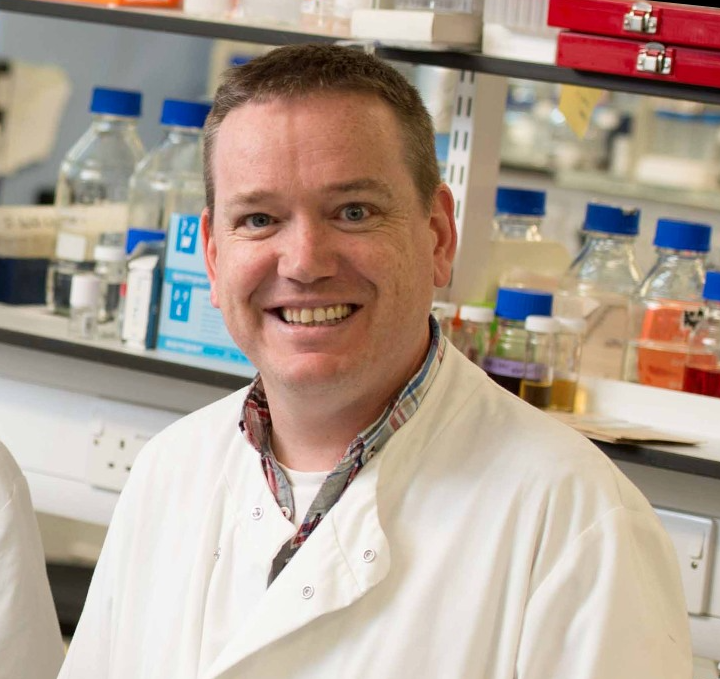
Dr Daniel Wall
- Reader (Bacteriology)
telephone:
01413307123
email:
Donal.Wall@glasgow.ac.uk
pronouns:
He/him/his
RB225 Level B2, Iii - Gbrc, University Place, Glasgow G12 8TA
 https://orcid.org/0000-0002-0421-1951
Biography
I carried out my PhD in Professor Wim Meijer’s laboratory at University College Dublin, Ireland studying the intracellular survival mechanisms of the opportunistic pathogen Rhodococcus equi.
Following this I moved to Boston where I carried out my first postdoctoral fellowship in Professor Beth McCormick’s laboratory at Harvard Medical School/Massachusetts General Hospital. While there I looked at the mucosal immunology of Salmonella Typhimurium infection, in particular with regard to intestinal inflammation involving migrating neutrophils.
A second postdoctoral position in Professor Peter Ghazal’s Division of Pathway Medicine at the University of Edinburgh involved studying the host pathways involved in the immune response to herpes virus infections, in particular how cytomegalovirus reactivates from latency in response to stimuli from the host.
I then moved to the University of Glasgow to take up my present position as a Principal Investigator and Lecturer. I have combined my diverse research experience to focus on the host response to microbial infection with a particular interest in how bacteria interact with Programmed Cell Death (PCD) pathways.
Research interests
Bacterial pathogens can cause either acute or persistent infections. Their capacity to cause these distinct types of diseases depends on their ability to influence or control the environment they find themselves in once they infect a host organism.
Within intestinal epithelial cells or circulating immune cells some bacterial pathogens can establish a niche for survival and replication. Despite attempts by host cells these pathogens survive by undermining host pathways that normally remove and respond to intracellular microbes.
As a last resort host cells induce cell suicide, removing themselves and the perceived threat from the body. Some bacterial pathogens we now know can also disrupt this process, keeping infected cells alive for prolonged periods facilitating replication of the bacteria intracellularly.
The consequences for the host organism can be profound with persistent periods of inflammation, especially when immune cells such as macrophages and dendritic cells are involved.
Grants
Grants and Awards listed are those received whilst working with the University of Glasgow.
- Investigating the role of Enterocloster clostridioformis bacteriophages in gut microbiome dysbiosis associated with metabolic disease states.
Tenovus Scotland
2024 - 2025
- Glasgow University Microbiome Initiative (GUMI) symposium
Medical Research Council
2022 - 2022
- Systemic spread of gut bacterial metabolites and the role in host health
Biotechnology and Biological Sciences Research Council
2021 - 2024
- Molecular mechanisms enabling DCs to control CD4 T cell priming.
Medical Research Council
2020 - 2023
- Elucidating the role of bacterial microcompartments in the pathogenesis of Crohns disease associated adherent-invasive Escherichia coli
Tenovus Scotland
2018 - 2019
- Propionic acid use in agriculture and food production is driving evolution of novel Escherichia coli pathotypes
Biotechnology and Biological Sciences Research Council
2016 - 2019
- Protein antibiotics for the treatment of Pseudomonas aeruginosa lung infection
Medical Research Council
2016 - 2019
- Development of novel cancer targeting bacterial strains as delivery vehicles for anti-tumour genes
Tenovus Scotland
2014 - 2015
- Survival and dissemination of enteric pathogens through exploitation and inhibition of programmed cell death pathways in circulating immune cells.
Biotechnology and Biological Sciences Research Council
2013 - 2016
- Deciphering and harnessing the activation of caspase-3 during infection by Salmonella typhimurium
Microbiology Society
2010 - 2010
- Controlled induction of apoptotic enzymes by Salmonella typhimurium drives infection and inflammation
Tenovus Scotland
2010 - 2011
Supervision
- Dritsa, Clio
N/A
Additional information
Invited International Presentations
- 2011: Tenovus Scotland - Sir Robert MacLellan Award
- 2011: University of Strathclyde, UK - "Exploitation of apoptosis by Salmonella Typhimurium"
- 2007: Washington D.C., USA - Experimental Biology Annual General Meeting - Identification of the Salmonella typhimurium SipA functional domain required for intestinal inflammation.
- 2005: Long Island, NY, USA - Cold Spring Harbor Laboratory Microbial Pathogenesis & Host Response meeting. Cold Spring Harbor Laboratory - The S. typhimurium effector protein SipA possesses two discrete functional domains for invasion and inflammation
Prizes, Awards and Distinctions
- 2010: Society for General Microbiology - President's Award
Research Fellowship
- 2010: University of Massachusetts, USA - Visiting Academic, University of Massachusetts Medical School, Molecular Genetics and Microbiology Department. Funded by the Society for General Microbiology, UK President's Fund.