Pioneering work at Glasgow recognised by Institute of Physics
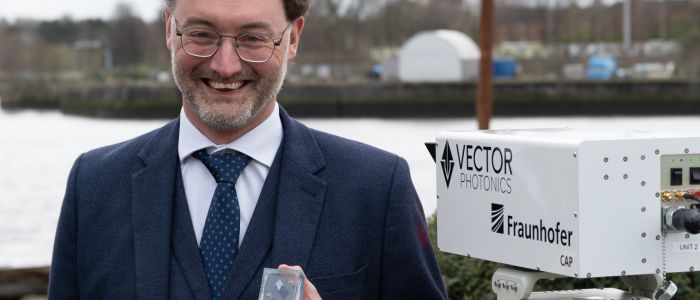
Professor Miles Padgett and honorary Professor Leslie Allen have been awarded the Young medal in recognition of their pioneering work on optical angular momentum.
Researcher offers hope for male diabetes sufferers
University of Glasgow Researcher offers hope for male diabetes sufferers.
Scientists reveal secret of girl with ‘all seeing eye’
Scientists have discovered how a girl with half a brain is able to see normally through one eye with both fields of vision.
University researchers find new way of reducing the symptoms of anaphylactic shock
University researchers find new way of reducing the symptoms of anaphylactic shock.
University secures multi-million pound grant for African scientists
Glasgow has played a leading role in securing almost £5 million for some of Africa's brightest scientists.
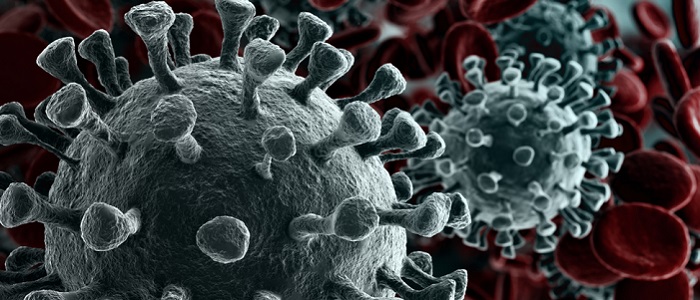
Major investment in virology research for University
The Medical Research Council is to invest £28 million in a partnership with the University of Glasgow to fund a new multidisciplinary centre of excellence in virology research.
Researchers show new antioxidant could help treat cardiovascular disease
Researchers believe they have found a potential new treatment for cardiovascular disease which reduces blood pressure.
Drinking 22 or more units of alcohol a week increases rates of hospital admission
Men who drink 22 or more units of alcohol a week have a 20% higher rate of admissions into acute care hospitals than non-drinkers, researchers have found.
Inflammatory markers in the blood identify higher risk of fatal heart attacks, suggests study
The presence of inflammatory markers in the blood of elderly people at risk of cardiovascular disease can identify individuals at higher risk of a fatal heart attack or stroke, a study has found.
Scientists search for sleepless souls suffering lifelong insomnia
Most people have experienced the odd sleepless night before a crucial exam, a job interview or before going on holiday, but few people get by with just a couple of hours of sleep a day, every day.
Brain takes just 200 milliseconds to interpret facial expressions
Researchers have discovered that it takes the brain just 200 milliseconds to determine a person’s emotional state by their facial expression.
Herceptin extends life of patients with terminal stomach cancer, study finds
Breast cancer drug Herceptin can extend the lives of patients with incurable stomach cancer by nearly three months, according to an international study involving Glasgow researchers.
Study into children's tooth decay underway
University of Glasgow researchers are part of UK-wide team looking at dental treatment for children
High blood pressure may be programmed in the womb
A scientific study has found further evidence that high blood pressure in adulthood is pre-programmed in the womb.
Scientists identify genetic links to high blood pressure
An international scientific study involving researchers from Glasgow has identified eight common genetic differences which may increase the risk of high blood pressure.
Professor recognised for role in revolutionising neuroimaging
A Glasgow academic has received a top accolade in recognition of his role in helping to revolutionise neuroimaging technology.
University leads way in Malaria research
Experts are developing a powerful diagnostic tool in the battle to diagnose and treat Malaria.
Scientists determine 3D structure of proteins in living cells for the first time
A Glasgow scientist was part of a team of researchers which has, for the first time, been able to determine the three-dimensional structure of protein in living cells.
Research identifies asthma risk in children
Researchers from the University of Glasgow have discovered a link between the development of asthma in childhood and low levels of physical activity.
World first as scientists grow microtubes from crystals
In a world-first, scientists at the University of Glasgow have grown micro-tube structures from crystals of inorganic compounds.
Researchers to study links between exercise and improved intelligence
Scientists at the University of Glasgow are investigating whether exercise may substantially improve brain function in children while helping prevent and treat obesity.
Surgery can play a bigger part in fight against obesity, say doctors
Gastric surgery can play a bigger role in helping obese people lose weight, a Glasgow surgeon has said.
Scientists use retroviruses to unravel woolly history of sheep domestication
Scientists have unravelled the woolly history of sheep domestication by examining retroviruses preserved in the animal’s DNA.
World first for Glasgow as stem cell therapy trials are approved
The University of Glasgow and the ReNeuron Group are to begin ground-breaking clinical trials with stem cell therapy for stroke.
Innovative Europe-wide Animal Genomics Project Makes Major Livestock Breeding Progress
Just half way into its four-year programme and the most innovative pan-European animal genomics research project ever undertaken is making major strides in developing breeding strategies for more economically and environmentally sustainable livestock production systems.
£500,000 project will help digital cameras build bigger picture from tiny particles
Scientists have received £500,000 funding to investigate ways of improving the quality of digital camera images through the manipulation of tiny particles.
How research into ‘clocks’ in plants could change our lives
From ensuring blooms for Mother’s Day to easing jet lag, new research into ‘clocks’ in plants by Glasgow plants scientists could have implications for the way we live our lives.
Study to assess if genes predispose salt to act as a blood pressure ‘trigger’
Researchers from the University of Glasgow are launching a study to find the link between genes and salt.
Financial support for small businesses to access University expertise
How can Scotland’s smaller companies afford the necessary innovative research and development to give themselves a competitive edge in these straitened times?
Green spaces close health gap
Researchers from the University of Glasgow have found that the health gap between the rich and poor is much lower in areas with the greenest environments
European Commission funds design study for unique future observatory
The European Commission is supporting the exploration of the universe with gravitational waves by allocating three million Euro for Einstein Telescope.
Researchers to tackle obesity in young children
Scientists from the University of Glasgow are to lead the way in a Europe-wide study of childhood obesity.
Talking cure eases insomnia in cancer patients
Persistent insomnia in cancer survivors can be greatly improved through cognitive behavioural therapy, according to University of Glasgow researchers.
Cannon to reveal how the Battle of Culloden was won
A University engineer has built a fully functioning cannon to help battlefield archaeologists answer unsolved questions on how the Battle of Culloden was won.
Glasgow’s contribution to the Big Bang
The University of Glasgow has a proud heritage in particle physics which continues today with our scientists working at the core of the world's biggest experiment.
Study shows high risk women can take control of diabetes ‘destiny’
Women at high risk of diabetes can reduce their body’s insulin resistance by exercising, a study shows
Glasgow scientists harness power of worms to treat arthritis
Glasgow scientists are aiming to harness a substance secreted by parasitic tropical worms to help them find a more effective treatment for arthritis.
Is religion good for your health?
Columbia University Medical scientist Professor Richard Sloan is to speak on the effects of religion on medical science in a free public lecture.
Prestigious award for University scientist
Professor Mandy MacLean has received the Estelle Grover Lecture Award.
British first for University’s horse hospital
The University of Glasgow Equine Hospital will be the first in the UK to look inside a horse as it gallops at full speed.
Alternative energy experts gather in Glasgow
Some of the world's leading biofuels scientists are gathering at the University of Glasgow to help launch the Solar and Bioenergy Research Centre.
First particles observed in Large Hadron Collider
Glasgow scientists, working at CERN, have observed the first particles in the Large Hadron Collider during preliminary tests ahead of the switch-on next month.
Face recognition: nurture not nature
Researchers have discovered for the first time that our society can influence the way we recognise other people’s faces.
World record breaker gets on his bike for leukaemia research
The fastest man to cycle around the world, Mark Beaumont, is saddling up again to support leukaemia research in Glasgow.
CPPR review of oil and gas revenues
A report into the the implications for UK and Scottish public finances of oil and gas revenues by the Centre for Public Policy for Regions
Ancient archaeology holds clue to new computer systems
Researchers are looking back at ancient civilisations in order to develop future computer systems in a £1.75m project.
Experts to undertake world’s largest Burns’ collection
Leading experts in Scotland’s best loved poet, Robert Burns, have signed a contract with the Oxford University Press to produce the largest and most comprehensive collection of his works.
Global recognition for Glasgow Chemistry advance
Glasgow research, which could lead to the development of chemical factories on a nanoscale, is to be published in the prestigious world chemistry journal: ‘Angewandte Chemie’.
Research puts finger on virtual iPhone button
A virtual tactile keyboard could hold the key to making the iPhone easier to use.
Glasgow academics recognised for outstanding work
Three Glasgow academics have received international recognition for the quality of their research work.
Glasgow students in the driving seat
A group of engineering students have driven their hand-built racing car at Silverstone.
Research at the Glasgow Sleep Centre
The Glasgow Sleep Centre has developed an intervention programme designed to help insomniacs establish more normal sleep patterns.
Scottish Prison Commission Report
Researchers at the Scottish Centre for Crime and Justice Research, based at the University of Glasgow, have helped develop an independent report on the future of crime and punishment in Scotland.
University climbs Times rankings
The University of Glasgow has jumped 11 places in the latest Times Good University Guide.
Royal honours for staff
Three members of University of Glasgow staff have been listed in this year’s Queen’s Honours List.
Can you hear black holes collide?
A team of gravitational-wave researchers from four universities including Glasgow has been selected to exhibit at the prestigious Royal Society Summer Science Exhibition.
Cabinet Secretary launches Glasgow Heart and Lung Institute
Nicola Sturgeon, Cabinet Secretary for Health and Wellbeing, has officially launched the Glasgow Heart and Lung Institute.
Marking 50 Years of Ultrasound
50 years ago a team of researchers in Glasgow published a scientific paper in the medical journal, The Lancet, which was to revolutionise medical diagnostics.
China as a global player
Distinguished international specialists are to speak on China's growing global influence at the launch conference of the Scottish Centre for Chinese Social Science Research at the University of Glasgow this week.
Gravitational wave research advances at Glasgow
The search for gravitational waves has revealed new information about the core of one of the most famous objects in the sky: the Crab Pulsar in the Crab Nebula.
Professor leads ‘crack team’ to tackle cancer’s greatest mysteries
A University of Glasgow professor has been picked to lead a new ‘crack team’ of cancer researchers.
Paul O’Gorman Leukaemia Research Centre opens
The Paul O’Gorman Leukaemia Research Centre has been opened by Dr Richard Rockefeller.
Breakthrough in the understanding of metabolic syndrome
University of Glasgow researchers have found that metabolic syndrome - a combination of medical disorders thought to increase risk of both diabetes and cardiovascular disease - only increases the risk of diabetes in the elderly.
Honorary Degrees for outstanding work in life sciences
The University of Glasgow is to award honorary degrees to five distinguished academics for their outstanding contributions to medicine and the life sciences.
Healthy patients needed for breakthrough heart disease study
Researchers at the University of Glasgow are calling for healthy patients to help them identify quicker and easier ways to pinpoint those at risk of developing heart disease.
CPPR assessment of Government economic targets
The latest analysis of the Scottish Government's economic targets by the Centre for Public Policy for Regions.
Senior appointment for University of Glasgow professor
Professor John Coggins has been appointed to the council of the Biotechnology and Biological Sciences Research Council.
Fluctuating diet increases risk of sudden death
New research has revealed that binge eating then dieting may significantly reduce lifespan.
Nanotechnology paves way for super iPods
A breakthrough by scientists from the University of Glasgow could see the storage capacity of an iPod increase 150,000 times.
Hormone clue in blood pressure battle
Understanding the role of the hormone aldosterone could provide hope of new treatments to millions of people who suffer from high blood pressure, University of Glasgow researchers have found
Early growth spurts could cause obesity
Researchers have found that growth spurts in early childhood could permanently affect an individual’s rate of metabolism, which is believed to be linked to obesity.
British cities among Europe’s top perfomers
British cities have experienced stronger economic improvement over the last decade than in most other European countries.
Ivy League lectures for Glasgow professors
Five University of Glasgow professors are heading to New York to give a series of lectures at one of the world’s most prestigious universities.
New hope for sufferers of restless legs
An often undiagnosed condition that is thought to affect up to 10% of the population is the subject of new research.
University targets neglected African diseases
Researchers from Africa have arrived at the University of Glasgow to map out new ways to tackle killer diseases that afflict humans and livestock.
Is cybermedicine turning us into a nation of expert patients?
Researchers from The University of Glasgow and Manchester Business School are undertaking an in-depth study into the impact of cybermedicine, such as virtual health communities and self-help sites, on face-to-face healthcare.
Drug research centre expands operations
A Glasgow-based drug research institute, specialising in psychiatric drug development, is expanding its work to offer comprehensive services to companies and scientific partners.
Why do vultures have bald heads?
The reason why vultures are such strange-looking birds has been revealed by a research team from the University of Glasgow.
Glasgow reaches for the moon
The University of Glasgow is offering its expertise in a major competition to land a robot on the moon.
Obese children take control of their treatment
Researchers from the University of Glasgow have devised a new approach to treating childhood obesity.
Physicists launch charm offensive
The subatomic world is undergoing a revolution and a relatively exotic denizen, the charm quark, is the latest target.
Would you bet on a Pentaquark?
When a new type of particle, a Pentaquark, was first discovered follow-up experiments failed to confirm its existence. Physicists at Glasgow explain the reason for apparently contradictory results.
UK electronics industry receives major EU funding boost
Glasgow researchers have received £750,000 funding from the European Commission for projects which could revolutionise the electronics industry
Scientists solve gene therapy mystery
Researchers from the University of Glasgow have solved a scientific riddle that could lead to the development of more effective gene therapies.
Economics at Glasgow joins global top 5%
The Department of Economics is officially among the top 5% research institutions in International Finance in the world.
Tackling depression through sleep therapy
Researchers at the University of Glasgow are looking at ways of treating depression by improving a person’s sleep.
Glasgow collaborates in ground-breaking new microscope
World leading electron microscope facility, SuperSTEM, a collaboration of leading scientists from three universities including Glasgow, has unveiled a ground breaking new microscope.
Leverhulme funding for ‘Managed Democracy’ study
Professor of International Politics, Stephen White has been awarded a Major Research Fellowship by the Leverhulme Foundation for a study on ‘Managed Democracy’.
Palestinian refugees are living in “slum conditions”
Palestinian refugees in unofficial camps are living in slum conditions redolent of UK housing from 100 years ago
Launch of the Wolfson Chair in Bioengineering
Professor Jon Cooper has been named as the first Wolfson Professor of Bioengineering at the University of Glasgow.
University research hailed as one of the breakthroughs of the year
Research carried out at the University of Glasgow has been named as one of the scientific breakthroughs of 2007.
LIGO sheds light on cosmic event
Analysis by the international LIGO Scientific Collaboration has excluded one previously leading explanation for the origin of an intense gamma ray burst occurring last winter.
Switched on to new technology
University of Glasgow researchers are developing new technology that could replace the household light-bulb within three years.
Games get better
New technology to improve the lifelike quality of computer games is being developed at the University of Glasgow.
SCENE wins New Build Award
The University has received further recognition for the building excellence of its Scottish Centre for Ecology and the Natural Environment (SCENE)
Study shows how the NHS fails to deliver in poor areas
Researchers from the University of Glasgow have begun to explain how the NHS under-achieves in poor areas.
Researchers develop molecular 'LEGO kit' to create nano-cubes
Scientists have devised a molecular 'LEGO toolkit' which can be used to assemble a vast number of new and functional chemical compounds.
Computer scientists play key-role in UK’s first three-way kidney transplants
Computer scientists are playing a key role in the NHS’s living donor kidney transplant programme which saw the first multiple kidney transplants involving three couples take place at the end of last year.
Alcohol and obesity mix to create deadly liver disease cocktail
Drinkers who are overweight are much more likely to develop deadly liver disease, according to scientists.
Focus on fish as study aims to assess stock levels
Sea anglers, conservationists and scientists have joined forces to investigate novel ways of assessing inshore fish stocks.
Two Glasgow researchers awarded fellowships to take expertise to Harvard
Two researchers within the British Heart Foundation (BHF) Glasgow Cardiovascular Research Centre have secured research opportunities at Harvard University in the United States.
Glasgow spin-out technology to reach wider market
Reactivlab, a University of Glasgow spin-out company which specialises in animal health diagnostic technology has been taken over by the Avacta Group.
Intel teams up with Glasgow to design future nanoscale memory chips
A European taskforce has been set up to investigate how to design the next generation of tera-scale computer memory systems - with Glasgow playing a key role.
Glasgow launches itself as a City of Science
Glasgow is launching an initiative to secure its position as a centre of excellence for the science industries of the 21st century.
Industry Day encourages companies to work with academia for business success
Companies in the West of Scotland and beyond are being encouraged to take advantage of the knowledge and expertise of academics in order to boost business.
Dynasty of plankton-eating giants from Age of Dinosaurs revealed in new study
An international team of experts, including a Glasgow academic, describe how new fossil evidence from Asia, Europe and the US reveals a missing piece in the evolutionary story of fish and mammals.
Glasgow expert finds Statins increase risk of Diabetes
A paper by Professor Naveed Sattar, published in The Lancet today, concludes a meta-analysis of 13 Statin trials
Glasgow scientist in national push to tackle animal diseases and poverty
BBSRC, DFID and the Scottish Government join forces to announce £13million of new funding for research
University expert's work included in new NHS strategy
Nicola Sturgeon launches NHS Quality Strategy in Glasgow today
Glasgow research to improve cancer prevention
Leukaemia & Lymphoma Research award Glasgow money to study how the development of Hodgkin’s lymphoma could be affected by a common human virus
World-leading proteomics researcher joins University
A world-leading clinical academic has been appointed Chair of Proteomics at the University of Glasgow.
Researchers seeking GP practices for hypertension study
Researchers are looking to recruit GP Practices to take part in a study of treatment methods for people with resistant hypertension.
Glasgow receives $3 million from the Gates Foundation to study sleeping sickness
Funding will go towards developing new models to test sleeping sickness drug efficiency.
Scientists are able to tie light in knots
Scientists at the Universities of Glasgow, Bristol and Southampton have succeeded in tying knots in light.
Veterinary scientists find way of killing equine sarcoid tumour cells
Veterinary researchers have succeeded in killing equine sarcoid cells by silencing genes in the virus which cause tumours on horses.
University expert develops new national child growth charts
World Health Organisation growth charts are officially launched by Scottish Government.
Why nature’s way of avoiding detection is smarter than first appears
An insect that looks like a twig, a moth that looks like a leaf or a plant that looks like a stone – is masquerading as an inanimate object just about avoiding detection?
Scientists ‘photograph’ nano-particle self-assembly
Scientists have imaged the self-assembly of nano-particles, unveiling the blueprint for building designer molecular machines atom-by-atom.
Bronze Age People Left Flowers at Grave
Archaeologists from the Universities of Glasgow and Aberdeen have found proof that pre-historic people laid flowers at the graves of their dead.
Vitamin E extract could help tackle cancer tumours
Scientists at Glasgow and Strathclyde find Vitamin extract shrinks tumours
Glasgow scientists predict the unpredictable to guide future nano-chip design
Scientists at Glasgow, in collaboration with colleagues from Edinburgh, Manchester, Southampton and York universities, have developed technology which will help microchip designers create future integrated circuits.
Unique transatlantic research partnership aims at longer healthier lives
Efforts to help the world’s ageing population live longer, healthier lives have been given a major boost with the announcement of six new transatlantic research projects.
Historical Thesaurus and two graduate novels shortlisted for awards
Two recent graduates of the University of Glasgow’s Creative Writing Masters and the Department of English Language's Historical Thesaurus have been shortlisted for a major book prize.
Poverty fuelling problem of alcohol-related facial injuries, say experts
New study reveals men from Scotland's poorsest areas are at greatest risk of injury
Old age slows visual processing abilities
It is a commonly-held belief that everything, except time perhaps, slows down as we get older, and it seems that wisdom holds true when it comes to discriminating between faces.
No need to fast for cholesterol test
Patients do not need to fast before having their cholesterol tested, scientists have found.
Study sheds new light on link between deprivation and risk of heart disease
A BMJ study into the risk of heart disease and stroke has found significant differences in the condition of arteries of people living in deprived and affluent areas.
Expansion of University spin-out company
One of the University's most successful spin-out companies has moved to new premises in the West of Scotland Science Park as part of an expansion programme.
Lord Winston films at Glasgow
Lord Winston visited Glasgow recently to film footage for the BBC’s flagship science programme, A Child of Our Time.
Glasgow's world first for the English language
After 45 years painstaking scholarship by the English Language department the world’s first historical thesaurus publishes this week (22 October).
Brain responds to human voice in one fifth of a second
Psychology researchers have found the sound of the human voice can be recognised by the brain in less than one fifth of a second.
Repairing memory loss due to sleep deprivation
Scientists from the Universities of Glasgow and Pennsylvania believe a new treatment will combat the adverse effects of insufficient sleep.
Looming sounds boost visual perception
Whether it’s the sound of a speeding car approaching from out of the blue, or the faint echo of footsteps following you along a dark street, such looming sounds not only make our ears prick up – but help us see better too.
Sleep Centre team scoops Pfizer oncology award
A team of scientists from the Glasgow Sleep Centre have won the best patient support initiative category at the Pfizer Excellence in Oncology Awards.
Fish farm innovation scoops honorary research fellow entrepreneur award
A Glasgow graduate and honorary research fellow has been named O2 X Awards male entrepreneur of the year 2009.
Cardiovascular researcher wins top US investigator award
A researcher at the BHF Glasgow Cardiovascular Research Centre has received a prestigious award from the American Heart Association.
Glasgow leads arthritis initiative to cultivate European expertise
An ambitious collaboration between a leading Danish healthcare company and the Universities of Glasgow and AMC in Amsterdam aims to cultivate European expertise in the treatment of arthritis.
Glasgow to Host Top International Malaria Research Body
The University of Glasgow has been chosen to host an international Malaria research unit.
Cardiovascular researcher wins £1m BHF grant
A Glasgow professor has received a grant worth more than £1 million over five years from the British Heart Foundation to develop novel therapies for patients with heart disease.
£19m boost for Glasgow's public health research
The Social & Public Health Sciences Unit (SPHSU) at the University has received more funding for its social research into major public health threats such as obesity, alcohol-related illnesses and sexual health conditions.
Solar-powered soldiers are the future
Soldiers of the future will look to the sun for their equipment’s energy needs, according to Glasgow scientists.
Glasgow Scientist secures $10 million from the Gates’ Foundation to eliminate rabies
A Glasgow veterinary scientist has been instrumental in securing a $10 million grant to fund the elimination of rabies in low-income countries
Medieval Scottish History webpages launched
A new web-resource for Scottish History, which aims bring the latest research on a pivotal period in Scotland’s past to the widest possible audience, has been launched.
New study reveals power of fruit juice and green tea in fight against heart disease
A University of Glasgow study has shown that drinking fruit juices and tea may help reduce the incidence of heart disease in humans
Faster searches key to a greener web
Faster internet search engine processors could be the key to reducing the environmental impact of the worldwide web, according to scientists.
Five-year fellowship funding for researcher
Dr Rudi Marquez, Ian Sword lecturer in organic chemistry, has been awarded a prestigious Engineering and Physical Sciences Research Council (EPSRC) Leadership Fellowship.
Should females trust showy males?
Research by evolutionary biologists at Glasgow suggests females should be wary of initial flashy displays which may not have staying power.
British-made technology will boost the search for elusive gravitational waves
Glasgow scientists are taking part in an international search for gravitational waves – ripples in the fabric of spacetime thought to have been created by the Big Bang.
Long-standing sunspot puzzle solved
Scientists at the Universities of Glasgow, Strathclyde and Central Lancashire have used 21st Century solar observations and image processing to solve an 18th Century sunspot puzzle.
Scientists hope tiny tubes can help repair damaged nerves
Researchers are hoping to use tiny fabricated polymer tubes to help damaged nerves heal themselves.
Emotions Lost in Translation when East meets West
Facial expressions are not a universally-understood language as is commonly thought, according to researchers.
Green light for pioneering Charles Rennie Mackintosh study
The first in-depth study of the architecture of Charles Rennie Mackintosh is to begin at the University of Glasgow early next year.
Healthcare burdening patients, say doctors
Patients with complex chronic illnesses are overburdened by their treatment, doctors have warned.
Scientists uncork potential health benefit of drinking red wine
Scientists at Glasgow have shown how resveratrol, a powerful antioxidant found in red wine works as an effective therapy for life-threatening inflammation.
Scientists study emerging strains of superbug Clostridium difficile
New and emerging strains of the bacteria Clostridium difficile (C.diff) are being studied by scientists in Glasgow, London and Cambridge.
Researchers examine efficacy of online bulimia self-help programme
Researchers are investigating the effectiveness of an online self-help programme for the eating disorder bulimia.