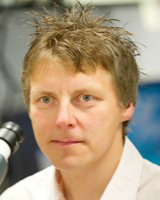
Dr Ole Kemi
- Senior Lecturer (Cardiovascular & Metabolic Health)
telephone:
01413305962
email:
Ole.Kemi@glasgow.ac.uk
Room 240B, Sir James Black Building, School of Cardiovascular and Metabolic Health, Glasgow G12 8QQ
 https://orcid.org/0000-0003-1344-9512
Biography
Dr Ole Kemi is an interdisciplinary scientist with particular expertise in cardiovascular and exercise physiology.
Dr Kemi trained for and received a BSc in medicine and sports science from the University of Tromso, Norway, an MSc in exercise science from the Norwegian University of Science and Technology (NTNU) in Trondheim, Norway, and as a university research fellow, a PhD in molecular medicine from the NTNU.
He has also taught exercise science, medicine, and biomedicine at the NTNU and the Johns Hopkins University, Baltimore, USA.
Dr Kemi's academic work has a focus on the effect of exercise and exercise training on the human body.
He researches and teaches the limits of physical capacity, performance and exercise effects in humans that may be elite athletes, patients with disease, or anyone in between.
Employing physiologic and performance measurements, he has shown that the greater the exercise effort, the greater the exercise benefit.
To understand the underlying mechanisms of this, he employs experimental models of heart disease and exercise training, coupled with advanced microscopy and other physiologic, biochemical and molecular assays, with which he has shown that hearts and blood vessels i) suffer a loss of function by heart disease, ii) gain function after exercise training in an exercise intensity-dependent manner, and iii) regain function by exercise training if first suffering loss of function by heart disease.
At the University of Glasgow, Dr Kemi's continues to research and teach exercise, cardiovascular, cellular, and integrative physiology and biology, all the while continuing to show that exercise is pretty dynamic, we should do more of it, and it has the power to make good things happen.
Research interests
I research the effects of exercise and exercise training on the human body or with the use of experimental models that mimic the human condition. This approach allows for a more detailed investigation and knowledge-generation of the function of the body systems, organs and cells, including their integration.
Experimental Studies of Heart, Vasculature and Muscle
These studies bridge and integrate basic cardiovascular and physiologic sciences with exercise physiology and sports and exercise sciences. Focus of research is on understanding and deciphering the cellular and molecular determinants of cardiovascular performance and the subcellular adaptations following exercise training. This includes studying the cellular and molecular mechanistic events that underlie and translate into improved cardiac function and clinical outcome in health and disease, with the use of appropriate experimental exercise and disease models and physiologic, biophysical, and biochemical research techniques. As a more recent extension, these techniques have also been used to assess the skeletal muscle, which also undergoes changes in response to disease or exercise training.
The rationale for this line of studies is that heart disease is the biggest killer and the leading cause of disability in the society today, and there is a limited scope of treatment. The 5-year mortality of heart failure; a severe form of heart disease is 50-70%, of which ~50% die of progressive pump failure chiefly caused by abnormal contractile function and ~50% of sudden arrhythmic events. Both abnormal contractile function and many arrhythmic events are further mechanistically explained by abnormalities in cardiomyocyte excitation-contraction coupling and cell function. As such, the heartbeat, the rhythm, the force of the contraction, and irregularities thereof are controlled by the network of cells that make up the heart. In my laboratory, we therefore study the heart muscle and its constituent cells under normal conditions, during pathologic conditions such as heart disease, and after exercise training in both health and disease. We do this to understand the heart better, and therefore be able to generate better therapies for the heart when something goes wrong. Ultimately, this will reduce the impact of heart disease to the patient as well as to the society at large. Importantly, and in contrast to other interventions, exercise and exercise training provides a cheap, but underdeveloped means to improve mortality, morbidity, quality of life, function and physical capacity.
Exercise Physiology, Sports Science and Performance
These experiments are carried out in voluntary human subjects in the sports science or exercise physiology laboratories or out in the field, such as professional and elite training and competition or match grounds, where the subject characteristics vary depending on the purpose of the study; some times they may be healthy young adults such as sports science students, other times they may be elite athletes competing at the highest level in their sport, and yet another time they may be subjects suffering from a dysfunction or disease that we may seek to remedy via exercise interventions. Recent examples of these experiments include:
Active recovery at a high intensity is superior for removing lactate in the muscle and facilitate readiness for the next exercise bout or session. Lactate has a long and interesting history of controversy, but a bit overlooked is the fact that lactate provides a proxy measure of fatigue in the working muscle. In a series of experiments, I and a number of students working on the project recruited healthy, normally active young adults, often sports science students, to the lab for a series for tests and measurements. Subjects first underwent an incremental exercise test where lactate threshold and maximal oxygen uptake was measured, after a health check and a proper warm-up. Each subsequent test, with each separated by several days, then continued with the subject undertaking really strenuous exercise by fast, intense running to exhaustion on a treadmill. This exercise was designed to raise muscle lactate production and blood lactate concentration to high and very high levels: in some experiments to a level of 5-6 mM, and in other experiments to the even higher levels of around 10-12 mM. Immediately following exhaustion, the subjects then began a recovery procedure that in the different experiments ranged from passive sit-down recovery (perhaps the most pleasant for the subjects) to active recovery consisting of walking to a pace that was more and more intense, by the highest intensity active recovery trial reaching the intensity of lactate threshold. During all this, blood lactate, lactate clearance, heart rate, and oxygen uptake were determined. These experiments showed that active recovery was clearly superior to passive recovery for removing muscle and blood lactate and therefore facilitating recovery. Moreover, the experiments showed that the optimal active recovery intensity was at or close to the individual’s lactate threshold intensity. This makes great sense, because this is the highest intensity that the subject may sustain without any further excess production and accumulation of lactate, and we know that lactate is best and most usefully eliminated by conversion to glucose in the muscle itself in a manner dependent on the rate of work by the muscle or by the liver in a process known as the Cori cycle, and we in this study were glad to show that the rate of lactate elimination is highest when the muscle is working at its highest rate it can achieve, before it topples over and starts to produce excess lactate again, which thereby must be avoided for active recovery.
Critical speed and the speed-tolerable duration relationship is another concept of exercise physiology my studies have sought to investigate and utilize, as a determinant of endurance exercise performance and therefore a really useful characteristic of physical capacity. Critical speed during running (critical power if cycling) is a measure that relatively recently both has been established as an exercise intensity demarcator alongside more traditional measures such as lactate or anaerobic threshold, as it distinguishes between heavy aerobic oxidative exercise and severe anaerobic non-oxidative exercise domains, and it as well also measures the relationship between speed and maximal attainable duration (speed-tolerable duration) above the critical speed, which because it can be calculated allows us to very accurately predict how long a subject or an athlete can sustain the severe non-oxidative exercise at given speeds above the critical speed, which helps for both optimizing high-intensity training as well as competition pacing.
In a very recent study, a postgraduate student in the lab undertook such experiments, where she established critical speed and speed-tolerable duration, along with measurements of maximal oxygen uptake, lactate or anaerobic threshold, running economy, and metabolic energy expenditure and substrate utilization. This was done under normal conditions and after supplementation of anthocyanin-rich blackcurrant extract, in a cross-over, placebo-controlled and randomized double-blind research design. Blackcurrant extract was chosen because experiments elsewhere had indicated that it may have ergogenic effects that potentially could improve high-intensity exercise. However, in our experiments, we found no such effect. The results from our experiments showed that supplementation of blackcurrant extract did not enhance or improve endurance exercise performance or the physiologic or metabolic parameters we measured, and hence provided no ergogenic effect. This was perhaps a little bit disappointing, but on the other hand, it is also important to show if a product may have ergogenic potential and when it may not have so.
Physiology of Rock Climbing and Mountaineering is an up-and-coming area of sports and exercise science, for several reasons. First, climbing, especially indoor roped climbing and bouldering, is rising in popularity these days. It has appeal to a variety of people as their chosen form of exercise and physical activity, and climbers cite a wide variety of reasons and motivations for why they climb, but important for many is the exercise training, physical capacity and the strength and conditioning aspect of it that improves fitness, health and well-being. This type of climbing has also a very strong competitive aspect to it, where competition climbing in line with most other sports sees athletes and competitions ranging in level from local club or community events to the international circuits of World Cups, World Championship, and most recently, its inclusion as an Olympic sport. The characteristics of upward and often overhanging climbing that taxes upper body and core strength as well as endurance, and with each event being time-limited to a range of seconds to minutes, this sets up a distinct bioenergetic scenario not found elsewhere.
In parallel to the above are the related activities of mountaineering, hiking and backcountry skiing or ski touring, but which in contrast to climbing are characterized by long to ultra-long endurance events. Here, the aerobic component prevails in a needs analysis of physical and physiologic determinants, but the strength contribution for successful completion is often also large and significant, though it may also be effectively non-existent, depending on the nature and chosen course of the activity. Moreover, the environmental challenges of exercising or performing outdoors, often with a significant extra load to carry, often in cold conditions, and often at elevated altitude must also be considered. Like climbing however, there are important benefits to consider, such as the exercise training, improvement of physical capacity and the strength and conditioning aspects of it that improve fitness, health and well-being.
The above therefore make rock climbing and mountaineering interesting and really useful avenues to research from an exercise physiology perspective and promote from a public health perspective. As an example of this, in a recent study, a group of students and I set up a research study investigating the determinant factors for rock climbing performance. Effectively, the study boiled it down to one question: from a physical capacity and exercise physiologic point of view, what makes one climber better than the other? To answer this question, we recruited and tested climbers of all levels of achievement, from the beginners who had never climbed before to the best climbers we could get our hands on, climbers at a high national level. Climbing achievement is graded on an open-ended scale from 0 (everyone can do it) to the current top standard of 9c (only a couple climbers in the world have been able to successfully climb at this level). In our study, we were able to include subject and athletes of every level up to 8a, of both sexes. All participating climbers were brought to the sports science laboratory where a wide range of physical and physiologic parameters of strength, power, aerobic and anaerobic endurance, flexibility and other factors were assessed in each part of the body that we had surmised may affect climbing performance. The participants where then also tested for climbing-specific capacities in the same muscles while performing climbing-specific exercises or while actually climbing on standardized but specific climbing routes set up for this purpose. Subsequently, principal component and multiple regression analysis showed that there is not one, but several factors related to physical capacity that set the best climbers apart from the rest. One important finding was specifically that shoulder power and endurance, and arm and finger strength account for almost 60-70% of the variation between different climbers’ peak performances, and as such provide a reason for why some climbers are better than others. Other parameters were also relevant, but not as important as the above, for determining climbing performance.
Knowing the above, we now are in a position to better and in a more informed manner tell what and how to train to progress in climbing and reach that next level of climbing. Specific training in response to this needs analysis would include specific dynamic exercises like pull-ups, static hangs with bent arms, and finger strength training, alongside more climbing and bouldering at climbing centers and locations.
For more details on my research and images click here Dr Ole Kemi Research Interest
For more details about my research, see my publications.
Publications
2026
Isaiah, Rachel, Routier, Victor and Kemi, Ole J.  ORCID: https://orcid.org/0000-0003-1344-9512
(2026)
Principles of interval training: a practical and physiological teaching guide for educators.
Advances in Physiology Education,
(doi: 10.1152/advan.00315.2025)
(PMID:42173136)
(Early Online Publication)
ORCID: https://orcid.org/0000-0003-1344-9512
(2026)
Principles of interval training: a practical and physiological teaching guide for educators.
Advances in Physiology Education,
(doi: 10.1152/advan.00315.2025)
(PMID:42173136)
(Early Online Publication)
Carpels, Thomas, Kelly, Sarah and Kemi, Ole J. ORCID: https://orcid.org/0000-0003-1344-9512
(2026)
Substitutions in professional elite soccer increase distance and high-intensity actions.
Journal of Strength and Conditioning Research,
(Accepted for Publication)
Kemi, Ole Johan ORCID: https://orcid.org/0000-0003-1344-9512
(2026)
Cardiac hypertrophy: physiological.
In: Mooren, Frank C. and Schmitz, Boris (eds.)
Encyclopedia of Exercise Medicine in Health and Disease.
Springer Nature.
ISBN 9783642278303
(doi: 10.1007/978-3-642-27830-3_39-1)
Routier, Victor, Isaiah, Rachel and Kemi, Ole Johan ORCID: https://orcid.org/0000-0003-1344-9512
(2026)
Interval training.
In: Mooren, Frank C. and Schmitz, Boris (eds.)
Encyclopedia of Exercise Medicine in Health and Disease.
Springer Nature.
ISBN 9783642278303
(doi: 10.1007/978-3-642-27830-3_116-1)
2025
Kemi, Ole ORCID: https://orcid.org/0000-0003-1344-9512
(2025)
Evidence-based evaluation of student and marker performances in assessment and examination.
Advances in Physiology Education, 49(1),
pp. 240-250.
(doi: 10.1152/advan.00202.2024)
(PMID:39810293)
2024
Kemi, Ole J. ORCID: https://orcid.org/0000-0003-1344-9512, Penpraze, Victoria, Scobie, Nairn ORCID: https://orcid.org/0000-0002-1996-741X and MacFarlane, Niall G.
(2024)
Graduate prospects explain undergraduate program standing in university league sports science tables.
Advances in Physiology Education, 48(2),
pp. 330-337.
(doi: 10.1152/advan.00126.2023)
(PMID:38420665)
Carpels, Thomas, Scobie, Nairn ORCID: https://orcid.org/0000-0002-1996-741X, MacFarlane, Niall G. and Kemi, Ole J. ORCID: https://orcid.org/0000-0003-1344-9512
(2024)
Mind the gap: comparison of external load and load variation between a reserve team in a 1-game week microcycle and its first team in a 2-game week microcycle within an elite professional soccer club.
Journal of Strength and Conditioning Research, 38(5),
e235-e242.
(doi: 10.1519/JSC.0000000000004734)
(PMID:38517476)
Kemi, Ole J. ORCID: https://orcid.org/0000-0003-1344-9512, Hoydal, Morten A., Haram, Per M., Smith, Godfrey L. ORCID: https://orcid.org/0000-0003-4821-9741, Ellingsen, Oyvind, Koch, Lauren G., Britton, Steven L. and Wisloff, Ulrik
(2024)
Inherited physical capacity: Widening divergence from young to adult to old.
Annals of the New York Academy of Sciences, 1534(1),
pp. 145-155.
(doi: 10.1111/nyas.15130)
(PMID:38520387)
2023
Da Silva Costa, A. et al. (2023) Electrically stimulated in vitro heart cell mimic of acute exercise reveals novel immediate cellular responses to exercise: Reduced contractility and metabolism, but maintained calcium cycling and increased myofilament calcium sensitivity. Cell Biochemistry and Function, 41(8), pp. 1147-1161. (doi: 10.1002/cbf.3847) (PMID:37665041)
Kemi, Ole J. ORCID: https://orcid.org/0000-0003-1344-9512
(2023)
Exercise and calcium in the heart.
Current Opinion in Physiology, 32,
100644.
(doi: 10.1016/j.cophys.2023.100644)
2022
Ritchie, Jonathan A., Ng, Jun Quan and Kemi, Ole J. ORCID: https://orcid.org/0000-0003-1344-9512
(2022)
When one says yes and the other says no; does calcineurin participate in physiologic cardiac hypertrophy?
Advances in Physiology Education, 46(1),
pp. 84-95.
(doi: 10.1152/advan.00104.2021)
(PMID:34762541)
2021
Carpels, Thomas, Scobie, Nairn ORCID: https://orcid.org/0000-0002-1996-741X, MacFarlane, Niall G. and Kemi, Ole J. ORCID: https://orcid.org/0000-0003-1344-9512
(2021)
Youth-to-senior transition in elite European club soccer.
International Journal of Exercise Science, 14(6),
pp. 1192-1203.
(PMID:35096247)
(PMCID:PMC8758176)
Pastellidou, Eleni, Gillespie, Eric, McGrotty, Anton, Spence, Joshua, McCloskey, William, Johnston, Lynsey, Wilson, John and Kemi, Ole J. ORCID: https://orcid.org/0000-0003-1344-9512
(2021)
Blackcurrant extract does not affect the speed-duration relationship during high-intensity running.
European Journal of Sport Science, 21(4),
pp. 552-561.
(doi: 10.1080/17461391.2020.1771428)
(PMID:32602793)
2020
MacKenzie, Robert, Monaghan, Linda, Masson, Robert A., Werner, Alice K., Caprez, Tansinee S., Johnston, Lynsey and Kemi, Ole J. ORCID: https://orcid.org/0000-0003-1344-9512
(2020)
Physical and physiologic determinants of rock climbing.
International Journal of Sports Physiology and Performance, 15(2),
pp. 168-179.
(doi: 10.1123/ijspp.2018-0901)
(PMID:31094249)
2019
Kemi, Ole J. ORCID: https://orcid.org/0000-0003-1344-9512, Fowler, Ewan, Mcglynn, Karen, Primrose, Deborah, Smirthwaite, Rachel and Wilson, John
(2019)
Intensity-dependence of exercise and active recovery in high-intensity interval training.
Journal of Sports Medicine and Physical Fitness, 59(1),
pp. 1937-1943.
(doi: 10.23736/S0022-4707.19.09521-5)
Ghouri, Iffath A., Kelly, Allen, Salerno, Simona, Garten, Karin, Stølen, Tomas, Kemi, Ole-Johan ORCID: https://orcid.org/0000-0003-1344-9512 and Smith, Godfrey L. ORCID: https://orcid.org/0000-0003-4821-9741
(2019)
Corrigendum: Characterization of electrical activity in post-myocardial infarction scar tissue in rat hearts using multiphoton microscopy.
Frontiers in Physiology, 10,
364.
(doi: 10.3389/fphys.2019.00364)
(PMID:31024333)
(PMCID:PMC6461023)
2018
Ghouri, Iffath A., Kelly, Allen, Salerno, Simona, Garten, Karin, Stølen, Tomas, Kemi, Ole-Johan ORCID: https://orcid.org/0000-0003-1344-9512 and Smith, Godfrey L. ORCID: https://orcid.org/0000-0003-4821-9741
(2018)
Characterization of electrical activity in post-myocardial infarction scar tissue in rat hearts using multiphoton microscopy.
Frontiers in Physiology, 9,
1454.
(doi: 10.3389/fphys.2018.01454)
(PMID:30386255)
(PMCID:PMC6199960)
Høydal, M. A. et al. (2018) Human cardiomyocyte calcium handling and transverse tubules in mid-stage of post-myocardial-infarction heart failure. ESC Heart Failure, 5(3), pp. 332-342. (doi: 10.1002/ehf2.12271) (PMID:29431258) (PMCID:PMC5933953)
2016
Høydal, M. A. et al. (2016) Exercise training reverses myocardial dysfunction induced by CaMKIIδC overexpression by restoring Ca2+-homeostasis. Journal of Applied Physiology, 121(1), pp. 212-220. (doi: 10.1152/japplphysiol.00188.2016) (PMID:27231311)
2015
Wisløff, Ulrik, Bye, Anja, Stølen, Tomas, Kemi, Ole Johan ORCID: https://orcid.org/0000-0003-1344-9512, Pollott, Geoffrey E., Pande, Manjusha, McEachin, Richard C., Britton, Steven L. and Koch, Lauren Gerard
(2015)
Blunted cardiomyocyte remodeling response in exercise-resistant rats.
Journal of the American College of Cardiology, 65(13),
pp. 1378-1380.
(doi: 10.1016/j.jacc.2015.01.041)
(PMID:25835453)
Ghouri, Iffath A., Kelly, Allen, Burton, Francis L., Smith, Godfrey L. ORCID: https://orcid.org/0000-0003-4821-9741 and Kemi, Ole Johan ORCID: https://orcid.org/0000-0003-1344-9512
(2015)
2-photon excitation fluorescence microscopy enables deeper high-resolution imaging of voltage and Ca2+in intact mice, rat, and rabbit hearts.
Journal of Biophotonics, 8(1-2),
pp. 112-123.
(doi: 10.1002/jbio.201300109)
2014
Devlin, J., Paton, B., Poole, L., Sun, W., Ferguson, C., Wilson, J. and Kemi, O. J. ORCID: https://orcid.org/0000-0003-1344-9512
(2014)
Blood lactate clearance after maximal exercise depends on active recovery intensity.
Journal of Sports Medicine and Physical Fitness, 54(3),
pp. 271-278.
2013
Kemi, O.J. ORCID: https://orcid.org/0000-0003-1344-9512, Haram, P.M., Høydal, M.A., Wisløff, U. and Ellingsen, Ø.
(2013)
Exercise training and losartan improve endothelial function in heart failure rats by different mechanisms.
Scandinavian Cardiovascular Journal, 47(3),
pp. 160-167.
(doi: 10.3109/14017431.2012.754935)
Ferguson, C., Wilson, J., Birch, K.M. and Kemi, O.J. ORCID: https://orcid.org/0000-0003-1344-9512
(2013)
Application of the speed-duration relationship to normalize the intensity of high-intensity interval training.
PLoS ONE, 8(11),
e76420.
(doi: 10.1371/journal.pone.0076420)
(PMID:24244266)
(PMCID:PMC3828304)
Kelly, A., Ghouri, I.A., Kemi, O.J. ORCID: https://orcid.org/0000-0003-1344-9512, Bishop, M.J., Bernus, O., Fenton, F.H., Myles, R.C. ORCID: https://orcid.org/0000-0003-4670-361X, Burton, F.L. and Smith, G.L. ORCID: https://orcid.org/0000-0003-4821-9741
(2013)
Subepicardial action potential characteristics are a function of depth and activation sequence in isolated rabbit hearts.
Circulation: Arrhythmia and Electrophysiology, 6(4),
pp. 809-817.
(doi: 10.1161/CIRCEP.113.000334)
2012
Kaurstad, Guri, Alves, Marcia N., Kemi, Ole J. ORCID: https://orcid.org/0000-0003-1344-9512, Rolim, Natale, Høydal, Morten A., Wisløff, Helene, Stølen, Tomas O. and Wisløff, Ulrik
(2012)
Chronic CaMKII inhibition blunts the cardiac contractile response to exercise training.
European Journal of Applied Physiology, 112(2),
pp. 579-588.
(doi: 10.1007/s00421-011-1994-0)
Kemi, Ole J. ORCID: https://orcid.org/0000-0003-1344-9512, MacQuaide, Niall ORCID: https://orcid.org/0000-0001-9026-0073, Hoydal, Morten A., Ellingsen, Oyvind, Smith, Godfrey L. ORCID: https://orcid.org/0000-0003-4821-9741 and Wisloff, Ulrik
(2012)
Exercise training corrects control of spontaneous calcium waves in hearts from myocardial infarction heart failure rats.
Journal of Cellular Physiology, 227(1),
pp. 20-26.
(doi: 10.1002/jcp.22771)
Kemi, Ole Johan ORCID: https://orcid.org/0000-0003-1344-9512 and Ellingsen, Oyvind
(2012)
Cardiac hypertrophy, physiological.
In: Mooren, Frank C. (ed.)
Encyclopedia of Exercise Medicine in Health and Disease.
Springer: Berlin, pp. 171-175.
ISBN 9783540360650
(doi: 10.1007/978-3-540-29807-6_39)
Rognmo, Oivind, Kemi, Ole Johan ORCID: https://orcid.org/0000-0003-1344-9512 and Wisloff, Ulrik
(2012)
Interval training.
In: Mooren, Frank C. (ed.)
Encyclopedia of Exercise Medicine in Health and Disease.
Springer: Berlin, pp. 470-473.
ISBN 9783540360650
(doi: 10.1007/978-3-540-29807-6_116)
2011
Koch, L. G. et al. (2011) Intrinsic aerobic capacity sets a divide for aging and longevity. Circulation Research, 109(10), pp. 1162-1172. (doi: 10.1161/CIRCRESAHA.111.253807)
Kemi, Ole J. ORCID: https://orcid.org/0000-0003-1344-9512, Hoydal, Morten A., MacQuaide, Niall ORCID: https://orcid.org/0000-0001-9026-0073, Haram, Per M., Koch, Lauren G., Britton, Steven L., Ellingsen, Oyvind, Smith, Godfrey L. ORCID: https://orcid.org/0000-0003-4821-9741 and Wisloff, Ulrik
(2011)
The effect of exercise training on transverse tubules in normal, remodeled, and reverse remodeled hearts.
Journal of Cellular Physiology, 226(9),
pp. 2235-2243.
(doi: 10.1002/jcp.22559)
Helgerud, J., Rodas, G., Kemi, O.J. ORCID: https://orcid.org/0000-0003-1344-9512 and Hoff, J.
(2011)
Strength and endurance in elite football players.
International Journal of Sports Medicine, 32(9),
pp. 677-682.
(doi: 10.1055/s-0031-1275742)
Kemi, O.J. ORCID: https://orcid.org/0000-0003-1344-9512, Rognmo, O., Amundsen, B.H., Stordahl, S., Richardson, R.S., Helgerud, J. and Hoff, J.
(2011)
One-arm maximal strength training improves work economy and endurance capacity but not skeletal muscle blood flow.
Journal of Sports Sciences, 29(2),
pp. 161-170.
(doi: 10.1080/02640414.2010.529454)
2010
Kemi, O.J. and Wisløff, U. (2010) Mechanisms of exercise-induced improvements in the contractile apparatus of the mammalian myocardium. Acta Physiologica, 199(4), pp. 425-439. (doi: 10.1111/j.1748-1716.2010.02132.x)
Menzies, P., Menzies, C., McIntyre, L., Paterson, P., Wilson, J. and Kemi, O.J. (2010) Blood lactate clearance during active recovery after an intense running bout depends on the intensity of the active recovery. Journal of Sports Sciences, 28(9), pp. 975-982. (doi: 10.1080/02640414.2010.481721)
Kemi, Ole Johan ORCID: https://orcid.org/0000-0003-1344-9512 and Wisløff, Ulrik
(2010)
High-intensity aerobic exercise training improves the heart in health and disease.
Journal of Cardiopulmonary Rehabilitation and Prevention, 30(1),
pp. 2-11.
(doi: 10.1097/HCR.0b013e3181c56b89)
(PMID:20040880)
Smith, G. ORCID: https://orcid.org/0000-0003-4821-9741, Reynolds, M., Burton, F.L. and Kemi, O.J. ORCID: https://orcid.org/0000-0003-1344-9512
(2010)
Confocal and multiphoton imaging of intracellular Ca2+.
Methods in Cell Biology, 99(10),
pp. 255-261.
(doi: 10.1016/B978-0-12-374841-6.00009-8)
Smith, Godfrey ORCID: https://orcid.org/0000-0003-4821-9741, Reynolds, Martin, Burton, Francis and Kemi, Ole Johan ORCID: https://orcid.org/0000-0003-1344-9512
(2010)
Confocal and multiphoton imaging of intracellular Ca2+.
In: Whitaker, Michael (ed.)
Calcium in Living Cells.
Series: Methods in cell biology (99).
Elsevier, pp. 225-261.
ISBN 9780123748416
(doi: 10.1016/B978-0-12-374841-6.00009-8)
Wang, Y., Wisloff, U. and Kemi, O.J. ORCID: https://orcid.org/0000-0003-1344-9512
(2010)
Animal models in the study of exercise-induced cardiac hypertrophy.
Physiological Research, 59(5),
pp. 633-644.
2009
Wisloff, U., Ellingsen, O. and Kemi, O.J. (2009) High-intensity interval training to maximize cardiac benefits of exercise training? Exercise and Sport Sciences Reviews, 37(3), pp. 139-146. (doi: 10.1097/JES.0b013e3181aa65fc)
Haram, P.M. et al. (2009) Aerobic interval training vs. continuous moderate exercise in the metabolic syndrome of rats artificially selected for low aerobic capacity. Cardiovascular Research, 81(4), pp. 723-732. (doi: 10.1093/cvr/cvn332) (PMID:19047339) (PMCID:PMC2642601)
Kemi, O.J. (2009) Experimental evidence may inform the debate. Journal of Applied Physiology, 106(1), p. 345.
Kemi, Ole ORCID: https://orcid.org/0000-0003-1344-9512, MacQuaide, Niall ORCID: https://orcid.org/0000-0001-9026-0073, Hoydal, M.A., Haram, P.M., Ellingsen, O., Wisloff, U. and Smith, Godfrey ORCID: https://orcid.org/0000-0003-4821-9741
(2009)
Exercise training reduces spontaneous Ca2+ waves in cardiomyocytes from post-myocardial infarction heart failure rats.
Biophysical Journal, 96(3.S1),
274A-275A.
(doi: 10.1016/j.bpj.2008.12.1359)
Stølen, T.O. et al. (2009) Interval training normalizes cCardiomyocyte function, diastolic Ca2+ control, and SR Ca2+ release synchronicity in a mouse model of diabetic cardiomyopathy. Circulation Research, 105(6), pp. 527-536. (doi: 10.1161/CIRCRESAHA.109.199810)
2008
Bye, A., Hoydal, M.A., Catalucci, D., Langaas, M., Kemi, O.J., Beisvag, V., Koch, L.G., Britton, S.L., Ellingsen, O. and Wisloff, U. (2008) Gene expression profiling of skeletal muscle in exercise-trained and sedentary rats with inborn high and low VO2max. Physiological Genomics, 35(3), pp. 213-221. (doi: 10.1152/physiolgenomics.90282.2008)
Adamson, M., MacQuaide, N. ORCID: https://orcid.org/0000-0001-9026-0073, Helgerud, J., Hoff, J. and Kemi, O.J.
(2008)
Unilateral arm strength training improves contralateral peak force and rate of force development.
European Journal of Applied Physiology, 103(5),
pp. 553-559.
(doi: 10.1007/s00421-008-0750-6)
(PMID:18443814)
Kemi, O.J., Ellingsen, O., Smith, G.L. and Wisloff, U. (2008) Exercise-induced changes in calcium handling in left ventricular cardiomyocytes. Frontiers in Bioscience, 13, pp. 356-368. (doi: 10.2741/2685)
Bye, A., Langaas, M., Høydal, M.A., Kemi, O.J., Heinrich, G., Koch, L.G., Britton, S.L., Najjar, S.M., Ellingsen, O. and Wisløff, U. (2008) Aerobic capacity-dependent differences in cardiac gene expression. Physiological Genomics, 33, pp. 100-109. (doi: 10.1152/physiolgenomics.00269.2007)
Kemi, O.J., Ceci, M., Condorelli, G., Smith, G.L. and Wisloff, U. (2008) Myocardial sarcoplasmic reticulurn Ca2+ ATPase function is increased by aerobic interval training. European Journal of Cardiovascular Prevention and Rehabilitation, 15(2), pp. 145-148. (doi: 10.1097/HJR.0b013e3282efd4e0)
Kemi, O.J., Ceci, M., Wisloff, U., Grimaldi, S., Gallo, P., Smith, G.L., Condorelli, G. and Ellingsen, O. (2008) Activation or inactivation of cardiac Akt/mTOR signaling diverges physiological from pathological hypertrophy. Journal of Cellular Physiology, 214(2), pp. 316-321. (doi: 10.1002/jcp.21197)
Poole, D.C. et al. (2008) Exercise training does/does not induce vascular adaptations beyond the active muscle beds. Journal of Applied Physiology, 105(3), pp. 1008-1010. (doi: 10.1152/japplphysiol.zdg-8158.pcpcomm.2008)
Schjerve, I. E. et al. (2008) Both aerobic endurance and strength training programmes improve cardiovascular health in obese adults. Clinical Science, 115(9), pp. 283-293. (doi: 10.1042/CS20070332)
Tjonna, A. E. et al. (2008) Aerobic Interval Training Versus Continuous Moderate Exercise as a Treatment for the Metabolic Syndrome: A Pilot Study. Circulation, 118(4), pp. 346-354. (doi: 10.1161/CIRCULATIONAHA.108.772822)
2007
Kemi, O (2007) Temperature preconditioning: a cold-hearted answer to ischaemic-reperfusion injury ? Journal of Physiology, 585(3), pp. 649-650. (doi: 10.1113/jphysiol.2007.146209)
Bye, A., Langaas, M., Hoydal, M.A., Kemi, O.J., Heinrich, G., Koch, L.G., Britton, S.L., Najjar, S.M., Ellingsen, O. and Wisloff, U. (2007) Aerobic capacity-dependent differences in cardiac gene expression. Physiological Genomics, 33(1), pp. 100-109. (doi: 10.1152/physiolgenomics.00269.2007)
Kemi, O.J. ORCID: https://orcid.org/0000-0003-1344-9512, Hoydal, M.A., Haram, P.M., Garnier, A., Fortin, D., Ventura-Clapier, R. and Ellingsen, O.
(2007)
Exercise training restores aerobic capacity and energy transfer systems in heart failure treated with losartan.
Cardiovascular Research, 76(1),
pp. 91-99.
(doi: 10.1016/j.cardiores.2007.06.008)
(PMID:17628515)
Hoydal, MA, Wisloff, U, Kemi, OJ, Britton, SL, Koch, LG, Smith, GL and Ellingsen, O (2007) Nitric oxide synthase type-1 modulates cardiomyocyte contractility and calcium handling: association with low intrinsic aerobic capacity. European Journal of Cardiovascular Prevention and Rehabilitation, 14(2), pp. 319-325.
Kemi, O (2007) Adaptation of endothelium to exercise training: Insights from experimental studies. Frontiers in Bioscience, 13(ISS 1), pp. 336-346. (doi: 10.2741/2683)
Kemi, O (2007) Running speed and maximal oxygen uptake in rats and mice: practical implications for exercise training. European Journal of Cardiovascular Prevention and Rehabilitation, 14(6), pp. 753-760.
Kemi, OJ, Ellingsen, O, Ceci, M, Grimaldi, S, Smith, GL, Condorelli, G and Wisloff, U (2007) Aerobic interval training enhances cardiomyocyte contractility and Ca2+ cycling by phosphorylation of CaMKII and Thr-17 of phospholamban. Journal of Molecular and Cellular Cardiology, 43(3), pp. 354-361. (doi: 10.1016/j.yjmcc.2007.06.013)
Wisloff, Ulrik, Haram, Per Magnus and Kemi, Ole Johan ORCID: https://orcid.org/0000-0003-1344-9512
(2007)
Genetic vs. acquired fitness: cardiomyocyte adaptations.
In: Stocchi, Vilberto, De Feo, Pierpaolo and Hood, David A. (eds.)
Role of Physical Exercise in Preventing Disease and Improving the Quality of Life.
Springer: Milan, pp. 61-81.
ISBN 9788847003750
(doi: 10.1007/978-88-470-0376-7_4)
2006
Kemi, O (2006) Time-course of endothelial adaptation following acute and regular exercise. European Journal of Cardiovascular Prevention and Rehabilitation, 13(4), pp. 585-591. (doi: 10.1097/01.hjr.0000198920.57685.)
Kemi, OJ, Arbo, I, Hoydal, MA, Loennechen, JP, Wisloff, U, Smith, GL and Ellingsen, O (2006) Reduced pH and contractility in failing rat cardiomyocytes. Acta Physiologica, 188(3-4), pp. 185-193. (doi: 10.1111/j.1748-1716.2006.01621.x)
2005
Kemi, O (2005) Effective training for patients with intermittent claudication. Scandinavian Cardiovascular Journal, 39(4), pp. 244-249. (doi: 10.1080/14017430510035844)
Kemi, O (2005) Moderate vs. high exercise intensity: Differential effects on aerobic fitness, cardiomyocyte contractility, and endothelial function. Cardiovascular Research, 67(1), pp. 161-172. (doi: 10.1016/j.cardiores.2005.03.010)
Kemi, O (2005) Strength and endurance differences between elite and junior elite ice hockey players. The importance of allometric scaling. International Journal of Sports Medicine, 26(7), pp. 537-541. (doi: 10.1055/s-2004-821328)
Kemi, O (2005) Trans-sodium crocetinate does not affect oxygen uptake in rats during treadmill running. Scandinavian Journal of Clinical and Laboratory Investigation, 65(7), pp. 577-584. (doi: 10.1080/00291950500228121)
2004
Kemi, O (2004) Aerobic fitness is associated with cardiomyocyte contractile capacity and endothelial function in exercise training and detraining. Circulation, 109(23), pp. 2897-2904. (doi: 10.1161/01.CIR.0000129308.04757.)
2003
Kemi, O (2003) Soccer specific testing of maximal oxygen uptake. Journal of Sports Medicine and Physical Fitness, 43(2), pp. 139-144.
2002
Kemi, O (2002) Intensity-controlled treadmill running in mice: cardiac and skeletal muscle hypertrophy. Journal of Applied Physiology, 93(4), pp. 1301-1309. (doi: 10.1152/japplphysiol.00231.2002)
Kemi, O (2002) Soccer specific aerobic endurance training. British Journal of Sports Medicine, 36(3), pp. 218-221. (doi: 10.1136/bjsm.36.3.218)
2001
Kemi, O. (2001) Intensity-controlled treadmill running in rats: VO2max and cardiac hypertrophy. American Journal of Physiology: Heart and Circulatory Physiology, 280(3), H1301-H1310.
Articles
Isaiah, Rachel, Routier, Victor and Kemi, Ole J. ORCID: https://orcid.org/0000-0003-1344-9512
(2026)
Principles of interval training: a practical and physiological teaching guide for educators.
Advances in Physiology Education,
(doi: 10.1152/advan.00315.2025)
(PMID:42173136)
(Early Online Publication)
Carpels, Thomas, Kelly, Sarah and Kemi, Ole J. ORCID: https://orcid.org/0000-0003-1344-9512
(2026)
Substitutions in professional elite soccer increase distance and high-intensity actions.
Journal of Strength and Conditioning Research,
(Accepted for Publication)
Kemi, Ole ORCID: https://orcid.org/0000-0003-1344-9512
(2025)
Evidence-based evaluation of student and marker performances in assessment and examination.
Advances in Physiology Education, 49(1),
pp. 240-250.
(doi: 10.1152/advan.00202.2024)
(PMID:39810293)
Kemi, Ole J. ORCID: https://orcid.org/0000-0003-1344-9512, Penpraze, Victoria, Scobie, Nairn ORCID: https://orcid.org/0000-0002-1996-741X and MacFarlane, Niall G.
(2024)
Graduate prospects explain undergraduate program standing in university league sports science tables.
Advances in Physiology Education, 48(2),
pp. 330-337.
(doi: 10.1152/advan.00126.2023)
(PMID:38420665)
Carpels, Thomas, Scobie, Nairn ORCID: https://orcid.org/0000-0002-1996-741X, MacFarlane, Niall G. and Kemi, Ole J. ORCID: https://orcid.org/0000-0003-1344-9512
(2024)
Mind the gap: comparison of external load and load variation between a reserve team in a 1-game week microcycle and its first team in a 2-game week microcycle within an elite professional soccer club.
Journal of Strength and Conditioning Research, 38(5),
e235-e242.
(doi: 10.1519/JSC.0000000000004734)
(PMID:38517476)
Kemi, Ole J. ORCID: https://orcid.org/0000-0003-1344-9512, Hoydal, Morten A., Haram, Per M., Smith, Godfrey L. ORCID: https://orcid.org/0000-0003-4821-9741, Ellingsen, Oyvind, Koch, Lauren G., Britton, Steven L. and Wisloff, Ulrik
(2024)
Inherited physical capacity: Widening divergence from young to adult to old.
Annals of the New York Academy of Sciences, 1534(1),
pp. 145-155.
(doi: 10.1111/nyas.15130)
(PMID:38520387)
Da Silva Costa, A. et al. (2023) Electrically stimulated in vitro heart cell mimic of acute exercise reveals novel immediate cellular responses to exercise: Reduced contractility and metabolism, but maintained calcium cycling and increased myofilament calcium sensitivity. Cell Biochemistry and Function, 41(8), pp. 1147-1161. (doi: 10.1002/cbf.3847) (PMID:37665041)
Kemi, Ole J. ORCID: https://orcid.org/0000-0003-1344-9512
(2023)
Exercise and calcium in the heart.
Current Opinion in Physiology, 32,
100644.
(doi: 10.1016/j.cophys.2023.100644)
Ritchie, Jonathan A., Ng, Jun Quan and Kemi, Ole J. ORCID: https://orcid.org/0000-0003-1344-9512
(2022)
When one says yes and the other says no; does calcineurin participate in physiologic cardiac hypertrophy?
Advances in Physiology Education, 46(1),
pp. 84-95.
(doi: 10.1152/advan.00104.2021)
(PMID:34762541)
Carpels, Thomas, Scobie, Nairn ORCID: https://orcid.org/0000-0002-1996-741X, MacFarlane, Niall G. and Kemi, Ole J. ORCID: https://orcid.org/0000-0003-1344-9512
(2021)
Youth-to-senior transition in elite European club soccer.
International Journal of Exercise Science, 14(6),
pp. 1192-1203.
(PMID:35096247)
(PMCID:PMC8758176)
Pastellidou, Eleni, Gillespie, Eric, McGrotty, Anton, Spence, Joshua, McCloskey, William, Johnston, Lynsey, Wilson, John and Kemi, Ole J. ORCID: https://orcid.org/0000-0003-1344-9512
(2021)
Blackcurrant extract does not affect the speed-duration relationship during high-intensity running.
European Journal of Sport Science, 21(4),
pp. 552-561.
(doi: 10.1080/17461391.2020.1771428)
(PMID:32602793)
MacKenzie, Robert, Monaghan, Linda, Masson, Robert A., Werner, Alice K., Caprez, Tansinee S., Johnston, Lynsey and Kemi, Ole J. ORCID: https://orcid.org/0000-0003-1344-9512
(2020)
Physical and physiologic determinants of rock climbing.
International Journal of Sports Physiology and Performance, 15(2),
pp. 168-179.
(doi: 10.1123/ijspp.2018-0901)
(PMID:31094249)
Kemi, Ole J. ORCID: https://orcid.org/0000-0003-1344-9512, Fowler, Ewan, Mcglynn, Karen, Primrose, Deborah, Smirthwaite, Rachel and Wilson, John
(2019)
Intensity-dependence of exercise and active recovery in high-intensity interval training.
Journal of Sports Medicine and Physical Fitness, 59(1),
pp. 1937-1943.
(doi: 10.23736/S0022-4707.19.09521-5)
Ghouri, Iffath A., Kelly, Allen, Salerno, Simona, Garten, Karin, Stølen, Tomas, Kemi, Ole-Johan ORCID: https://orcid.org/0000-0003-1344-9512 and Smith, Godfrey L. ORCID: https://orcid.org/0000-0003-4821-9741
(2019)
Corrigendum: Characterization of electrical activity in post-myocardial infarction scar tissue in rat hearts using multiphoton microscopy.
Frontiers in Physiology, 10,
364.
(doi: 10.3389/fphys.2019.00364)
(PMID:31024333)
(PMCID:PMC6461023)
Ghouri, Iffath A., Kelly, Allen, Salerno, Simona, Garten, Karin, Stølen, Tomas, Kemi, Ole-Johan ORCID: https://orcid.org/0000-0003-1344-9512 and Smith, Godfrey L. ORCID: https://orcid.org/0000-0003-4821-9741
(2018)
Characterization of electrical activity in post-myocardial infarction scar tissue in rat hearts using multiphoton microscopy.
Frontiers in Physiology, 9,
1454.
(doi: 10.3389/fphys.2018.01454)
(PMID:30386255)
(PMCID:PMC6199960)
Høydal, M. A. et al. (2018) Human cardiomyocyte calcium handling and transverse tubules in mid-stage of post-myocardial-infarction heart failure. ESC Heart Failure, 5(3), pp. 332-342. (doi: 10.1002/ehf2.12271) (PMID:29431258) (PMCID:PMC5933953)
Høydal, M. A. et al. (2016) Exercise training reverses myocardial dysfunction induced by CaMKIIδC overexpression by restoring Ca2+-homeostasis. Journal of Applied Physiology, 121(1), pp. 212-220. (doi: 10.1152/japplphysiol.00188.2016) (PMID:27231311)
Wisløff, Ulrik, Bye, Anja, Stølen, Tomas, Kemi, Ole Johan ORCID: https://orcid.org/0000-0003-1344-9512, Pollott, Geoffrey E., Pande, Manjusha, McEachin, Richard C., Britton, Steven L. and Koch, Lauren Gerard
(2015)
Blunted cardiomyocyte remodeling response in exercise-resistant rats.
Journal of the American College of Cardiology, 65(13),
pp. 1378-1380.
(doi: 10.1016/j.jacc.2015.01.041)
(PMID:25835453)
Ghouri, Iffath A., Kelly, Allen, Burton, Francis L., Smith, Godfrey L. ORCID: https://orcid.org/0000-0003-4821-9741 and Kemi, Ole Johan ORCID: https://orcid.org/0000-0003-1344-9512
(2015)
2-photon excitation fluorescence microscopy enables deeper high-resolution imaging of voltage and Ca2+in intact mice, rat, and rabbit hearts.
Journal of Biophotonics, 8(1-2),
pp. 112-123.
(doi: 10.1002/jbio.201300109)
Devlin, J., Paton, B., Poole, L., Sun, W., Ferguson, C., Wilson, J. and Kemi, O. J. ORCID: https://orcid.org/0000-0003-1344-9512
(2014)
Blood lactate clearance after maximal exercise depends on active recovery intensity.
Journal of Sports Medicine and Physical Fitness, 54(3),
pp. 271-278.
Kemi, O.J. ORCID: https://orcid.org/0000-0003-1344-9512, Haram, P.M., Høydal, M.A., Wisløff, U. and Ellingsen, Ø.
(2013)
Exercise training and losartan improve endothelial function in heart failure rats by different mechanisms.
Scandinavian Cardiovascular Journal, 47(3),
pp. 160-167.
(doi: 10.3109/14017431.2012.754935)
Ferguson, C., Wilson, J., Birch, K.M. and Kemi, O.J. ORCID: https://orcid.org/0000-0003-1344-9512
(2013)
Application of the speed-duration relationship to normalize the intensity of high-intensity interval training.
PLoS ONE, 8(11),
e76420.
(doi: 10.1371/journal.pone.0076420)
(PMID:24244266)
(PMCID:PMC3828304)
Kelly, A., Ghouri, I.A., Kemi, O.J. ORCID: https://orcid.org/0000-0003-1344-9512, Bishop, M.J., Bernus, O., Fenton, F.H., Myles, R.C. ORCID: https://orcid.org/0000-0003-4670-361X, Burton, F.L. and Smith, G.L. ORCID: https://orcid.org/0000-0003-4821-9741
(2013)
Subepicardial action potential characteristics are a function of depth and activation sequence in isolated rabbit hearts.
Circulation: Arrhythmia and Electrophysiology, 6(4),
pp. 809-817.
(doi: 10.1161/CIRCEP.113.000334)
Kaurstad, Guri, Alves, Marcia N., Kemi, Ole J. ORCID: https://orcid.org/0000-0003-1344-9512, Rolim, Natale, Høydal, Morten A., Wisløff, Helene, Stølen, Tomas O. and Wisløff, Ulrik
(2012)
Chronic CaMKII inhibition blunts the cardiac contractile response to exercise training.
European Journal of Applied Physiology, 112(2),
pp. 579-588.
(doi: 10.1007/s00421-011-1994-0)
Kemi, Ole J. ORCID: https://orcid.org/0000-0003-1344-9512, MacQuaide, Niall ORCID: https://orcid.org/0000-0001-9026-0073, Hoydal, Morten A., Ellingsen, Oyvind, Smith, Godfrey L. ORCID: https://orcid.org/0000-0003-4821-9741 and Wisloff, Ulrik
(2012)
Exercise training corrects control of spontaneous calcium waves in hearts from myocardial infarction heart failure rats.
Journal of Cellular Physiology, 227(1),
pp. 20-26.
(doi: 10.1002/jcp.22771)
Koch, L. G. et al. (2011) Intrinsic aerobic capacity sets a divide for aging and longevity. Circulation Research, 109(10), pp. 1162-1172. (doi: 10.1161/CIRCRESAHA.111.253807)
Kemi, Ole J. ORCID: https://orcid.org/0000-0003-1344-9512, Hoydal, Morten A., MacQuaide, Niall ORCID: https://orcid.org/0000-0001-9026-0073, Haram, Per M., Koch, Lauren G., Britton, Steven L., Ellingsen, Oyvind, Smith, Godfrey L. ORCID: https://orcid.org/0000-0003-4821-9741 and Wisloff, Ulrik
(2011)
The effect of exercise training on transverse tubules in normal, remodeled, and reverse remodeled hearts.
Journal of Cellular Physiology, 226(9),
pp. 2235-2243.
(doi: 10.1002/jcp.22559)
Helgerud, J., Rodas, G., Kemi, O.J. ORCID: https://orcid.org/0000-0003-1344-9512 and Hoff, J.
(2011)
Strength and endurance in elite football players.
International Journal of Sports Medicine, 32(9),
pp. 677-682.
(doi: 10.1055/s-0031-1275742)
Kemi, O.J. ORCID: https://orcid.org/0000-0003-1344-9512, Rognmo, O., Amundsen, B.H., Stordahl, S., Richardson, R.S., Helgerud, J. and Hoff, J.
(2011)
One-arm maximal strength training improves work economy and endurance capacity but not skeletal muscle blood flow.
Journal of Sports Sciences, 29(2),
pp. 161-170.
(doi: 10.1080/02640414.2010.529454)
Kemi, O.J. and Wisløff, U. (2010) Mechanisms of exercise-induced improvements in the contractile apparatus of the mammalian myocardium. Acta Physiologica, 199(4), pp. 425-439. (doi: 10.1111/j.1748-1716.2010.02132.x)
Menzies, P., Menzies, C., McIntyre, L., Paterson, P., Wilson, J. and Kemi, O.J. (2010) Blood lactate clearance during active recovery after an intense running bout depends on the intensity of the active recovery. Journal of Sports Sciences, 28(9), pp. 975-982. (doi: 10.1080/02640414.2010.481721)
Kemi, Ole Johan ORCID: https://orcid.org/0000-0003-1344-9512 and Wisløff, Ulrik
(2010)
High-intensity aerobic exercise training improves the heart in health and disease.
Journal of Cardiopulmonary Rehabilitation and Prevention, 30(1),
pp. 2-11.
(doi: 10.1097/HCR.0b013e3181c56b89)
(PMID:20040880)
Smith, G. ORCID: https://orcid.org/0000-0003-4821-9741, Reynolds, M., Burton, F.L. and Kemi, O.J. ORCID: https://orcid.org/0000-0003-1344-9512
(2010)
Confocal and multiphoton imaging of intracellular Ca2+.
Methods in Cell Biology, 99(10),
pp. 255-261.
(doi: 10.1016/B978-0-12-374841-6.00009-8)
Wang, Y., Wisloff, U. and Kemi, O.J. ORCID: https://orcid.org/0000-0003-1344-9512
(2010)
Animal models in the study of exercise-induced cardiac hypertrophy.
Physiological Research, 59(5),
pp. 633-644.
Wisloff, U., Ellingsen, O. and Kemi, O.J. (2009) High-intensity interval training to maximize cardiac benefits of exercise training? Exercise and Sport Sciences Reviews, 37(3), pp. 139-146. (doi: 10.1097/JES.0b013e3181aa65fc)
Haram, P.M. et al. (2009) Aerobic interval training vs. continuous moderate exercise in the metabolic syndrome of rats artificially selected for low aerobic capacity. Cardiovascular Research, 81(4), pp. 723-732. (doi: 10.1093/cvr/cvn332) (PMID:19047339) (PMCID:PMC2642601)
Kemi, O.J. (2009) Experimental evidence may inform the debate. Journal of Applied Physiology, 106(1), p. 345.
Kemi, Ole ORCID: https://orcid.org/0000-0003-1344-9512, MacQuaide, Niall ORCID: https://orcid.org/0000-0001-9026-0073, Hoydal, M.A., Haram, P.M., Ellingsen, O., Wisloff, U. and Smith, Godfrey ORCID: https://orcid.org/0000-0003-4821-9741
(2009)
Exercise training reduces spontaneous Ca2+ waves in cardiomyocytes from post-myocardial infarction heart failure rats.
Biophysical Journal, 96(3.S1),
274A-275A.
(doi: 10.1016/j.bpj.2008.12.1359)
Stølen, T.O. et al. (2009) Interval training normalizes cCardiomyocyte function, diastolic Ca2+ control, and SR Ca2+ release synchronicity in a mouse model of diabetic cardiomyopathy. Circulation Research, 105(6), pp. 527-536. (doi: 10.1161/CIRCRESAHA.109.199810)
Bye, A., Hoydal, M.A., Catalucci, D., Langaas, M., Kemi, O.J., Beisvag, V., Koch, L.G., Britton, S.L., Ellingsen, O. and Wisloff, U. (2008) Gene expression profiling of skeletal muscle in exercise-trained and sedentary rats with inborn high and low VO2max. Physiological Genomics, 35(3), pp. 213-221. (doi: 10.1152/physiolgenomics.90282.2008)
Adamson, M., MacQuaide, N. ORCID: https://orcid.org/0000-0001-9026-0073, Helgerud, J., Hoff, J. and Kemi, O.J.
(2008)
Unilateral arm strength training improves contralateral peak force and rate of force development.
European Journal of Applied Physiology, 103(5),
pp. 553-559.
(doi: 10.1007/s00421-008-0750-6)
(PMID:18443814)
Kemi, O.J., Ellingsen, O., Smith, G.L. and Wisloff, U. (2008) Exercise-induced changes in calcium handling in left ventricular cardiomyocytes. Frontiers in Bioscience, 13, pp. 356-368. (doi: 10.2741/2685)
Bye, A., Langaas, M., Høydal, M.A., Kemi, O.J., Heinrich, G., Koch, L.G., Britton, S.L., Najjar, S.M., Ellingsen, O. and Wisløff, U. (2008) Aerobic capacity-dependent differences in cardiac gene expression. Physiological Genomics, 33, pp. 100-109. (doi: 10.1152/physiolgenomics.00269.2007)
Kemi, O.J., Ceci, M., Condorelli, G., Smith, G.L. and Wisloff, U. (2008) Myocardial sarcoplasmic reticulurn Ca2+ ATPase function is increased by aerobic interval training. European Journal of Cardiovascular Prevention and Rehabilitation, 15(2), pp. 145-148. (doi: 10.1097/HJR.0b013e3282efd4e0)
Kemi, O.J., Ceci, M., Wisloff, U., Grimaldi, S., Gallo, P., Smith, G.L., Condorelli, G. and Ellingsen, O. (2008) Activation or inactivation of cardiac Akt/mTOR signaling diverges physiological from pathological hypertrophy. Journal of Cellular Physiology, 214(2), pp. 316-321. (doi: 10.1002/jcp.21197)
Poole, D.C. et al. (2008) Exercise training does/does not induce vascular adaptations beyond the active muscle beds. Journal of Applied Physiology, 105(3), pp. 1008-1010. (doi: 10.1152/japplphysiol.zdg-8158.pcpcomm.2008)
Schjerve, I. E. et al. (2008) Both aerobic endurance and strength training programmes improve cardiovascular health in obese adults. Clinical Science, 115(9), pp. 283-293. (doi: 10.1042/CS20070332)
Tjonna, A. E. et al. (2008) Aerobic Interval Training Versus Continuous Moderate Exercise as a Treatment for the Metabolic Syndrome: A Pilot Study. Circulation, 118(4), pp. 346-354. (doi: 10.1161/CIRCULATIONAHA.108.772822)
Kemi, O (2007) Temperature preconditioning: a cold-hearted answer to ischaemic-reperfusion injury ? Journal of Physiology, 585(3), pp. 649-650. (doi: 10.1113/jphysiol.2007.146209)
Bye, A., Langaas, M., Hoydal, M.A., Kemi, O.J., Heinrich, G., Koch, L.G., Britton, S.L., Najjar, S.M., Ellingsen, O. and Wisloff, U. (2007) Aerobic capacity-dependent differences in cardiac gene expression. Physiological Genomics, 33(1), pp. 100-109. (doi: 10.1152/physiolgenomics.00269.2007)
Kemi, O.J. ORCID: https://orcid.org/0000-0003-1344-9512, Hoydal, M.A., Haram, P.M., Garnier, A., Fortin, D., Ventura-Clapier, R. and Ellingsen, O.
(2007)
Exercise training restores aerobic capacity and energy transfer systems in heart failure treated with losartan.
Cardiovascular Research, 76(1),
pp. 91-99.
(doi: 10.1016/j.cardiores.2007.06.008)
(PMID:17628515)
Hoydal, MA, Wisloff, U, Kemi, OJ, Britton, SL, Koch, LG, Smith, GL and Ellingsen, O (2007) Nitric oxide synthase type-1 modulates cardiomyocyte contractility and calcium handling: association with low intrinsic aerobic capacity. European Journal of Cardiovascular Prevention and Rehabilitation, 14(2), pp. 319-325.
Kemi, O (2007) Adaptation of endothelium to exercise training: Insights from experimental studies. Frontiers in Bioscience, 13(ISS 1), pp. 336-346. (doi: 10.2741/2683)
Kemi, O (2007) Running speed and maximal oxygen uptake in rats and mice: practical implications for exercise training. European Journal of Cardiovascular Prevention and Rehabilitation, 14(6), pp. 753-760.
Kemi, OJ, Ellingsen, O, Ceci, M, Grimaldi, S, Smith, GL, Condorelli, G and Wisloff, U (2007) Aerobic interval training enhances cardiomyocyte contractility and Ca2+ cycling by phosphorylation of CaMKII and Thr-17 of phospholamban. Journal of Molecular and Cellular Cardiology, 43(3), pp. 354-361. (doi: 10.1016/j.yjmcc.2007.06.013)
Kemi, O (2006) Time-course of endothelial adaptation following acute and regular exercise. European Journal of Cardiovascular Prevention and Rehabilitation, 13(4), pp. 585-591. (doi: 10.1097/01.hjr.0000198920.57685.)
Kemi, OJ, Arbo, I, Hoydal, MA, Loennechen, JP, Wisloff, U, Smith, GL and Ellingsen, O (2006) Reduced pH and contractility in failing rat cardiomyocytes. Acta Physiologica, 188(3-4), pp. 185-193. (doi: 10.1111/j.1748-1716.2006.01621.x)
Kemi, O (2005) Effective training for patients with intermittent claudication. Scandinavian Cardiovascular Journal, 39(4), pp. 244-249. (doi: 10.1080/14017430510035844)
Kemi, O (2005) Moderate vs. high exercise intensity: Differential effects on aerobic fitness, cardiomyocyte contractility, and endothelial function. Cardiovascular Research, 67(1), pp. 161-172. (doi: 10.1016/j.cardiores.2005.03.010)
Kemi, O (2005) Strength and endurance differences between elite and junior elite ice hockey players. The importance of allometric scaling. International Journal of Sports Medicine, 26(7), pp. 537-541. (doi: 10.1055/s-2004-821328)
Kemi, O (2005) Trans-sodium crocetinate does not affect oxygen uptake in rats during treadmill running. Scandinavian Journal of Clinical and Laboratory Investigation, 65(7), pp. 577-584. (doi: 10.1080/00291950500228121)
Kemi, O (2004) Aerobic fitness is associated with cardiomyocyte contractile capacity and endothelial function in exercise training and detraining. Circulation, 109(23), pp. 2897-2904. (doi: 10.1161/01.CIR.0000129308.04757.)
Kemi, O (2003) Soccer specific testing of maximal oxygen uptake. Journal of Sports Medicine and Physical Fitness, 43(2), pp. 139-144.
Kemi, O (2002) Intensity-controlled treadmill running in mice: cardiac and skeletal muscle hypertrophy. Journal of Applied Physiology, 93(4), pp. 1301-1309. (doi: 10.1152/japplphysiol.00231.2002)
Kemi, O (2002) Soccer specific aerobic endurance training. British Journal of Sports Medicine, 36(3), pp. 218-221. (doi: 10.1136/bjsm.36.3.218)
Kemi, O. (2001) Intensity-controlled treadmill running in rats: VO2max and cardiac hypertrophy. American Journal of Physiology: Heart and Circulatory Physiology, 280(3), H1301-H1310.
Book Sections
Kemi, Ole Johan ORCID: https://orcid.org/0000-0003-1344-9512
(2026)
Cardiac hypertrophy: physiological.
In: Mooren, Frank C. and Schmitz, Boris (eds.)
Encyclopedia of Exercise Medicine in Health and Disease.
Springer Nature.
ISBN 9783642278303
(doi: 10.1007/978-3-642-27830-3_39-1)
Routier, Victor, Isaiah, Rachel and Kemi, Ole Johan ORCID: https://orcid.org/0000-0003-1344-9512
(2026)
Interval training.
In: Mooren, Frank C. and Schmitz, Boris (eds.)
Encyclopedia of Exercise Medicine in Health and Disease.
Springer Nature.
ISBN 9783642278303
(doi: 10.1007/978-3-642-27830-3_116-1)
Kemi, Ole Johan ORCID: https://orcid.org/0000-0003-1344-9512 and Ellingsen, Oyvind
(2012)
Cardiac hypertrophy, physiological.
In: Mooren, Frank C. (ed.)
Encyclopedia of Exercise Medicine in Health and Disease.
Springer: Berlin, pp. 171-175.
ISBN 9783540360650
(doi: 10.1007/978-3-540-29807-6_39)
Rognmo, Oivind, Kemi, Ole Johan ORCID: https://orcid.org/0000-0003-1344-9512 and Wisloff, Ulrik
(2012)
Interval training.
In: Mooren, Frank C. (ed.)
Encyclopedia of Exercise Medicine in Health and Disease.
Springer: Berlin, pp. 470-473.
ISBN 9783540360650
(doi: 10.1007/978-3-540-29807-6_116)
Smith, Godfrey ORCID: https://orcid.org/0000-0003-4821-9741, Reynolds, Martin, Burton, Francis and Kemi, Ole Johan ORCID: https://orcid.org/0000-0003-1344-9512
(2010)
Confocal and multiphoton imaging of intracellular Ca2+.
In: Whitaker, Michael (ed.)
Calcium in Living Cells.
Series: Methods in cell biology (99).
Elsevier, pp. 225-261.
ISBN 9780123748416
(doi: 10.1016/B978-0-12-374841-6.00009-8)
Wisloff, Ulrik, Haram, Per Magnus and Kemi, Ole Johan ORCID: https://orcid.org/0000-0003-1344-9512
(2007)
Genetic vs. acquired fitness: cardiomyocyte adaptations.
In: Stocchi, Vilberto, De Feo, Pierpaolo and Hood, David A. (eds.)
Role of Physical Exercise in Preventing Disease and Improving the Quality of Life.
Springer: Milan, pp. 61-81.
ISBN 9788847003750
(doi: 10.1007/978-88-470-0376-7_4)
Grants
Grants and Awards listed are those received whilst working with the University of Glasgow.
- Cardiac CaMK in heart failure and exercise training
British Heart Foundation
2010 - 2013
- Cellular basis for alternating T-wave morphology in isolated rabbit hearts
British Heart Foundation
2009 - 2012
Supervision
- Isaiah, Rachel
Menstrual Cycle, Strength loss and EIMD
Teaching
- Programme Coordinator Physiology & Sports Science (BSc Honours).
- Programme Coordinator Physiology (BSc Honours).
- Deputy Convener Postgraduate Research & Teaching, School of Life Sciences.
- Course Coordinator Cell Physiology of Exercise (BSc).
- Deputy Course Coordinator Cardiometabolic Health & Physical Activity (BSc)
- Course Coordinator Cellular and Molecular Exercise Physiology (MSc).
- Teach courses in undergraduate BSc, graduate MSc, medicine, dentistry, summer school, and seminars in post-graduate PhD.
- Honours project, MSc, and PhD supervisor.
- Advisor of studies
- Fellow of Higher Education Academy, UK.
Professional activities & recognition
Prizes, awards & distinctions
- 2023: Teaching Excellence Team Award (Sports Science) (University of Glasgow)
- 2012: Best Poster Award (European Society of Cardiology)
- 2010: Fellow (European Society of Cardiology)
- 2009: New Investigator Award (American College of Sports Medicine)
- 2008: Fellow (The Higher Education Academy)
- 2006: International Research Award (Biophysical Society)
- 2004: National Student Research Award Honorable Recognition (American College of Sports Medicine)
- 2002: Nycomed Pharma Award (Norwegian Medical Association)
- 2002: International Student Award (American College of Sports Medicine)
Research fellowships
- 2001 - 2005: Norwegian University of Science and Technology, Trondheim, Norway, University Research Fellowship
- 2001 - 2005: Johns Hopkins University, Instructor
Grant committees & research advisory boards
- 2006 - 2016: European Society of Cardiology, Nucleus of Basic Science Committee
Editorial boards
- 2024: Advances in Physiology Education (Editorial Board)
- 2020: Frontiers in Physiology (Associate Editor)
- 2020: Frontiers in Sports and Active Living (Associate Editor)
- 2006 - 2008: Frontiers in Bioscience (Guest Editor)
Professional & learned societies
- 2023: Invited Member, New York Academy of Sciences
- 2010: Fellow, European Society of Cardiology
- 2008: Fellow, The Higher Education Academy
- 2006: Member, The Physiological Society
- 2002: Member, European Society of Cardiology
- 1999: Member, American College of Sports Medicine
Selected international presentations
- 2023: Learning and Teaching Conference (Glasgow, UK)
- 2019: Arctic University of Norway (Tromso, Norway)
- 2018: Ulm University (Ulm, Germany)
- 2016: International Society of Heart Research (Buenos Aires, Argentina)
- 2015: European Society of Cardiology (Lisbon, Portugal)
- 2015: Northern Cardiovascular Research Group (Newcastle, UK)
- 2014: European Society of Cardiology (Amsterdam, The Netherlands)
- 2014: Biophysical Society (San Francisco, USA)
- 2014: University of Leeds (Leeds, UK)
- 2013: Capital University of Physical Education and Sports (Beijing, China)
- 2013: Exercise in Medicine (Trondheim, Norway)
- 2012: European Society of Cardiology (Munich, Germany)
- 2011: KG Jebsen Center of Excellence (Trondheim, Norway)
- 2011: European Society of Cardiology (Paris, France)
- 2010: European Society of Cardiology (Stockholm, Sweden)
- 2010: The Physiological Society (Manchester, UK)
- 2010: Norwegian University of Science and Technology (Trondheim, Norway)
- 2010: European Society of Cardiology (Prague, Czech Republic)
- 2010: British Association of Sport and Exercise Sciences (Glasgow, UK)
- 2009: University of Leeds (Leeds, UK)
- 2009: European Society of Cardiology (Barcelona, Spain)
- 2008: Exercise in Medicine (Trondheim, Norway)
- 2008: European Society of Cardiology (Paris, France)
- 2008: The Physiological Society (Cambridge, UK)
- 2008: European Society of Cardiology (Munich, Germany)
- 2008: The Physiological Society (Manchester, UK)
- 2007: European Society of Cardiology (Madrid, Spain)
- 2007: European Society of Cardiology (Vienna, Austria)
- 2007: University of Strathclyde (Glasgow, UK)
- 2007: The Physiological Society (Glasgow, UK)
- 2007: Biophysical Society (Baltimore, USA)
- 2006: Northern Cardiovascular Research Group (Leeds, UK)
- 2006: University of California San Diego (San Diego, USA)
- 2006: Exercise in Medicine (Trondheim, Norway)
- 2005: Harvard Medical School (Boston, USA)
- 2004: Norwegian University of Science and Technology (Trondheim, Norway)
- 2003: Nordic Pediatric Cardiology (Oslo, Norway)